Look for councils, courts, monasteries, mosques, churches, schools, law, pilgrimage routes, and state offices that make ideas durable.
Timeline
Religion, Reform, and Ideas Timeline
Trace religious authority, doctrine, reform, conflict, and intellectual change from late antiquity into the early modern world.
Timeline Guide
How did lived belief become institutions, reform movements, conflicts, and public ideas across different societies?
Sacred claims are described as communities understand them, while councils, courts, schools, rituals, reform movements, and conflicts are explained historically rather than judged theologically.
Religious history becomes clearer when sacred meaning and public action are not collapsed into one thing. Believers hold events, texts, figures, and rituals as sacred; historians can still ask how communities, rulers, schools, courts, pilgrims, and reformers made those commitments visible in public life.
Begin with lived religion before public power: a monk copying a text, a merchant endowing a shrine, a family keeping a festival calendar, worshippers listening to a sermon, a pilgrim entering a shrine, a jurist hearing a dispute, and a community remembering a martyr. Those scenes keep the route from becoming only a catalog of rulers and councils.
Use careful labels as you read. According to Islamic tradition, revelation and the Hijra carry sacred meaning and community memory; many historians then study Mecca, Medina, source transmission, migration, and institution-building. Christian councils, Buddhist patronage, Hindu court ritual, Jewish law and memory, Sikh reform, and modern political religion also need the same separation between belief as lived truth and history as public action.
Sacred events keep neutral labels. Muslims understand revelation and the Hijra through faith and community memory; Christian traditions remember councils, saints, and sacred history through their own theological claims; Buddhist, Hindu, Jewish, Sikh, and other traditions also require wording that describes belief without pretending to settle it.
Start With These Dates
- c. 260 BCEAshoka Turns Toward Buddhism
After the Kalinga War, Ashoka promoted Buddhist ethics and imperial moral rule through inscriptions and public policy.
- c. 30 CEKushan Empire Rises
The Kushan ruling line emerged from Yuezhi groups in Bactria and built a state linking Central Asia, northern India, and long-distance trade routes.
- 313 CEEdict of Milan
The Edict of Milan recognized religious toleration for Christians within the Roman Empire, changing the relationship between imperial power and Christianity.
- 325 CECouncil of Nicaea
Bishops gathered at Nicaea under Constantine to address doctrinal disputes and define shared Christian teaching within an imperial setting.
- c. 830 CEHouse of Wisdom Flourishes
The Abbasid court's Bayt al-Hikmah, or House of Wisdom, became a symbol of translation, scholarship, and mathematical and scientific work in Baghdad.
- 1575 CEAkbar Founds the Ibadat Khana
Akbar founded the Ibadat Khana at Fatehpur Sikri as a space for religious and philosophical discussion, revealing how Mughal rule engaged questions of authority, diversity, and imperial ethics.
- 1648 CEPeace of Westphalia
The Peace of Westphalia ended major phases of the Thirty Years' War and adjusted political and religious arrangements in Europe.
- 1978-1979 CEIranian Revolution
Iran's revolution overthrew the Pahlavi monarchy and created an Islamic Republic, combining mass protest, clerical leadership, anti-authoritarian anger, and anti-imperial politics.
Sources Used Here
- The Metropolitan Museum of Art: The Birth of Islam
Museum reference for the early Islam section of the religion and reform timeline.
- The Metropolitan Museum of Art: The Prophet Muhammad and the Origins of Islam
Museum curriculum reference for Muhammad, revelation, the Hijra, and community formation.
- Official UNESCO World Heritage Centre: Aksum
Institutional reference for Aksum's Christianization and African religious-political setting.
- Encyclopaedia Britannica: Ashoka
Reference for Ashoka, Buddhist patronage, remorse after Kalinga, and imperial moral language.
- Encyclopaedia Britannica: Council of Nicaea
Reference for Nicaea, creed formation, doctrinal dispute, bishops, and Constantine's imperial setting.
At Nicaea, imagine bishops arriving with local disputes already in their churches while Constantine wanted unity visible enough to govern. At Karbala, Shi'i memory especially made grief, loyalty, poetry, procession, and public mourning into a language of justice, while Sunni and other Muslim traditions remembered authority and community through different emphases. At Trent, reform entered classrooms, confessionals, seminaries, art, discipline, and the ordinary habits of parish life.
Ashoka's policies need material detail: inscriptions, officials, moral exhortation, animal-welfare orders, patronage, pilgrimage memory, and public language after Kalinga. Nicaea also needs detail: bishops, creed-making, imperial hospitality, theological dispute, and the problem of making one formula travel through many churches.
Ashoka's remorse is not treated as a transparent diary entry. The page reads his edicts as royal self-presentation, moral claim, policy language, and later Buddhist memory, while leaving room for debate over motive and effect.
Aksum makes the same point outside the Mediterranean center: Red Sea trade, royal court culture, inscriptions, bishops, and local communities made Christianity a public language in an African kingdom rather than only a Roman imperial story.
Kushan and Aksum entries need gradual-change language. Patronage, coin imagery, royal language, trade routes, monasteries, bishops, older rituals, and regional practices could coexist; conversion or support by a ruler did not make a whole society change overnight.
Parallel care matters. Buddhism appears through monasteries, rulers, translators, pilgrims, and local practice; Christianity through councils, churches, schisms, reform, and state power; Islam through revelation as Muslims understand it, migration, law, scholarship, Sunni-Shi'i memory, Sufi networks, and political authority; Hindu, Jewish, Sikh, and other traditions enter where courts, rituals, ethics, reform, and public memory make them historically visible.
Non-Abrahamic anchors are explicit rather than implied: Ashoka and Kushan patronage for Buddhist public life, Nara and Pagan for Buddhist state and monastic institutions, Akbar's Ibadat Khana for Mughal debate among traditions, bhakti and Sikh routes for devotion and community formation, and Confucian or Daoist public ethics where East Asian statecraft and ritual order become historical actors.
The scope also has to admit what a single route cannot fully hold. Hindu bhakti, Jewish diaspora learning, Sikh community formation, Confucian and Daoist public ethics, African Christian and Islamic institutions, Indigenous sacred geographies, and new religious movements need fuller neighboring pages. This route names them where they change public history and points outward when a tradition deserves more than a passing entry.
The major stops include Ashoka, Kushan Buddhism, Nicaea, Aksum, the Hijra, Karbala, Baghdad translation, the Great Schism, the First Crusade, Safavid Iran, the Protestant Reformation, Trent, Westphalia, abolitionist religion, and modern political religion.
The internal debates are part of the story, not a specialist appendix. Buddhist patronage could support monastic learning while also serving kingship, and Buddhist communities differed across monastic, court, devotional, and regional practice. Sunni and Shi'i memories of authority diverged around succession and justice. Catholic, Protestant, Orthodox, and other Christian histories disagreed over scripture, sacraments, bishops, councils, icons, discipline, and state power.
Historians debate motives and causality at several points: Ashoka's moral language after Kalinga, Constantine's political and religious aims, the social reach of the Reformation, whether Westphalia marks a birth of modern sovereignty or a later shorthand, and whether modern political religion is revival, reform, revolution, or statecraft in sacred language.
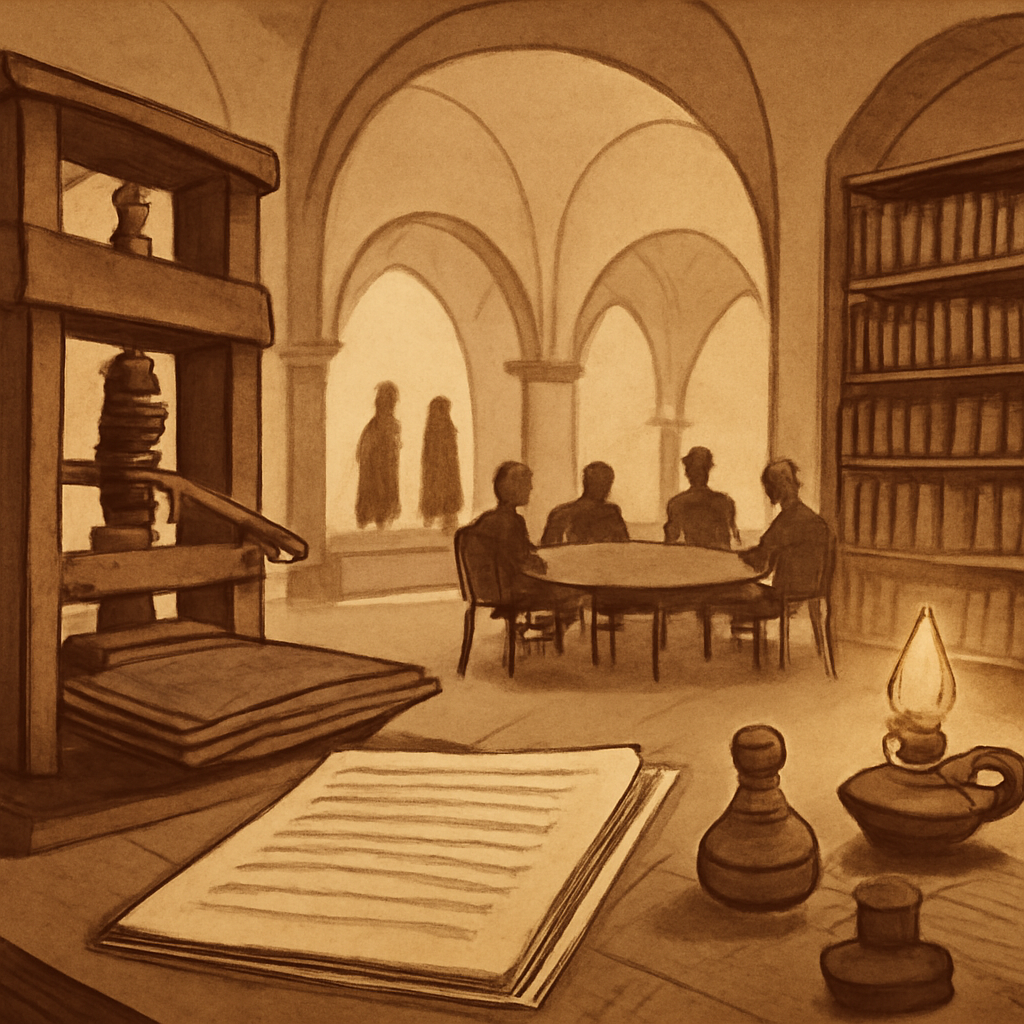
A teacherly way to read the page is to keep asking one modest question: what had to change in daily life for an idea to become public history? The answer may be a calendar, school, law court, pilgrimage route, sermon, translation house, print shop, battlefield, or family ritual.
Start with a respectful boundary: this page explains how religious communities made history; it does not rank sacred truth. Belief, ritual, scripture, law, devotion, reform, violence, and public memory are treated as serious human realities before they become abstractions.
A reader can picture the route before naming the theory: a pilgrim moving toward a shrine, a monk copying a text, a bishop arguing at council, a jurist teaching in a mosque, a Jewish family keeping law and memory in diaspora, a Sikh community gathering around scripture and service, and a court using sacred language to make rule sound legitimate.
This timeline follows lived belief and public authority together. It is not a list of doctrines floating above history, and it does not reduce faith to politics. The nodes show communities, rulers, monks, scholars, armies, pilgrims, translators, bishops, jurists, reformers, and ordinary worshippers asking how worship, law, learning, violence, reform, ethics, and belonging fit together.
The route does not treat religion as a natural march from devotion to institution to conflict. Different Buddhisms, Christianities, early Islamic communities, Jewish communities, Hindu court cultures, Sikh institutions, East Asian ethical traditions, Sufi networks, reform movements, and political religions moved through many paths: household practice, monastic discipline, royal patronage, law, debate, pilgrimage, translation, protest, and memory.
Ashoka's turn toward Buddhism gives the route an early question: how can power speak about moral restraint after violence? The page treats Ashoka's remorse and moral turn through inscriptions and later memory, while noting that historians still debate motive, royal self-presentation, patronage, and how far the policy changed everyday rule. His memory belongs beside later imperial religious changes because it shows rulers using public language, inscriptions, patronage, and ethical claims to shape political legitimacy. Kushan support for Buddhism and routes across Central Asia then show religion moving through trade, diplomacy, pilgrimage, monasteries, coins, and translation rather than staying inside one kingdom.
The Edict of Milan, Council of Nicaea, and Aksum's Christianity make late antique religion visible as institution and statecraft. Picture a bishop arriving at Nicaea with local disputes already alive in his church, or an Aksumite court weighing Red Sea trade, royal authority, inscriptions, bishops, and Christian identity. Aksum's conversion did not make every local practice change at once; older ritual habits, regional communities, trade ties, and court politics coexisted while Christian language became more public. Toleration, doctrine, bishops, councils, and royal conversion changed how communities imagined public authority. These events do not reduce Christianity to politics. They show that doctrine and power were entangled because rulers and church leaders both cared about unity, legitimacy, and the right to define truth.
The early Islamic section begins with revelation and migration as Muslims remember them, while historical context explains Mecca, Medina, community formation, and the source families behind later biographies. The Hijra turned belief, leadership, law, social bonds, and place into a new political and religious community. Badr, Jerusalem, the Umayyads, Karbala, and the Dome of the Rock then show memory, conquest, sacred geography, dynasty, and intra-Muslim division shaping the Islamic world from the start.
Karbala has to be handled with more than one label. Shi'i communities especially remember Husayn's death through grief, injustice, loyalty to the Prophet's family, and moral witness; many Sunni accounts also honor Husayn while explaining the crisis through different legal, political, and communal emphases. That difference is exactly why the date matters for a world-history timeline: memory can become ritual, identity, literature, protest, and political language.
The Abbasid and translation nodes keep learning at the center. Baghdad and the House of Wisdom show ideas moving through patronage, urban life, translation, mathematics, astronomy, medicine, philosophy, paper, and scholarly debate. Religious history becomes thinner when intellectual work is treated as separate from belief. In many societies, knowledge, piety, court power, and public prestige moved together.
The route also follows Buddhist and Islamic networks across Asia. Nara, Pagan, Delhi, Malacca, and Mansa Musa's hajj show how capitals, pilgrimage, trade, architecture, and court culture carried religious authority across Japan, Myanmar, South Asia, Southeast Asia, and West Africa. The point is not to make every tradition the same. It is to show that ideas travel through institutions and routes.
Schism, crusade, and the Mongol sack of Baghdad reveal rupture. The Great Schism made Christian authority visibly divided between eastern and western churches. The First Crusade turned pilgrimage, violence, penitence, papal authority, and holy places into a military project. The destruction of Baghdad changed the political and scholarly memory of the Abbasid world. These moments show that religious history includes conflict over who speaks for the sacred.
The early modern section turns reform into state formation. Safavid Iran made Shi'a Islam central to political identity; the Protestant Reformation used print, preaching, scripture, and local rulers to challenge church authority; the Council of Trent reshaped Catholic reform; Akbar's Ibadat Khana staged debate at the Mughal court. These are not just theological events. They changed education, discipline, law, diplomacy, and community boundaries.
Christian entries also need internal variety. Nicaea became central to many Christian traditions, but later Orthodox, Catholic, Protestant, Oriental Orthodox, and other communities carried different institutional memories, languages, and arguments about authority. The Reformation likewise was not one reform: Lutheran, Reformed, Anglican, Anabaptist, Catholic, and local movements disagreed over scripture, sacraments, church order, rulers, violence, and conscience.
The page keeps other routes open because no single timeline can hold every sacred geography. Hindu bhakti movements, Jewish learning across diaspora communities, Sikh formation in Punjab, Confucian and Daoist public ethics, African Christian and Islamic institutions, Indigenous sacred landscapes, and new religious movements need their own deeper pages. This route names them when they reshape public history and points outward where a fuller account belongs.
Westphalia belongs here because religious conflict helped reshape state language in Europe. The peace did not invent the modern state by itself, but it made sovereignty, confession, diplomacy, and territorial settlement part of a long argument over authority. The Iranian Revolution at the end of the route reminds readers that religion and modern politics did not separate cleanly. Ideas can return through revolution, law, protest, and state power in new forms.
Read the route through translation, institution, and memory. Translation moves texts and concepts; institutions make ideas durable; memory turns events such as Karbala, crusade, reform, schism, or revolution into living references. A good religion timeline does not ask only what people believed. It asks how belief became community, law, art, learning, conflict, reform, and political imagination.
The story is strongest when read in layers. First, follow the dates from c. 260 BCE to 1978-1979 CE. Then read across the event types: religious and political change, imperial formation, religious policy, church council. The timeline becomes more than chronology when those dates reveal decisions, institutions, violence, reform, and memory.
House of Wisdom Flourishes sits near the middle of the sequence. Ask what had already become unavoidable by c. 830 CE, what actors still believed they could control, and which consequences were already beginning to move beyond the original setting.
The named events are Ashoka Turns Toward Buddhism, Kushan Empire Rises, Edict of Milan, Council of Nicaea, Aksum Adopts Christianity, c. 330: Ezana and the Red Sea Context, Beginning of Muhammad's Revelations. Each one pushes a more precise question: what changed, who benefited, who paid the cost, and what later page explains the aftermath more clearly?
Read the timeline against geography too. Places matter because power moves through corridors, borders, cities, ports, capitals, and frontiers. The map below keeps those distances visible while the event pages explain the human and institutional consequences.
A good timeline has a pulse: pressure, decision, expansion, resistance, and aftermath. When you move through Classical Antiquity, Late Antiquity, and Late Antique Africa, keep asking whether an event is creating a new problem, revealing a hidden weakness, or making an earlier choice harder to reverse.
The human layer matters because timelines can become too abstract. Figures such as Ashoka, Kujula Kadphises, Yuezhi groups, Constantine the Great, Licinius, and Early bishops help the sequence feel lived rather than mechanical. Their choices do not explain everything, but they show where institutions, ideas, military systems, social movements, and public fear entered real decisions.
The ending is not only the last date. With closing events such as Council of Trent, Akbar Founds the Ibadat Khana, Peace of Westphalia, and Iranian Revolution, the reader can ask what remained unsettled: which institutions survived, which arguments continued, which victims or opponents were left outside the official story, and which later crisis reused the same vocabulary.
Read this page once quickly for order, then read it again for contrast. Compare early confidence with later uncertainty, local decisions with global consequences, and visible turning points with slower changes in law, economy, belief, technology, borders, or memory. That second pass is where a timeline becomes an explanation.
Causation in this sequence is layered. One event may supply the trigger, another may reveal an older weakness, and a later event may show the consequence that people at the beginning did not expect. The useful habit is to separate background pressure, immediate decision, turning point, and aftermath before deciding which event matters most.
Consequences are uneven. A political settlement might look successful in one capital while creating resentment elsewhere; a military victory might end a campaign while deepening civilian trauma; a scientific or institutional breakthrough might solve one problem while creating new risks. The timeline is strongest when those mixed outcomes remain visible.
The final pass is comparative. After reading this sequence, open a neighboring topic or person page and ask whether the same pattern appears again. Repetition usually points to a structure; contrast usually points to a historical choice that could have gone another way.
Importance is not the same thing as drama. Some events are remembered because they were spectacular, while others matter because they changed rules, expectations, alliances, legal categories, technologies, or public language. Use the timeline to test both kinds of importance before deciding what belongs at the center of the story.
The page rewards moving outward. A timeline gives order, but the event pages give causes, maps, people, sources, and reading paths. When a date feels too compressed, open the full event page and then return here; the sequence becomes clearer with each pass instead of asking the reader to memorize a list.
Follow texts, languages, scholars, merchants, monks, and travelers as ideas move across regions and become useful in new settings.
Ask why events such as Karbala, schism, crusade, reformation, and revolution keep shaping later identities.
Use Religion as one lens for reading Religion, Reform, and Ideas Timeline, then compare how that lens changes from the opening events to the aftermath.
Ashoka Turns Toward Buddhism gives the opening problem a date and place. Ask what was already unstable before it happened.
House of Wisdom Flourishes is a compression point: earlier causes are now crowded together with decisions that will shape the sequence's ending.
Follow the path through Kalinga, Bactria, Milan, Nicaea, Aksum, and Mecca and ask how distance changed communication, logistics, fear, and control.
Iranian Revolution works as both an ending and a beginning: it closes one sequence while opening later disputes, institutions, memories, or reforms.
Which conditions existed before the first event, and which later decision turned those conditions into visible historical change?
Who had the power to choose, who had fewer choices, and who is missing when the story is told only through leaders or institutions?
Which facts are date anchors, which are interpretations, and which claims need checking through the event sources before being repeated?
Which linked event, person, year, or topic page would change your interpretation if you read it next?
Interactive Timeline
Explore Religion, Reform, and Ideas Timeline by sequence
Ashoka Turns Toward Buddhism
After the Kalinga War, Ashoka promoted Buddhist ethics and imperial moral rule through inscriptions and public policy.
Read the full event pageNarrative Stages
Read this timeline in chapters
Imperial Religion and Ethical Rule
Buddhist, Christian, and late antique imperial cases show religion moving through kingship, law, doctrine, and public authority.
- Ashoka Turns Toward Buddhismc. 260 BCE
- Kushan Empire Risesc. 30 CE
- Edict of Milan313 CE
- Council of Nicaea325 CE
- Aksum Adopts Christianity, c. 330: Ezana and the Red Sea Contextc. 330 CE
Islamic Community and Caliphate
Revelation, migration, battle, conquest, dynastic rule, sacred architecture, and intra-Muslim memory shaped early Islamic history.
- Beginning of Muhammad's Revelationsc. 610 CE
- Hijra to Medina622 CE
- Battle of BadrMarch 624 CE
- Rashidun Conquest of Jerusalem637 CE
- Umayyad Caliphate Founded661 CE
- Battle of Karbala680 CE
- Dome of the Rock Completed691-692 CE
Learning, Cities, and Religious Networks
Buddhist capitals, Abbasid Baghdad, translation, pilgrimage, and regional states show ideas moving through cities and routes.
Schism, Crusade, and Islamic-World Plurality
Medieval religion was not one story; church division, crusade, sultanates, Mongol violence, pilgrimage, and Southeast Asian Islam all reshaped authority.
- Great Schism of 10541054 CE
- First Crusade Begins1095 CE
- Delhi Sultanate Founded1206 CE
- Mongol Sack of BaghdadFebruary 1258
- Mansa Musa's Hajj1324-1325 CE
- Malacca Sultanate Risesc. 1400 CE
Reform, Confession, and Modern Political Religion
Safavid state formation, European Reformation, Catholic reform, Mughal debate, Westphalia, and Iran show ideas entering state power in different forms.
- Safavid Empire Founded1501 CE
- Protestant Reformation Begins1517 CE
- Council of Trent1545-1563
- Akbar Founds the Ibadat Khana1575 CE
- Peace of Westphalia1648 CE
- Iranian Revolution1978-1979 CE
Map Layer
Religion, Reform, and Ideas Timeline geography
Gold pins mark the approximate locations of published event pages. This is a schematic locator map, not a historical border map.
Event location Simplified land areaClick a pin to open the event page
Coordinates are approximate and are used to help readers orient themselves before opening a full event page.
References
Where to Check the Facts
- The Metropolitan Museum of Art: The Birth of IslamMuseum reference for the early Islam section of the religion and reform timeline.
- The Metropolitan Museum of Art: The Prophet Muhammad and the Origins of IslamMuseum curriculum reference for Muhammad, revelation, the Hijra, and community formation.
- Official UNESCO World Heritage Centre: AksumInstitutional reference for Aksum's Christianization and African religious-political setting.
- Encyclopaedia Britannica: AshokaReference for Ashoka, Buddhist patronage, remorse after Kalinga, and imperial moral language.
- Encyclopaedia Britannica: Council of NicaeaReference for Nicaea, creed formation, doctrinal dispute, bishops, and Constantine's imperial setting.
- Encyclopaedia Britannica: Council of TrentReference for Catholic reform, doctrine, discipline, and early modern confessional conflict.
- Encyclopaedia Britannica: Peace of WestphaliaReference for Westphalia, religious settlement, diplomacy, sovereignty language, and postwar political order.