Follow how rulers tried to govern territory that no single court could physically see: roads, satrapies, commanderies, envoys, capitals, and frontier intermediaries all matter.
Timeline
Ancient Empires Timeline
A chronological guide to classical empires, city-states, battlefield turning points, imperial state formation, and political memory.
Timeline Guide
How did ancient empires and city-states turn conquest, citizenship, roads, religion, and memory into systems that could govern distance?
Read this edited guide as a path through dates, places, affected lives, source limits, and contested memory rather than as an exhaustive database.
Quick scan: the route runs from Achaemenid Persia around 550 BCE through Greek city-state reform, Mauryan and Qin-Han state formation, Roman transformation, Ravenna in 476, and Talas in 751. The map is mainly Afro-Eurasian: Anatolia, Mesopotamia, the Nile, Iran, the Aegean, the Ganges plain, Chang'an, Central Asia, the Mediterranean, Constantinople, and Ravenna.
Start with people handling the machinery of rule: a Persian messenger crossing royal roads, an Athenian citizen hearing assembly debate, an Ashokan scribe carving public ethics into stone, a Qin clerk checking measures in a market, and an officer in Ravenna trying to make a fading title still mean authority. This timeline is an Afro-Eurasian ancient-empires spine, not a claim to cover every ancient society; African, American, and Pacific traditions need their own routes as well as comparison points here.
Ordinary and marginalized lives stay inside the route: tribute payers under Persian kings, enslaved people excluded from Greek citizenship, households pulled into Qin labor, frontier families facing Han military demand, provincial taxpayers in Rome, and local communities negotiating successor rule after 476.
For parallel routes beyond this Afro-Eurasian spine, continue to Indigenous Americas and Pre-Columbian Civilizations, First Peoples / Migrations / Pacific Worlds, African Kingdoms and Independence, and Pacific / Oceania Sovereignty. Those pages keep the atlas from pretending one ancient route can represent every region.
Start With These Dates
- c. 550 BCEAchaemenid Empire Founded
Cyrus the Great built the Achaemenid Empire from a Persian power base, creating an imperial system that connected Iran, Mesopotamia, Anatolia, and Central Asia.
- 539 BCECyrus Conquers Babylon
Cyrus the Great captured Babylon, absorbing the Neo-Babylonian kingdom into the expanding Achaemenid Empire.
- 508 BCECleisthenes Reforms Athens
Cleisthenes reorganized Athenian political participation around new tribes and demes, helping create the institutional foundations of Athenian democracy.
- 490 BCEBattle of Marathon, 490 BCE: Summary, Sides, Winner, and Significance
The Battle of Marathon happened in 490 BCE on the plain of Marathon near Athens. An Athenian-led force, joined by Plataeans, defeated a Persian expedition sent after the Ionian Revolt and Athenian involvement in it. The battle did not end Persian power, but it gave Athens a powerful memory of citizen defense before later Persian War battles such as Thermopylae and Salamis.
- 216 BCEBattle of Cannae
Hannibal's Carthaginian army destroyed a much larger Roman force at Cannae during the Second Punic War.
- 476 CEFall of the Western Roman Empire, 476 AD: What Happened Next
In 476 AD, Odoacer deposed Romulus Augustulus in Ravenna. That is why 476 is used for the fall of the Western Roman Empire: the western Roman imperial office ended in Italy, while eastern Roman rule continued from Constantinople. Read the event with a west-east map distinction, then compare it with 330, Justinian, Charlemagne, and 1453.
- 541 CEPlague of Justinian
A devastating plague struck the Byzantine world during Justinian's reign, spreading through connected trade and urban networks.
- 751 CEBattle of Talas
Tang and Abbasid forces fought near the Talas River as rival powers competed over Central Asian alliances, trade corridors, and frontier influence.
Sources Used Here
- The Metropolitan Museum of Art: The Roman Empire
Museum reference for the Roman imperial spine of the ancient empires timeline.
- The Metropolitan Museum of Art: Qin Dynasty
Museum reference for Qin unification and early Chinese imperial state formation.
- The Metropolitan Museum of Art: Han Dynasty
Museum reference for Han chronology, court culture, and East Asian imperial continuity.
- Encyclopaedia Britannica: Achaemenid Empire
Reference for Persian imperial chronology and the early western Asian spine of the timeline.
- Encyclopaedia Britannica: Han Dynasty
Reference for the East Asian imperial spine and Han chronology.
The page also names the debates behind the dates. Persian accommodation can look like tolerance or strategy; the Silk Road can hide many local routes under one convenient phrase; Rome in 476 can be read as fall, transformation, or continuation. Those disagreements are part of the reader's path, not footnotes after a clean story.
Scope note: this route is curated around four visible chapters: early empires and city-states, imperial expansion, religious and institutional change, and late antique transformation. It deliberately points toward separate Americas and Pacific routes rather than pretending one Afro-Eurasian spine can stand for all ancient history.
This timeline is deliberately broader than a Roman chronology. The sequence begins with Achaemenid Persia and Greek city-state reform, crosses South Asian and East Asian state formation, follows Central Asian exchange, and only then turns to Rome's republic, empire, Christian transformation, and late antique afterlife. That shape matters because ancient world history becomes thinner when every road is made to lead to Rome.
The route becomes concrete from the first screen. Imagine a courier leaving Sardis on the Persian royal road, an Athenian citizen finding his deme and tribe inside a new civic map, an Ashokan official hearing an inscription read aloud, a Qin clerk checking weights and written forms in a market, a Han envoy returning with information about horses and western peoples, and an officer in Ravenna watching imperial regalia become a diplomatic message to Constantinople. Those small scenes keep the timeline from becoming only a sequence of famous rulers.
The opening chapter asks how large states and small political communities solved opposite problems. Persia had to make imperial distance governable through kingship, roads, satrapies, tribute, and local accommodation. Athens had to reorganize political belonging at the scale of citizens, tribes, demes, assemblies, and public memory. The Greek-Persian wars then show these scales meeting under military pressure, while the Peloponnesian War reveals the instability of a city-state world organized by rival alliances.
The middle chapter turns conquest into comparison. Alexander's victory at Gaugamela did not simply replace one ruler with another; it broke the Achaemenid imperial frame and opened Hellenistic successor states such as the Seleucid Empire. The Mauryan Empire and Ashoka's turn toward Buddhist patronage show a different version of imperial power, where conquest, remorse, inscription, ethics, and rule over a varied subcontinent become part of the same story. Qin and Han China add another comparison: short-lived coercive unification followed by a long dynasty that made imperial continuity more durable.
The route then widens through connectivity. Zhang Qian's mission, Kushan rule, and later Central Asian conflict make geography visible as a historical force. Empires learned through envoys, merchants, frontier peoples, coins, monasteries, and roads as much as through battles. A strong ancient timeline must therefore include routes and reports, not only armies. The Silk Road lens helps readers see Central Asia as a core region in ancient history rather than empty space between better-known states.
The Roman arc appears as one major thread inside this larger fabric. Cannae shows Rome's ability to survive catastrophic defeat; Caesar's assassination exposes republican crisis; Augustus shows institutional redesign; Milan and Nicaea show imperial Christianity changing public authority; Constantinople shifts the imperial center east; 476 becomes a symbolic western endpoint rather than the end of Roman history everywhere. Read this arc beside Persia, Han China, Mauryan India, and Central Asia, and the Roman story becomes more precise.
The final chapter is transformation rather than collapse. The fall of the Western Roman Empire, Justinian's plague, and the Battle of Talas sit at the edge of ancient and medieval worlds. They show that empires end unevenly: offices disappear, capitals move, successor kingdoms form, disease changes capacity, and memories remain useful. The timeline is built to make readers ask what survived, what broke, and which older forms of power later societies kept borrowing.
Each chapter has a different reader payoff: Persia and Athens explain authority; the Hellenistic and South Asian chapters explain scale; Qin, Han, and Central Asia explain connection; Rome explains institutional afterlife; late antiquity explains transformation. That rhythm prevents the timeline from becoming a long wall of dates. A reader can enter through a familiar name such as Julius Caesar, then move outward to less familiar but equally important pages such as Zhang Qian, Kushan power, or Ashoka's inscriptions.
The first chapter is about imperial grammar. Achaemenid Persia did not only expand; it built a language of royal order that could operate across older kingdoms, cities, temples, and local elites. Roads, messengers, satrapies, tribute, inscriptions, and ceremonial display made distance legible. That is why Cyrus in Babylon belongs near the beginning. The event shows conquest becoming a claim that local populations could recognize, even if they also experienced imperial pressure.
The second chapter is about political belonging at a smaller scale. Cleisthenes' reforms, Marathon, Thermopylae, and the Peloponnesian War show the Greek polis as an intense civic world. Citizenship, cult, land, military service, assemblies, alliances, and memory made identity powerful. But that same intensity produced exclusion and rivalry. Greek city-states work here as a comparison with empire, not as an uncomplicated story of freedom.
The third chapter is about conquest and inheritance. Gaugamela is a turning point because it ends one ruling dynasty while exposing how much imperial infrastructure a conqueror could reuse. Alexander did not conquer empty space. He entered a world of roads, cities, treasuries, administrative habits, and royal symbols. The later Seleucid Empire belongs on the route because it asks what happened when Macedonian rulers governed older Persian and Mesopotamian geographies through Hellenistic forms.
The South Asian chapter is central, not supplementary. The Maurya Empire formed from Magadhan geography, Pataliputra's position, northwestern opportunity, court organization, military consolidation, and regional diversity. Ashoka's memory then turns the timeline toward moral communication: conquest, remorse, inscriptions, Buddhist patronage, and public ethics. The point is not to make Ashoka a simple hero. It is to ask how imperial power could speak about restraint through the same mechanisms that made empire possible.
The East Asian chapter asks why some institutions outlive the regimes that first impose them. Qin unification was short-lived, but standardization, central command, law, measurement, roads, and the imperial idea shaped what came next. Han rule then adapted the inheritance into a longer political model through court ritual, commanderies, frontier policy, learning, revenue, and historical memory. The timeline is richer when Qin and Han are read together: one proves the force of unification, the other tests durability.
The connectivity chapter makes Central Asia visible. Zhang Qian's mission, Kushan rule, and later Talas show that routes were not empty lines between civilizations. They were zones of diplomacy, horses, coins, merchants, monasteries, garrisons, envoys, language contact, and military risk. A timeline that leaves Central Asia as a blank space makes ancient history too tidy. This route treats corridors and intermediaries as historical actors.
The Roman chapter works best after the reader has already seen other imperial answers. Cannae shows Roman endurance under crisis; Caesar's assassination shows institutional breakdown; Augustus shows political redesign; the Edict of Milan and Nicaea show religion moving into imperial statecraft; Constantinople shows geography pulling power east. Read in this order, Rome becomes less of a default center and more of one sophisticated answer to problems other regions also faced.
The late antique chapter is about uneven endings. The fall of the Western Roman Empire in 476 is a meaningful symbol, but it is not the end of Roman authority everywhere. Eastern imperial power continued, Christian institutions grew, successor kingdoms reused Roman forms, and later crises changed capacity without erasing memory. Justinian's plague belongs here because disease could alter imperial possibility as powerfully as a battle or law.
The timeline also needs an evidence lens. The ancient world is reconstructed from uneven materials: inscriptions, coins, chronicles, administrative tablets, archaeology, later histories, religious texts, and monumental remains. Some events are known through royal voices; others through opponents, later compilers, or material traces. A good reader asks what the source can show and what it cannot. That habit keeps the sequence from sounding more certain than the evidence allows.
The source trail combines museum evidence, major reference works, and comparative scholarship. Oxford's empire syntheses help frame Achaemenid, Ashokan, Roman, and other cases as variations on political domination rather than as isolated civilization stories, while Rome-and-China scholarship keeps Han and Roman comparison from collapsing into a two-column similarity chart. Those syntheses act as guardrails before the reader moves back into specific events, people, places, and source pages.
Geography guides every chapter. Persia requires Anatolia, Mesopotamia, Egypt, Iran, Central Asia, and the Indus frontier. Greek city-states require the Aegean, mountains, ports, colonies, and western Anatolia. Maurya requires the Ganges plain, Pataliputra, Kalinga, and northwestern corridors. Han requires Chang'an, the Hexi Corridor, steppe frontiers, and Central Asia. Rome requires the Mediterranean, Danube, Rhine, Constantinople, and Ravenna. Talas requires readers to look east of familiar Mediterranean maps.
The timeline keeps affected groups visible. Conquest and administration changed the lives of farmers, soldiers, enslaved people, scribes, merchants, monks, priests, women in households and courts, frontier communities, and subject elites. Some gained security, patronage, markets, or status. Others faced tax burdens, labor, forced movement, violence, or exclusion. Without that layer, ancient timelines become a parade of rulers and battles.
The social-cost layer is explicit. Persian roads moved couriers and armies; they also rested on tribute and labor. Greek citizenship created intense belonging while excluding women, enslaved people, foreigners, and subject allies. Mauryan and Qin projects made law, inscription, roads, and command visible while demanding labor and obedience. Rome's roads, cities, and law grew beside slavery, conquest, taxation, and military extraction. The timeline is about power becoming durable, not power becoming innocent.
The route has several debate points. Was Persian flexibility tolerance or strategy? Did Greek citizenship expand freedom or preserve exclusion? Did Qin severity make Han durability possible? Was Ashoka's moral language a critique of conquest or a tool of rule? Did Rome fall, transform, or continue in new containers? Was the Silk Road a trade network, a diplomatic system, a memory, or all of those at once? These debates make the page worth reading beyond the dates.
For students, the timeline offers a structure for essays. Each event can be sorted into background pressure, trigger, turning point, consequence, and memory. Cyrus in Babylon shows legitimacy after conquest. Cleisthenes shows institutional redesign. Gaugamela shows dynastic rupture and inheritance. Ashoka shows moral communication after violence. Qin and Han show coercion and adaptation. Constantine and Nicaea show religious politics. 476 and Talas show why endings and transitions are rarely simple.
For casual readers, the timeline stays navigable. The short path is Persia, Athens, Maurya, Qin, Han, Rome, Constantinople, 476, and Talas. The deeper path adds Babylon, Marathon, Thermopylae, Gaugamela, Ashoka, Zhang Qian, Kushan power, Gupta rise, Milan, Nicaea, and Justinian's plague. Each added stop answers a question raised by the previous one rather than feeling like a detour.
The final reason this timeline matters is that the route is broad without becoming random. Every node tests how power became durable, how geography shaped possibility, how evidence survives, how ordinary people are affected, and how later societies reuse ancient memory.
The chronology also has to explain why it includes both narrow events and long processes. A battle such as Cannae compresses crisis into a single date. A reform such as Cleisthenes' political settlement shows institutional redesign. A mission such as Zhang Qian's journey opens a geography of knowledge. A council such as Nicaea turns doctrine into imperial politics. A plague changes capacity over time. Putting these forms together teaches readers that history is not made by one type of event.
Notice how the timeline moves between centers and edges. Capitals such as Persepolis, Pataliputra, Chang'an, Rome, and Constantinople matter, but so do frontiers, corridors, ports, roads, and contested borderlands. Many turning points happen where a center tries to understand or control a region beyond its immediate reach. That is why the route keeps returning to Central Asia, the Aegean, the Mediterranean, and the eastern frontier zones.
The timeline can also be read as a sequence of communication technologies. Royal inscriptions, administrative tablets, envoys, coins, roads, court histories, edicts, councils, and urban monuments all carry authority. They do not simply report power; they help create it. Cyrus in Babylon, Ashoka's inscriptions, Han records, Roman law, and Christian councils each show a different way of making rule visible and repeatable across space.
A strong timeline also separates crisis from explanation. Gaugamela is a crisis for the Achaemenid dynasty, but the explanation includes Macedonian military organization, Persian imperial inheritance, local geography, and later Hellenistic adaptation. 476 is a crisis for western imperial officeholding, but the explanation includes frontier politics, fiscal strain, military command, eastern continuation, and later memory. The dramatic date matters most when it opens the slower causes behind it.
The route helps teachers and students avoid a Europe-only ancient world. Rome and Greece remain important, but they are placed beside Persia, South Asia, East Asia, and Central Asia. That balance changes the questions. Instead of asking how Greece led to Rome and then Europe, the timeline asks how different regions built institutions, handled diversity, moved goods and ideas, justified authority, and remembered old power.
The route also avoids a triumphalist idea of empire. Many ancient states created roads, cities, law, patronage, records, and long-distance exchange. They also created violence, extraction, hierarchy, forced labor, exclusion, and vulnerability. The better reading does not admire or condemn too quickly; it identifies who benefited, who paid, who adapted, who resisted, and who later told the story.
The ancient-to-medieval transition is especially important for the atlas as a whole. Talas, Justinian's plague, Constantinople, and the western Roman collapse point toward later Islamic, Byzantine, Central Asian, and medieval European routes. The timeline therefore works like a hinge. It closes one cluster while preparing readers for the next phase of world history, where older roads, cities, religious networks, and imperial memories keep changing shape.
The selected nodes are not every important ancient event. They are chosen because they connect regions, source problems, and search intents around one rule: each node changes the route's answer to distance, authority, geography, evidence, or memory. Readers can challenge the selection, but the selection logic stays visible.
The limits are visible too. This is an Afro-Eurasian ancient-empires spine, not a complete ancient-world encyclopedia. Nubia and Meroe, Nok cultures, Olmec and Maya cities, Andean worlds, Arabian polities, island Southeast Asia, and Pacific histories require their own routes and comparison pages. Naming that boundary is part of the quality standard: a broad timeline helps readers see what it covers and what still needs a separate doorway.
Informal filters make the long route easier to hold in mind. A political filter highlights Cyrus, Cleisthenes, Qin, Augustus, and 476. A religious filter highlights Ashoka, Gupta patronage, Milan, Nicaea, and Constantinople. A route-and-exchange filter highlights Zhang Qian, Kushan power, Talas, and Central Asian corridors. A crisis filter highlights Cannae, Gaugamela, plague, and western collapse. These filters help a long timeline stay readable without requiring separate duplicate pages.
The fastest way through the timeline is to follow one institution at a time. Roads connect Persia, Rome, and Central Asia; court records connect Han and later dynastic memory; councils and inscriptions connect religion to public authority; capitals such as Pataliputra, Chang'an, Rome, Constantinople, and Ravenna show how geography turns power into administration.
The timeline also needs glossary-like concepts because readers meet recurring words across regions. Empire means rule over distance and diversity, not just a big kingdom. Satrapy, commandery, province, and city-state are different administrative forms, not interchangeable labels. Legitimacy means the story that makes rule believable. Frontier means a zone of contact and pressure, not merely a line. Memory means later reuse of an event, person, city, or title. These concepts become familiar as the route unfolds.
Another way to read the timeline is through succession. Persian kings, Macedonian successors, Mauryan rulers, Qin and Han dynasties, Roman emperors, and Byzantine continuities all faced the question of how power survives a founder. Some systems depended heavily on royal charisma and military success; others developed offices, rituals, laws, or bureaucratic habits that could survive individual rulers. Succession is one of the quiet threads connecting the whole route.
The environmental layer remains visible even when the route is not framed as environmental history. Rivers made Pataliputra and the Ganges world powerful. Seas made the Aegean and Mediterranean both connective and contested. Steppe and desert corridors shaped Han, Kushan, and Persian frontiers. Disease, especially Justinian's plague, reminds readers that microbes could change imperial capacity. Geography and environment are not background scenery; they are constraints that change historical possibility.
The timeline also prepares readers for comparison pages. Roman Empire vs Han Dynasty works better after readers have already seen Persia, Maurya, Greek city-states, and Central Asia because comparison is not only a two-column exercise. It asks which problems were shared, which answers were regional, and which memories later became dominant. The long timeline gives that comparison a wider field.
The same discipline matters beyond antiquity: choose meaningful nodes, explain source logic, keep geography visible, avoid thin lists, and make every stop lead somewhere useful. That is how a reader can later move into Islamic World, African Kingdoms, Indian Ocean, Atlantic Revolutions, Industrial Capitalism, Cold War, and Rights Movements timelines without starting over.
The route also rewards revisiting. A first pass gives the order of events; a second pass shows repeating problems; a third pass reveals how evidence shapes what can be claimed. That layered reading makes the timeline useful for both quick orientation and deeper study, because every chapter can be read as a story, a comparison, and a source problem at the same time.
The reader leaves with one compact thesis: ancient history is not a ladder of civilizations but a field of experiments in governing distance. Some experiments used roads, some used cities, some used inscriptions, some used law, some used religion, and some survived mostly as memory across later world history routes.
The story is strongest when read in layers. First, follow the dates from c. 550 BCE to 751 CE. Then read across the event types: imperial founding, conquest, political reform, battle. The timeline becomes more than chronology when those dates reveal decisions, institutions, violence, reform, and memory.
Battle of Cannae sits near the middle of the sequence. Ask what had already become unavoidable by 216 BCE, what actors still believed they could control, and which consequences were already beginning to move beyond the original setting.
The named events are Achaemenid Empire Founded, Cyrus Conquers Babylon, Cleisthenes Reforms Athens, Battle of Marathon, 490 BCE: Summary, Sides, Winner, and Significance, Battle of Thermopylae, Peloponnesian War Begins. Each one pushes a more precise question: what changed, who benefited, who paid the cost, and what later page explains the aftermath more clearly?
Read the timeline against geography too. Places matter because power moves through corridors, borders, cities, ports, capitals, and frontiers. The map below keeps those distances visible while the event pages explain the human and institutional consequences.
A good timeline has a pulse: pressure, decision, expansion, resistance, and aftermath. When you move through Classical Antiquity, keep asking whether an event is creating a new problem, revealing a hidden weakness, or making an earlier choice harder to reverse.
The human layer matters because timelines can become too abstract. Figures such as Cyrus the Great, Nabonidus, Cleisthenes, Miltiades, Darius I, and Leonidas I help the sequence feel lived rather than mechanical. Their choices do not explain everything, but they show where institutions, ideas, military systems, social movements, and public fear entered real decisions.
The ending is not only the last date. With closing events such as Constantinople Founded, Fall of the Western Roman Empire, 476 AD: What Happened Next, Plague of Justinian, and Battle of Talas, the reader can ask what remained unsettled: which institutions survived, which arguments continued, which victims or opponents were left outside the official story, and which later crisis reused the same vocabulary.
Read this page once quickly for order, then read it again for contrast. Compare early confidence with later uncertainty, local decisions with global consequences, and visible turning points with slower changes in law, economy, belief, technology, borders, or memory. That second pass is where a timeline becomes an explanation.
Causation in this sequence is layered. One event may supply the trigger, another may reveal an older weakness, and a later event may show the consequence that people at the beginning did not expect. The useful habit is to separate background pressure, immediate decision, turning point, and aftermath before deciding which event matters most.
Consequences are uneven. A political settlement might look successful in one capital while creating resentment elsewhere; a military victory might end a campaign while deepening civilian trauma; a scientific or institutional breakthrough might solve one problem while creating new risks. The timeline is strongest when those mixed outcomes remain visible.
The final pass is comparative. After reading this sequence, open a neighboring topic or person page and ask whether the same pattern appears again. Repetition usually points to a structure; contrast usually points to a historical choice that could have gone another way.
Importance is not the same thing as drama. Some events are remembered because they were spectacular, while others matter because they changed rules, expectations, alliances, legal categories, technologies, or public language. Use the timeline to test both kinds of importance before deciding what belongs at the center of the story.
The page rewards moving outward. A timeline gives order, but the event pages give causes, maps, people, sources, and reading paths. When a date feels too compressed, open the full event page and then return here; the sequence becomes clearer with each pass instead of asking the reader to memorize a list.
Ask which institutions survived their founders. Qin rule was brief but influential; Augustus built a settlement with a long afterlife; city-state reforms outlived the politicians who designed them.
Use Zhang Qian, Kushan power, Talas, and trade-linked disease to see how movement of goods, people, and ideas changed what empire meant.
Ashoka, Milan, Nicaea, Gupta patronage, and Constantinople show that ancient politics cannot be separated from public religion, moral language, and sacred authority.
Watch which events became reusable symbols: Thermopylae, Caesar's assassination, Augustus, Constantinople, 476, and Talas all gained meanings beyond their immediate outcomes.
Do not read the timeline as a ladder from one civilization to another. Compare parallel answers to recurring problems: legitimacy, succession, frontiers, communication, taxation, and crisis.
For a short path, read Persia, Qin, Caesar, Constantinople, and 476. For a deeper path, add Ashoka, Zhang Qian, Kushan rule, Gupta power, and Talas to see the non-Mediterranean structure of the cluster, then return to the map and sources.
Ask what kind of source supports each node: inscription, tablet, coin, archaeology, court history, classical narrative, religious text, or later memory.
Keep ordinary people visible while reading big states: taxpayers, soldiers, enslaved people, merchants, monks, scribes, women, and frontier communities.
Treat endings as layered. Dynasties can fall while roads, cities, laws, religions, titles, and memories keep working in later societies.
Achaemenid Empire Founded gives the opening problem a date and place. Ask what was already unstable before it happened.
Battle of Cannae is a compression point: earlier causes are now crowded together with decisions that will shape the sequence's ending.
Follow the path through Persis, Babylon, Athens, Marathon, Thermopylae, and Greece and ask how distance changed communication, logistics, fear, and control.
Battle of Talas works as both an ending and a beginning: it closes one sequence while opening later disputes, institutions, memories, or reforms.
Which conditions existed before the first event, and which later decision turned those conditions into visible historical change?
Who had the power to choose, who had fewer choices, and who is missing when the story is told only through leaders or institutions?
Which facts are date anchors, which are interpretations, and which claims need checking through the event sources before being repeated?
Which linked event, person, year, or topic page would change your interpretation if you read it next?
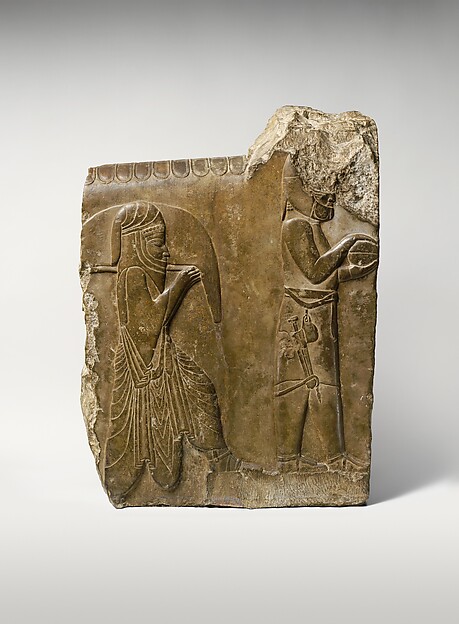
Interactive Timeline
Explore Ancient Empires Timeline by sequence
Achaemenid Empire Founded
Cyrus the Great built the Achaemenid Empire from a Persian power base, creating an imperial system that connected Iran, Mesopotamia, Anatolia, and Central Asia.
Read the full event pageNarrative Stages
Read this timeline in chapters
Persian and Greek Foundations
Imperial Persia and Greek city-states developed competing answers to power, citizenship, alliance, and memory.
Hellenistic and South Asian Scale
Alexander's conquests, successor kingdoms, and South Asian empires show different ways conquest became institutions.
- Battle of Gaugamela331 BCE
- Mauryan Empire Foundedc. 322 BCE
- Seleucid Empire Founded312 BCE
- First Punic War Begins264 BCE
- Ashoka Turns Toward Buddhismc. 260 BCE
Chinese and Central Asian Routes
Qin, Han, Zhang Qian, and Kushan power connect state formation with routes, diplomacy, and frontier geography.
- Qin Unification of China221 BCE
- Battle of Cannae216 BCE
- Han Dynasty Founded202 BCE
- Zhang Qian's Western Mission138 BCE
- Kushan Empire Risesc. 30 CE
Rome and Late Antique Authority
Rome's republican crisis, imperial settlement, Christian turn, and new eastern capital changed the grammar of empire.
- Assassination of Julius CaesarMarch 15, 44 BCE
- Founding of the Roman Empire27 BCE
- Edict of Milan313 CE
- Gupta Empire Risesc. 320 CE
- Council of Nicaea325 CE
- Constantinople FoundedMay 11, 330 CE
Transformation and Afterlife
Late antique crises and Central Asian encounters show that ancient empires ended unevenly and survived through memory.
Map Layer
Ancient Empires Timeline geography
Gold pins mark the approximate locations of published event pages. This is a schematic locator map, not a historical border map.
Event location Simplified land areaClick a pin to open the event page
Coordinates are approximate and are used to help readers orient themselves before opening a full event page.
References
Where to Check the Facts
- The Metropolitan Museum of Art: The Roman EmpireMuseum reference for the Roman imperial spine of the ancient empires timeline.
- The Metropolitan Museum of Art: Qin DynastyMuseum reference for Qin unification and early Chinese imperial state formation.
- The Metropolitan Museum of Art: Han DynastyMuseum reference for Han chronology, court culture, and East Asian imperial continuity.
- Encyclopaedia Britannica: Achaemenid EmpireReference for Persian imperial chronology and the early western Asian spine of the timeline.
- Encyclopaedia Britannica: Han DynastyReference for the East Asian imperial spine and Han chronology.
- Encyclopaedia Britannica: Roman EmpireReference for Roman imperial chronology, geography, and late antique transition.
- Oxford University Press: The Oxford World History of Empire, Volume TwoScholarly synthesis reference for comparing empires across regions, including Achaemenid, Ashokan, Roman, and other imperial cases.
- Oxford University Press: Rome and China, Comparative Perspectives on Ancient World EmpiresScholarly comparative reference for state formation and institutional comparison between the ancient Mediterranean and early China.