At a Glance
The shape of the event
- Date
- May 11, 330 CE
- Place
- Constantinople
- Type
- Capital Founding
Constantine inaugurated Constantinople as a new imperial capital on the site of Byzantium, shifting Roman political gravity toward the eastern Mediterranean.
May 11, 330 CE; place the event in Constantinople before comparing causes or consequences.
Constantinople shaped politics, trade, Christianity, diplomacy, and imperial memory for more than a millennium.
Constantine the Great are the first names or groups to compare before widening the story.
The city became a central seat of Roman and later Byzantine imperial power.
The city became a central seat of Roman and later Byzantine imperial power.
Constantinople shaped politics, trade, Christianity, diplomacy, and imperial memory for more than a millennium.
Follow the story next to see how a single foundation altered institutions and imaginations.
Background
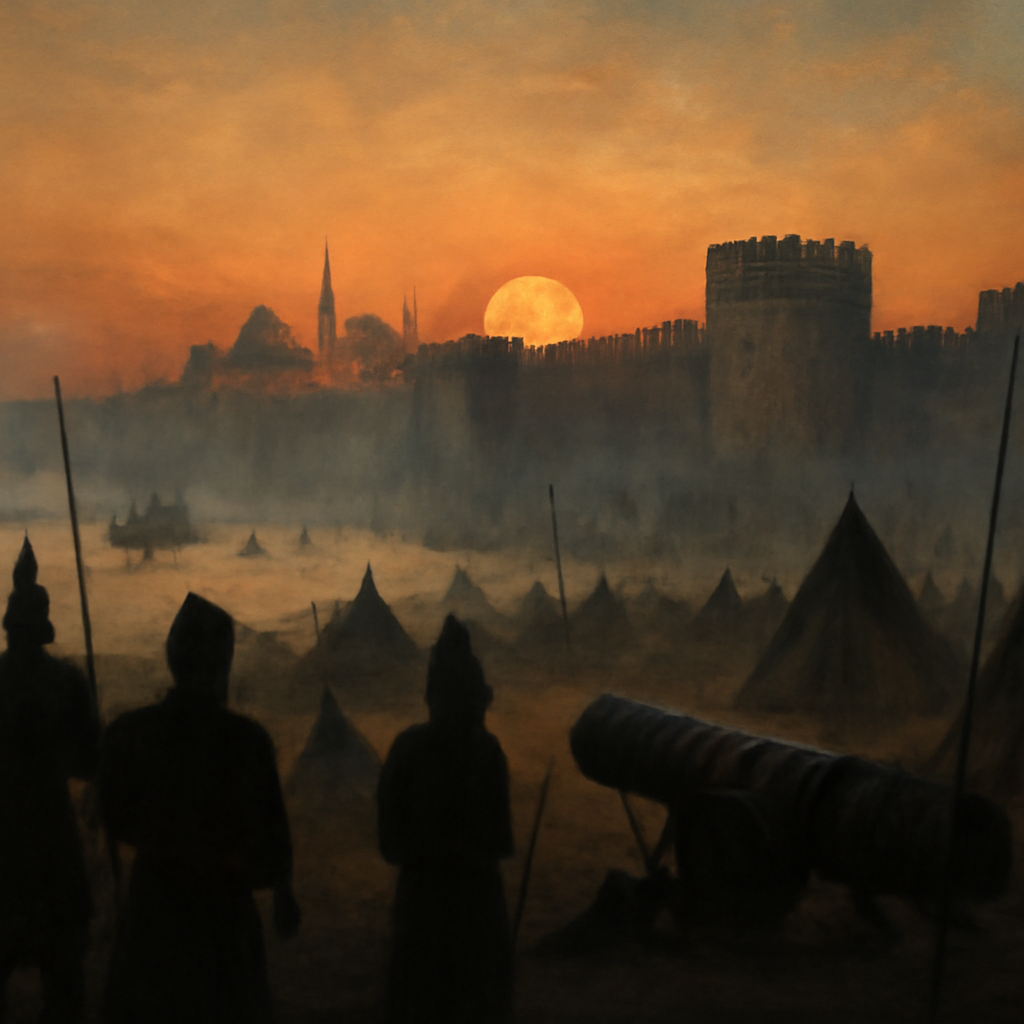
By 330 CE the Roman world had traveled through crisis and adaptation. Capitals, frontiers, and imperial logistics had become urgent questions for rulers who faced rivals along land and sea. Byzantium, a modest Greek-founded port on the Bosporus, offered a rare combination of deep harbor, defensible position, and access to the routes that linked the eastern provinces to Anatolia and the Levant. Constantine inherited these strategic realities and a transformed religious landscape: Christianity had moved from persecuted sect to a public presence bound up with imperial patronage. Administratively, emperors had already been experimenting with power away from Rome; economic weight had shifted eastward as grain, taxes, and trade flows favored provincial cities.
Historians debate how much Constantine’s personal vision mattered versus these broader currents. Some emphasize his agency—ritual, propaganda, legal acts—while others point to structural forces that made Byzantium an obvious choice for a renewed capital. This account keeps that tension visible: Constantine made a decisive public move on May 11, 330 CE, but he did so into an environment shaped by geography, economy, and religious change that set the terms for what a new capital could accomplish. Local elites mattered too. The founding of Constantinople is more than a capital relocation. Constantine chose a site where Europe and Asia, the Black Sea and Mediterranean, imperial administration and Christian patronage could meet.
The city turned geography into government: harbors, walls, roads, ceremonies, courts, and churches all helped make Roman power visible in a new eastern center. The date also asks readers to think about continuity. Constantinople did not replace Rome's memory overnight, and the empire did not become medieval Byzantium in a single ceremony. The city's importance grew because institutions, emperors, bishops, soldiers, merchants, and residents kept investing meaning and resources into it.
The Turning Point
On May 11, 330 CE Constantine the Great conducted a public act: he inaugurated Constantinople as a new imperial capital on the existing urban footprint of Byzantium. That single public ceremony expressed multiple choices. Constantine chose Byzantium’s commanding site on the Bosporus over older traditions centered on Rome; he created a visible imperial center that brought court, administration, and ceremonial life closer to the eastern provinces. The act was political as much as symbolic: an imperial capital signaled where patronage would flow, where military attention might concentrate, and where the emperor’s presence would be most apparent. Practical considerations—harbor, defensibility, and access to eastern trade and provinces—met with imperial will.
Contemporary actors beyond the emperor also mattered: provincial officials, local elites, and bishops whose fortunes would be tied to the new capital had stakes in that inauguration. Scholars continue to weigh how decisive the ceremony itself was versus the cumulative administrative and economic trends that had already been steering Rome’s center of gravity eastward. The moment on May 11 was an inflection—a deliberate, visible choice by Constantine that accelerated shifts already underway and provided a focal point for subsequent political, religious, and economic reorganization. The turning point was the establishment of a durable imperial center in the eastern Mediterranean. The city gave later Roman rule a strategic anchor that could survive western imperial collapse and reshape Christian imperial politics.
Consequences
Constantinople’s inauguration produced both immediate reorientation and consequences that unfolded over centuries. In the near term the new capital concentrated imperial institutions and ceremonial life in the eastern Mediterranean, signaling where political attention and resources would be concentrated. Merchants and tax flows increasingly met an imperial court that could project authority into Anatolia, Syria, and Egypt; bishops and church structures found a patronized urban center where Christianity intertwined with statecraft. Over the long term the city anchored what historians call the Byzantine imperial tradition: it served as the primary seat of Roman-imperial authority in the east and a durable reference point for successors who invoked Constantinople’s founding to legitimate rule.
Economically and diplomatically, its position between Europe and Asia made it a persistent node in trade and in negotiations with neighboring powers. The memory of Constantine’s choice—his inauguration on May 11, 330 CE—became part of imperial identity, used repeatedly to assert continuity and sacred sanction. At the same time, historians remind readers that this trajectory was neither inevitable nor uni-dimensional: wars, administrative reforms, and local societies all shaped outcomes, and the city’s role shifted in response to changing political and economic climates across more than a millennium. The afterlife includes Byzantine statecraft, Hagia Sophia, Orthodox Christianity, trade routes, sieges, the Fourth Crusade, 1453, and Ottoman Istanbul.
A founding ceremony in 330 therefore becomes a route into more than a millennium of urban memory.
Interpretation Notes
The hardest question around Constantinople Founded is causation. The event had immediate actors, but its meaning also came from institutions, geography, resources, and expectations already present in Eastern Mediterranean.
Why Keep Reading
Follow the story next to see how a single foundation altered institutions and imaginations. Read about Constantine’s subsequent laws and church policies to trace how imperial patronage reshaped urban life. Track how the city’s position on trade routes affected Mediterranean commerce and how rulers used Constantinople’s symbolic founding to claim legitimacy. Explore the later centuries when the city became the pivot of Byzantine diplomacy, warfare, and religious controversy. Each linked episode—administrative reforms, economic shifts, ecclesiastical councils, sieges and treaties—reveals a different strand of how Constantine’s 330 CE decision was taken up, contested, and reinvented across time. Those threads help explain why Constantinople remained central to imperial memory and international politics for more than a millennium.
Continue to Constantine, Nicaea, Justinian, Hagia Sophia, the Great Schism, 1204, 1453, and Ottoman history to follow the city's changing identities.
Reading Path
Follow the story without losing the thread
Before This
- Council of Nicaea325 CE
- Gupta Empire Risesc. 320 CE
- Edict of Milan313 CE
After This
Same Period
- Beginning of Muhammad's Revelationsc. 610 CE
- Hijra to Medina622 CE
- Battle of BadrMarch 624 CE
Wider Timeline
Mind Map
How to think about Constantinople Founded
Strategic location
Byzantium's harbor and Bosporus access made it a practical hub for eastern provinces and trade
Map Layer
Where this event sits geographically
Gold pins mark the approximate locations of published event pages. This is a schematic locator map, not a historical border map.
Coordinates are approximate and are used to help readers orient themselves before opening a full event page.
References
Where to Check the Facts
- Encyclopaedia Britannica: Istanbul, ConstantinopleSpecific reference for Constantinople's inauguration under Constantine in 330 CE.
- Encyclopaedia Britannica: Byzantine Empire SummaryContext reference for Constantinople as an imperial capital and Byzantine center.