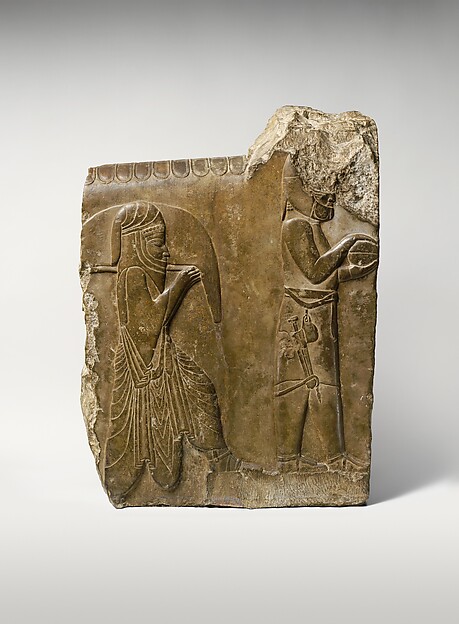
Central Question
What turns conquest, citizenship, roads, religion, and memory into a political order that can outlive one ruler?
Start With These Dates
- c. 550 BCEAchaemenid Empire Founded
Cyrus the Great built the Achaemenid Empire from a Persian power base, creating an imperial system that connected Iran, Mesopotamia, Anatolia, and Central Asia.
- 539 BCECyrus Conquers Babylon
Cyrus the Great captured Babylon, absorbing the Neo-Babylonian kingdom into the expanding Achaemenid Empire.
- 508 BCECleisthenes Reforms Athens
Cleisthenes reorganized Athenian political participation around new tribes and demes, helping create the institutional foundations of Athenian democracy.
- 490 BCEBattle of Marathon, 490 BCE: Summary, Sides, Winner, and Significance
The Battle of Marathon happened in 490 BCE on the plain of Marathon near Athens. An Athenian-led force, joined by Plataeans, defeated a Persian expedition sent after the Ionian Revolt and Athenian involvement in it. The battle did not end Persian power, but it gave Athens a powerful memory of citizen defense before later Persian War battles such as Thermopylae and Salamis.
- 221 BCEQin Unification of China
The Qin state defeated its rival kingdoms and declared a unified imperial order, creating institutions that later dynasties would adapt, contest, and remember.
- 476 CEFall of the Western Roman Empire, 476 AD: What Happened Next
In 476 AD, Odoacer deposed Romulus Augustulus in Ravenna. That is why 476 is used for the fall of the Western Roman Empire: the western Roman imperial office ended in Italy, while eastern Roman rule continued from Constantinople. Read the event with a west-east map distinction, then compare it with 330, Justinian, Charlemagne, and 1453.
- 751 CEBattle of Talas
Tang and Abbasid forces fought near the Talas River as rival powers competed over Central Asian alliances, trade corridors, and frontier influence.
Sources Used Here
- The Metropolitan Museum of Art - The Achaemenid Persian Empire (550-330 B.C.)
Used to verify the imperial scale and geographic frame for the Persian part of the Ancient Empires route.
- The Metropolitan Museum of Art - Qin Dynasty
Used to verify Qin unification, early imperial China, and the comparative ancient-empires route.
- Encyclopaedia Britannica - Achaemenid Empire
Used to cross-check the Achaemenid chronology, founding frame, and imperial administration context.
- Encyclopaedia Britannica - Ancient Greek civilization, Sparta and Athens
Used to verify the city-state comparison frame for Athens, Sparta, and Greek political identity.
Start with a scene rather than a label: a Persian courier rides a royal road, an Athenian citizen hears a law debated, an Ashokan inscription is read aloud, a Qin clerk checks measures in a market, and a Roman provincial family pays taxes under a distant emperor. These moments explain why the hub exists: ancient power had to become visible to people far from the ruler.
The route is built around debates, not a smooth parade of civilizations. Historians argue over Persian flexibility, the exclusions inside Greek citizenship, how far Mauryan rule reached in practice, whether Qin severity made Han durability easier, and what 476 means if eastern Roman authority continued. The hub keeps those disagreements near the top so readers know the page is interpretation as well as orientation.
The hub has a clear scope limit. It is an Afro-Eurasian ancient-empires doorway, not a complete ancient-world encyclopedia. Nubia, Meroe, Nok cultures, Olmec and Maya cities, Andean worlds, Arabian polities, island Southeast Asia, and Pacific histories need separate routes and comparison pages rather than being squeezed into one generic ancient label.
Ancient Empires and City-States follows early states that turned conquest, citizenship, law, roads, religion, and memory into durable power. It does not treat Rome as the default center of antiquity. The route begins with Persian imperial formation, moves through Greek city-state politics, follows South Asian and East Asian state building, then returns to Rome and late antiquity as one part of a wider Afro-Eurasian system.
The first pattern is administration after victory. Cyrus and the Achaemenids show how conquest had to become satrapies, royal roads, tribute, cities, and stories of legitimate kingship. Qin and Han China raise a parallel question from the other side of Eurasia: what makes a unified state outlast the dynasty that first imposed it? Mauryan and Gupta South Asia add another layer, because power there must be read through court patronage, religious authority, regional diversity, and memory rather than through armies alone.
The second pattern is the tension between city-state freedom and imperial scale. Athens, Sparta, and the Greek-Persian wars make political identity visible at the scale of citizens, assemblies, leagues, hoplite armies, and public memory. Yet the Peloponnesian War also shows how city-states could exhaust themselves in alliance systems and strategic fear. Alexander and the Seleucids then transform that city-state world into a Hellenistic imperial geography that stretched across older Persian and Mesopotamian spaces.
The third pattern is connectivity. Zhang Qian's mission, Kushan rule, Central Asian routes, and the Battle of Talas belong in the same route because empires did not only fight at borders; they learned about distant peoples, carried goods and religious ideas, minted coins, founded cities, and made the map itself more knowable. This is why the page pairs battles with diplomatic missions and capitals. A battle can change a frontier, but a route can change what rulers imagine the frontier to be.
The fourth pattern is imperial afterlife. Rome's republic, empire, Christian turn, new capital at Constantinople, and western imperial collapse show that empires can survive as institutions, laws, churches, languages, memories, and arguments even after a specific office or dynasty ends. The fall of the Western Roman Empire is therefore not treated as a simple cliff edge. It is one late chapter in a longer route about how power changes containers while keeping older symbols alive.
Read this hub as a comparison engine. Ask the same questions on every stop: who claimed authority, what infrastructure made rule possible, who was excluded, what geography constrained the ruler, what source or inscription preserved the story, and what later society reused the memory. The point is not to memorize a pile of ancient dates. The point is to see why empire was never just expansion; it was a repeated experiment in making distance, difference, and obedience look governable.
A practical first path runs from Persia for administrative scale, to Greek city-states for political belonging, to Maurya for moral communication, to Han for durable bureaucracy, to Rome for institutional afterlife, and finally to 476 for the problem of endings.
Picture the ancient world through work before rulers: a Persian messenger changing horses on a royal road, an Athenian citizen arguing in an assembly, an Ashokan inscription being read aloud, a Qin clerk checking measures in a market, a Han envoy hearing reports from Central Asia, and a Roman taxpayer dealing with an official far from the capital. Those scenes show the shared problem: power had to travel across distance and still feel believable.
Scope matters from the start. This is a selective route through ancient empires and city-states, not a complete global survey of antiquity. Nubia, Meroe, Nok cultures, Maya and Olmec worlds, Andean states, Arabian polities, island Southeast Asia, and Pacific histories need their own routes and comparison pages rather than being squeezed into one label.
The first map is deliberately Afro-Eurasian. Achaemenid Persia gives an early example of multi-regional rule through roads, satrapies, tribute, royal language, and local accommodation. Greek city-states show a smaller scale where citizenship, exclusion, war, and public ritual made politics intensely local. South Asian, East Asian, Central Asian, and Roman cases then offer different answers to distance, legitimacy, and memory.
Non-Mediterranean examples carry as much weight as Greece and Rome. An Ashokan edict had to make royal remorse legible to readers far from court. A Qin market inspector could make unification visible through measures and punishments. A Han envoy returning from Central Asia turned frontier intelligence into court policy and later Silk Road memory.
The costs of ancient power belong in the same frame as monuments and law. Subject farmers paid grain and labor; enslaved people built households, estates, mines, and cities; women shaped courts, households, ritual, and succession even when formal offices excluded them; soldiers and coerced workers carried the physical burden of roads, walls, campaigns, and frontier garrisons.
Political comparison works only when no system becomes the default. Persian kingship projected hierarchy across many regions. Greek poleis made citizen belonging visible through institutions and public ritual. Mauryan and Gupta power connected court authority to regional geography and religious patronage. Qin and Han China turned standardization, commanderies, court learning, and dynastic legitimacy into an imperial model. Rome transformed city-based republican institutions into Mediterranean empire and later Christian imperial memory.
Economic history gives the page weight. Empires needed roads, grain, taxes, labor, tribute, ports, mines, coins, and administrative records. City-states needed landholding, trade, tribute, slavery, and military service. Central Asian routes depended on merchants, envoys, oasis communities, horses, coins, and religious networks. A page that only names rulers misses the material systems that made ancient power durable or fragile.
Religion and culture are not side topics here. Persian royal ideology, Babylonian and Egyptian local traditions, Greek civic cults, Mauryan dhamma, Buddhist patronage, Han ritual learning, Gupta court culture, Roman public religion, Christianity, Nicaea, Constantinople, and later Islamic-era Central Asian encounters all belong to the route because sacred authority, ritual, and memory helped turn rule into legitimacy. Ancient power rarely separated administration from moral, religious, or ceremonial language.
Geography is the organizing discipline. The map pushes readers beyond the Mediterranean. Anatolia, Mesopotamia, Egypt, Iran, the Indus frontier, the Ganges plain, Pataliputra, Chang'an, Central Asia, the Hexi Corridor, Bactria, the Aegean, Rome, Constantinople, Ravenna, and Talas all matter. These places reveal why mountains, rivers, seas, roads, frontiers, and corridors shaped what rulers could know, tax, defend, or imagine. Geography turns chronology into explanation.
Sources stay close to the comparative claims. The Met's Achaemenid and Qin essays anchor imperial scale, material culture, and administration; Britannica checks Achaemenid chronology and Greek civic comparison; event pages add inscriptions, coins, legal slips, archaeology, court records, religious texts, later histories, and material remains. These sources are uneven. They often preserve rulers, elites, temples, scribes, battles, and monumental claims better than ordinary voices.
The social layer keeps the route humane. Farmers paid taxes and supplied grain; soldiers guarded frontiers and carried disease and ideas; enslaved people and laborers built wealth and infrastructure; merchants connected regions; monks and priests carried texts and patronage; women shaped households, courts, rituals, and memory even when formal office excluded them; subject communities negotiated, resisted, or adapted. The hub never lets the size of empire erase the people who lived inside it.
The debate layer prevents a tourist-brochure version of antiquity. Did empires integrate regions or exploit them? Did city-state freedom depend on exclusion? Was 476 a fall, a symbol, or a transformation? Was Ashoka a moral ruler, an imperial communicator, or both? Did the Silk Road connect worlds peacefully or through risk, tribute, and military pressure? These questions give the page intellectual friction and make it more useful for students and curious readers.
The comparison layer is the main reason to keep reading. Achaemenid Persia and Han China both solved distance through administration, but their languages of legitimacy differed. Greek city-states and Rome both began with city politics, but one remained fragmented while the other became imperial. Maurya and Rome both connect conquest to memory, but their religious and geographic worlds differ sharply. Central Asia shows that routes could be as important as capitals. The hub teaches comparison without ranking.
The before-and-after structure connects ancient and medieval worlds. Before these empires, older Near Eastern, Egyptian, South Asian, Chinese, and Mediterranean traditions had already built languages of kingship, law, ritual, and city life. During the cluster, those traditions were reorganized at larger scales. After the cluster, successor kingdoms, Byzantine institutions, Buddhist networks, Islamic expansion, legal memory, and later political myths reused ancient forms. Ancient history therefore remains active after the date range ends.
The practical path stays simple. Beginners can start with Persia, Greek city-states, Qin, Han, Maurya, Rome, and 476. Students can compare causes, institutions, and consequences across the required samples. Deep readers can follow source types: inscriptions, royal ideology, Greek histories, Chinese court records, Buddhist patronage, Roman law, and archaeological remains. The point is not to dump every ancient page into one list; it is to make each next step answer a sharper question.
The first screen also answers why this page is worth staying with. The familiar ancient world often arrives as disconnected topics: Rome, Greece, China, Persia, India, the Silk Road. This hub argues that those topics become more interesting together. They are not identical, but they ask recurring questions about authority, distance, belief, material resources, affected groups, and memory. That is what makes the cluster expandable without becoming random.
The entry point is intentionally simple: start with a familiar name, then follow the problem it reveals. Rome leads to law and afterlife; Han leads to bureaucracy and frontier knowledge; Persia leads to roads and negotiated diversity; Maurya leads to inscription, conquest, and moral memory; Greek city-states lead to citizenship, exclusion, and rivalry. Each door opens into the same larger question about how people made power work across distance.
A final layer is humility about coverage. This guide does not pretend to cover all ancient history. It compares regions, connects pages through geography and causation, keeps evidence visible, and sends narrower questions to the page that can answer them in depth. The same discipline can later carry Islamic history, Africa, the Americas, Oceania, science, trade, disease, rights, and modern global history without turning the atlas into a random list.
The hierarchy also explains why some search questions share a canonical home. Roman Empire summary belongs to the Roman page, Roman chronology belongs to the Roman timeline, causes of collapse belong to the fall page and the empire-fall explainer, and 476 belongs to the year page. That structure helps readers understand which page answers which question.
The final reading promise is continuity. When readers finish here, the next move is clear: into a civilization page for summary, into a timeline for sequence, into an event page for causation, into a person page for agency, into a year page for anchoring, or into an explainer for comparison. The next click should feel earned.
That continuity also makes the material easier to follow. Readers may arrive through Rome, Han, Persia, Greece, Maurya, Qin, Ashoka, Caesar, 476, or the Silk Road. The page shows that these are not isolated answers. They are connected entrances into one larger ancient-world question, with sources.
Compare satrapies, commanderies, roads, capitals, taxation, and law. Winning territory is the opening move; governing it is the harder historical problem.
Use Athens, Sparta, Marathon, Thermopylae, and the Peloponnesian War to ask why smaller communities could create strong political identities and still remain vulnerable to larger systems.
Follow Zhang Qian, the Kushans, the Silk Road, and Central Asia to see how diplomacy, trade, and religious movement changed what empires knew about one another.
Watch how Rome, Persia, Han China, Mauryan India, and Constantinople became names later societies could reuse when they wanted legitimacy, warning, or comparison.
Read past rulers alone. Soldiers, subject peoples, merchants, monks, city residents, farmers, and frontier communities carried the costs and opportunities of empire.
Ask whether each page is solving a city, kingdom, empire, route, or memory problem. The answer changes how causation works.
Notice whether the page relies on inscriptions, archaeology, court records, later histories, religious texts, or material culture.
Use the map to see rivers, capitals, roads, ports, frontiers, corridors, and distances that a date list cannot explain.
Keep soldiers, farmers, enslaved people, scribes, merchants, monks, women, subject communities, and local elites in view.
Choose a Reading Path
Start With Achaemenid Persia
Begin with the Achaemenid Empire and Cyrus in Babylon when you want to understand how older Near Eastern kingship became a multi-region imperial language.
Start with c. 550 BCE: Achaemenid Empire FoundedCompare Qin and Han
Open Qin Unification and Han Dynasty Founded together to see how a short dynasty and a long dynasty could both shape Chinese political memory.
Start with 539 BCE: Cyrus Conquers BabylonUse Rome as a Late Route
Move from Cannae to Caesar, Augustus, Constantine, Constantinople, and 476 when you want the Roman arc without pretending it is the whole ancient world.
Start with 508 BCE: Cleisthenes Reforms AthensFollow the Trade Lens
Use Zhang Qian, Kushan power, and Talas to connect empire with routes, diplomacy, religious movement, and Central Asian geography.
Start with 490 BCE: Battle of Marathon, 490 BCE: Summary, Sides, Winner, and SignificanceBeginner Route
Start with Achaemenid Persia, Greek City-States, Maurya Empire, Han Dynasty, Roman Empire, and 476 in history.
Start with 221 BCE: Qin Unification of ChinaStudent Route
Compare causes and effects across Qin Unification, Fall of the Western Roman Empire, Julius Caesar, and Why did empires fall?
Start with 476 CE: Fall of the Western Roman Empire, 476 AD: What Happened NextMap Route
Move from Persia to the Aegean, Pataliputra, Chang'an, Central Asia, Rome, Constantinople, and Talas.
Start with 751 CE: Battle of TalasEvidence Route
Read the source lists as a sequence: inscriptions, tablets, classical histories, court records, museums, and encyclopedic synthesis.
How the Story Builds
The route opens with Achaemenid state formation, Babylon, Cleisthenes, Marathon, Thermopylae, and the Peloponnesian War. These pages show empire and city-state politics developing side by side.
Gaugamela, the Mauryan Empire, the Seleucids, Ashoka, and the Gupta rise show how conquest, patronage, religion, and court culture created different versions of large-scale rule.
Qin, Han, Zhang Qian, Kushan power, and Talas show how East Asia and Central Asia belong inside the same ancient atlas, not as side notes to Mediterranean history.
Cannae, Caesar, Augustus, Milan, Nicaea, Constantinople, 476, and Justinian's plague show Rome changing from republic to empire to Christian imperial memory and successor worlds.
After each stage, ask whether the key change came from battlefield success, administrative design, religious authority, trade routes, or memory. The answer shifts by region.
Achaemenid Persia shows how royal ideology, satrapies, tribute, and roads made diversity governable without erasing local identities.
Greek city-states show political belonging at smaller scale, where participation, exclusion, rivalry, and memory became intense.
Maurya, Qin, Han, Kushan, and Gupta pages compare court power, moral authority, frontier routes, bureaucracy, and patronage.
Rome shows a city becoming a Mediterranean empire, then a Christian imperial memory whose afterlife outlasted western officeholding.
476, Justinian's plague, Constantinople, and Talas show ancient structures breaking, adapting, and feeding later worlds.
- Which ancient empire in this route depended most on roads, and which depended most on cities, courts, or religious authority?
- Why did Qin institutions outlive Qin rule, while some Hellenistic kingdoms depended more visibly on dynastic military power?
- How does the meaning of 476 change when it is read after Persia, Han China, Mauryan India, and Central Asian routes instead of only after Roman events?
- What does the map reveal about distance, frontier pressure, and communication that a simple date list hides?
- Where do ordinary people appear in this route: as subjects, soldiers, taxpayers, merchants, converts, migrants, or political participants?
- Which ancient system in this route made distance governable most effectively, and what did that system cost?
- Where do sources make ordinary people visible, and where do they leave the reader dependent on elite voices?
- How does the route change when Central Asia and South Asia are treated as central rather than peripheral?
- Which ancient memories were later reused most powerfully: Rome, Greece, Persia, Han, Ashoka, or the Silk Road?
Interactive Timeline
Follow Ancient Empires and City-States by sequence
Achaemenid Empire Founded
Cyrus the Great built the Achaemenid Empire from a Persian power base, creating an imperial system that connected Iran, Mesopotamia, Anatolia, and Central Asia.
Read the full event pageMap Layer
Ancient Empires and City-States geography
Gold pins mark the approximate locations of published event pages. This is a schematic locator map, not a historical border map.
Coordinates are approximate and are used to help readers orient themselves before opening a full event page.
Route Events
Events in This Topic
Achaemenid Empire Founded
Cyrus the Great built the Achaemenid Empire from a Persian power base, creating an imperial system that connected Iran, Mesopotamia, Anatolia, and Central Asia.
Cyrus Conquers Babylon
Cyrus the Great captured Babylon, absorbing the Neo-Babylonian kingdom into the expanding Achaemenid Empire.
Cleisthenes Reforms Athens
Cleisthenes reorganized Athenian political participation around new tribes and demes, helping create the institutional foundations of Athenian democracy.
Battle of Marathon, 490 BCE: Summary, Sides, Winner, and Significance
The Battle of Marathon happened in 490 BCE on the plain of Marathon near Athens. An Athenian-led force, joined by Plataeans, defeated a Persian expedition sent after the Ionian Revolt and Athenian involvement in it. The battle did not end Persian power, but it gave Athens a powerful memory of citizen defense before later Persian War battles such as Thermopylae and Salamis.
Battle of Thermopylae
A small Greek force led by Sparta delayed the Persian army at Thermopylae during the second Persian invasion of Greece.
Peloponnesian War Begins
Athens and Sparta entered a long war that drew in allied city-states and exposed the fragility of Greek interstate order.
Battle of Gaugamela
Alexander the Great defeated Darius III at Gaugamela, breaking Persian imperial power and opening the way to Macedonian control over the empire.
Mauryan Empire Founded
Chandragupta Maurya founded the Mauryan Empire, creating one of South Asia's largest early imperial states after the decline of older kingdoms.
Seleucid Empire Founded
Seleucus I Nicator established the Seleucid Empire from part of Alexander the Great's former realm, linking Greek-Macedonian rule with western Asian political geography.
First Punic War Begins
Rome and Carthage entered the First Punic War over influence in Sicily, beginning a series of conflicts for western Mediterranean power.
Ashoka Turns Toward Buddhism
After the Kalinga War, Ashoka promoted Buddhist ethics and imperial moral rule through inscriptions and public policy.
Qin Unification of China
The Qin state defeated its rival kingdoms and declared a unified imperial order, creating institutions that later dynasties would adapt, contest, and remember.
Battle of Cannae
Hannibal's Carthaginian army destroyed a much larger Roman force at Cannae during the Second Punic War.
Han Dynasty Founded
Liu Bang founded the Han dynasty after the fall of Qin rule, creating a long-lasting imperial order that balanced central authority with political adaptation.
Zhang Qian's Western Mission
The Han court sent Zhang Qian westward to seek alliances and gather knowledge about Central Asian peoples and paths.
Assassination of Julius Caesar
A group of senators killed Julius Caesar during a meeting in Rome; their motives mixed republican language, elite fear, personal rivalry, and later interpretations after years of civil war and personal rule.
Founding of the Roman Empire
Octavian accepted the title Augustus and reorganized Roman power around a new imperial settlement that preserved republican language while concentrating authority.
Kushan Empire Rises
The Kushan ruling line emerged from Yuezhi groups in Bactria and built a state linking Central Asia, northern India, and long-distance trade paths.
Gupta Empire Rises
The Gupta dynasty rose in northern India, building a durable imperial order from the Ganges heartland.
Constantinople Founded
Constantine inaugurated Constantinople as a new imperial capital on the site of Byzantium, shifting Roman political gravity toward the eastern Mediterranean.
Fall of the Western Roman Empire, 476 AD: What Happened Next
In 476 AD, Odoacer deposed Romulus Augustulus in Ravenna. That is why 476 is used for the fall of the Western Roman Empire: the western Roman imperial office ended in Italy, while eastern Roman rule continued from Constantinople. Read the event with a west-east map distinction, then compare it with 330, Justinian, Charlemagne, and 1453.
Battle of Talas
Tang and Abbasid forces fought near the Talas River as rival powers competed over Central Asian alliances, trade corridors, and frontier influence.
References
Where to Check the Facts
- The Metropolitan Museum of Art - The Achaemenid Persian Empire (550-330 B.C.)Used to verify the imperial scale and geographic frame for the Persian part of the Ancient Empires path.
- The Metropolitan Museum of Art - Qin DynastyUsed to verify Qin unification, early imperial China, and the comparative ancient-empires path.
- Encyclopaedia Britannica - Achaemenid EmpireUsed to cross-check the Achaemenid chronology, founding frame, and imperial administration context.
- Encyclopaedia Britannica - Ancient Greek civilization, Sparta and AthensUsed to verify the city-state comparison frame for Athens, Sparta, and Greek political identity.