At a Glance
The shape of the event
- Date
- 1954
- Place
- Guatemala City
- Type
- Coup
A United States-backed coup overthrew Jacobo Arbenz after land reform and Cold War fears made Guatemala a target of intervention.
1954; place the event in Guatemala City before comparing causes or consequences.
The event shows how Cold War intervention shaped Latin American politics beyond formal war zones.
Jacobo Arbenz / Guatemalan opposition are the first names or groups to compare before widening the story.
The coup ended the reform government and helped open decades of instability and violence.
The coup ended the reform government and helped open decades of instability and violence.
The event shows how Cold War intervention shaped Latin American politics beyond formal war zones.
Follow this thread to see how a single coup connects to wider themes: how land reform met entrenched economic interests, how Cold War geopolitics reached into local disputes, and how memory and law later contested off...
Background
Guatemala after World War II was a country under pressure from multiple directions. Jacobo Arbenz rose as part of a wave of postwar reformism that sought to address deep land inequality through agrarian measures. These policies touched powerful economic interests and provoked a determined political opposition at home. At the same time, international tensions between the United States and its rivals cast any left-leaning reform in a global light: municipal decisions about land and labor became entangled with broad Cold War anxieties about influence in the Americas. Those converging pressures—domestic demands for change, organized resistance by sectors that stood to lose, and foreign actors watching regional alignment—created an environment in which political struggle could rapidly escalate into direct intervention.
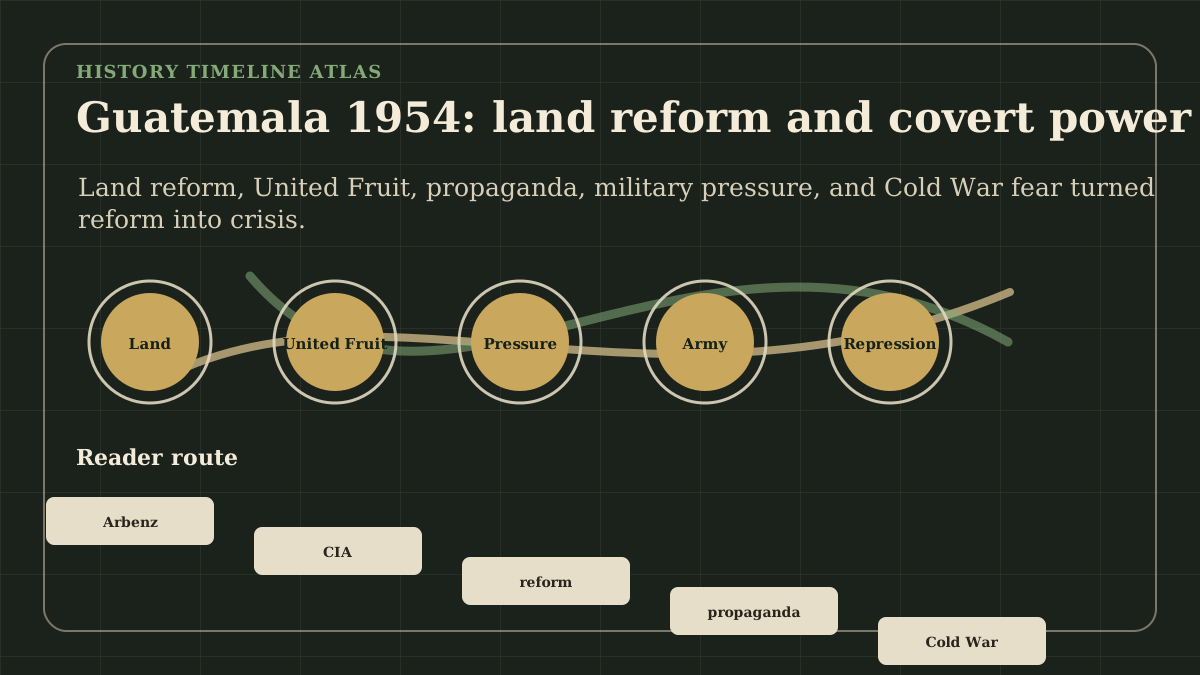
How historians weigh those pressures depends on which evidence they privilege: official records, diplomatic cables, oral memory, labor testimony, or local law and archaeology each tell part of the story. The Guatemalan coup is clearest when land is put at the center. Arbenz's reform threatened large estates and the political power built around them, while the United Fruit Company gave the conflict a transnational business dimension. Cold War language mattered, but it did not erase local questions about land, labor, Indigenous communities, military loyalty, and who could define national development. Washington's view of the crisis turned reform into a security problem. That framing made covert action appear cleaner than it was.
Propaganda, diplomatic pressure, regional allies, psychological warfare, and a small rebel force worked because the Guatemalan army, elite opposition, and fears of isolation created pressure inside the state. The coup was foreign-backed, but it also depended on domestic fractures.
The Turning Point
The decisive change in 1954 came when political conflict moved from contentious policymaking to organized removal of a sitting government. Jacobo Arbenz’s land reform had made him a target of the Guatemalan opposition, and that domestic resistance found reinforcement through foreign backing. Actors on both sides made concrete choices: opponents consolidated forces that could challenge state authority; external backers chose to support efforts to unseat the reform government rather than mediate a domestic settlement. Those choices translated into a coup that toppled Arbenz and dissolved the immediate possibility of the reforms he championed.
The event was not a single isolated act but the result of coordinated political and military decisions—inside Guatemala and beyond—that determined which institutions would survive and which programs would be undone. The turning point was the conversion of land reform into a Cold War emergency. Once agrarian policy was framed as communist penetration, diplomatic pressure, company lobbying, intelligence planning, and military hesitation reinforced one another. Another turning point was psychological. The operation did not need a large conventional army to succeed because propaganda, uncertainty, elite fear, and the perception of U. S. backing changed calculations inside Guatemala's military and political institutions.
Consequences
The most immediate consequence was the end of the reform government Arbenz led. Policies intended to redistribute land and alter entrenched economic relations were halted, and the political space for similar reforms narrowed. Over the longer term, the coup helped open decades of instability and violence in Guatemala: political disputes that once played out through legislation and party politics increasingly found expression through repression, counterinsurgency, and cycles of unrest. The episode also became an emblem of a broader pattern in the Cold War era—how interventions outside formal battlefields reshaped politics across Latin America.
Finally, the event left a contested legacy: competing records—official archives, survivors’ memories, labor histories, legal challenges, and community testimonies—offer different accounts of what happened and why, so that public memory of 1954 continues to be debated and reassembled. The overthrow of Arbenz did not simply replace one leader. It narrowed political possibility and helped open a long cycle of repression, civil conflict, anti-communist state violence, and contested memory. For many Guatemalans, the event belongs less to a diplomatic timeline than to family histories of fear, exile, organizing, and loss. The best next route moves to Chile, Cuba, Vietnam, and the Cold War timeline because Guatemala shows a pattern: local reform movements were often interpreted through superpower rivalry.
That does not mean every local actor was a puppet. It means global rivalry changed the cost of domestic politics and made outside intervention easier to justify.
Interpretation Notes
Interpretations of Guatemalan Coup depend on whose evidence is centered: rulers and official records, affected communities, oral memory, archaeology, law, diplomacy, labor, and later public memory do not always tell the same story.
Why Keep Reading
Follow this thread to see how a single coup connects to wider themes: how land reform met entrenched economic interests, how Cold War geopolitics reached into local disputes, and how memory and law later contested official narratives. Tracing what came before and after 1954 reveals not just a sequence of political moves but shifting lives, legal battles, and cultural reckonings. If you want to understand how intervention reshaped a nation—and why different sources tell different stories—explore related events and timelines that track policy, protest, and memory across the following decades. Read Guatemala beside the Cuban Revolution, Bay of Pigs, Chilean coup, Vietnam War, and decolonization pages.
That route keeps the Cold War grounded in land, labor, companies, local elites, Indigenous communities, and the human cost of intervention.
Reading Path
Follow the story without losing the thread
Before This
- Battle of Dien Bien Phu1954 CE
- Korean ArmisticeJuly 27, 1953
- ANZUS Treaty Signed1951
After This
- Warsaw Pact FoundedMay 1955
- Suez Crisis1956 CE
- Hungarian RevolutionOctober-November 1956
Same Period
Wider Timeline
Mind Map
How to think about Guatemalan Coup
Land reform
Arbenz’s policies aimed to redistribute unused estates, provoking political opposition among landholders
Map Layer
Where this event sits geographically
Gold pins mark the approximate locations of published event pages. This is a schematic locator map, not a historical border map.
Coordinates are approximate and are used to help readers orient themselves before opening a full event page.
References
Where to Check the Facts
- Encyclopaedia Britannica: Mexican RevolutionReference for the Mexican Revolution, social conflict, constitutionalism, and revolutionary politics.
- Encyclopaedia Britannica: Cuban RevolutionReference for the Cuban Revolution, Batista's overthrow, revolutionary government, and Cold War significance.
- Encyclopaedia Britannica: Fidel CastroBiographical reference for Castro's revolutionary leadership, Cuban government, and Cold War role.
- U.S. National Archives: The Cold WarArchive reference hub for Cold War records, federal documentation, and research guidance.
- Office of the Historian: The Early Cold War, 1945-1952Official diplomatic history reference for early Cold War foreign-policy context.