At a Glance
The shape of the event
- Date
- 1956 CE
- Place
- Suez Canal
- Type
- International crisis
The Suez Crisis followed Egypt's nationalization of the canal and a British, French, and Israeli attack that exposed the limits of old imperial power.
1956 CE; place the event in Suez Canal before comparing causes or consequences.
Suez links decolonization, oil routes, Arab nationalism, Cold War diplomacy, and the decline of European imperial autonomy.
Gamal Abdel Nasser / Anthony Eden / Dwight D. Eisenhower are the first names or groups to compare before widening the story.
International pressure forced withdrawal, and Nasser's prestige rose while Britain and France faced a symbolic post-imperial setback.
International pressure forced withdrawal, and Nasser's prestige rose while Britain and France faced a symbolic post-imperial setback.
Suez links decolonization, oil routes, Arab nationalism, Cold War diplomacy, and the decline of European imperial autonomy.
Suez connects to multiple threads of twentieth-century history: the end of European imperial dominance, the rise of nationalist leaders like Nasser, the geopolitics of oil and shipping, and the way Cold War rivalry co...
Background
By the mid-twentieth century the Suez Canal was more than a narrow strip of water; it was a vital artery for commerce and for routes to oil fields that powered modern industry. Control of that artery sat uneasily with Britain and France's fading imperial roles, while new national movements across Africa and the Middle East demanded sovereignty and economic independence. Gamal Abdel Nasser's rise in Egypt embodied that drive: he spoke for Arab nationalism and for control over national resources. At the same time, the Cold War cast every regional crisis into a larger contest between superpowers, altering how London, Paris and Washington weighed military action.
Financial pressures, changing public opinion at home, and the moral argument against direct colonial control made a forcible reaction more complicated than in an earlier age. The canal's legal status, transit rights and ownership had long been debated; Nasser's choice to nationalize a company that had been dominated by foreign shareholders forced those debates into immediate crisis. Local communities along the canal lived with the immediate consequences of trade disruptions and military movement; politicians in capitals weighed prestige and practical interests. Diplomatic channels — including appeals to international opinion and economic leverage — already mattered more than a purely military solution. Those shifting levers are essential to explain why a confrontation unfolded the way it did.
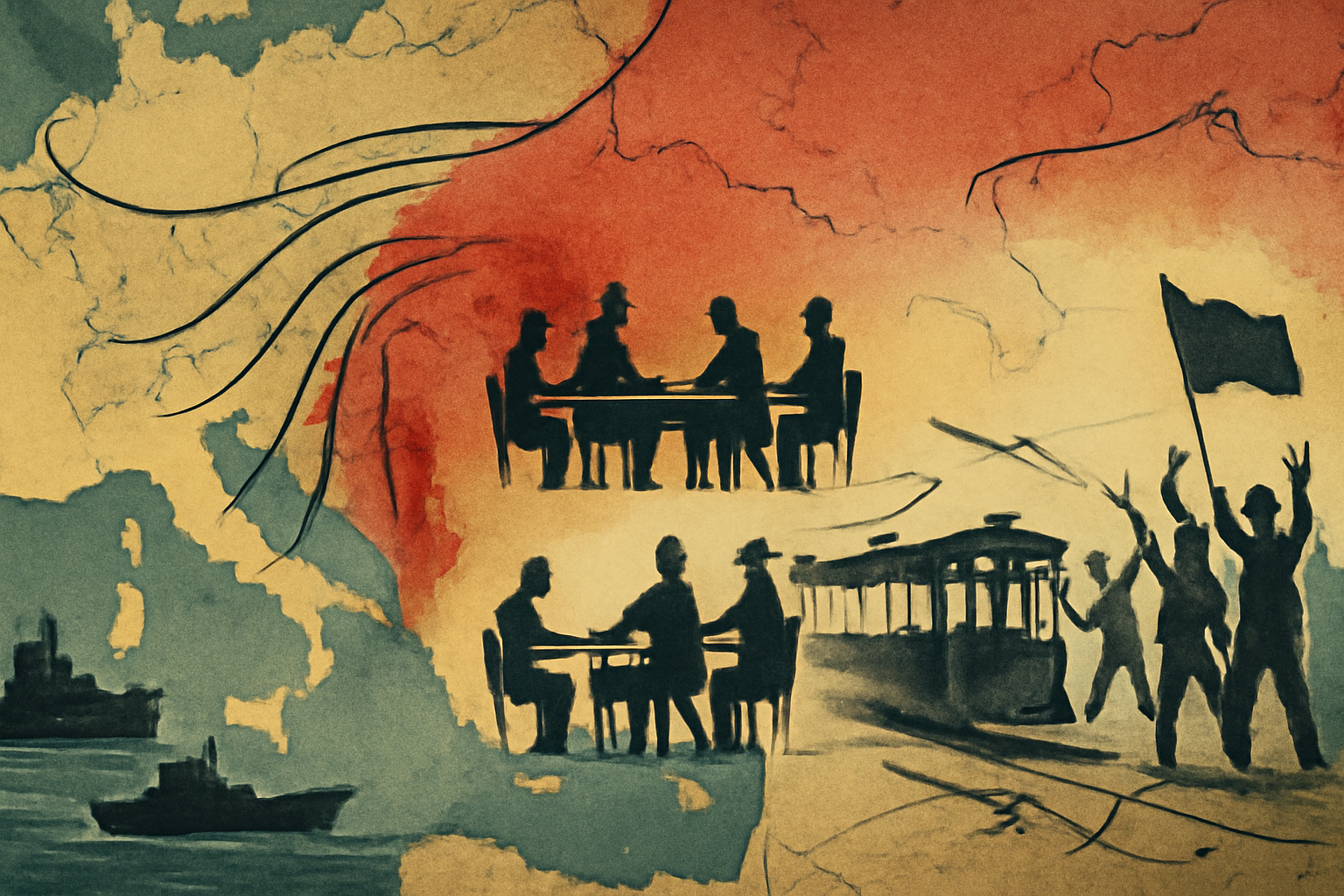
The Suez Crisis is clearest when nationalization, imperial pride, Cold War pressure, and Arab nationalism stay in one frame. Nasser's move against the canal company challenged British and French assumptions about control, while Israel had its own security and regional calculations. The crisis exposed how postwar power had changed. Britain and France could still plan military action, but they faced U. S. financial pressure, Soviet threats, UN debate, Egyptian resistance, and global criticism of colonial-style intervention.
The Turning Point
Events accelerated when Gamal Abdel Nasser announced nationalization of the Suez Canal company, turning a legal and economic dispute into a direct assertion of Egyptian sovereignty. That decision confronted Britain and France with an urgent dilemma: accept diminished control over a strategic asset or try to recover it by force. Prime Minister Anthony Eden chose military collaboration with France and Israel to seize the initiative, framing action as necessary to reopen the waterway and to check what he saw as a dangerous precedent. Israel joined with its own strategic aims against Egypt. The choice to use military force made the crisis instantaneously international. Yet the crisis did not play out only on the ground. President Dwight D.
Eisenhower in Washington reacted not by aligning with London and Paris but by opposing their operation; American diplomatic pressure, expressed through public and private channels, reshaped the political arithmetic. Faced with unified external pressure and the risks of broader diplomatic fallout during the Cold War, Britain, France and Israel found the military option unsustainable. The immediate military moves thus created a political rupture: they exposed the gap between imperial capacity for action and the international constraints of the postwar era.
Consequences
In the days and months after the fighting, international pressure compelled withdrawal of invading forces; the military phase closed but the political consequences widened. Gamal Abdel Nasser emerged strengthened: his nationalization and resistance enhanced his standing across the Arab world and made him a symbol of anti-colonial assertion. Britain and France suffered a public and diplomatic setback that many contemporaries and later historians read as a symbolic marker of post-imperial decline. The crisis showed that European powers could no longer act unilaterally in strategic regions without reckoning with superpower opinion and global institutions. Longer-term effects radiated outward: the Suez episode tightened connections between decolonization, the security of oil routes, the growth of Arab nationalism, and Cold War diplomacy.
It also left unresolved local scars — communities around the canal bore dislocation and economic disruption, and the memory of the crisis would be invoked differently in Cairo, London and Paris. Finally, the event's legacy cautions historians: seeing Suez only as a single decisive day flattens the story. The withdrawal was the end of one phase; the causes, the people affected, and the memories that followed continued to shape regional politics for years. The consequences included Nasser's enhanced prestige, humiliation for Britain and France, a stronger signal of European imperial decline, and a more visible U. S. -Soviet role in Middle Eastern crises. Suez matters because old power failed in public.
Interpretation Notes
Suez Crisis is easy to flatten into one dramatic date. A stronger reading separates immediate action from deeper causes, affected communities, and the memory later states or movements built around the event.
Why Keep Reading
Suez connects to multiple threads of twentieth-century history: the end of European imperial dominance, the rise of nationalist leaders like Nasser, the geopolitics of oil and shipping, and the way Cold War rivalry constrained regional actors. Follow the timelines of decolonization in Africa and the Middle East, trace diplomatic exchanges between London, Paris and Washington, and watch how the canal featured in successive crises of the region. If you want to understand how single decisions interact with structural change, follow the aftermath of 1956 through political biographies, maps of trade routes, and accounts from communities along the canal. Each perspective adds a different answer to why Suez mattered — and why its consequences still echo.
Continue to the Suez Canal opening, 1956 in history, decolonization, Arab nationalism, and Cold War Middle East routes.
Reading Path
Follow the story without losing the thread
Before This
- Hungarian RevolutionOctober-November 1956
- Warsaw Pact FoundedMay 1955
- Bandung ConferenceApril 1955
After This
- Sputnik 1 LaunchedOctober 4, 1957
- Ghana IndependenceMarch 6, 1957
- Cuban Revolution Triumphs1959
Same Period
- Cuban Missile CrisisOctober 1962
- Fall of the Berlin WallNovember 9, 1989
- Dissolution of the Soviet UnionDecember 1991
Wider Timeline
Mind Map
How to think about Suez Crisis
Nationalization
Nasser's 1956 decision to nationalize the Suez Canal company forced a confrontation over sovereignty and economic control.
Map Layer
Where this event sits geographically
Gold pins mark the approximate locations of published event pages. This is a schematic locator map, not a historical border map.
Coordinates are approximate and are used to help readers orient themselves before opening a full event page.
References
Where to Check the Facts
- Encyclopaedia Britannica: Suez CrisisReference for the crisis, nationalization, invasion, and diplomatic outcome.
- Encyclopaedia Britannica: Arab oil embargoReference for the 1973-1974 embargo and its energy, diplomatic, and economic consequences.
- U.S. National Archives: The Cold WarArchive reference hub for Cold War records, federal documentation, and research guidance.
- Office of the Historian: The Early Cold War, 1945-1952Official diplomatic history reference for early Cold War foreign-policy context.