Central Question
Which Cold War and post-Cold War structures still shape contemporary life, and where did globalization create new kinds of risk, connection, and memory?
Start With These Dates
- October 24, 1945United Nations Founded
The United Nations came into force after World War II as states tried to build a stronger framework for peace, security, and cooperation.
- December 10, 1948Universal Declaration of Human Rights
The United Nations General Assembly adopted the Universal Declaration of Human Rights after World War II and the Holocaust.
- October 1, 1949Founding of the People's Republic of China
Mao Zedong proclaimed the People's Republic of China in Beijing after Communist victory in the Chinese Civil War.
- July 20, 1969Apollo 11 Moon Landing
Apollo 11 landed humans on the Moon, fulfilling a U.S. Cold War space goal and creating a global symbol of technological ambition.
- November 9, 1989Fall of the Berlin Wall
East German authorities opened border crossings in Berlin after months of protest and pressure, allowing people to cross the wall freely.
- December 2010Arab Spring Begins
Protests in Tunisia spread into a wider regional wave against authoritarian rule, corruption, unemployment, and police abuse.
- March 11, 2020COVID-19 Pandemic Declared
The World Health Organization characterized COVID-19 as a pandemic after the virus spread across continents and strained public-health systems.
Sources Used Here
- United Nations: History of the United Nations
Reference for the institutional postwar frame and the UN as a contemporary-world anchor.
- Encyclopaedia Britannica: Globalization
Reference for globalization as an economic, cultural, technological, and political process.
Contemporary World is designed as a route, not a folder. It gathers events that answer related reader questions about power, belief, conflict, exchange, institutions, and memory. The strongest way to read the page is to move from the earliest events toward the later ones, watching how one kind of pressure changes form across different places.
The route currently runs from October 24, 1945 to March 11, 2020. That span lets readers compare immediate turning points with slower consequences: the founding of institutions, the spread of ideas, the shock of war or disease, and the way later societies reused earlier events as warnings, models, or symbols.
Start with United Nations Founded, Universal Declaration of Human Rights, Founding of the People's Republic of China, Apollo 11 Moon Landing, Tiananmen Square Protests and then follow the internal links into people, timelines, years, maps, and source lists. The route structure stays visible when each event explains why it belongs with the others and where the next useful page is.
Compare the events by scale. Some are concentrated moments, such as a battle, proclamation, trial, or publication. Others are long processes, such as a reform movement, pandemic, trade route, or diplomatic order. Reading both types together helps prevent the page from becoming a list of dates.
A useful route keeps uncertainty visible. Historical change rarely has one cause or one clean ending, so the reader can separate background pressure, immediate trigger, turning point, result, and later memory. That pattern is what makes the atlas expandable without making the reader start over each time.
This route is also a comparison tool. After reading one event, compare it with a later event on the same page and ask what changed in scale, language, geography, technology, authority, or public memory. The comparison is often more useful than the individual summary because it reveals the pattern the topic page is built to expose. When a claim feels too neat, open the full event page and check whether the evidence supports one cause, several causes, or a contested interpretation before moving on.
The Contemporary World hub begins after 1945 but refuses to treat the present as only a news feed. It asks how postwar institutions, Cold War rivalry, decolonization, rights language, nuclear anxiety, mass media, digital networks, terrorism, pandemics, and climate-era politics became the background conditions of ordinary life. The point is not to make every recent event equal. The point is to show the structures that keep shaping what readers recognize as modern.
The United Nations and the Universal Declaration of Human Rights create the first spine. They did not end war, empire, racism, poverty, or state violence, but they changed the language of legitimacy. Governments, activists, courts, journalists, and international organizations could now argue with a vocabulary of rights, development, sovereignty, security, and humanitarian responsibility. Contemporary history begins with that gap between ideals and enforcement.
The Cold War gives the hub its second spine. The founding of the People's Republic of China, Korea, Berlin, nuclear crises, Vietnam, Afghanistan, and the Soviet collapse show that ideology was never only European. Cold War politics moved through Asia, Africa, Latin America, the Middle East, and the global institutions created after World War II. A contemporary route has to make proxy war, development aid, security alliances, and revolutionary politics visible together.
Globalization is the third spine, but the page treats it as uneven connection rather than a smooth opening of markets. Trade, finance, migration, container shipping, tourism, telecommunications, satellite systems, supply chains, and international law made distance feel different. At the same time, debt, labor exploitation, border policing, inequality, environmental damage, and cultural backlash made connection a source of conflict. The word globalization only becomes useful when its winners and costs are named.
Technology changes the route without replacing politics. Apollo 11, ARPANET, genome research, digital communication, surveillance, vaccines, nuclear power, and media networks all widened what states and publics could imagine. Yet technology did not act by itself. It moved through universities, militaries, corporations, laboratories, public funding, patents, platforms, and protest. This hub therefore asks who controls infrastructure and who becomes visible or vulnerable inside it.
The post-Cold War moment is not a clean victory story. The fall of the Berlin Wall and the dissolution of the Soviet Union created real openings, but they also left arguments over nationalism, privatization, borders, NATO, Russian power, memory, and economic shock. The route asks readers to compare 1989 as liberation, transition, and unfinished settlement. That ambiguity keeps the page from sounding like a celebration written too early.
September 11 belongs in the hub because it reorganized security, surveillance, war, migration politics, Islamophobia, and public memory across borders. The event also shows why contemporary history needs multiple scales: individual trauma, city geography, intelligence systems, media spectacle, military response, international law, and long wars all became connected. A single day changed policy, but its consequences unfolded over decades.
The Arab Spring and COVID-19 pandemic show the contemporary world as networked and fragile. Protest videos, social media, authoritarian response, public health systems, border closures, vaccines, misinformation, supply chains, and mutual aid all belong to the same historical environment. These pages help readers see how information can mobilize, confuse, connect, and isolate at the same time.
Evidence for contemporary history is abundant but unstable. Speeches, treaties, datasets, photographs, television, social media, court records, public health reports, oral testimony, satellite images, and leaked documents can create the illusion of total visibility. The harder task is judgment. Which records are official, which are contested, which are propaganda, and which voices were never archived?
The hub keeps decolonization visible even when the event list enters through Cold War and globalization pages. New states had to build institutions inside a world of aid, debt, commodity dependence, security alliances, development plans, and inherited borders. Contemporary history is therefore not simply what happened after empires ended. It is also the history of how imperial afterlives survived in markets, languages, military bases, legal systems, and migration routes.
Climate belongs in the route even before the site has a full climate history cluster. Energy systems, industrial growth, oil politics, drought, storms, food prices, displacement, and international summits connect environmental history to contemporary power. The page can link climate change to empire, capitalism, science, migration, and public health rather than treating it as a separate recent topic.
A useful warning for readers is that the contemporary world produces instant explanations too quickly. Media cycles reward simple causes, but historical explanation asks for background structures: institutions, incentives, memory, geography, technology, and uneven power. This hub encourages slower reading of recent events without pretending neutrality means ignoring harm.
The contemporary route also needs a moral vocabulary that is precise. Words like democracy, authoritarianism, development, terrorism, human rights, sovereignty, and globalization are not neutral labels. They have histories and are used by states, activists, corporations, and international bodies for different purposes. The hub asks readers to notice who benefits when a word becomes common sense.
Migration is another missing layer that the hub prepares for. Refugees, guest workers, students, diaspora communities, asylum seekers, and undocumented migrants all reveal how borders and labor markets work in practice. Future pages on migration will connect wars, climate stress, inequality, education, remittances, and identity to the same contemporary atlas structure.
Finance gives the route another hidden infrastructure. The postwar order, debt crises, oil shocks, structural adjustment, development banks, trade agreements, sanctions, currency crises, and digital payment systems all changed what sovereignty meant in practice. A state may have a flag, a seat at the United Nations, and a constitution while still negotiating with creditors, commodity markets, security patrons, and supply-chain dependence.
Media history is just as important as diplomatic history. Radio, television, satellite news, mobile phones, social platforms, encrypted messaging, and algorithmic feeds changed how publics saw crisis and how states tried to control attention. The Arab Spring, September 11, COVID-19, and protest politics all show that visibility can mobilize action, spread rumor, create solidarity, and invite repression at the same time.
Everyday life gives the hub a scale readers recognize. Passports, airports, remittances, vaccines, school curricula, fuel prices, shipping delays, digital accounts, news alerts, police powers, and climate anxiety are not side effects of contemporary history. They are the places where large systems become personal. The route becomes more readable when it connects institutions to ordinary routines.
The environment links contemporary history to older routes. Industrial energy, imperial extraction, Cold War development, oil politics, urban growth, agriculture, public health, and climate science all lead into present risk. A drought, storm, heat wave, or pandemic is never only natural once infrastructure, inequality, and governance decide who is protected and who is exposed.
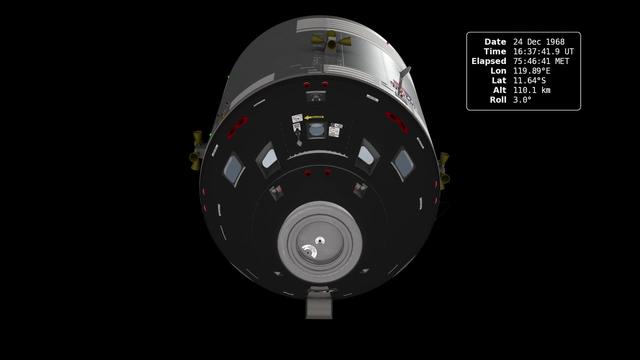
Visual material for this route works best when it shows planetary scale and system dependence. Earthrise, satellite imagery, protest photographs, public health charts, supply-chain maps, or institutional buildings can each carry a different meaning. The current planetary image is useful because it turns technology, environment, and shared vulnerability into one visible question rather than another generic modern skyline.
The strongest reading path is comparative. Put 1945 beside 1989, 2001, 2010, and 2020, then ask how each date changed trust in institutions. The answer moves from peacekeeping and rights to market transition, security state expansion, protest networks, public health capacity, and debates over expertise, citizenship, and evidence.
Decolonization needs more weight inside the contemporary route. Ghana, Algeria, India, Indonesia, Kenya, Vietnam, Congo, and many other cases show that independence was not one clean transfer of sovereignty. New governments faced borders drawn by empire, armies shaped by colonial rule, commodity dependence, ethnic and regional tensions, language politics, and Cold War pressure. Independence, development, and postcolonial constraint stay in the same frame.
Energy is another hidden backbone. Oil shocks, nuclear power, pipelines, coal dependence, renewable transitions, sanctions, resource nationalism, and climate negotiations shaped diplomacy and daily prices. A fuel crisis can change elections, war planning, household budgets, and trade balances at the same time. Contemporary history becomes more readable when energy is treated as infrastructure, not merely as an economic topic.
The global South is not just where crises happen. It is where many contemporary ideas, movements, and institutions were tested: nonalignment, liberation theology, development economics, debt politics, vaccine access, environmental justice, migration diplomacy, and new regional organizations. Adding this layer prevents the hub from becoming a North Atlantic story with occasional international examples.
Public health deserves a route beyond COVID-19. Smallpox eradication, HIV/AIDS activism, malaria campaigns, vaccine politics, pharmaceutical patents, hospital systems, nutrition, sanitation, and global surveillance all show how health became international governance. Disease history is not separate from rights or inequality. It reveals who receives protection, who is blamed, and who has the authority to define emergency.
Memory politics have become a contemporary force. Monuments, school textbooks, museum repatriation, genocide recognition, apology debates, archives, digital remembrance, and denial campaigns shape diplomacy and citizenship. The past is not safely behind the present. It is repeatedly reopened when communities argue over responsibility, repair, identity, and evidence.
The route also needs to distinguish crisis from structure. A recession, terrorist attack, protest wave, pandemic, or coup may dominate headlines, but structures decide what happens next: courts, welfare systems, police powers, media ownership, supply chains, public trust, and international alliances. This distinction helps readers move beyond event lists into historical explanation.
Cities are another way into the contemporary world. New York, Berlin, Beijing, Lagos, Cairo, Delhi, Seoul, Sao Paulo, Dubai, and many other urban centers concentrate migration, finance, protest, policing, inequality, culture, and infrastructure. A city can make global systems visible at street level through housing costs, transit, labor, pollution, media, surveillance, and public space.
Regional organizations also deserve more attention. The European Union, African Union, ASEAN, Arab League, OAS, Mercosur, and other bodies show states trying to manage trade, borders, security, development, and crisis without becoming one global government. Their successes and failures help readers see that contemporary order is not only national or United Nations-centered. It is layered, negotiated, and often fragile.
Youth politics adds a living scale: students, workers, online communities, and climate organizers often reveal institutional stress before formal leaders name it.
The contemporary route is strongest when it gives readers tools for reading the present carefully. Instead of asking whether one event explains everything, it asks which institutions were already in place, which networks carried the shock, which communities were exposed, and which memories shaped response. That method makes the site useful even as new events keep appearing.
The strongest next expansion is a set of contemporary subroutes: decolonization and postcolonial states, global energy, public health, migration and borders, digital platforms, climate politics, and memory conflicts. Those routes would let the hub become a map of systems readers live inside rather than a short chronology of famous recent shocks.
The reader payoff is perspective without pretending the story is finished. Contemporary history should not flatten into a list of crises. It should reveal the systems readers already live inside: institutions, rights claims, borders, networks, financial flows, disease environments, technologies, memories, planetary risks, and democratic accountability.
Read the events in order first; the page is built to reveal change over time.
Ask which pressures existed before the visible turning point and which actors had room to choose.
Follow what changed afterward in institutions, borders, law, belief, or everyday life.
Notice which events became symbols and why later generations kept returning to them.
Track the gap between postwar ideals and the power needed to enforce them.
Ask how finance, media, migration, supply chains, disease, and platforms make distant events feel local.
Read terrorism, war, surveillance, alliances, and border politics as connected rather than separate topics.
Treat recent events as historically meaningful while staying alert to contested evidence and living memory.
Follow debt, aid, oil, trade, sanctions, currency crisis, and development institutions as constraints on sovereignty.
Ask how television, phones, platforms, censorship, rumor, and archives change what becomes visible or believable.
Choose a Reading Path
Start With the Timeline
Use the related timeline first when you want a chronological route through the topic.
Start with October 24, 1945: United Nations FoundedOpen a Person Page
Use people pages when the topic is easier to understand through leadership, resistance, reform, or memory.
Start with December 10, 1948: Universal Declaration of Human RightsUse Year Pages
Use year pages when you need a fast answer to what changed in a specific year.
Start with October 1, 1949: Founding of the People's Republic of ChinaReturn to the Map
Use the map to keep geography visible while moving between events and regions.
Start with July 20, 1969: Apollo 11 Moon LandingPostwar Order
Begin with the UN and human rights when the question is how the world tried to prevent another global war.
Start with November 9, 1989: Fall of the Berlin WallCold War Afterlives
Use China, Berlin, Afghanistan, and the Soviet collapse to see how Cold War structures survived 1991.
Start with December 2010: Arab Spring BeginsNetworked Crisis
Move from ARPANET and globalization to September 11, the Arab Spring, and COVID-19.
Start with March 11, 2020: COVID-19 Pandemic DeclaredTechnology and Power
Follow space, internet, genome science, and public health as systems built by institutions and contested by publics.
Everyday Systems
Use passports, supply chains, remittances, vaccines, fuel prices, and digital platforms to see global structures in daily life.
Climate and Health
Read pandemics, energy, drought, storms, and public health as connected risks rather than isolated emergencies.
How the Story Builds
Begin with United Nations Founded. The opening event usually shows the pressure that made the route necessary: a crisis of authority, an expanding exchange system, a new technology, a contested idea, or a conflict that older institutions could no longer contain.
Fall of the Berlin Wall works as a checkpoint because it lets readers ask what had become irreversible, which actors still had choices, and how the route changed scale between the opening event and the later consequences.
The later edge of the route includes Human Genome Project Completed, Arab Spring Begins, and COVID-19 Pandemic Declared. These pages help readers see what survived beyond the first shock: institutions, borders, laws, memories, technologies, movements, or arguments that kept shaping later history.
The route is easier to remember through people and places. Watch figures such as Representatives of founding states, Eleanor Roosevelt, United Nations, Mao Zedong, Neil Armstrong, and Buzz Aldrin move through settings such as San Francisco and New York, Paris, Beijing, and Mare Tranquillitatis; that is where large structures become visible as choices, risks, costs, and memories.
The UN and rights language created a vocabulary that later movements and states could invoke, bend, or ignore.
China, Korea, Vietnam, Berlin, Afghanistan, and nuclear diplomacy made ideology global and local at the same time.
Trade, finance, telecommunications, migration, and digital networks changed the meaning of distance.
The Soviet collapse, market transitions, regional wars, and new security claims made victory narratives unstable.
Terrorism, pandemics, climate pressure, and misinformation show how connected systems can spread harm as well as knowledge.
Digital media, public records, protest footage, and state censorship make contemporary evidence abundant but contested.
- Which event in Contemporary World feels like the true point of no return, and why might another reader choose a different event?
- What changes if the route is read from the perspective of ordinary people rather than rulers, armies, inventors, reformers, or institutions?
- Which consequence was immediate, and which consequence only became clear decades later?
- Where does the map change the interpretation by showing distance, borders, routes, ports, capitals, or frontiers?
- Which postwar institutions changed behavior, and where did they mainly change language?
- Why did the Cold War keep shaping politics after the Soviet Union ended?
- When does globalization create opportunity, and when does it create exposure?
- How should contemporary pages handle evidence that is abundant but contested?
- Which recent events need more time before their long-term meaning can be judged?
- How do debt, aid, sanctions, oil, and supply chains change what sovereignty means?
- When does visibility create accountability, and when does it create rumor, surveillance, or repression?
Interactive Timeline
Follow Contemporary World by sequence
United Nations Founded
The United Nations came into force after World War II as states tried to build a stronger framework for peace, security, and cooperation.
Read the full event pageMap Layer
Contemporary World geography
Gold pins mark the approximate locations of published event pages. This is a schematic locator map, not a historical border map.
Coordinates are approximate and are used to help readers orient themselves before opening a full event page.
Route Events
Events in This Topic
United Nations Founded
The United Nations came into force after World War II as states tried to build a stronger framework for peace, security, and cooperation.
Universal Declaration of Human Rights
The United Nations General Assembly adopted the Universal Declaration of Human Rights after World War II and the Holocaust.
Founding of the People's Republic of China
Mao Zedong proclaimed the People's Republic of China in Beijing after Communist victory in the Chinese Civil War.
Apollo 11 Moon Landing
Apollo 11 landed humans on the Moon, fulfilling a U.S. Cold War space goal and creating a global symbol of technological ambition.
Tiananmen Square Protests
Pro-democracy demonstrations centered on Tiananmen Square called for political reform before the Chinese government used force to suppress the movement.
Fall of the Berlin Wall
East German authorities opened border crossings in Berlin after months of protest and pressure, allowing people to cross the wall freely.
Dissolution of the Soviet Union
The Soviet Union formally dissolved after political reform, economic strain, nationalist movements, and failed attempts to preserve central authority.
September 11 Attacks
Al-Qaeda hijackers attacked targets in the United States, destroying the World Trade Center towers and striking the Pentagon.
Human Genome Project Completed
The Human Genome Project completed a reference sequence of the human genome, creating a major resource for biology and medicine.
Arab Spring Begins
Protests in Tunisia spread into a wider regional wave against authoritarian rule, corruption, unemployment, and police abuse.
COVID-19 Pandemic Declared
The World Health Organization characterized COVID-19 as a pandemic after the virus spread across continents and strained public-health systems.
References
Where to Check the Facts
- United Nations: History of the United NationsReference for the institutional postwar frame and the UN as a contemporary-world anchor.
- Encyclopaedia Britannica: GlobalizationReference for globalization as an economic, cultural, technological, and political process.