At a Glance
The shape of the event
- Date
- April 30, 1975
- Place
- Saigon
- Type
- War End
North Vietnamese forces captured Saigon, ending the Vietnam War and marking the collapse of the U.S.-backed South Vietnamese state.
April 30, 1975; place the event in Saigon before comparing causes or consequences.
The event reshaped U.S. foreign policy debates and became a defining image of Cold War intervention's limits.
Ho Chi Minh / South Vietnamese government are the first names or groups to compare before widening the story.
Vietnam was reunified under communist rule after years of war.
Vietnam was reunified under communist rule after years of war.
The event reshaped U.S. foreign policy debates and became a defining image of Cold War intervention's limits.
If you want to understand how the Fall of Saigon fits into wider Cold War and decolonization histories, follow the preceding campaigns and the immediate months of reunification that reorganized Vietnam’s institutions...
Background
The Fall of Saigon occurred at the intersection of three large forces: a localized struggle for national independence, the broader Cold War rivalry, and the decolonization of Southeast Asia. Over decades, Vietnamese politics had been shaped by anti-colonial movements, the leadership and legacy of figures such as Ho Chi Minh, and the emergence of two rival Vietnamese states. The United States committed political and military support to the South Vietnamese government as part of its containment strategy, while North Vietnam pursued reunification through sustained military and political pressure. By the spring of 1975, those pressures—military campaigns, political fatigue at home and abroad, and the exhaustion of institutions tested by years of war—converged.
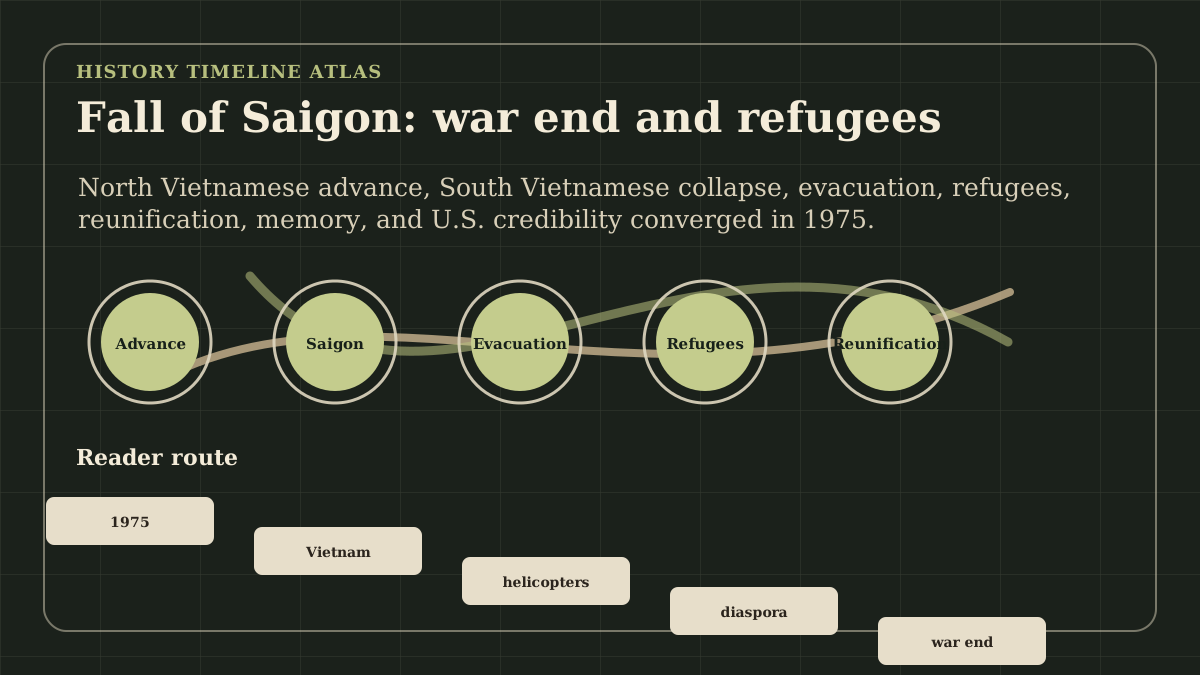
Scholars differ on whether the outcome should be read primarily as the product of deliberate decisions by leaders on the ground, structural shifts in international politics, or the cumulative effects of long-term social change within Vietnam. This account keeps those disputes visible: it describes the immediate forces at work without claiming a single, definitive explanation. The Fall of Saigon is clearest when it is read as a state collapse, a military ending, and a human evacuation at the same time. North Vietnamese forces advanced after years of war, while the South Vietnamese state faced military pressure, political exhaustion, shrinking U. S. support, and collapsing confidence.
The event was not only the last scene of an American war; it was a Vietnamese turning point. The images of helicopters and embassy rooftops are powerful, but they can narrow the story. Saigon contained soldiers, officials, families, journalists, civilians trying to decide whether to flee, people who could not leave, and people who welcomed the war's end. A fuller page needs both evacuation panic and the reality that Vietnamese experiences were not uniform. The Cold War frame matters, but decolonization matters too. Vietnam's wars moved through Japanese occupation, French colonialism, partition, U. S. intervention, revolutionary nationalism, communist organization, and regional conflict. Saigon's fall connected all of those histories to reunification under communist rule.
The Turning Point
The decisive change was not a single isolated order but a sequence of actions and failures that made the South Vietnamese government unsustainable in Saigon. North Vietnamese forces launched a final offensive that seized territory and eroded the capacity of the rival state. As the capital fell, the symbolic and administrative structures of the South Vietnamese government collapsed: ministries, military units and political networks that had sustained the state no longer held. For North Vietnam, the capture of Saigon represented the culmination of a long strategy to bring the country together under communist rule; for the South Vietnamese government, it was the moment when remaining lines of defense and legitimacy collapsed.
Ho Chi Minh’s revolutionary legacy provided ideological continuity for the winning side even though he had died years earlier; the leaders who carried his movement to victory acted on both political goals and military opportunity. Observers at the time and since have debated the relative weight of choices—orders to stand or withdraw, decisions by external backers about support—and deeper trends such as waning external assistance and popular exhaustion after years of conflict. The turning point was the speed with which battlefield defeat became political unraveling. As northern forces approached, evacuation, rumor, command failure, and fear fed each other.
The practical question was no longer whether the South Vietnamese state could survive, but who could get out, who would stay, and what surrender would mean. April 30 made the transition visible. Tanks entering the city, official surrender, and the end of the Republic of Vietnam turned years of contested war into a new political order. The moment was decisive, but its meaning differed sharply depending on where a person stood.
Consequences
In the immediate aftermath, the Fall of Saigon ended open combat between North and South and created a single Vietnamese state under communist rule. The formal reunification that followed closed a violent chapter that had lasted decades and set in motion social, political and economic transformations within Vietnam. Internationally, the image of Saigon’s fall became a touchstone for debates in Washington and other capitals about the limits and costs of intervening in distant civil wars during the Cold War era. Policymakers and publics reassessed assumptions about military power, alliance commitments and the ability to engineer political outcomes through force. Longer-term effects include shifts in regional alignments and ongoing discussion about how decolonization and national liberation movements remade postwar geopolitics.
Historians continue to weigh whether the outcome was the result of decisive human choices in 1975 or the endpoint of longer structural forces—economic strains, political fatigue, and international realignments—that had been building for years. That unresolved tension makes the Fall of Saigon a useful case for testing how we explain endings in modern history. The immediate consequence was reunification under communist rule and the end of the U. S. -backed South Vietnamese state. The longer consequences included reeducation camps, property changes, migration, refugees, diaspora politics, regional trauma, and continuing debate over memory and responsibility. For the United States, the event became a symbol of intervention's limits, credibility debates, and the politics of military withdrawal.
For Vietnam and its diaspora, it carried layered meanings of liberation, loss, exile, reunification, and survival.
Interpretation Notes
The memory of Fall of Saigon often depends on who tells the story. A court, army, religious community, merchant network, or later nation can emphasize different causes and make Saigon stand for different lessons.
Why Keep Reading
If you want to understand how the Fall of Saigon fits into wider Cold War and decolonization histories, follow the preceding campaigns and the immediate months of reunification that reorganized Vietnam’s institutions and society. Explore the role of international diplomacy and how shifting American policy debates after 1975 influenced later interventions. Reading the timelines of military campaigns, refugee movements and diplomatic negotiations will clarify how fast events unfolded and where choices—by commanders, politicians and civilians—made a decisive difference. Each thread helps explain why the moment remains contested and consequential. Read the Fall of Saigon after Vietnam War Escalation and before postwar refugee, Cold War, and decolonization routes. That path keeps the event connected to Vietnamese history rather than only U.
S. memory.
Reading Path
Follow the story without losing the thread
Before This
- Angola Gains IndependenceNovember 11, 1975
- Mozambique Gains IndependenceJune 25, 1975
- Papua New Guinea Gains Independence1975
After This
- Soviet-Afghan War BeginsDecember 1979
- Iranian Revolution1978-1979 CE
- Sandinista Revolution1979
Same Period
- Cuban Missile CrisisOctober 1962
- Apollo 11 Moon LandingJuly 20, 1969
- Fall of the Berlin WallNovember 9, 1989
Wider Timeline
Mind Map
How to think about Fall of Saigon
Cold War pressure
Superpower rivalry shaped the resources and strategies available to both Vietnamese states, influencing military aid, diplomacy and international legitimacy.
Map Layer
Where this event sits geographically
Gold pins mark the approximate locations of published event pages. This is a schematic locator map, not a historical border map.
Coordinates are approximate and are used to help readers orient themselves before opening a full event page.
References
Where to Check the Facts
- U.S. National Archives: The Cold WarArchive reference hub for Cold War records, federal documentation, and research guidance.
- Office of the Historian: The Early Cold War, 1945-1952Official diplomatic history reference for early Cold War foreign-policy context.