At a Glance
The shape of the event
- Date
- 1994
- Place
- South Africa
- Type
- Political Transition
South Africa held its first fully democratic elections, ending apartheid rule and bringing Nelson Mandela to the presidency.
1994; place the event in South Africa before comparing causes or consequences.
The transition became a major case of negotiated democratization, memory politics, and the continuing work of racial justice.
Nelson Mandela / F. W. de Klerk are the first names or groups to compare before widening the story.
A new democratic government replaced the legal structure of white minority rule.
A new democratic government replaced the legal structure of white minority rule.
The transition became a major case of negotiated democratization, memory politics, and the continuing work of racial justice.
Follow the preceding decades of exclusion and the chapters of negotiation that led to 1994 to understand how law, protest and political choice combined to make a democratic opening possible.
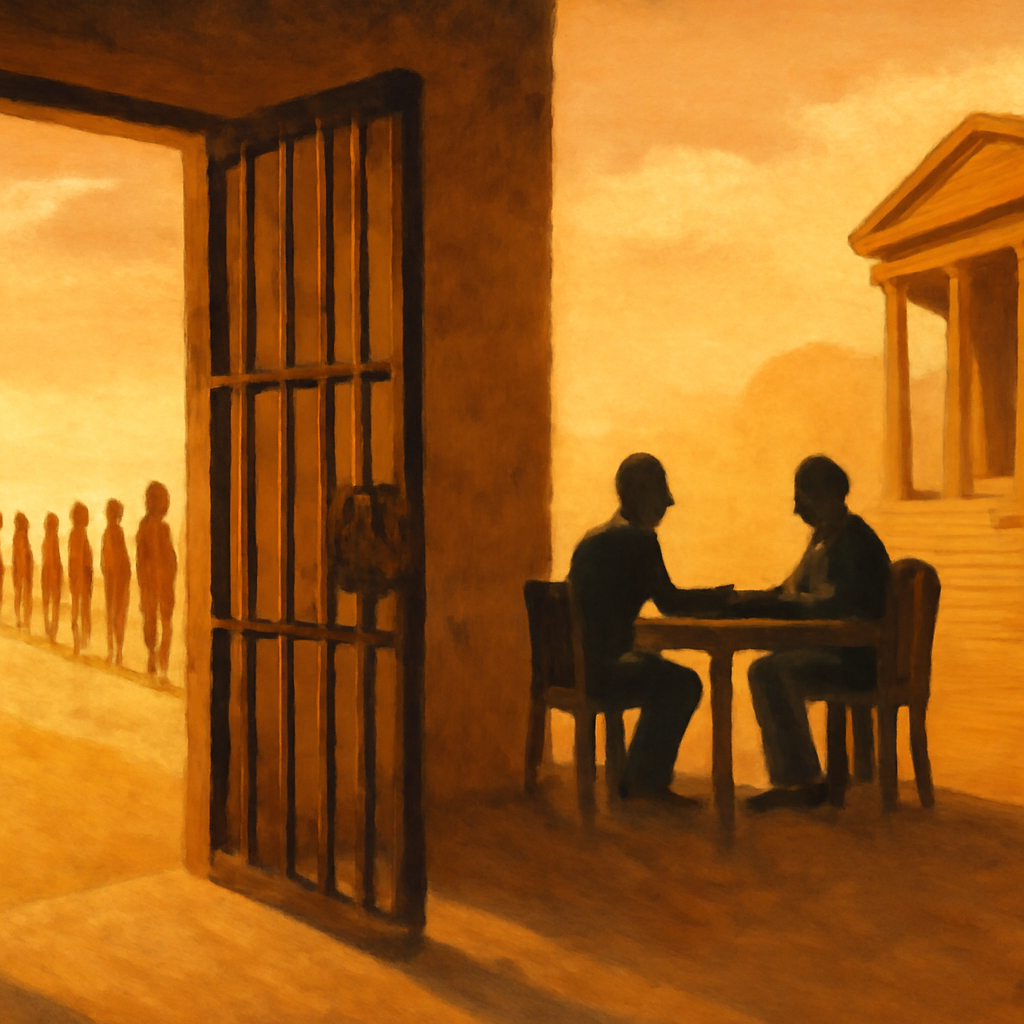
Background
By 1994 South Africa’s politics were the product of decades of laws and institutions designed to secure white minority rule. Apartheid formalized racial separation in government, in public life and in civic rights, producing widespread exclusion from political participation and unequal access to resources. Over many years those exclusions generated sustained and varied pressures. Inside the country, organizing, protests and everyday resistance widened opposition to the system; outside, diplomatic and economic pressures raised the cost of maintaining a polity premised on exclusion. Economic and social strains made the old arrangements harder to sustain in practice. No single cause explains the fall of apartheid.
Some analysts foreground the cumulative weight of social mobilization and external pressure; others emphasize the contingent decisions of political leaders and negotiators who opened space for compromise. This account preserves that dispute rather than collapsing it. Structural crises and human agency interacted across years—legal breakdowns, popular contestation and political choices together created conditions in which a first fully democratic election in 1994 could take place. That election was therefore an opening in a longer historical process, not a moment that stands apart from what came before. The fall of apartheid was not a single election miracle. It came through decades of resistance, labor organizing, underground politics, international pressure, armed struggle, community mobilization, negotiations, and shifts inside the National Party state.
The 1994 election mattered because it turned negotiated transition into public legitimacy. Mandela and de Klerk were central, but so were voters, parties, township organizers, former prisoners, security forces, constitutional negotiators, and communities carrying the memory of repression.
The Turning Point
The decisive change of 1994 was the conversion of prolonged contestation into a political settlement enacted through a nationwide vote: the country’s first fully democratic elections. That ballot broke the legal monopoly of white minority rule by extending the franchise to all citizens, and it produced a new configuration of governing authority. Nelson Mandela emerged from that election as president, and F. W. de Klerk—who had led the ruling authorities during the final years of apartheid—figured as a central interlocutor in the negotiations that made the election possible. Those outcomes depended on concrete choices. Political actors chose negotiation and a ballot-box settlement over extending formal exclusion or returning to large-scale coercion.
Organizers and voters mobilized to make inclusive participation meaningful; negotiators accepted compromises to create a viable electoral process; officials dismantled critical elements of the prior legal framework so a new government could be formed. In short, leadership decisions by Mandela, de Klerk and many others interacted with broader pressures to produce a negotiated opening. Scholars continue to debate how much of the result should be attributed to individual agency and how much to structural dynamics, but 1994 remains the clearest moment when those forces were translated into new constitutional and political arrangements. The turning point was the move from minority rule to a nonracial democratic election.
The vote made citizenship visible in a country where law had long organized exclusion, land dispossession, movement controls, and political violence.
Consequences
In the immediate aftermath, apartheid’s formal legal architecture was replaced: a new democratic government took office and the laws underpinning white minority rule were displaced from the center of political life. That change brought international recognition and inaugurated an era of representative government in which those previously excluded gained political voice. Over the longer term the 1994 transition has become a major reference point in debates about negotiated democratization, transitional politics and public memory. It is often cited as an example of how bargaining and staged institutional reform can end exclusionary regimes without total social collapse. The settlement also exposed difficult questions about how societies remember past injustices, who shapes public narratives, and how to balance reconciliation with accountability.
Importantly, the legal end of apartheid did not erase its social legacies: deep inequalities and contested visions of racial justice persisted, making the promise of equal rights an ongoing, contested project. Interpretations remain cautious and contested—some view the transition as a triumph of statesmanship, others as a partial solution that left structural inequalities largely intact—and that debate continues to inform South African civic life and comparative study across Southern Africa. The afterlife includes the Mandela presidency, Truth and Reconciliation Commission, constitutional rights, inequality, land debates, memory work, and the hard question of how political freedom confronts economic structures left by apartheid. The victory was real, but it did not automatically distribute repair or trust.
Interpretation Notes
Fall of Apartheid raises a debate about scale: did the decisive change come from the visible political transition, or from older pressures around Apartheid and Democracy that had already narrowed what people could do?
Why Keep Reading
Follow the preceding decades of exclusion and the chapters of negotiation that led to 1994 to understand how law, protest and political choice combined to make a democratic opening possible. Subsequent pages trace the negotiations that produced the election, the formation of the new government and the early years of Nelson Mandela’s presidency—periods that illuminate why scholars disagree about the balance between leadership and deeper structural change. If you want to know how a legal revolution became a continuing social project, these next items show where the promises of 1994 met the realities of day-to-day politics.
Read this page with Soweto, Mandela, Desmond Tutu, OAU, civil rights, and human rights pages to compare how legal systems of racial hierarchy are dismantled and remembered.
Reading Path
Follow the story without losing the thread
Before This
- Oslo Accords1993 CE
- Dissolution of the Soviet UnionDecember 1991
- Nelson Mandela ReleasedFebruary 11, 1990
After This
Same Period
- Dissolution of the Soviet UnionDecember 1991
- German ReunificationOctober 3, 1990
- Nelson Mandela ReleasedFebruary 11, 1990
Wider Timeline
Mind Map
How to think about Fall of Apartheid
Structural pressure
Decades of exclusion, economic and diplomatic pressures made apartheid harder to sustain
Map Layer
Where this event sits geographically
Gold pins mark the approximate locations of published event pages. This is a schematic locator map, not a historical border map.
Coordinates are approximate and are used to help readers orient themselves before opening a full event page.
References
Where to Check the Facts
- South African History Online: The Nelson Mandela Presidency, 1994 to 1999Reference for negotiations, the first democratic election, Mandela's presidency, and the transition from apartheid to constitutional democracy.
- Encyclopaedia Britannica: ApartheidSpecific reference for apartheid, resistance, reform, negotiations, and the 1994 democratic transition in South Africa.