Historical Role
Nelson Mandela should be read through struggle, imprisonment, negotiation, and government rather than through reconciliation alone. His biography begins before the famous release scene, with the African National Congress, apartheid law, Black political organizing, legal defense, underground activity, the Rivonia trial, and the decision that some activists made to turn toward sabotage after peaceful protest had been violently blocked.
The release in 1990 matters because it marked a new stage, not a finished victory. Mandela emerged from prison into negotiations shaped by mass mobilization, state violence, economic pressure, international sanctions, party rivalry, fear of civil war, and the need to move from liberation movement to governing coalition.
The 1994 election gives the page its democratic hinge. Mandela became president after South Africa's first fully democratic election, but the end of apartheid did not remove inequality, land conflict, memory wounds, policing questions, or economic difficulty. A useful biography keeps triumph and unfinished transformation together.
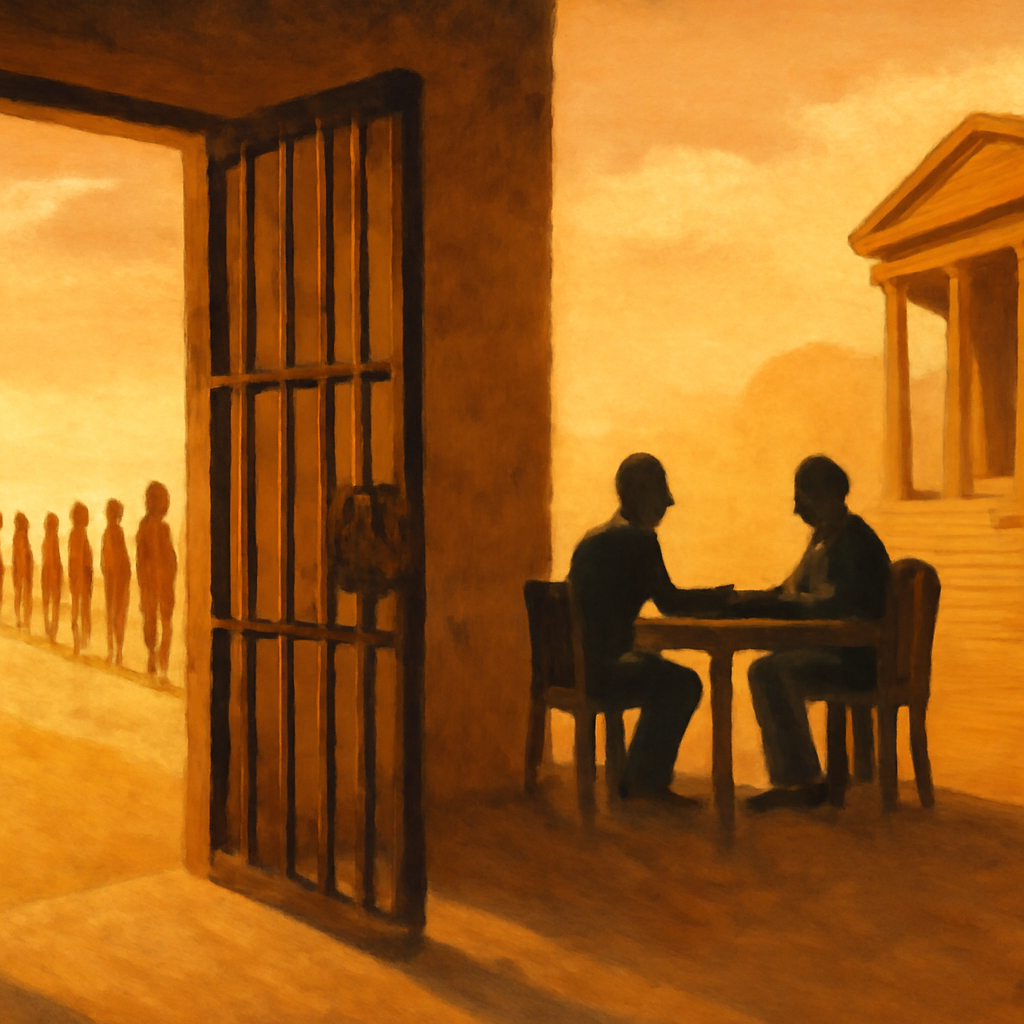
Robben Island should be treated as more than a symbol of suffering. Prison became a school of discipline, argument, language learning, legal thinking, and movement continuity. The state tried to isolate anti-apartheid leaders, but the prison years also preserved relationships, sharpened political patience, and gave later negotiations a moral authority that could not be manufactured at the conference table.
Mandela's presidency also belongs to institution-building. The constitution, the Truth and Reconciliation Commission, national symbols, security-force integration, and the ordinary routines of government all mattered because a democratic transition has to become durable in courts, schools, police stations, ballots, budgets, and public memory. Reconciliation was a political practice, not only a personal virtue.
The page gains depth when it keeps generational critique visible. Younger South Africans and many activists have asked whether the settlement protected too much economic power from the apartheid era. That question does not cancel Mandela's achievement; it helps readers understand why democratic founding moments are judged both by the catastrophe they prevent and by the injustices they leave unresolved.
Nelson Mandela helps connect individual action with wider historical change in South Africa. The biography works best when it keeps the surrounding world visible: authority, conflict, belief, reform, or discovery moved through decisions made under pressure.
The related events show how roles such as Anti-apartheid leader, President can be read through dates, places, institutions, and consequences rather than through reputation alone. The biography explains why this person matters, while the linked events explain what changed around them.
A richer reading starts with the limits around the person. Some figures acted through offices, armies, courts, laboratories, churches, parties, ships, trade networks, or protest movements; others became important because later communities turned their lives into symbols. The page therefore asks what this person could actually change, what was already moving before them, and which consequences later readers attached to the name.
Read the biography against absence as well. Many lives around Nelson Mandela are less visible in the record: opponents, collaborators, family members, workers, soldiers, students, subjects, victims, translators, scribes, or local communities. Keeping those surrounding people in view makes the page less like a name card and more like an entry point into historical systems.
Nelson Mandela also works as a navigation point. Open the linked event pages to see where the biography becomes chronology, then use the topic routes to test whether the same pattern appears beyond one life. That extra step matters because historical importance is rarely contained inside a single decision; it usually spreads through institutions, witnesses, opponents, imitators, and later arguments over memory.
Sources and Method
Source method: read Mandela through the release and 1994 election pages, while using biography sources to connect resistance, prison, negotiation, presidency, and contested legacy.
Evidence Notes
How Sensitive Claims Are Sourced
- 1
Release as negotiation hinge
Mandela's release is framed as the opening of a difficult transition rather than a sentimental ending to apartheid.
- 2
Democratic transition and unfinished change
The 1994 election anchors Mandela's presidency while the page keeps inequality, memory, and institutional rebuilding visible.
Why This Person Matters
Nelson Mandela matters because the connected events make a larger historical pattern easier to follow. The page links biography to consequences so readers can move from a life story into the wider atlas, compare the person with contemporaries, and understand why later memory kept returning to this figure. Nelson Mandela matters because his life helps readers understand how a liberation struggle becomes a negotiated democratic transition without resolving every injustice it inherits. The biography connects apartheid, prison, global solidarity, political violence, negotiation, elections, presidency, memory, constitutional design, and unfinished equality.
It also gives readers a way to ask a harder question than whether Mandela was inspiring: how can a society leave legal racial rule behind while still carrying economic hierarchy, trauma, and contested memory into the democratic future?
What changes when Mandela is read as part of a movement and a negotiated transition, not only as a global symbol of reconciliation?
How to Read This Life
Nelson Mandela is easiest to understand when the biography is read beside Nelson Mandela Released, Fall of Apartheid. Those events show the historical setting in motion: dates, places, institutions, conflict, and consequences give the life a structure that a short biography alone cannot provide.
The surrounding route crosses Post-Cold War and locations such as Cape Town, South Africa. That matters because influence rarely stays inside one person. It moves through offices, armies, movements, laws, texts, speeches, institutions, and later memory.
A useful reading path starts with the role labels, then opens the event pages to see what changed, and finally compares this person with other actors facing similar pressures.
For readers who arrive on a biography first, this page is meant to become a doorway rather than a stop. Read one paragraph for the answer, then use the turning points, topic routes, and event links to test whether the person's reputation matches the wider evidence.
Read Nelson Mandela beside Mandela Released, Fall of Apartheid, Soweto, rights movements, African decolonization, and human-rights pages. That sequence turns a biography into a route through law, resistance, negotiation, and democratic transition.
Then compare him with King, Gandhi, Lumumba, Tutu, and Nkrumah where available. The comparison asks how moral authority, armed struggle debates, prison, negotiation, mass politics, and state office change a leader's role.
A useful final route moves from the celebrated 1994 election to land, labor, housing, memory, policing, and constitutional rights. That path keeps readers inside the unfinished work of democratic transformation instead of ending the story at victory.
Read Nelson Mandela through the roles of Anti-apartheid leader, President rather than as reputation alone.
Place the biography inside South Africa and the wider events linked below.
Ask which choices were personal and which were constrained by institutions or crisis.
Follow how later memory simplified, contested, or reused this person's role.
Look for the ANC, unions, students, churches, exiles, lawyers, and township organizers around the famous name.
Read 1990-1994 through danger, compromise, fear, pressure, and institutional design.
Ask how global memory celebrates Mandela and what it can hide about inequality after apartheid.
Legacy, Limits, and Memory
A useful biography keeps scale in view. Nelson Mandela mattered because individual choices met a wider structure: institutions, enemies, allies, audiences, technologies, beliefs, and inherited conflicts. The related event pages help separate personal agency from conditions that no single person controlled.
Memory is part of the biography too. Later readers often simplify a figure into a hero, villain, founder, reformer, conqueror, prophet, scientist, or symbol. Those labels can be helpful, but they become misleading when they hide conflict, compromise, exclusion, uncertainty, or the experiences of people outside the main biography.
For the next step, compare this life with a topic route rather than stopping at the name. If the same pattern appears across several figures, the reader has found a historical structure; if this person breaks the pattern, the contrast is usually where the most interesting question begins.
The main risk is a soft reconciliation story that erases conflict. Mandela's importance includes forgiveness and negotiation, but also organized resistance, state repression, armed-struggle debate, and hard bargaining.
A second risk is treating one leader as the whole anti-apartheid movement. Trade unions, students, churches, rural communities, exiles, women organizers, lawyers, and township activists made the transition possible.
Turning Points to Read Next
Nelson Mandela Released
Nelson Mandela was released from prison after twenty-seven years, signaling a new phase in negotiations to end apartheid in South Africa.
Fall of Apartheid
South Africa held its first fully democratic elections, ending apartheid rule and bringing Nelson Mandela to the presidency.
Related Timeline
- February 11, 1990Nelson Mandela Released
Nelson Mandela was released from prison after twenty-seven years, signaling a new phase in negotiations to end apartheid in South Africa.
- 1994Fall of Apartheid
South Africa held its first fully democratic elections, ending apartheid rule and bringing Nelson Mandela to the presidency.
References
Where to Check the Facts
- Encyclopaedia Britannica: Nelson MandelaBiographical reference for Nelson Mandela's life dates, roles, institutions, and historical setting.
- Encyclopaedia BritannicaBackground reference for chronology, names, and historical context.
- WikidataStructured reference for dates, places, alternate names, and entity links.