Watch how choices that looked regional in 1933, 1938, or 1939 became part of a worldwide conflict by 1941, then forced coalitions to think at planetary scale.
Timeline
World War II Timeline
A guided route through appeasement, invasion, global expansion, occupation, turning points, surrender, and postwar reckoning in World War II.
Timeline Guide
How did a European crisis become a global war, and how did that war produce a new international order?
Reader note: this page is written for older students and general readers. It discusses genocide, mass violence, occupation, civilian bombing, forced labor, and postwar trials, so the sequence moves slowly around sources and affected communities.
Begin with people before arrows on a map: a Polish teacher hiding papers after occupation, a Warsaw teenager carrying news through a ghetto stairwell, a Chongqing family moving after another air raid, a Filipino nurse watching liberation become street fighting, and an Okinawan civilian searching for shelter between armies.
The war spread through Europe, China, Southeast Asia, North Africa, the Atlantic, the Pacific, and colonial empires. Indian, African, Caribbean, Maori, Aboriginal, and Pacific Islander soldiers and workers served systems that did not grant equal citizenship, which is why this route leads directly into decolonization and civil-rights pages.
The Holocaust is part of the war's structure. Ghettos, mass shootings, deportations, mobile killing units, camps, forced labor, property seizure, collaboration, rescue, and resistance changed what occupation meant across Europe. Denial is not credible; historical argument concerns responsibility, documentation, scale details, choices, and memory.
Japanese occupation is treated with the same care. The Nanjing Massacre, forced labor, military sexual slavery, prison-camp abuse, resource extraction, and civilian terror belong inside the Asia-Pacific story. Debate does not mean doubt about atrocity; it means historians and public institutions argue over documentation, command responsibility, numbers, denial, education, and memorial practice.
Start With These Dates
- 1933 CERise of Nazi Germany
Adolf Hitler became chancellor and rapidly dismantled democratic institutions, building a racist dictatorship through law, violence, propaganda, and terror.
- September 1938Munich Agreement
Britain and France accepted Germany's demand for the Sudetenland in an agreement that attempted to avoid war but encouraged further Nazi expansion.
- September 1, 1939Invasion of Poland
Germany invaded Poland, using speed, air power, and coordinated ground forces to begin the European phase of World War II.
- July-October 1940Battle of Britain
The Royal Air Force resisted German air attacks in 1940, preventing Germany from gaining the air superiority needed for an invasion of Britain.
- 1942-1943Battle of Stalingrad
Soviet forces encircled and defeated a German army at Stalingrad after months of brutal urban combat and strategic overreach.
- 1945End of World War II
World War II ended with the defeat of Nazi Germany and Imperial Japan, closing a global conflict while opening urgent questions of occupation and reconstruction.
- October 24, 1945United Nations Founded
The United Nations came into force after World War II as states tried to build a stronger framework for peace, security, and cooperation.
- 1945-1946Nuremberg Trials
The Allies tried leading Nazi officials at Nuremberg, creating a legal record of aggression, war crimes, and crimes against humanity.
Sources Used Here
- Encyclopaedia Britannica: Timeline of World War II
Timeline reference for the order and dates of major World War II events.
- Imperial War Museums: Second World War
Institutional reference for the war's global scale, human cost, and long-term consequences.
- United States Holocaust Memorial Museum: World War II Key Dates
Reference for key dates connecting Nazi Germany, invasion, occupation, the Holocaust, and Nazi persecution of Jews and other victim groups.
- Museum of the Second World War in Gdansk: Main Exhibition
Polish museum reference for the war's causes, consequences, victims, perpetrators, heroes, and ordinary people in an Eastern European setting.
- Memorial Hall of the Victims in Nanjing Massacre: Museum
East Asian museum reference for Nanjing Massacre memory, Japanese occupation violence, remains, exhibitions, and civilian victims.
The bombing questions are concrete. Strategic bombing debates ask whether area bombing shortened the war, attacked industry, terrorized civilians, or crossed moral limits. Hiroshima and Nagasaki debates ask about invasion planning, warnings, surrender politics, Soviet entry, postwar signaling, and the human cost of nuclear destruction.
The route also flags its gaps. Early Japanese expansion in Manchuria and China, colonial politics in India and Africa, the Burma campaign, Southeast Asian occupation, Japanese American incarceration, and Pacific island warfare all need deeper side routes. This timeline gives the war a strong spine rather than the whole story.
This timeline is not a short list of famous battles. It follows the widening logic of World War II from dictatorship and appeasement to invasion, global mobilization, occupation, resistance, surrender, and postwar judgment. The shape matters because the war was not one clean military arc. It was a chain of political decisions, racial violence, imperial ambitions, battlefield reversals, industrial capacity, civilian suffering, and arguments over what kind of order would follow catastrophe.
The sequence begins before formal declarations of total war because the political structure of the conflict was built earlier. The rise of Nazi Germany shows how propaganda, violence, law, and state institutions narrowed the field of opposition. The Munich Agreement belongs in the route because it shows the failure of diplomatic containment before war began. The invasion of Poland then turned expansion into a European war, while the Battle of Britain and Operation Barbarossa show two different limits of German strategy: air power could not break Britain, and the invasion of the Soviet Union turned the war into a vast ideological and material struggle.
The war becomes fully global when the Pacific and European theaters connect. Pearl Harbor brought the United States directly into the war, but Midway shows that global entry did not automatically mean easy victory. It took naval intelligence, risk, production, and a shift in initiative. Stalingrad then gives the Eastern Front its central turning point: an urban battle and encirclement that revealed the cost of overreach and the scale of Soviet endurance.
The middle of the timeline also keeps civilian history in view. The Warsaw Ghetto Uprising sits beside battlefield events because occupation, genocide, and resistance are not secondary to the story. D-Day made Allied return to western Europe visible, yet it only makes sense when placed next to years of occupation, eastern-front fighting, air war, supply planning, and coalition negotiation.
The closing stage compresses many kinds of ending into one year. Yalta raised questions of occupation, borders, and influence before the fighting stopped. Hiroshima forced the nuclear age into historical memory. The end of World War II closed the military conflict while leaving destroyed cities, displaced people, occupation zones, colonial demands, and ideological rivalry. The United Nations and the Nuremberg Trials show two different attempts to respond: one institutional, one legal.
Read as a whole, the route moves from aggression to coalition warfare to postwar institution-building and moral reckoning. It gives readers a scaffold for asking better questions: why appeasement failed, why the war widened, why some battles became turning points, why civilian experience must be central, and why 1945 was both an ending and a beginning.
Editor's note: I would not start World War II with a victory map. Start with pressure, fear, occupation, racial ideology, hunger, ships, families, propaganda, and the paperwork that made violence organized. The dates matter because people had to live inside them before historians turned them into a clean sequence.
Reader advisory for students: this timeline discusses genocide, mass shootings, starvation, forced labor, sexual violence, civilian bombing, nuclear destruction, and postwar trials. The page is written for high-school, college, and general readers, but it slows down around traumatic material and names affected communities before asking interpretive questions.
Read this page through named lanes, not through one giant war story: Holocaust and Nazi persecution; Japanese occupation and the Asia-Pacific war; Soviet-German war and Stalinist power; Allied strategy and bombing; colonial troops and home fronts; and the postwar attempt to build law after catastrophe.
The first useful reading move is to separate the war's opening from the conditions that made the opening possible. Nazi rule in Germany, Japanese expansion in Asia, Italian aggression, anti-communist fears, imperial rivalries, racial ideology, economic depression, and the remembered failures of World War I all shaped the field before September 1939. That does not mean the war was inevitable. It means the invasion of Poland landed in a world where many older restraints had already weakened.
Appeasement belongs in the route because it shows decision-making under fear. Munich was not simply cowardice or wisdom; it was a diplomatic gamble made by leaders facing memories of trench warfare, military unreadiness, public anxiety, and uncertainty about Hitler's aims. The value of the page is that readers can see why a policy might look understandable in the moment and disastrous in hindsight. That tension creates better historical judgment than a slogan.
The invasion of Poland changes the story from pressure to war. Germany's attack, the Soviet move from the east, and the collapse of Polish sovereignty show how diplomacy, secret agreements, mechanized force, and civilian terror became connected. The event also reminds readers that World War II cannot be told only through western-front chronology. Eastern Europe was a central field of occupation, partition, ethnic violence, forced movement, and later memory conflict.
The Battle of Britain is a different kind of checkpoint. It did not end the war, but it kept Britain in the conflict and preserved a base for later coalition warfare. Airfields, radar, pilots, civilians under bombing, codebreaking, aircraft production, and political resolve all mattered. The event helps readers understand that survival can be as decisive as conquest. Sometimes the route turns because one side fails to force surrender.
Operation Barbarossa enlarges every scale at once. The invasion of the Soviet Union made the war ideological, racial, territorial, agricultural, industrial, and genocidal in a new way. It stretched German logistics across enormous distances and exposed civilians, prisoners, Jews, Roma, Communist officials, and many other groups to extreme violence. Reading Barbarossa beside Leningrad, Stalingrad, and Kursk reveals why the Eastern Front cannot be treated as just another theater.
The siege of Leningrad gives the timeline a civilian clock. Hunger, cold, bombardment, evacuation, rationing, factory work, and the Road of Life across Lake Ladoga turn the map into lived experience. A student might remember the siege as a military episode, but the deeper question is how a city survives when a front line becomes a starvation system. This is where endurance, state capacity, suffering, and public memory meet.
The Holocaust must remain inside the timeline rather than appearing as a separate moral appendix. Wannsee, the Warsaw Ghetto Uprising, occupation policy, ghettos, deportations, shootings, forced labor, camps, confiscation, collaboration, rescue, and resistance all belong to the war's structure. Jewish victims are central to that history; Roma and Sinti people, disabled people, Polish civilians and elites, Soviet prisoners of war, gay men, Jehovah's Witnesses, political opponents, and many others also need named attention when the page describes Nazi persecution. The Nazi project was not only battlefield expansion. It was an attempt to reorder Europe through racial rule and murder. That changes the meaning of every nearby military event.
Pearl Harbor makes the war fully global for the United States, but the Pacific War already had a longer history in Asian empire, resource pressure, Chinese resistance, Japanese military politics, and western colonial presence. The attack connected the U.S. home front, carrier warfare, shipbuilding, island bases, intelligence, and anti-Japanese racism. It also changed the reader's map: the war now had to be followed across the Atlantic, Europe, North Africa, China, Southeast Asia, and the Pacific.
Coral Sea, Midway, and Guadalcanal belong together. Coral Sea showed carrier warfare and the defense of sea lanes; Midway shifted naval initiative after intelligence and risk converged; Guadalcanal turned victory into a grinding campaign of airfields, night battles, disease, supply, and local disruption. Together they teach a simple but important lesson: Pacific turning points were not one miracle battle. They were a series of contests over distance.
El Alamein makes North Africa more than a side road. Desert war tied Egypt, Libya, the Suez Canal, Mediterranean shipping, empire-wide troops, fuel, ports, and Middle Eastern strategy into the war. The battle shows why logistics can decide what tactics can even attempt. It also gives readers a way to place the British Empire, colonial forces, local civilians, and Axis supply problems inside the same frame.
Stalingrad and Kursk form the middle hinge of the European war. Stalingrad concentrated urban combat, encirclement, prestige, starvation, and Soviet endurance into one catastrophic turning point. Kursk then showed defense-in-depth, intelligence, reserves, armor, artillery, and industrial replacement at a different scale. Read together, they show that Germany did not merely lose battles in the east. It lost the capacity to dictate the rhythm of the war.
Tehran, Yalta, and Potsdam keep diplomacy visible beside combat. Coalition warfare required leaders who distrusted one another to coordinate timing, supplies, fronts, occupation zones, borders, and visions of security. These conferences do not interrupt the military story. They explain why victory produced new arguments before the fighting was over. The Cold War becomes easier to understand once these wartime negotiations are visible.
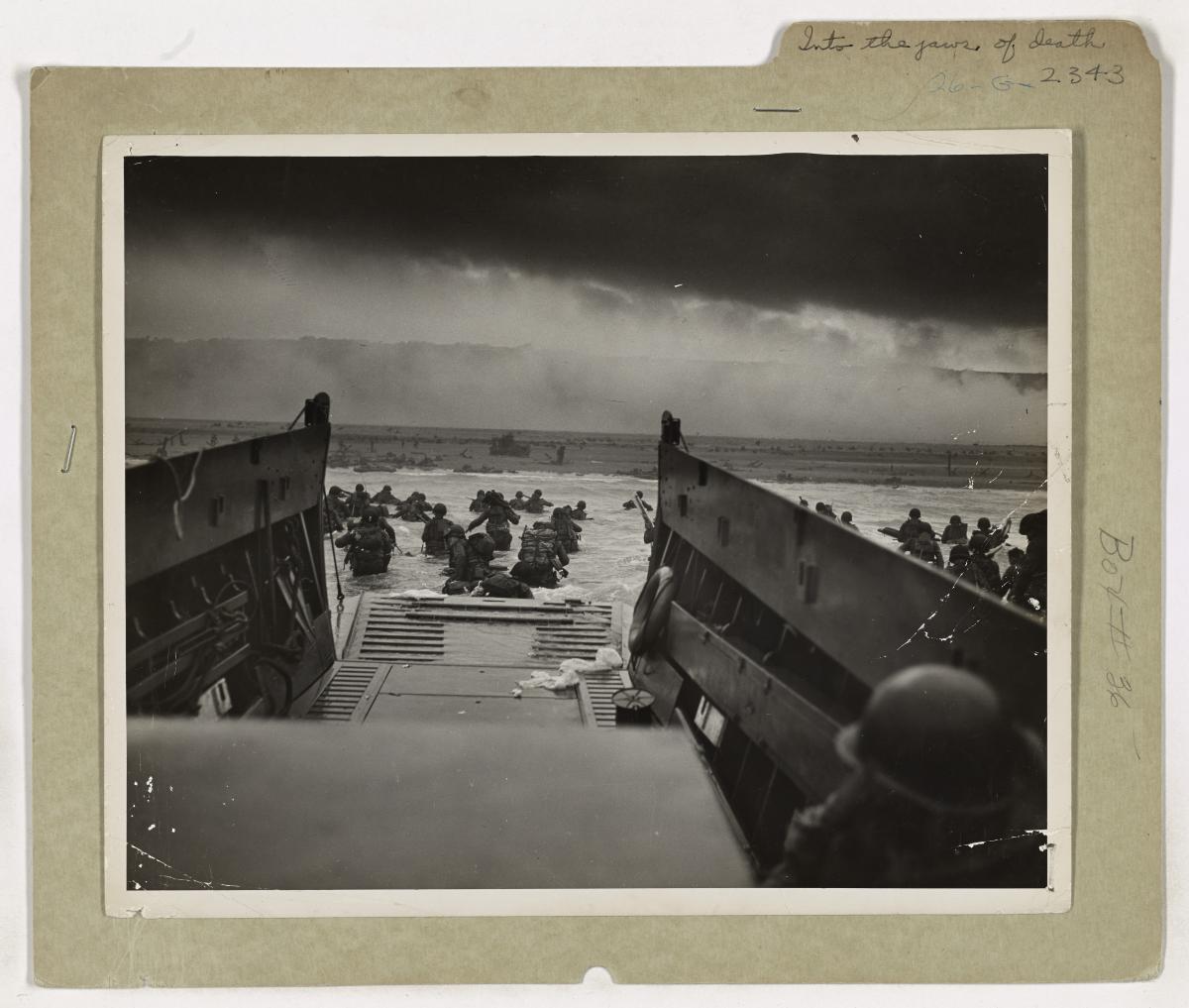
D-Day, the liberation of Paris, and the Battle of the Bulge show the western-front route from return to uncertainty to final advance. Normandy required weather, deception, landing craft, air superiority, resistance networks, naval firepower, and enormous logistical planning. Paris gave liberation a public image and a political problem: who spoke for France after occupation? The Bulge then reminded the Allies that Germany could still inflict shock even while losing the war.
Okinawa and Hiroshima force readers into the hardest ending questions. Okinawa revealed the human cost of fighting close to Japan's home islands, especially for civilians trapped inside the battle. Hiroshima introduced nuclear destruction into the end of the war and into every later discussion of military necessity, civilian targeting, scientific responsibility, and memory. The timeline cannot settle those debates for the reader, but it must make the stakes clear.
The end of World War II is not one ending. Germany surrendered; Japan surrendered; cities lay in ruins; displaced persons moved through camps and roads; empires faced anti-colonial pressure; soldiers returned changed; borders shifted; civilians searched for missing relatives; and new occupying authorities tried to govern defeated states. A good timeline slows down here because 1945 is crowded with endings that point in different directions.
The United Nations and Nuremberg Trials give the route two postwar answers. The United Nations tried to make collective security, state membership, and international diplomacy more durable than the League of Nations had been. Nuremberg tried to name crimes, responsibility, evidence, and legal accountability after mass violence. Neither answer solved world politics, but both changed the language available after catastrophe.
Geography is the timeline's hidden grammar. Poland explains why Eastern Europe mattered early; Britain explains air and sea survival; the Soviet Union explains distance and industrial war; the North Atlantic explains supply; North Africa explains canals and empire; the Pacific explains island chains and carrier range; Germany and Japan explain occupation and surrender; New York, San Francisco, and Nuremberg explain postwar institutions and legal memory.
The human scale runs through every chapter. Leaders made decisions, but the war was carried by infantry, pilots, sailors, codebreakers, factory workers, nurses, prisoners, enslaved and forced laborers, refugees, partisans, diplomats, scientists, children, colonized soldiers, and civilians under occupation or bombing. Readers stay with the page longer when those lives are visible beside strategy. War becomes more legible when it stops being only arrows on a map.
The evidence also changes across the route. Diplomatic declarations, battle reports, survivor testimony, photographs, maps, trial records, intelligence files, government orders, diaries, and ruins do not answer the same questions. Wannsee needs bureaucratic records; Leningrad needs civilian survival evidence; Midway needs naval intelligence and after-action accounts; Hiroshima needs military, scientific, and survivor perspectives; Nuremberg needs documents and testimony. The timeline becomes stronger when readers notice which kind of evidence supports each node.
For students, this page can be read through five routes. The first is escalation: Nazi rule, Munich, Poland, Britain, Barbarossa, Pearl Harbor. The second is turning points: Coral Sea, Midway, El Alamein, Stalingrad, Kursk, Guadalcanal. The third is civilian war: Leningrad, Wannsee, Warsaw, bombing, occupation, Okinawa, Hiroshima. The fourth is coalition politics: Atlantic Charter, Tehran, Yalta, Potsdam. The fifth is aftermath: UN, Nuremberg, decolonization pressure, and Cold War division.
For curious readers, the reason to keep going is that the familiar names become stranger when placed in order. D-Day looks different after Stalingrad and Tehran. Hiroshima looks different after Okinawa and Potsdam. The United Nations looks different after Versailles and the League of Nations. The Warsaw Ghetto Uprising looks different when the Holocaust is kept inside the war rather than outside it. The page rewards rereading because each later event changes the meaning of earlier ones.
The timeline's selection is not every major World War II event. It is a curated route through escalation, global theaters, genocide, coalition strategy, battlefield reversals, surrender, and institution-building. That selection logic matters. It prevents the page from becoming a warehouse of dates while still giving enough nodes for a reader to understand the war's structure. Future additions can deepen China, Southeast Asia, the home fronts, resistance, and colonial troops without breaking the route.
A second reading can follow state power. Nazi Germany shows how a regime used law, police, party organization, propaganda, and racial categories to make violence administrative. Britain shows how a state organized morale, air defense, shipping, rationing, and empire. The Soviet Union shows coercion, evacuation, industrial relocation, and mass mobilization under extreme invasion. The United States shows production, alliance management, scientific research, and two-ocean war. Japan shows military government, imperial expansion, naval strategy, and occupation in Asia and the Pacific. The comparison keeps the war from becoming one national story.
A third reading can follow empire and colonial subjects. Indian, African, Caribbean, Southeast Asian, Pacific, North African, and Middle Eastern communities were not marginal to the war. Some fought in imperial armies, some lived under occupation, some supplied labor or raw materials, some faced internment or bombing, and some used wartime disruption to press for independence. Burma, Malaya, Singapore, Indonesia, Korea, the Philippines, North Africa, and Pacific islands were not side settings; they were places where occupation, labor, supply, and strategy entered daily life. The Atlantic Charter, Japanese occupation, and the United Nations all created languages that anti-colonial movements later turned against empire.
A fourth reading can follow technology without treating technology as destiny. Radar, aircraft carriers, codebreaking, tanks, synthetic materials, amphibious craft, rockets, penicillin, radar-directed air defense, and atomic weapons mattered because institutions could fund, build, deploy, and interpret them. Technology did not float above politics. It moved through universities, factories, laboratories, naval commands, bomber crews, intelligence teams, and government decisions about acceptable risk.
A fifth reading can follow memory. Britain remembers 1940 through survival and defiance; Russia remembers the Great Patriotic War through sacrifice and victory; Jewish memory centers catastrophe, resistance, and survival; China carries Nanjing and long occupation as wounds in public memory; Japan and Okinawa carry contested memories of destruction, responsibility, and civilian suffering; Germany confronts defeat, guilt, division, and later remembrance; the United States remembers Pearl Harbor, D-Day, and Hiroshima through changing debates. The same timeline therefore holds many moral geographies at once.
The home-front route deserves the same attention as the battle route. Ration cards, blackout curtains, factory shifts, school evacuations, censorship offices, victory gardens, internment camps, bond drives, and casualty telegrams show how war entered ordinary schedules. That layer helps readers connect strategy to endurance: states could fight long wars only when households, workplaces, and local communities were pulled into the machinery of survival.
The page also leaves useful gaps visible. China, the Burma campaign, the Italian campaign, strategic bombing, resistance across occupied Europe, the home front, codebreaking at Bletchley Park, women in war work, Japanese American incarceration, colonial troops, and postwar displacement all open further reading paths. Naming those absences does not weaken the route. It tells readers that a broad timeline is a framework for exploration, not a claim that 27 nodes can exhaust the war.
The final takeaway is not that World War II was simply won by one battle, one leader, or one technology. It was decided through the interaction of ideology, production, logistics, geography, intelligence, resistance, state violence, civilian endurance, coalition bargaining, and moral reckoning. A timeline that holds those forces together becomes a map for thinking, not a memorization exercise.
The story is strongest when read in layers. First, follow the dates from 1933 CE to 1945-1946. Then read across the event types: dictatorship, diplomatic agreement, invasion, air battle. The timeline becomes more than chronology when those dates reveal decisions, institutions, violence, reform, and memory.
Battle of Stalingrad sits near the middle of the sequence. Ask what had already become unavoidable by 1942-1943, what actors still believed they could control, and which consequences were already beginning to move beyond the original setting.
The named events are Rise of Nazi Germany, Munich Agreement, Invasion of Poland, Battle of Britain, Atlantic Charter, Operation Barbarossa. Each one pushes a more precise question: what changed, who benefited, who paid the cost, and what later page explains the aftermath more clearly?
Read the timeline against geography too. Places matter because power moves through corridors, borders, cities, ports, capitals, and frontiers. The map below keeps those distances visible while the event pages explain the human and institutional consequences.
A good timeline has a pulse: pressure, decision, expansion, resistance, and aftermath. When you move through Twentieth Century, Interwar Period, and World War II, keep asking whether an event is creating a new problem, revealing a hidden weakness, or making an earlier choice harder to reverse.
The human layer matters because timelines can become too abstract. Figures such as Adolf Hitler, Neville Chamberlain, Winston Churchill, Hermann Goring, and Franklin D. Roosevelt help the sequence feel lived rather than mechanical. Their choices do not explain everything, but they show where institutions, ideas, military systems, social movements, and public fear entered real decisions.
The ending is not only the last date. With closing events such as Atomic Bombing of Hiroshima, End of World War II, United Nations Founded, and Nuremberg Trials, the reader can ask what remained unsettled: which institutions survived, which arguments continued, which victims or opponents were left outside the official story, and which later crisis reused the same vocabulary.
Read this page once quickly for order, then read it again for contrast. Compare early confidence with later uncertainty, local decisions with global consequences, and visible turning points with slower changes in law, economy, belief, technology, borders, or memory. That second pass is where a timeline becomes an explanation.
Causation in this sequence is layered. One event may supply the trigger, another may reveal an older weakness, and a later event may show the consequence that people at the beginning did not expect. The useful habit is to separate background pressure, immediate decision, turning point, and aftermath before deciding which event matters most.
Consequences are uneven. A political settlement might look successful in one capital while creating resentment elsewhere; a military victory might end a campaign while deepening civilian trauma; a scientific or institutional breakthrough might solve one problem while creating new risks. The timeline is strongest when those mixed outcomes remain visible.
The final pass is comparative. After reading this sequence, open a neighboring topic or person page and ask whether the same pattern appears again. Repetition usually points to a structure; contrast usually points to a historical choice that could have gone another way.
Importance is not the same thing as drama. Some events are remembered because they were spectacular, while others matter because they changed rules, expectations, alliances, legal categories, technologies, or public language. Use the timeline to test both kinds of importance before deciding what belongs at the center of the story.
The page rewards moving outward. A timeline gives order, but the event pages give causes, maps, people, sources, and reading paths. When a date feels too compressed, open the full event page and then return here; the sequence becomes clearer with each pass instead of asking the reader to memorize a list.
Victory depended on military coordination, industrial capacity, intelligence, logistics, shipping, air power, Soviet endurance, U.S. production, and constant political compromise.
The war was fought through occupation, bombing, racial violence, forced labor, displacement, siege, starvation, and mass civilian death; any readable timeline has to keep that layer visible.
The ending points forward to occupation, reconstruction, postwar law, decolonization pressure, Cold War rivalry, refugee movements, nuclear politics, and the hope and limits of new institutions.
Read Europe, North Africa, the Atlantic, the Soviet Union, China, Southeast Asia, and the Pacific as connected theaters whose logistics and politics affected one another.
Keep the Holocaust, occupation, forced labor, starvation, deportation, collaboration, and resistance inside the main wartime sequence.
Ask how fuel, shipping, railways, airfields, ports, factories, food, and replacement manpower made strategy possible or impossible.
Use Atlantic Charter, Tehran, Yalta, Potsdam, the UN, and Nuremberg to see how the war produced arguments over law, borders, security, and memory.
Notice which events became symbols of endurance, atrocity, liberation, destruction, or justice, and ask whose memory is easiest to hear.
For an essay route, sort each node into background pressure, trigger, turning point, civilian experience, diplomatic settlement, or long-term consequence.
Rise of Nazi Germany gives the opening problem a date and place. Ask what was already unstable before it happened.
Battle of Stalingrad is a compression point: earlier causes are now crowded together with decisions that will shape the sequence's ending.
Follow the path through Berlin, Munich, Poland, United Kingdom, Argentia Bay, Newfoundland, and Eastern Front and ask how distance changed communication, logistics, fear, and control.
Nuremberg Trials works as both an ending and a beginning: it closes one sequence while opening later disputes, institutions, memories, or reforms.
Which conditions existed before the first event, and which later decision turned those conditions into visible historical change?
Who had the power to choose, who had fewer choices, and who is missing when the story is told only through leaders or institutions?
Which facts are date anchors, which are interpretations, and which claims need checking through the event sources before being repeated?
Which linked event, person, year, or topic page would change your interpretation if you read it next?
Interactive Timeline
Explore World War II Timeline by sequence
Rise of Nazi Germany
Adolf Hitler became chancellor and rapidly dismantled democratic institutions, building a racist dictatorship through law, violence, propaganda, and terror.
Read the full event pageNarrative Stages
Read this timeline in chapters
Dictatorship and Appeasement
The war's political prehistory runs through dictatorship, racial state-building, intimidation, and failed diplomatic containment.
- Rise of Nazi Germany1933 CE
- Munich AgreementSeptember 1938
War in Europe
Invasion, air war, and the attack on the Soviet Union turned expansion into a continental struggle for survival and occupation.
- Invasion of PolandSeptember 1, 1939
- Battle of BritainJuly-October 1940
- Operation BarbarossaJune 22, 1941
Global War and Turning Points
Pearl Harbor, Midway, and Stalingrad show the conflict widening and then beginning to reverse against Axis power.
- Attack on Pearl HarborDecember 7, 1941
- Battle of MidwayJune 1942
- Battle of Stalingrad1942-1943
Occupation, Resistance, and Liberation
The war cannot be reduced to battlefield movement; occupation, genocide, resistance, and liberation shaped its human meaning.
- Warsaw Ghetto UprisingApril-May 1943
- D-Day LandingsJune 6, 1944
Surrender, Institutions, and Reckoning
The closing year linked military victory to diplomacy, nuclear weapons, surrender, international institutions, and legal memory.
- Yalta ConferenceFebruary 1945
- Atomic Bombing of HiroshimaAugust 6, 1945
- End of World War II1945
- United Nations FoundedOctober 24, 1945
- Nuremberg Trials1945-1946
Map Layer
World War II Timeline geography
Gold pins mark the approximate locations of published event pages. This is a schematic locator map, not a historical border map.
Event location Simplified land areaClick a pin to open the event page
Coordinates are approximate and are used to help readers orient themselves before opening a full event page.
References
Where to Check the Facts
- Encyclopaedia Britannica: Timeline of World War IITimeline reference for the order and dates of major World War II events.
- Imperial War Museums: Second World WarInstitutional reference for the war's global scale, human cost, and long-term consequences.
- United States Holocaust Memorial Museum: World War II Key DatesReference for key dates connecting Nazi Germany, invasion, occupation, the Holocaust, and Nazi persecution of Jews and other victim groups.
- Museum of the Second World War in Gdansk: Main ExhibitionPolish museum reference for the war's causes, consequences, victims, perpetrators, heroes, and ordinary people in an Eastern European setting.
- Memorial Hall of the Victims in Nanjing Massacre: MuseumEast Asian museum reference for Nanjing Massacre memory, Japanese occupation violence, remains, exhibitions, and civilian victims.
- Yad Vashem: World Holocaust Remembrance CenterIsraeli Holocaust remembrance, documentation, research, and education reference for victims, destroyed communities, resistance, and rescue.