At a Glance
The shape of the event
- Date
- July 5-August 23, 1943
- Place
- Kursk
- Type
- Battle
German forces attacked the Kursk salient, but Soviet defenses, intelligence, reserves, and counteroffensives turned the battle into another major Axis defeat on the Eastern Front.
July 5-August 23, 1943; place the event in Kursk before comparing causes or consequences.
Kursk confirmed that Germany had lost the strategic initiative in the east and that Soviet operational capacity was growing.
Soviet commanders / German commanders / Red Army soldiers are the first names or groups to compare before widening the story.
The Soviet Union held and then launched counteroffensives that pushed German forces back.
The Soviet Union held and then launched counteroffensives that pushed German forces back.
Kursk confirmed that Germany had lost the strategic initiative in the east and that Soviet operational capacity was growing.
The next useful step is to follow the linked events, people, topic routes, and timelines.
Background
After Stalingrad, Germany sought to regain initiative in the east. The Kursk salient created an obvious target, but Soviet planners anticipated the attack and prepared extensive defensive belts. Before Battle of Kursk, the surrounding world already contained unresolved tensions over authority, resources, belief, strategy, or legitimacy. Those pressures mattered because they shaped what different actors thought was possible. Single-cause explanations flatten the background, which was usually a mix of long-running structures and immediate decisions. The location in Eastern Europe also matters, because events there connected local choices to wider routes of diplomacy, war, trade, reform, or memory. This context prepares the reader to see the event as part of a sequence rather than as an isolated headline.
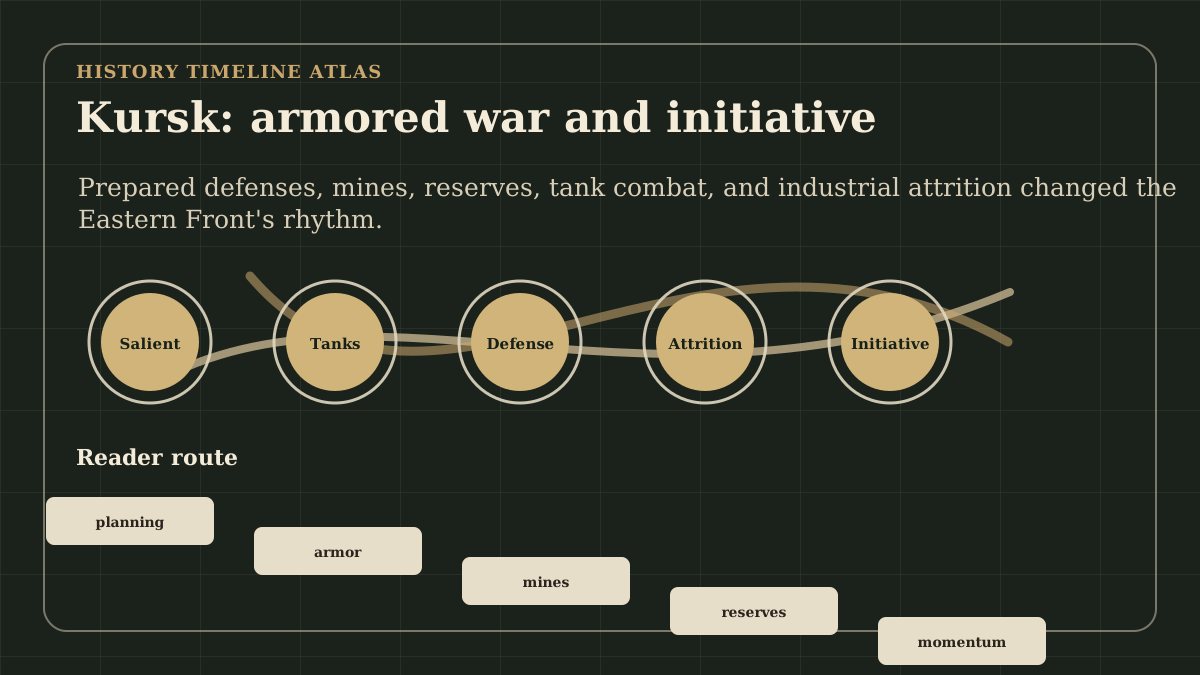
Kursk is often flattened into a tank-battle superlative, but its deeper importance lies in preparation. Soviet commanders anticipated the German attack and built layered defenses with mines, anti-tank guns, artillery, trenches, reserves, and intelligence. German forces entered a battlefield where surprise was limited and where tactical success had to overcome a prepared operational system. The geography matters. The salient around Kursk invited German planners to imagine a clean pincer movement, yet that same bulge gave Soviet commanders time to read the likely direction of attack and turn space into friction. Defense in depth made every advance expensive.
Mine belts slowed armored units, anti-tank guns forced tactical pauses, artillery and air power wore down formations, and reserve armies waited behind the first line rather than gambling everything on one forward position. The battle also shows how industrial war changed the meaning of battlefield success. Individual tank models and famous clashes can draw attention, but the larger question was replacement, repair, fuel, training, rail movement, and whether an army could keep initiative after absorbing losses. Kursk belongs in the same reader path as Stalingrad because both reveal that the Eastern Front turned through systems of endurance as much as through dramatic encirclement.
The Turning Point
The battle combined mines, anti-tank guns, trenches, artillery, aircraft, armored formations, reserves, and industrial replacement capacity. It was not a single tank duel; it was a vast contest of preparation and attrition. The turning point was not simply that the event occurred, but that it changed the range of options available afterward. People connected to Soviet commanders, German commanders, Red Army soldiers acted inside constraints created by earlier conflicts, institutions, and expectations. Some choices were deliberate; others were responses to pressure, fear, opportunity, or failed compromise. The event's form as battle also shaped how consequences unfolded.
It made certain outcomes easier to imagine, gave later actors new evidence or symbols to use, and forced communities to adapt to a situation that could no longer be treated as temporary. The turning point was not a single charge. It came when German offensive energy failed to break the layered defense fast enough to restore strategic freedom. Once the attack slowed, Soviet counteroffensives could turn defense into pressure. That transition is the heart of the event: prepared absorption became renewed movement. This is why Kursk should be read as an initiative shift. Germany remained dangerous after July 1943, and the war did not become easy for the Red Army. But the pattern changed.
Soviet commanders increasingly chose where the front would move, while German forces spent more time reacting to offensives they could delay but not fully reverse.
Consequences
The Soviet Union held and then launched counteroffensives that pushed German forces back. Kursk confirmed that Germany had lost the strategic initiative in the east and that Soviet operational capacity was growing. The immediate result mattered, but the longer effect came from how later people interpreted and reused the event. Some consequences were institutional: laws, borders, offices, alliances, or systems of rule changed. Others were social or cultural: public memory, political language, religious identity, or expectations about power shifted. Read the event on two clocks at once. One clock follows the immediate aftermath; the other follows the slower movement of influence into later crises, reforms, debates, and historical comparisons. After Kursk, the Eastern Front's rhythm changed.
Germany could still fight hard and inflict enormous damage, but it was increasingly reacting to Soviet initiative, industrial replacement, and coordinated offensives. The event therefore belongs after Stalingrad and before the final advance westward: it shows that the war in the east turned not through one collapse, but through accumulated losses of initiative. For readers, Kursk is also a warning against reading war through machines alone. Tanks mattered, but so did mapping, intelligence, labor, logistics, morale, medical recovery, and the political willingness to keep armies in the field. A richer account makes mechanized battle human again: crews operated inside heat, smoke, fear, confusion, and command systems that were trying to turn individual survival into operational result.
Interpretation Notes
Popular memory often simplifies Kursk into the largest tank battle, while historians emphasize intelligence, defense-in-depth, logistics, and multiple operations across a larger campaign.
Why Keep Reading
The next useful step is to follow the linked events, people, topic routes, and timelines. Battle of Kursk becomes clearer when it is compared with what came before and after it, especially events in Twentieth Century and related pages about World War II and Eastern Front. The map helps locate the event, the mind map separates causes from effects, and the source list gives readers a way to check the factual spine. Keep reading to see whether this event was a beginning, a turning point, an ending, or a symbol that later generations kept reworking. Read Kursk after Stalingrad and before the liberation of Paris or D-Day to see two different Allied roads toward Germany.
The Soviet road moved through attrition and ground offensives in the east; the western Allied road required sea power, air power, coalition planning, and amphibious invasion. Keeping both roads visible prevents the Second World War from becoming a single-front story.
Reading Path
Follow the story without losing the thread
Before This
- Warsaw Ghetto UprisingApril-May 1943
- Tehran ConferenceNovember 28-December 1, 1943
- Battle of MidwayJune 1942
After This
- D-Day LandingsJune 6, 1944
- Liberation of ParisAugust 25, 1944
- Battle of the BulgeDecember 16, 1944-January 25, 1945
Same Period
- Assassination of Archduke Franz FerdinandJune 28, 1914
- Russian Revolution1917 CE
- Treaty of VersaillesJune 28, 1919
Wider Timeline
Mind Map
How to think about Battle of Kursk
Pressure
After Stalingrad, Germany sought to regain initiative in the east. The Kursk salient created an obvious target, but Soviet planners anticipated the attack and prepared extensive defensive belts.
Map Layer
Where this event sits geographically
Gold pins mark the approximate locations of published event pages. This is a schematic locator map, not a historical border map.
Coordinates are approximate and are used to help readers orient themselves before opening a full event page.
References
Where to Check the Facts
- Encyclopaedia Britannica: Battle of KurskReference for Kursk chronology and significance.
- Imperial War Museums: The Eastern FrontMuseum reference for Eastern Front context.
- Imperial War Museums: The Battle of Kursk, July-August 1943 collectionMuseum collection reference for Kursk battlefield evidence and Eastern Front visual context.
- National WWI Museum and Memorial: All About WWIMuseum reference hub for World War I chronology, maps, articles, and educational context.
- U.S. National Archives: World War I CentennialArchive reference hub for World War I records, photographs, documents, and educational resources.
- The National WWII Museum: Explore By TopicMuseum reference hub for World War II theaters, battles, home fronts, aftermath, and memory.
- Imperial War Museums: What You Need to Know About the Second World WarMuseum reference for the global war, civilian experience, military fronts, and consequences.