At a Glance
The shape of the event
- Date
- September 8, 1941
- Place
- Leningrad
- Type
- Siege
German and Finnish forces cut land routes to Leningrad, beginning a devastating siege that subjected civilians and defenders to hunger, bombardment, cold, and isolation.
September 8, 1941; place the event in Leningrad before comparing causes or consequences.
The siege became one of the war's starkest examples of civilian endurance, starvation warfare, and the scale of suffering on the Eastern Front.
Leningrad residents / Soviet defenders / German Army Group North are the first names or groups to compare before widening the story.
Leningrad endured the siege until Soviet forces fully lifted it in January 1944.
Leningrad endured the siege until Soviet forces fully lifted it in January 1944.
The siege became one of the war's starkest examples of civilian endurance, starvation warfare, and the scale of suffering on the Eastern Front.
The next useful step is to follow the linked events, people, topic routes, and timelines.
Background
Operation Barbarossa made the capture or destruction of major Soviet cities part of a wider war of annihilation. Leningrad's political symbolism, industrial value, and northern location made it a central target. Before Siege of Leningrad Begins, the surrounding world already contained unresolved tensions over authority, resources, belief, strategy, or legitimacy. Those pressures mattered because they shaped what different actors thought was possible. Single-cause explanations flatten the background, which was usually a mix of long-running structures and immediate decisions. The location in Eastern Europe also matters, because events there connected local choices to wider routes of diplomacy, war, trade, reform, or memory.
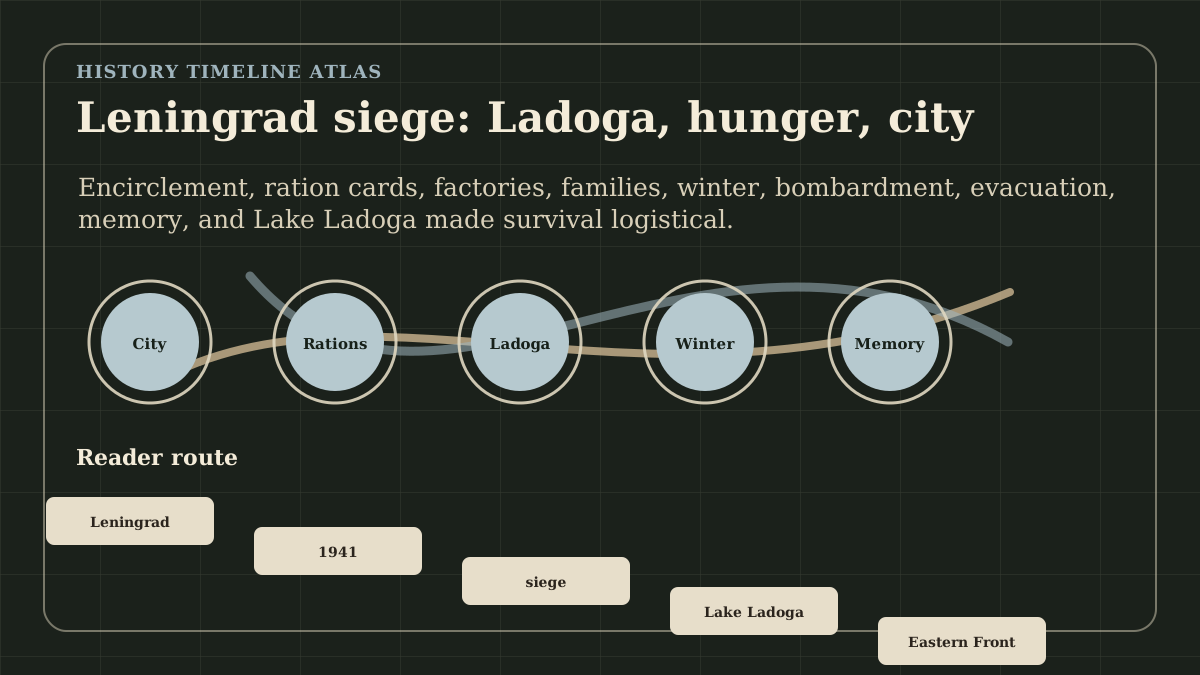
This context prepares the reader to see the event as part of a sequence rather than as an isolated headline. The siege needs to be read as a military encirclement and a civilian catastrophe at the same time. Leningrad was not only a target on a map. It was a city of workers, children, factory managers, musicians, party officials, soldiers, medical staff, and families trying to survive as food, fuel, transport, and heat collapsed. The German plan to isolate the city turned geography into a weapon. Lake Ladoga gives the page its crucial route.
The Road of Life was not a romantic escape corridor; it was a dangerous supply and evacuation system exposed to weather, bombardment, ice, exhaustion, and administrative failure. Keeping that route visible helps readers understand why survival depended on logistics as much as courage. The page also has to keep Nazi policy visible. The siege was not ordinary encirclement alone; it belonged to a wider war in which starvation, racial ideology, occupation planning, and the destruction of Soviet urban life were part of strategy. That context prevents the story from becoming only a tale of local endurance.
The Turning Point
The siege began when Axis forces severed the city's land connections. Survival depended on rationing, local defense, evacuation attempts, industrial work under fire, and the dangerous supply route across Lake Ladoga known as the Road of Life. The turning point was not simply that the event occurred, but that it changed the range of options available afterward. People connected to Leningrad residents, Soviet defenders, German Army Group North acted inside constraints created by earlier conflicts, institutions, and expectations. Some choices were deliberate; others were responses to pressure, fear, opportunity, or failed compromise. The event's form as siege also shaped how consequences unfolded.
It made certain outcomes easier to imagine, gave later actors new evidence or symbols to use, and forced communities to adapt to a situation that could no longer be treated as temporary. The turning point was the severing of land routes in September 1941. Once the city was isolated, every decision about food, heat, evacuation, military production, and public order became part of survival under siege. A second turning point was the creation and defense of supply routes across Lake Ladoga. Boats, ice roads, trucks, warehouses, drivers, soldiers, and administrators turned geography into a fragile lifeline that could never fully erase hunger but could keep the city from complete collapse.
Consequences
Leningrad endured the siege until Soviet forces fully lifted it in January 1944. The siege became one of the war's starkest examples of civilian endurance, starvation warfare, and the scale of suffering on the Eastern Front. The immediate result mattered, but the longer effect came from how later people interpreted and reused the event. Some consequences were institutional: laws, borders, offices, alliances, or systems of rule changed. Others were social or cultural: public memory, political language, religious identity, or expectations about power shifted. Read the event on two clocks at once. One clock follows the immediate aftermath; the other follows the slower movement of influence into later crises, reforms, debates, and historical comparisons.
The siege became a central Soviet and Russian memory of endurance, but memory can flatten the experience. Hunger did not strike everyone equally. Access to work, ration categories, evacuation, age, health, political status, and informal exchange all shaped who lived and who died. A careful page honors endurance while still asking how institutions handled scarcity. Leningrad also changes the way readers approach the Eastern Front. It shows that World War II was fought through hunger, winter, industry, propaganda, evacuation, and city life as well as through armies. Read it beside Barbarossa, Stalingrad, Kursk, and the Holocaust to see how Nazi war aims treated civilians as part of the battlefield.
The siege's evidence base is unusually intimate: ration cards, diaries, medical records, evacuation lists, music, photographs, official reports, and family memory all carry different kinds of truth. A strong page lets those materials complicate simple triumphal language without losing sight of the city's survival.
Interpretation Notes
Public memory often emphasizes heroic endurance, while historians also examine state planning, evacuation failures, censorship, and the unequal experience of survival inside the city.
Why Keep Reading
The next useful step is to follow the linked events, people, topic routes, and timelines. Siege of Leningrad Begins becomes clearer when it is compared with what came before and after it, especially events in Twentieth Century and related pages about World War II and Eastern Front. The map helps locate the event, the mind map separates causes from effects, and the source list gives readers a way to check the factual spine. Keep reading to see whether this event was a beginning, a turning point, an ending, or a symbol that later generations kept reworking. Read Leningrad after Operation Barbarossa and before Stalingrad, Kursk, Warsaw, and the liberation of Nazi-occupied Europe.
That path shows how the Eastern Front joined military operations, ideology, civilian suffering, and memory in one vast conflict. It also helps readers compare different kinds of wartime evidence: operational maps, ration records, survivor diaries, and later commemorations do not answer the same questions.
Reading Path
Follow the story without losing the thread
Before This
- Attack on Pearl HarborDecember 7, 1941
- Operation BarbarossaJune 22, 1941
- Atlantic CharterAugust 14, 1941
After This
- Battle of MidwayJune 1942
- Battle of Stalingrad1942-1943
- Battle of the Coral SeaMay 1942
Same Period
- Assassination of Archduke Franz FerdinandJune 28, 1914
- Russian Revolution1917 CE
- Treaty of VersaillesJune 28, 1919
Wider Timeline
Mind Map
How to think about Siege of Leningrad Begins
Nazi siege policy
Starvation, racial ideology, and the destruction of Soviet urban life made the siege more than a conventional encirclement.
Map Layer
Where this event sits geographically
Gold pins mark the approximate locations of published event pages. This is a schematic locator map, not a historical border map.
Coordinates are approximate and are used to help readers orient themselves before opening a full event page.
References
Where to Check the Facts
- Encyclopaedia Britannica: Siege of LeningradReference for the chronology and human cost of the siege.
- Imperial War Museums: The Siege of LeningradMuseum reference for the siege's civilian and military context.
- Imperial War Museums: The Siege of Leningrad collectionMuseum collection reference for visual and material evidence from besieged Leningrad.
- National WWI Museum and Memorial: All About WWIMuseum reference hub for World War I chronology, maps, articles, and educational context.
- U.S. National Archives: World War I CentennialArchive reference hub for World War I records, photographs, documents, and educational resources.
- The National WWII Museum: Explore By TopicMuseum reference hub for World War II theaters, battles, home fronts, aftermath, and memory.
- Imperial War Museums: What You Need to Know About the Second World WarMuseum reference for the global war, civilian experience, military fronts, and consequences.