At a Glance
The shape of the event
- Date
- January 20, 1942
- Place
- Wannsee, Berlin
- Type
- Policy Conference
Senior Nazi officials met at Wannsee to coordinate the bureaucratic implementation of the so-called Final Solution, linking genocide to administrative planning across occupied Europe.
January 20, 1942; place the event in Wannsee, Berlin before comparing causes or consequences.
Wannsee remains crucial evidence for the bureaucratic character of the Holocaust and the way genocide was embedded in state administration.
Reinhard Heydrich / Adolf Eichmann / Nazi officials are the first names or groups to compare before widening the story.
The conference strengthened coordination among Nazi agencies involved in deportation, forced labor, and mass murder.
The conference strengthened coordination among Nazi agencies involved in deportation, forced labor, and mass murder.
Wannsee remains crucial evidence for the bureaucratic character of the Holocaust and the way genocide was embedded in state administration.
The next useful step is to follow the linked events, people, topic routes, and timelines.
Background
Mass murder of Jews had already begun through shootings, ghettos, deportations, and killing operations. Wannsee did not start the Holocaust, but it clarified how state agencies would coordinate deportation and murder. Before Wannsee Conference, the surrounding world already contained unresolved tensions over authority, resources, belief, strategy, or legitimacy. Those pressures mattered because they shaped what different actors thought was possible. Single-cause explanations flatten the background, which was usually a mix of long-running structures and immediate decisions. The location in Central Europe also matters, because events there connected local choices to wider routes of diplomacy, war, trade, reform, or memory. This context prepares the reader to see the event as part of a sequence rather than as an isolated headline.
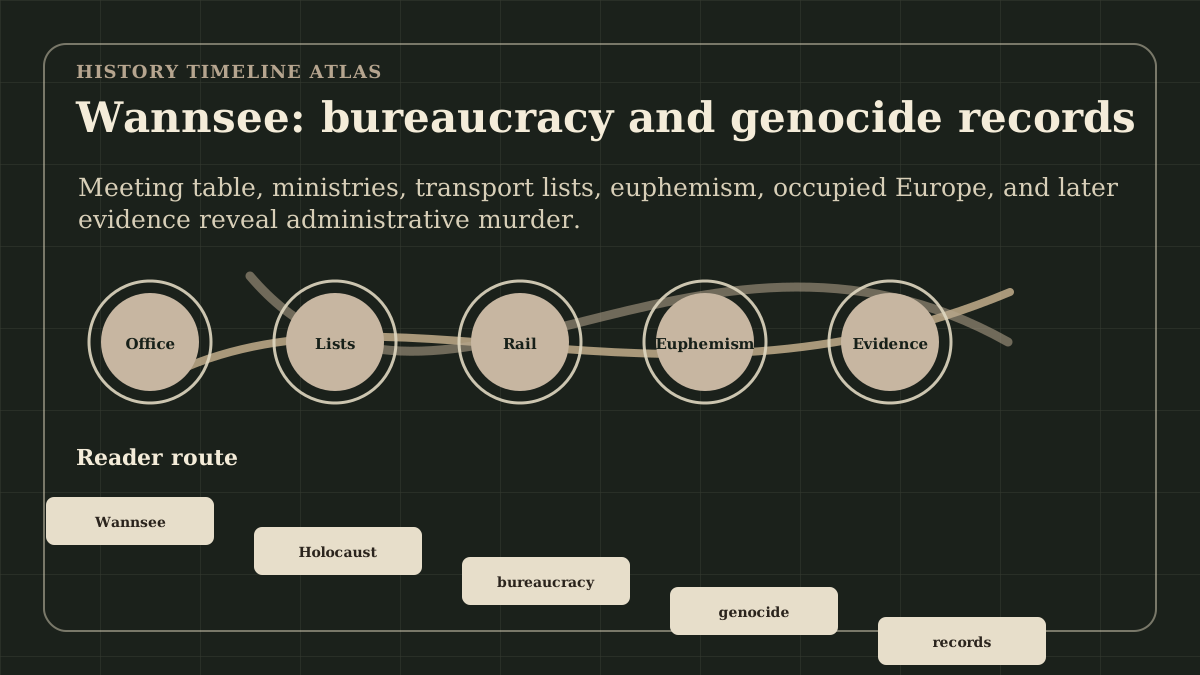
Wannsee becomes clearer when read as administrative coordination inside an already violent system. The meeting did not invent Nazi antisemitism or begin mass murder, but it connected ministries, police authority, transport, forced labor, deportation categories, and occupied territories. That bureaucratic setting is the point. Genocide depended on people who could turn racial ideology into schedules, lists, jurisdictional claims, and office work. The setting also helps readers understand why this event is so disturbing. A lakeside villa, minutes, titles, departments, and policy language can look ordinary on the surface. The horror lies partly in that ordinariness: officials used administrative habits to organize deportation and murder across a continent.
The machinery needs to be visible without treating the meeting as the Holocaust's starting gun. Occupied Europe belongs in the room. The discussion depended on ghettos, shootings, rail networks, police chains, labor categories, and the seizure of Jewish people from many jurisdictions. The map points outward from Berlin to deportation routes, occupied territories, ministries, camps, and killing sites rather than staying inside the conference room.
The Turning Point
Heydrich chaired the meeting while Eichmann recorded minutes. Officials discussed categories, deportation logistics, labor, and administrative responsibility, showing how genocide could be organized through ordinary offices and technical language. The turning point was not simply that the event occurred, but that it changed the range of options available afterward. People connected to Reinhard Heydrich, Adolf Eichmann, Nazi officials acted inside constraints created by earlier conflicts, institutions, and expectations. Some choices were deliberate; others were responses to pressure, fear, opportunity, or failed compromise. The event's form as policy conference also shaped how consequences unfolded.
It made certain outcomes easier to imagine, gave later actors new evidence or symbols to use, and forced communities to adapt to a situation that could no longer be treated as temporary. The turning point was coordination, not invention. Heydrich used the meeting to assert authority, align agencies, and clarify how offices would cooperate. That made the event important even though murder was already underway. It shows how radical policy could become more systematic when rival bureaucracies were made to work through a shared procedure. Eichmann's minutes matter because they preserve euphemism and structure at once. The language avoids direct moral clarity, yet the document reveals participants, categories, territories, and administrative assumptions.
The source teaches a hard lesson: evidence of mass violence often survives in the very language designed to disguise it.
Consequences
The conference strengthened coordination among Nazi agencies involved in deportation, forced labor, and mass murder. Wannsee remains crucial evidence for the bureaucratic character of the Holocaust and the way genocide was embedded in state administration. The immediate result mattered, but the longer effect came from how later people interpreted and reused the event. Some consequences were institutional: laws, borders, offices, alliances, or systems of rule changed. Others were social or cultural: public memory, political language, religious identity, or expectations about power shifted. Read the event on two clocks at once. One clock follows the immediate aftermath; the other follows the slower movement of influence into later crises, reforms, debates, and historical comparisons.
The event's long afterlife comes from the surviving record. Minutes, names, offices, euphemisms, and later testimony let readers see how state language can hide mass violence while making it executable. That makes Wannsee a crucial route into Holocaust history, the war against civilians, and the legal questions that later surfaced at Nuremberg. Wannsee also helps readers understand responsibility beyond a single dictator. Genocide required ideological leaders, police officials, transport administrators, lawyers, clerks, local collaborators, camp personnel, and many institutions that made persecution routine. That does not dilute responsibility. It widens the field of accountability to the systems that made murder administratively possible.
Interpretation Notes
A common misconception treats Wannsee as the moment the Holocaust was decided; the stronger interpretation places it inside an already unfolding process of radicalization and murder.
Why Keep Reading
The next useful step is to follow the linked events, people, topic routes, and timelines. Wannsee Conference becomes clearer when it is compared with what came before and after it, especially events in Twentieth Century and related pages about Holocaust and World War II. The map helps locate the event, the mind map separates causes from effects, and the source list gives readers a way to check the factual spine. Keep reading to see whether this event was a beginning, a turning point, an ending, or a symbol that later generations kept reworking. Read Wannsee beside the Holocaust route, Nuremberg Trials, World War II timeline, and pages on occupation.
That path keeps policy language, victim experience, military context, and postwar legal reckoning connected.
Reading Path
Follow the story without losing the thread
Before This
- Battle of MidwayJune 1942
- Battle of Stalingrad1942-1943
- Battle of the Coral SeaMay 1942
After This
- Warsaw Ghetto UprisingApril-May 1943
- Battle of KurskJuly 5-August 23, 1943
- Tehran ConferenceNovember 28-December 1, 1943
Same Period
- Assassination of Archduke Franz FerdinandJune 28, 1914
- Russian Revolution1917 CE
- Treaty of VersaillesJune 28, 1919
Wider Timeline
Mind Map
How to think about Wannsee Conference
Pressure
Mass murder of Jews had already begun through shootings, ghettos, deportations, and killing operations. Wannsee did not start the Holocaust, but it clarified how state agencies would coordinate deportation and murder.
Map Layer
Where this event sits geographically
Gold pins mark the approximate locations of published event pages. This is a schematic locator map, not a historical border map.
Coordinates are approximate and are used to help readers orient themselves before opening a full event page.
References
Where to Check the Facts
- United States Holocaust Memorial Museum: Wannsee Conference and the Final SolutionReference for the meeting, participants, and Holocaust context.
- Official House of the Wannsee Conference: Protocol and DocumentsOfficial memorial reference for the Wannsee protocol, documents, and conference interpretation.
- Encyclopaedia Britannica: Wannsee ConferenceReference for the conference's role in Nazi policy coordination.
- National WWI Museum and Memorial: All About WWIMuseum reference hub for World War I chronology, maps, articles, and educational context.
- U.S. National Archives: World War I CentennialArchive reference hub for World War I records, photographs, documents, and educational resources.
- The National WWII Museum: Explore By TopicMuseum reference hub for World War II theaters, battles, home fronts, aftermath, and memory.
- Imperial War Museums: What You Need to Know About the Second World WarMuseum reference for the global war, civilian experience, military fronts, and consequences.