Central Question
How did East Asian states repeatedly transform older dynastic, bureaucratic, military, and cultural systems under pressure from conquest, reform, empire, and global trade?
Start With These Dates
- 589Sui Reunifies China
The Sui dynasty reunified China after centuries of division, creating institutions and infrastructure later expanded by the Tang.
- 618Tang Dynasty Founded
The Tang dynasty replaced the Sui and built one of imperial China's most influential political and cultural orders.
- 645Taika Reforms
The Taika reforms reorganized court authority, land, taxation, and administration under a more centralized model influenced by continental systems.
- 710Nara Capital Established
Japan established a permanent capital at Nara, strengthening court government, Buddhist institutions, and written administration.
- 1644Qing Conquest of China
Manchu forces entered Beijing and began Qing rule over China after Ming collapse and civil war.
- 1989Tiananmen Square Protests
Pro-democracy demonstrations centered on Tiananmen Square called for political reform before the Chinese government used force to suppress the movement.
- 1997Hong Kong Handover
Britain transferred Hong Kong to China under the one country, two systems framework, linking treaty-port history, decolonization, capitalism, sovereignty, and civic memory.
Sources Used Here
- Encyclopaedia Britannica: Tang dynasty
Reference for Tang state formation, government, culture, and regional influence.
- Encyclopaedia Britannica: Song dynasty
Reference for Song political chronology, economy, technology, and culture.
- Official UNESCO World Heritage Centre: Historic Monuments of Ancient Nara
Institutional reference for Nara's capital landscape, Buddhist monuments, and East Asian cultural exchange.
- Cambridge University Press: The Cambridge History of China
Specialist scholarly synthesis for Chinese dynastic, imperial, revolutionary, and Mao-era historical interpretation.
- Cambridge University Press: The Cambridge History of Japan
Specialist scholarly synthesis for Japanese state formation, Meiji transformation, imperial expansion, and modern political change.
East Asia Dynasties, Reform, and Modernity is designed as a route, not a folder. It gathers events that answer related reader questions about power, belief, conflict, exchange, institutions, and memory. The strongest way to read the page is to move from the earliest events toward the later ones, watching how one kind of pressure changes form across different places.
The route currently runs from 589 to 1997. That span lets readers compare immediate turning points with slower consequences: the founding of institutions, the spread of ideas, the shock of war or disease, and the way later societies reused earlier events as warnings, models, or symbols.
Start with Sui Reunifies China, Tang Dynasty Founded, Taika Reforms, Nara Capital Established, Heian Capital Established and then follow the internal links into people, timelines, years, maps, and source lists. The route structure stays visible when each event explains why it belongs with the others and where the next useful page is.
Compare the events by scale. Some are concentrated moments, such as a battle, proclamation, trial, or publication. Others are long processes, such as a reform movement, pandemic, trade route, or diplomatic order. Reading both types together helps prevent the page from becoming a list of dates.
A useful route keeps uncertainty visible. Historical change rarely has one cause or one clean ending, so the reader can separate background pressure, immediate trigger, turning point, result, and later memory. That pattern is what makes the atlas expandable without making the reader start over each time.
This route is also a comparison tool. After reading one event, compare it with a later event on the same page and ask what changed in scale, language, geography, technology, authority, or public memory. The comparison is often more useful than the individual summary because it reveals the pattern the topic page is built to expose. When a claim feels too neat, open the full event page and check whether the evidence supports one cause, several causes, or a contested interpretation before moving on.
This route deepens East Asia beyond a few modern flashpoints. It begins with Sui reunification and Tang state formation, then follows Japanese reforms, Nara and Heian capitals, Goryeo and Joseon Korea, Song economic life, Mongol conquest, Ming restoration, Qing conquest, treaty ports, regional war, nationalism, revolution, reform, and Hong Kong. The long frame matters because modern East Asia inherited older institutions and memories.
The medieval section is about adaptation and statecraft. Japan adapted continental institutions without becoming China. Korea built durable dynastic systems with its own court, Buddhism, Confucianism, and military pressures. Song China expanded commerce and civil administration while facing frontier limits. These pages help readers see East Asia as a region of interaction, not as one center with passive neighbors.
The early modern and modern section turns the route toward conquest, trade, and reform under pressure. Ming, Joseon, Imjin War, Qing, Treaty of Nanjing, Meiji Japan, the Sino-Japanese War, May Fourth, the Long March, PRC founding, Cultural Revolution, reform and opening, Tiananmen, and Hong Kong show changing answers to the same problem: how can states preserve authority while facing internal crisis and external pressure?
A broad East Asia question often splits quickly into China, Japan, Korea, dynasty, reform, and modernity. This route connects those doors without pretending they are identical. It lets a beginner start with dynasties and end with globalization while keeping war, economy, culture, and sovereignty visible.
The route begins with dynastic statecraft because later modern crises become harder to understand without it. Sui reunification, Tang administration, Song commerce, Ming restoration, Qing conquest, Japanese court adaptation, and Korean dynastic durability all show how bureaucracy, law, ritual, education, land, military organization, and capitals made authority visible. Modern East Asia did not emerge from a blank slate; it argued with older languages of order.
Japan's early route is not a side note to China. Nara and Heian courts adapted writing, Buddhism, law codes, urban planning, and aristocratic culture while developing their own court politics and landed power. The Meiji Restoration later used the language of civilization, sovereignty, industry, conscription, education, and empire in another act of selective adaptation. The comparison across centuries helps readers see borrowing as political choice rather than imitation.
Korea deserves its own path inside the route. Goryeo and Joseon show Buddhism, Confucian governance, military pressure, printing, diplomacy, landholding, court faction, and local society operating between powerful neighbors without losing historical specificity. The Imjin War reveals Korea as a battlefield of Japanese invasion, Ming intervention, naval defense, civilian trauma, and regional strategy. Korea is not only the place where other powers meet; it is a historical actor with its own institutions.
China's imperial sequence adds scale and discontinuity. Tang cosmopolitanism, Song commercialization, Mongol conquest, Ming rebuilding, Qing expansion, treaty-port pressure, republican nationalism, Communist revolution, Mao-era campaigns, reform and opening, 1989, and Hong Kong all belong to one long argument over authority. The route avoids a simple cycle model by asking which institutions survived, which broke, and which were reinvented under pressure.
Regional interaction makes the route more interesting than a national timeline. Envoys, monks, texts, tribute missions, pirates, merchants, printers, potters, soldiers, students, missionaries, revolutionaries, and exiles crossed the sea and land routes that connect China, Korea, Japan, Mongolia, Vietnam, and wider maritime Asia. Sometimes movement produced admiration and learning; sometimes it produced invasion, unequal treaties, or occupation.
The nineteenth century changes the route's tempo. The Treaty of Nanjing, Meiji reforms, the Sino-Japanese War, treaty ports, railways, newspapers, factories, and new schools show that East Asian states were measuring themselves against military and industrial pressure. The question was not simply Westernization. It was how to survive in a world where sovereignty depended on ships, guns, finance, international law, and public mobilization.
Revolution and reform need to be separated. May Fourth activists challenged empire, tradition, science, language, gender, and national weakness. The Long March became a political memory of survival and party legitimacy. The PRC founding built a new state; the Cultural Revolution attacked institutions in the name of revolution; reform and opening reorganized economy and global connection; Tiananmen revealed conflict over political voice. Each event changes the meaning of modernity.
Hong Kong gives the route a sovereignty and globalization endpoint. Treaty-port history, British rule, migration, manufacturing, finance, protest, and the 1997 handover connect nineteenth-century coercion with late twentieth-century global capitalism. Hong Kong is not only an ending to colonial rule; it is a lens on law, identity, public protest, memory, and the unfinished problem of sovereignty.
Evidence varies across the route. Court chronicles, legal codes, Buddhist objects, ceramics, maps, palace architecture, diplomatic records, treaty texts, newspapers, photographs, memoirs, party documents, economic statistics, protest testimony, and museum objects each carry different biases. East Asian history becomes more readable when readers ask whether a claim comes from a court, a conqueror, a reformer, a merchant, a survivor, or a later state memory.
The source trail now has documentary edges as well as reference works. UNESCO sites anchor Nara and Kyoto as built environments; Cambridge and Oxford scholarship keep China, Japan, Korea, and Meiji reform inside specialist debate; Korean and Japanese institutional archives keep local records visible; Columbia's Nanjing treaty excerpt shows how coercive diplomacy entered legal language; the UK National Archives May Fourth material gives student protest and international-equality claims a primary-source foothold; Hong Kong's Basic Law text anchors the handover route in official legal language. Those records help the page move beyond dynastic summary.
The hub also warns against teleology. Meiji reform did not automatically mean liberal modernity; it also built imperial capacity. Chinese revolution did not simply replace dynasty with a predetermined modern state; it passed through war, fiscal crisis, ideology, organization, and mass mobilization. Korean history is not only a buffer between China and Japan; Joseon institutions, colonial experience, independence activism, division, and war each need their own evidence. These cautions make the page more honest when the route moves through sensitive and contested events.
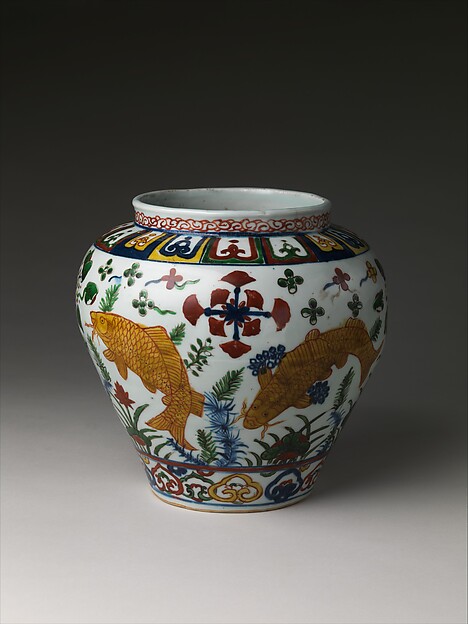
The visual route works through material culture as well as maps. A porcelain jar reveals craft, kilns, trade, taste, and global demand; a manuscript reveals religious transmission; a treaty image reveals coercive law; a city plan reveals state design; a protest photograph reveals public risk. The best visuals connect objects to institutions and movement rather than reducing East Asia to decorative motifs.
The next-click path is deliberately layered. A beginner can read Sui, Tang, Song, Ming, Qing, Meiji, Nanjing, PRC, reform, and Hong Kong as a broad sequence. A student can compare Japan, Korea, and China through statecraft, war, reform, and sovereignty. A deeper reader can follow evidence types: court record, artifact, treaty, manifesto, party text, economic data, and public memory.
The route's central tension is continuity under pressure. East Asian states and societies repeatedly borrowed, resisted, translated, centralized, commercialized, militarized, and remembered. The result is not one civilizational story and not three isolated national stories. It is a regional history where dynastic statecraft, cultural transmission, imperial violence, reform projects, revolution, economic globalization, and sovereignty disputes remain connected.
Social history gives the sequence its human scale. Exam candidates, monks, women in court households, peasant taxpayers, potters, sailors, treaty-port workers, factory laborers, soldiers, students, Red Guards, migrants, bankers, and protesters all appear at different points. Their lives show how dynastic order, reform, war, and globalization reached far beyond palaces and party documents.
Memory also travels across borders. The Tang appears in later cultural pride; Joseon remains central to Korean identity; Meiji can be remembered as reform and as imperial expansion; Nanjing and the Sino-Japanese War carry pain, diplomacy, and denial; 1989 and Hong Kong carry contested language about rights and order. The route stays honest when public memory is treated as a historical force, not an afterthought.
A useful closing question is how authority learns. Courts learned from precedent, reformers learned from foreign models, revolutionaries learned from defeat, economies learned from global markets, and protesters learned from earlier movements. East Asian history becomes more than sequence when the reader watches states and societies revise inherited tools under pressure while arguing over which memories deserve authority. That question ties dynastic precedent to modern reform.
Read the events in order first; the page is built to reveal change over time.
Ask which pressures existed before the visible turning point and which actors had room to choose.
Follow what changed afterward in institutions, borders, law, belief, or everyday life.
Notice which events became symbols and why later generations kept returning to them.
Compare bureaucracy, capitals, courts, law, education, and military systems across China, Japan, and Korea.
Follow envoys, wars, Buddhism, Confucianism, trade, texts, and technology across borders.
Use treaties, war, revolution, reform, protest, and sovereignty transfers to read modern East Asia.
Look for moments when states borrowed law, writing, technology, schooling, military forms, or institutions while changing their meaning.
Read Imjin, treaty ports, Sino-Japanese conflict, revolution, occupation memory, and Hong Kong through the question of who controls law and territory.
Use chronicles, ceramics, treaties, photographs, manifestos, and protest records to connect objects with institutions and public memory.
Choose a Reading Path
Start With the Timeline
Use the related timeline first when you want a chronological route through the topic.
Start with 589: Sui Reunifies ChinaOpen a Person Page
Use people pages when the topic is easier to understand through leadership, resistance, reform, or memory.
Start with 618: Tang Dynasty FoundedUse Year Pages
Use year pages when you need a fast answer to what changed in a specific year.
Start with 645: Taika ReformsReturn to the Map
Use the map to keep geography visible while moving between events and regions.
Start with 710: Nara Capital EstablishedBegin With Dynasties
Start with Sui, Tang, Song, Ming, Qing, Goryeo, Joseon, Nara, and Heian to see statecraft before modern crisis.
Start with 1644: Qing Conquest of ChinaCompare Japan and Korea
Use court capitals, Buddhism, Confucian governance, military invasion, and Meiji reform to avoid a China-only route.
Start with 1989: Tiananmen Square ProtestsFollow Imperial Pressure
Open Treaty of Nanjing, Meiji, the Sino-Japanese War, and Hong Kong when the question is sovereignty under unequal power.
Start with 1997: Hong Kong HandoverRead Revolution and Reform
Move from May Fourth to the Long March, PRC founding, Cultural Revolution, reform and opening, and Tiananmen.
Use the Object Trail
Let porcelain, manuscripts, city plans, treaty texts, maps, photographs, and protest records anchor the wider sequence.
How the Story Builds
Begin with Sui Reunifies China. The opening event usually shows the pressure that made the route necessary: a crisis of authority, an expanding exchange system, a new technology, a contested idea, or a conflict that older institutions could no longer contain.
Qing Conquest of China works as a checkpoint because it lets readers ask what had become irreversible, which actors still had choices, and how the route changed scale between the opening event and the later consequences.
The later edge of the route includes China's Reform and Opening Begins, Tiananmen Square Protests, and Hong Kong Handover. These pages help readers see what survived beyond the first shock: institutions, borders, laws, memories, technologies, movements, or arguments that kept shaping later history.
The route is easier to remember through people and places. Watch figures such as Emperor Wen of Sui, Sui officials, Gaozu of Tang, Li family, Emperor Kotoku, and Nakatomi no Kamatari move through settings such as Chang'an and southern China, Chang'an, Yamato court, Nara, and Heian-kyo; that is where large structures become visible as choices, risks, costs, and memories.
Sui, Tang, Song, Ming, Qing, Goryeo, Joseon, Nara, and Heian create languages of court order, law, ritual, and administration.
Monks, envoys, texts, ceramics, merchants, soldiers, and students move institutions and ideas across borders without erasing local difference.
Mongol, Ming, Qing, and Imjin histories show conquest, reconstruction, border-making, and defensive memory across the region.
Nanjing, Meiji, treaty ports, newspapers, schools, and military reform turn sovereignty into an industrial and legal problem.
May Fourth, the Long March, PRC founding, and the Cultural Revolution connect national crisis to party legitimacy and mass mobilization.
Reform and opening, Tiananmen, Hong Kong, export growth, protest, and legal memory bring the route into the contemporary world.
- Which event in East Asia Dynasties, Reform, and Modernity feels like the true point of no return, and why might another reader choose a different event?
- What changes if the route is read from the perspective of ordinary people rather than rulers, armies, inventors, reformers, or institutions?
- Which consequence was immediate, and which consequence only became clear decades later?
- Where does the map change the interpretation by showing distance, borders, routes, ports, capitals, or frontiers?
- How did East Asian states borrow institutions without becoming copies of one another?
- Why did Korea and Japan need their own routes inside East Asian history?
- How did nineteenth-century imperial pressure change Qing, Japanese, and Korean politics?
- What connects dynastic history to reform, revolution, and globalization?
- When does adaptation become reform, and when does it become imperial competition?
- Which sources reveal ordinary people inside dynastic and revolutionary state projects?
- How does Hong Kong change the interpretation of treaty ports, empire, law, protest, and globalization?
Interactive Timeline
Follow East Asia Dynasties, Reform, and Modernity by sequence
Sui Reunifies China
The Sui dynasty reunified China after centuries of division, creating institutions and infrastructure later expanded by the Tang.
Read the full event pageMap Layer
East Asia Dynasties, Reform, and Modernity geography
Gold pins mark the approximate locations of published event pages. This is a schematic locator map, not a historical border map.
Coordinates are approximate and are used to help readers orient themselves before opening a full event page.
Route Events
Events in This Topic
Sui Reunifies China
The Sui dynasty reunified China after centuries of division, creating institutions and infrastructure later expanded by the Tang.
Tang Dynasty Founded
The Tang dynasty replaced the Sui and built one of imperial China's most influential political and cultural orders.
Taika Reforms
The Taika reforms reorganized court authority, land, taxation, and administration under a more centralized model influenced by continental systems.
Nara Capital Established
Japan established a permanent capital at Nara, strengthening court government, Buddhist institutions, and written administration.
Heian Capital Established
The Japanese court moved to Heian-kyo, opening a long period of aristocratic culture, court politics, and changing provincial power.
Goryeo Unifies Korea
Goryeo unified much of the Korean Peninsula after the Later Three Kingdoms period, creating a durable dynasty that shaped Korean institutions, Buddhism, diplomacy, and political memory.
Song Dynasty Founded
The Song dynasty reunified much of China after the Five Dynasties period and built a highly developed civil, commercial, and technological order.
Mongol Conquest of Southern Song
Mongol forces completed the conquest of Southern Song, bringing all of China under Yuan rule.
Ming Dynasty Founded
Zhu Yuanzhang founded the Ming dynasty after the collapse of Yuan rule, creating a new imperial order with strong central claims.
Joseon Dynasty Founded
The Joseon dynasty replaced Goryeo and built a long-lasting Korean state shaped by Confucian institutions and elite culture.
Zheng He's First Indian Ocean Voyage
Zheng He began the first of the Ming treasure voyages, sending large Chinese fleets through Southeast Asia and across the Indian Ocean.
Imjin War Begins
Japanese invasions of Korea began the Imjin War, drawing Joseon Korea, Ming China, and Japanese armies into a devastating regional conflict.
Qing Conquest of China
Manchu forces entered Beijing and began Qing rule over China after Ming collapse and civil war.
Treaty of Nanjing
The Treaty of Nanjing ended the First Opium War and forced Qing China into treaty-port concessions, indemnities, and Hong Kong's cession.
Meiji Restoration
The Tokugawa shogunate collapsed and imperial rule was restored in a political settlement that launched intense state-led modernization.
First Sino-Japanese War Begins
War between Qing China and Meiji Japan over influence in Korea revealed a major shift in East Asian regional power.
Xinhai Revolution
The Xinhai Revolution overthrew the Qing dynasty and opened the way for the Republic of China after centuries of imperial rule.
May Fourth Movement
Chinese students and intellectuals protested the Versailles settlement and broader political weakness, linking nationalism to cultural and political critique.
Long March Begins
Chinese Communist forces began the Long March after military pressure from Nationalist campaigns.
Founding of the People's Republic of China
Mao Zedong proclaimed the People's Republic of China in Beijing after Communist victory in the Chinese Civil War.
Korean War Begins
North Korean forces crossed into South Korea, turning a divided peninsula into a major Cold War war involving the United Nations, China, and the United States.
Cultural Revolution Begins
Mao Zedong launched the Cultural Revolution, mobilizing youth and political campaigns against perceived enemies and old structures.
China's Reform and Opening Begins
China began market-oriented reform and opening policies under Deng Xiaoping's leadership after the Mao era.
Tiananmen Square Protests
Pro-democracy demonstrations centered on Tiananmen Square called for political reform before the Chinese government used force to suppress the movement.
Hong Kong Handover
Britain transferred Hong Kong to China under the one country, two systems framework, linking treaty-port history, decolonization, capitalism, sovereignty, and civic memory.
References
Where to Check the Facts
- Encyclopaedia Britannica: Tang dynastyReference for Tang state formation, government, culture, and regional influence.
- Encyclopaedia Britannica: Song dynastyReference for Song political chronology, economy, technology, and culture.
- Official UNESCO World Heritage Centre: Historic Monuments of Ancient NaraInstitutional reference for Nara's capital landscape, Buddhist monuments, and East Asian cultural exchange.
- Cambridge University Press: The Cambridge History of ChinaSpecialist scholarly synthesis for Chinese dynastic, imperial, revolutionary, and Mao-era historical interpretation.
- Cambridge University Press: The Cambridge History of JapanSpecialist scholarly synthesis for Japanese state formation, Meiji transformation, imperial expansion, and modern political change.
- Harvard University Press: A New History of KoreaKorean-history scholarship reference for long Korean chronology, institutions, cultural history, colonial pressure, and modern change.
- Oxford Research Encyclopedia of Asian History: Meiji RevolutionPeer-reviewed reference for Meiji transformation as revolution, state centralization, social change, and contested modernization.
- Encyclopaedia Britannica: Ming dynastyReference for Ming restoration, government, maritime activity, and culture.
- Encyclopaedia Britannica: Qing dynastyReference for Qing conquest, imperial expansion, crisis, and reform.
- Official UNESCO World Heritage Centre: Historic Monuments of Ancient KyotoInstitutional reference for Kyoto's long capital history, court culture, temples, and urban memory.
- Official archive: Columbia Asia for Educators: Treaty of Nanjing excerptsPrimary-source teaching excerpt for the Treaty of Nanjing, treaty-port coercion, indemnity, and legal-commercial pressure after the Opium War.
- National Archives of Japan: Constitution of Japan and Meiji constitutional holdingsJapanese archival reference for Meiji constitutional state-building, imperial rescripts, and the legal language of modern reform.
- National Diet Library: Modern Japan in Archives - Japan's Annexation of KoreaJapanese archive reference for the 1910 annexation of Korea and the documentary trail behind Japanese colonial rule.
- National Institute of Korean History: Annals of the Choson DynastyKorean institutional reference for Joseon court records, dynastic governance, and Korean historical specificity inside the East Asia path.
- U.S. Office of the Historian: English translation of the 1910 Korea annexation treatyDiplomatic-document reference for treaty language around Japan's annexation of Korea and international reporting of colonial transition.
- Official archive: UK National Archives: May Fourth Movement 1919Primary-source archive material for May Fourth diplomacy, national equality language, and post-World War I Chinese protest context.
- Official archive: Hong Kong Basic Law official English textOfficial legal text for the Hong Kong handover framework, rights language, political structure, and sovereignty after 1997.