At a Glance
The shape of the event
- Date
- March-April 1930
- Place
- Dandi
- Type
- Civil Disobedience
Mahatma Gandhi led a march to the sea to protest Britain's salt monopoly, turning a common commodity into a symbol of colonial resistance.
March-April 1930; place the event in Dandi before comparing causes or consequences.
The Salt March showed the political power of disciplined civil disobedience and mass symbolic action.
Mahatma Gandhi are the first names or groups to compare before widening the story.
The campaign drew international attention and expanded participation in India's independence movement.
The campaign drew international attention and expanded participation in India's independence movement.
The Salt March showed the political power of disciplined civil disobedience and mass symbolic action.
The Salt March sits at a hinge between tactical invention and long-term political change; following what came next helps test competing interpretations.
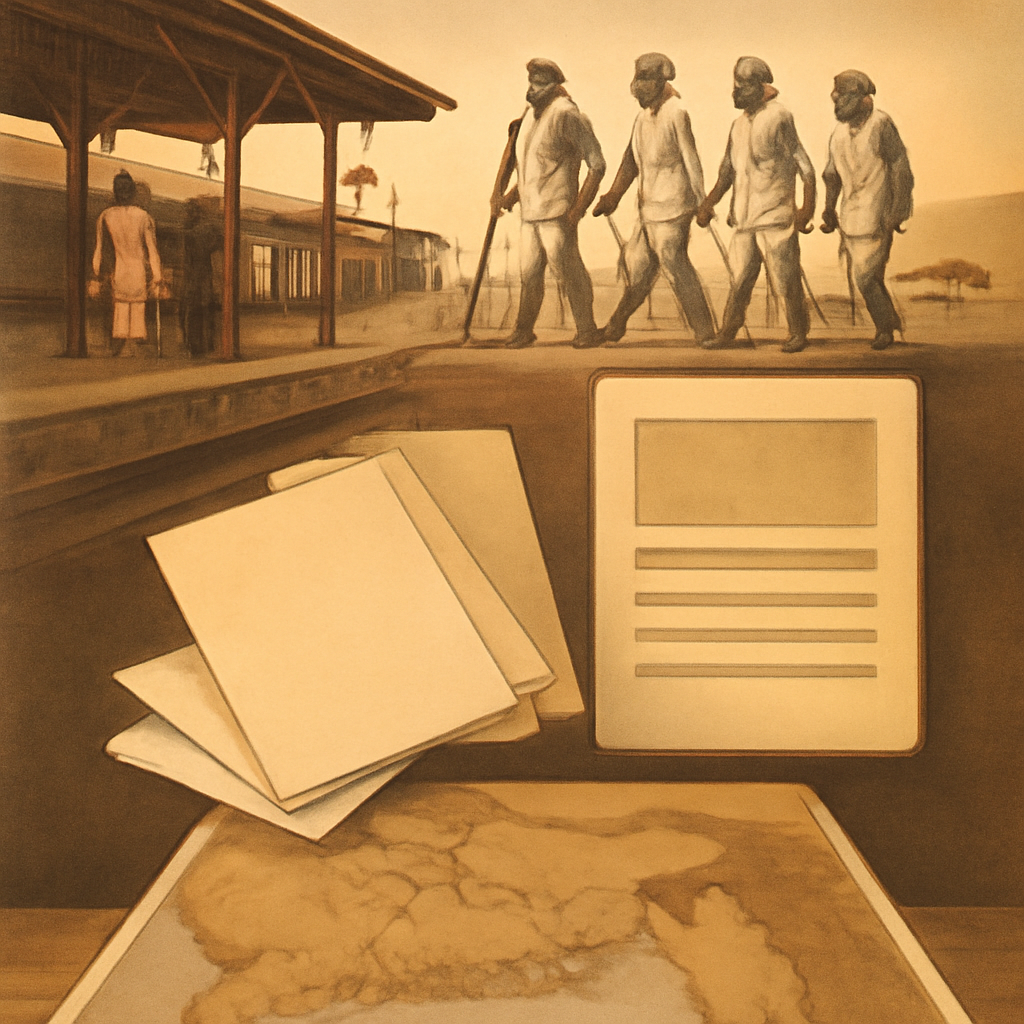
Background
By 1930, Indian opposition to British rule had reached a stage where symbolic acts could carry broad political force. For decades the British government had maintained a monopoly over salt: its manufacture and sale were regulated and taxed, turning a basic necessity into a source of revenue and grievance. Salt’s ubiquity made it a strategic target — no one was exempt from its use, and so its regulation touched household life as much as public politics. Mahatma Gandhi chose this common commodity to expose the wider inequalities of colonial authority, to condense complex demands for self-rule into an act that millions could understand and, potentially, reproduce. This explanation captures part of the story but not all of it.
Structural forces — economic extraction, political exclusion, administrative control — created conditions for mass protest. Individual choices mattered too: Gandhi’s decision to frame a campaign around salt, organizers’ tactical choices, and ordinary people’s willingness to follow transformed grievance into action. Historians debate how much weight to give each level: was the march the decisive spark that mobilized millions, or one of many expressions of deeper long-term pressures? This page keeps that tension visible rather than resolving it. The Salt March is readable because it turned an everyday substance into a political instrument. Salt linked tax policy, household life, coastal geography, colonial law, and moral theater.
Gandhi's march worked because it made imperial power visible in a form ordinary people could understand and join. The event also depended on planning, discipline, press attention, local participation, and the symbolic choice of walking through villages. It was not only a protest against a tax; it was a way to show how nonviolent action could organize bodies, time, and public meaning.
The Turning Point
The immediate change came in how resistance was enacted and observed. By walking to the shore at Dandi, Mahatma Gandhi converted an abstract protest into a visible, repeatable act: salt production and possession, previously regulated by law, could be reclaimed as a deliberately political gesture. That decision reframed everyday behaviour — what people ate, how they gathered salt — as an arena of contention. The march itself drew attention because it was led from the front by Gandhi, whose presence made the action legible to sympathizers at home and abroad. Participants who followed him, whether local villagers or urban sympathizers, turned a leader’s solitary act into collective disobedience.
Officials were forced to respond to widely publicized acts that could not be contained to courtroom debates or parliamentary petitions. International observers, journalists and political critics took note, and the campaign’s visibility changed the terms of the contest: it was no longer only a legal or administrative issue but a moral and political confrontation staged in public. At the same time, the turning point was not only theatrical. The choice to pursue nonviolent, disciplined civil disobedience constrained behaviour even as it magnified impact: participants could refuse compliance without resorting to armed conflict, and that restraint shaped both how authorities reacted and how the wider population judged the movement.
Different historians emphasize different elements of this shift; the facts above keep those disputes explicit. The turning point was the move from grievance to mass civil disobedience. By breaking the salt law at Dandi, Gandhi converted a legal issue into a national and international spectacle of colonial authority being refused.
Consequences
In the near term, the Salt March reshaped public attention and political calculations. The campaign drew international notice, bringing reporters and foreign audiences into closer view of India’s struggle. Within India, the action broadened engagement: people who had previously been on the margins of political life recognized that a household necessity could be a site of lawful defiance, and many joined protests, demonstrations, and forms of noncooperation. Those shifts increased the scale and visibility of the independence movement without reducing its nonviolent self-definition. Over a longer horizon, the march became a touchstone in narratives about how modern mass movements could operate.
It is widely cited as an example of disciplined civil disobedience and mass symbolic action — a tactical model that other leaders and movements have studied or emulated. Yet the longer-term consequences are not mono-causal. The Salt March interacted with economic pressures, political organization, and international opinion in ways historians still parse. Some view it as catalytic; others see it as one significant episode among many structural forces that produced decolonization. What is less disputed is that the march shifted perceptions: not only of what salt meant in a colony, but of what ordinary people could do when a simple act was given political form.
The consequences included arrests, wider civil disobedience, global attention, negotiations, and a stronger public image of Indian nationalism as disciplined mass action. The march also revealed the limits of spectacle, since independence still required years of negotiation, repression, organizing, and political conflict.
Interpretation Notes
Salt March can look simple when reduced to one date, but the evidence usually points to a wider setting. The useful debate is which part mattered most: leadership, logistics, belief, social pressure, or the institutions that survived afterward.
Why Keep Reading
The Salt March sits at a hinge between tactical invention and long-term political change; following what came next helps test competing interpretations. Read next about the wider civil-disobedience campaigns of the early 1930s to see how nonviolent tactics spread and were contested across regions and classes. Explore biographies of Gandhi and of local organisers to weigh individual agency against structural pressures. Compare international press coverage and diplomatic responses to understand how overseas attention shaped colonial governance. Each thread deepens the central question: when does a symbolic act become a decisive force? Continue to Gandhi, Indian nationalism, the Indian Rebellion of 1857, Partition, and decolonization routes to follow how symbolic protest became political leverage.
Reading Path
Follow the story without losing the thread
Before This
- Wall Street Crash of 1929October 1929
- Women's Suffrage in the United StatesAugust 18, 1920
- Treaty of VersaillesJune 28, 1919
After This
- Rise of Nazi Germany1933 CE
- Invasion of PolandSeptember 1, 1939
- Attack on Pearl HarborDecember 7, 1941
Same Period
- Assassination of Archduke Franz FerdinandJune 28, 1914
- Russian Revolution1917 CE
- Treaty of VersaillesJune 28, 1919
Wider Timeline
Mind Map
How to think about Salt March
Salt monopoly
British regulation and taxation of salt turned an everyday necessity into a widespread grievance
Map Layer
Where this event sits geographically
Gold pins mark the approximate locations of published event pages. This is a schematic locator map, not a historical border map.
Coordinates are approximate and are used to help readers orient themselves before opening a full event page.
References
Where to Check the Facts
- Encyclopaedia Britannica: Salt MarchSpecific reference for Gandhi's 1930 Salt March, civil disobedience, and anti-colonial mobilization.
- Encyclopaedia BritannicaBackground reference for chronology, names, and historical context.
- WikidataStructured reference for dates, places, alternate names, and entity links.