At a Glance
The shape of the event
- Date
- October 1945
- Place
- Manchester
- Type
- Political Congress
The Fifth Pan-African Congress brought activists and future leaders together in Manchester, sharpening demands for African independence and anti-colonial solidarity.
October 1945; place the event in Manchester before comparing causes or consequences.
The congress became a bridge between wartime anti-fascist language and postwar decolonization politics.
Kwame Nkrumah / W. E. B. Du Bois are the first names or groups to compare before widening the story.
Pan-African networks connected diaspora activism with emerging African nationalist movements.
Pan-African networks connected diaspora activism with emerging African nationalist movements.
The congress became a bridge between wartime anti-fascist language and postwar decolonization politics.
Follow this thread to see how ideas forged in transatlantic rooms met local realities on the ground.
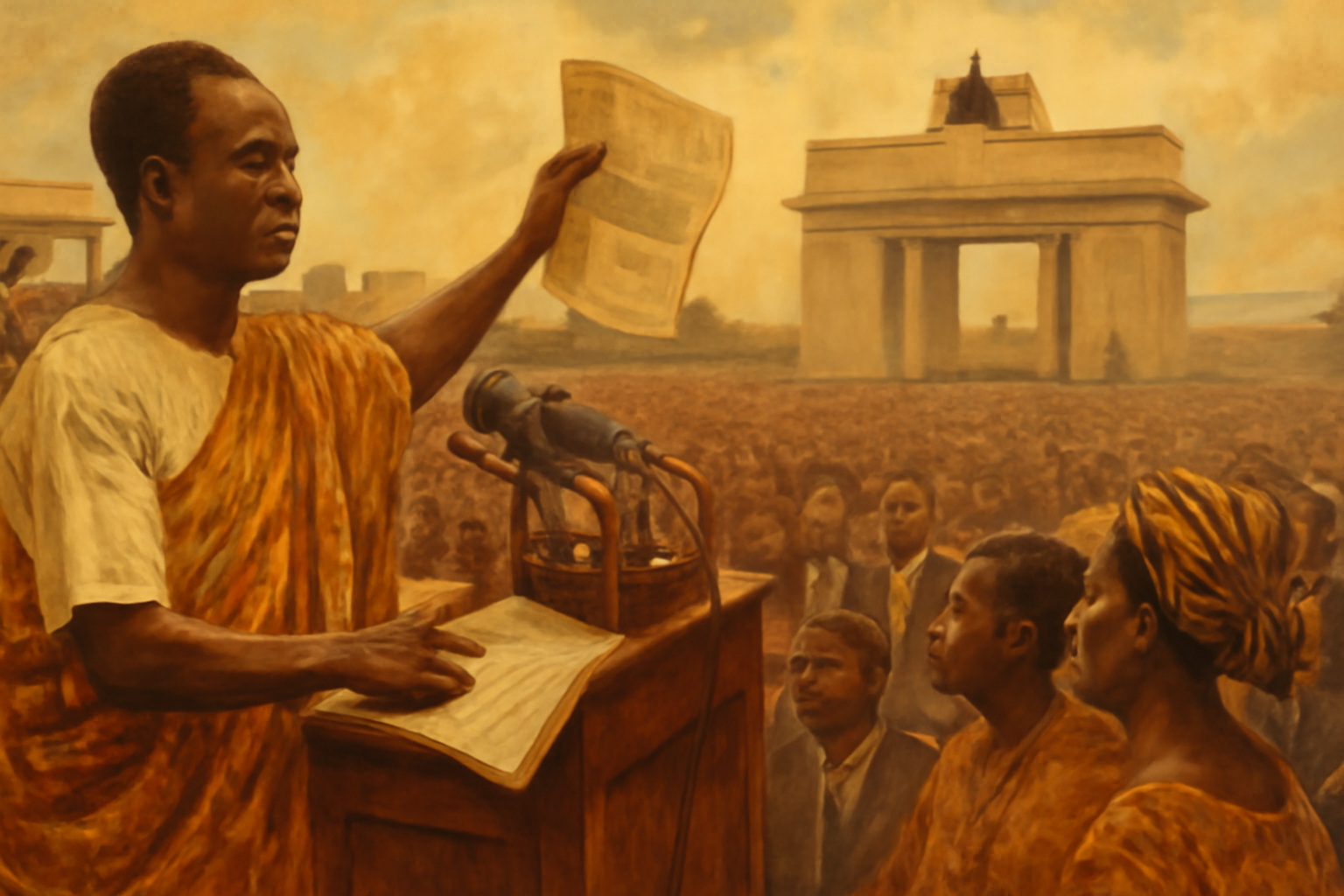
Background
The Fifth Pan‑African Congress met in a world still reorganizing after the Second World War. Wartime rhetoric—about defeating fascism and defending human rights—had reopened public conversation about who counted as a free subject. At the same time, colonial administrations that had seemed unshakeable before the war faced new pressures: returning soldiers, growing urban populations, diasporic networks and enhanced political literacy among students and professionals. Pan‑Africanism itself was not new in 1945; previous conferences and long‑standing transatlantic ties had already built communication channels and shared vocabularies.
Institutions, geography and uneven resources also mattered: Manchester was a city in the imperial metropole with a distinctive diasporic presence and transport links that made it a practical meeting point for activists from Africa, the Caribbean and North America. Expectations ran high on multiple sides—among colonial authorities, metropolitan publics and activists—so that any gathering of this kind would be read as more than a debating society. Still, no single pressure explains the congress. Political cultures, institutional memory, personal networks and material constraints combined to create a setting in which a concentrated political argument about independence and rights could gain renewed force.
The 1945 Pan-African Congress gains force when Manchester is treated as a meeting point for workers, students, intellectuals, trade unionists, and future political leaders rather than a ceremonial conference. Delegates connected wartime anti-fascist language to colonial labor, racism, land, representation, and the demand for self-government. The congress also helps readers see decolonization before independence flags. Ideas moved through newspapers, unions, diaspora networks, speeches, petitions, and personal relationships. Nkrumah, Du Bois, Padmore, and other participants mattered, but the broader network made Pan-Africanism practical.
The Turning Point
What changed in Manchester was the tone and reach of anti‑colonial politics. Delegates did not invent pan‑African ideas in October 1945, but they made strategic choices about how to carry them forward. By bringing together activists from across the Atlantic and African Diaspora—among them Kwame Nkrumah and W. E. B. Du Bois—the congress sharpened a language of active demands for self‑government and coordinated solidarity rather than leaving such claims to isolated national struggles. Those present debated tactics and objectives: whether to press metropolitan publics with moral appeals, to link diasporic pressure to grassroots organizing in African territories, or to frame independence as a rights issue in postwar diplomatic settings.
The Manchester meeting also placed a premium on network building—resolving to sustain contacts, share information and cultivate leaders who would return to their home contexts with political programmes. In short, the congress turned scattered pressures into a clearer set of political options, exporting a model of transatlantic cooperation that future nationalists would adapt. These were choices about priorities and forms of engagement as much as about slogans; they made the congress a practical node in a broader anti‑colonial trajectory. The turning point was the sharper move from reformist appeal toward mass anti-colonial politics. The congress did not create decolonization by itself, but it gave language and connection to activists who would soon work inside parties, unions, and liberation movements.
Consequences
In the months and years after the congress, its most visible consequence was not a single law or declaration but a denser web of political connections. Pan‑African networks that linked diaspora activism with emerging African nationalist movements became more systematic: people who met in Manchester kept corresponding, exchanged strategies, and carried ideas into party platforms and mass mobilizations. The congress helped to translate wartime anti‑fascist language about rights and self‑determination into political vocabulary that colonial activists could use against imperial rule. Over the longer term, the Manchester meeting is best seen as a contributing moment—one that made certain lines of argument more prominent and legitimized transnational coordination among future leaders.
That influence was uneven: it mattered more in some contexts than in others, and it interacted with local political conditions, economic constraints and metropolitan responses. Historians therefore debate causation: the congress did not single‑handedly trigger decolonization, but it became an important bridge between the moral framings of a global conflict and the practical politics of postwar independence movements. Its legacy is visible in the careers of attendees who later assumed national leadership and in the persistence of Pan‑African vocabulary in diplomatic and grassroots struggles. The afterlife runs through Ghanaian independence, African parties, anti-apartheid organizing, the Non-Aligned Movement, and later debates over continental unity. The event matters because it links diaspora politics to state-making on the African continent.
Interpretation Notes
The hardest question around Fifth Pan-African Congress is causation. The event had immediate actors, but its meaning also came from institutions, geography, resources, and expectations already present in Atlantic and African Diaspora.
Why Keep Reading
Follow this thread to see how ideas forged in transatlantic rooms met local realities on the ground. The Fifth Pan‑African Congress connects directly to biographies—of Kwame Nkrumah among them—and to the next decade of political formation across Africa and the Caribbean. Readers who track the congress’s networks will encounter electoral campaigns, decolonization negotiations, and cultural movements that repurposed its language of rights. Examining what attendees did afterward also sharpens the central historical question: when does a meeting become a movement? Tracing those afterlives clarifies both the promise and the limits of international gatherings as engines of political change. Read this event with Ghana independence, Bandung, OAU, apartheid, and civil rights pages.
That route shows how anti-colonial politics crossed the Atlantic, Africa, and international institutions.
Reading Path
Follow the story without losing the thread
Before This
- Indonesia Proclaims IndependenceAugust 17, 1945
- Fifth Pan-African CongressOctober 1945
- Battle of AdwaMarch 1, 1896
After This
- Mau Mau Uprising Begins1952 CE
- Battle of Dien Bien Phu1954 CE
- Algerian War BeginsNovember 1954
Same Period
- Ghana IndependenceMarch 6, 1957
- Tanganyika Gains IndependenceDecember 9, 1961
- Indonesia Proclaims IndependenceAugust 17, 1945
Wider Timeline
Mind Map
How to think about Fifth Pan-African Congress
Wartime rhetoric
Language about defeating fascism and defending human rights created moral leverage for anti‑colonial claims in 1945.
Map Layer
Where this event sits geographically
Gold pins mark the approximate locations of published event pages. This is a schematic locator map, not a historical border map.
Coordinates are approximate and are used to help readers orient themselves before opening a full event page.
References
Where to Check the Facts
- Encyclopaedia Britannica: Pan-AfricanismReference for Pan-Africanism, congresses, diaspora politics, and anti-colonial movements.
- BlackPast: Fifth Pan-African CongressSupporting reference for the Manchester meeting, participants, and political demands.