At a Glance
The shape of the event
- Date
- c. 1200 BCE
- Place
- San Lorenzo and Gulf Coast lowlands
- Type
- Urban and Ritual Development
Olmec centers on the Gulf Coast developed monumental sculpture, ritual landscapes, and elite authority that influenced later Mesoamerican societies.
c. 1200 BCE; place the event in San Lorenzo and Gulf Coast lowlands before comparing causes or consequences.
The Olmec route gives the atlas a deep Indigenous American starting point before Maya, Aztec, Inca, and European-contact narratives.
Olmec sculptors / Gulf Coast communities are the first names or groups to compare before widening the story.
Large ceremonial centers and long-distance exchange helped define an early Mesoamerican cultural horizon.
Large ceremonial centers and long-distance exchange helped define an early Mesoamerican cultural horizon.
The Olmec route gives the atlas a deep Indigenous American starting point before Maya, Aztec, Inca, and European-contact narratives.
Follow this thread to see how early monuments and ritual centers seed later developments across Mesoamerica: how artistic conventions circulate, how ritual space becomes political space, and how exchange links distant...
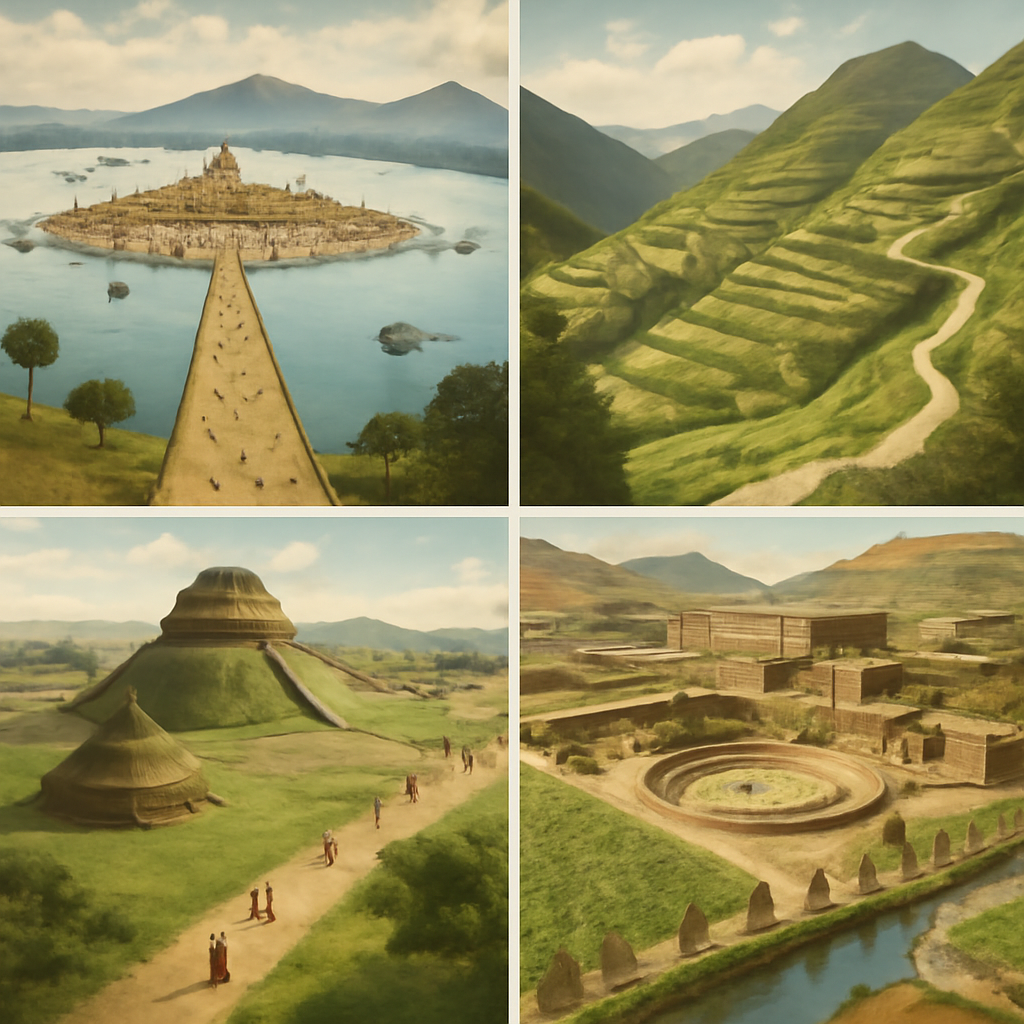
Background
The Gulf Coast lowlands where Olmec centers emerged were a complex setting of humid plains, river channels, and communities tied to seasonal rhythms. Small-scale farming, fishing, and gathering supported settled villages while craftspeople experimented with new forms and scales of representation. No single cause explains the rise of monumental places: social leaders, skilled stoneworkers, collective labor, and widening networks of exchange all mattered in different degrees and at different times. Across this coastline, people negotiated the practical challenges of food production, resource procurement, and intercommunity relations. At the same time, symbolic work—ritual rites, public images, and designated ceremonial spaces—became a way to manage those pressures.
Archaeology and later memory preserve traces of those efforts, but each line of evidence—artistic remains, settlement patterns, or hearsay recorded centuries later—emphasizes different actors and motives. That uncertainty is itself part of the moment: communities were crafting public life while leaving multiple, often conflicting, records of what was important. A stronger Olmec page has to resist the old habit of using the phrase 'mother culture' as if it explains everything. San Lorenzo, La Venta, and related Gulf Coast centers mattered deeply, but their importance comes from regional interaction, material evidence, ecology, labor, and later influence, not from a simple one-way origin story for all Mesoamerica. The Gulf Coast environment shaped what was possible.
Rivers, wetlands, fertile zones, transport routes, maize agriculture, fishing, craft production, and access to stone and prestige goods helped communities build centers that were both local and connected. Monumental heads and platforms were part of this landscape, not isolated museum objects. Evidence is unusually important here because Olmec political names and voices do not survive as a narrative text. Archaeologists work through sculpture, settlement patterns, offerings, ceramics, iconography, trade materials, and landscape modification. The page should teach readers how historians know as well as what they know.
The Turning Point
What shifted around c. 1200 BCE was less a single revolution than a clustering of choices by identifiable actors. Skilled Olmec sculptors began producing large-scale, carefully worked imagery; their work required coordinated quarrying, transport, and shared labor. Gulf Coast communities allocated space and time for new ritual landscapes—plazas, mounds, and pathways—where public performance and display could take place. Emerging leaders or corporate households appear to have invested in these projects, framing them as communal obligations, competitive gestures, or both. Those decisions shaped who controlled resources and ritual knowledge. Long-distance exchange networks, already present in the region, provided access to prestige materials and allowed decorative programs to reference distant places, increasing the visibility and authority of certain centers.
Together, these actors—sculptors, community members, craft organizers, and exchange partners—made deliberate choices about scale, visibility, and social labor that turned local practice into regional models and created places whose voices could be heard across the Gulf Coast lowlands. The turning point was the emergence of major centers whose monumental art, planned spaces, and exchange links made authority visible. Labor organization became visible in basalt transport, mound building, carving, and the maintenance of ceremonial landscapes. Another turning point was symbolic circulation. Motifs, materials, and ritual forms associated with Gulf Coast centers appeared across wider Mesoamerican networks, though influence should be read as interaction and adaptation rather than simple cultural copying.
Consequences
In the near term, the choices to concentrate production, ritual practice, and display produced large ceremonial centers that became focal points for surrounding populations. These centers anchored seasonal gatherings, redistributed goods and obligations, and offered arenas in which elite authority could be signaled and contested. In the longer term, the combination of monumental sculpture, designed ritual spaces, and persistent exchange routes helped define an early Mesoamerican cultural horizon: a set of shared forms and practices that later societies would inherit, adapt, or reject. For modern readers and for scholarly narratives, the Olmec route offers a deep Indigenous American starting point that precedes and complicates stories centered on the Maya, Aztec, Inca, or European contact.
Interpretations of this era remain contested because different kinds of evidence—official-looking monuments, everyday deposits, oral memory, and legal or diplomatic traces—emphasize different constituencies. That plurality matters: the material presence of ceremonial centers tells one story; the lived experience of laborers or neighboring communities may tell another. Recognizing those dissonances reshapes how we think about authority, memory, and the making of early states in Mesoamerica. The immediate consequence was the growth of complex centers that could coordinate labor, ritual, exchange, and political display. The longer consequence was a durable reference point for later Mesoamerican histories of kingship, sacred landscapes, maize worlds, art, and interregional contact.
For readers, the Olmec page helps make Indigenous American history deep before Teotihuacan, Maya cities, Tenochtitlan, and conquest. It makes clear that the Americas had long histories of urban and ceremonial complexity before European arrival.
Interpretation Notes
Interpretations of Olmec Centers Flourish depend on whose evidence is centered: rulers and official records, affected communities, oral memory, archaeology, law, diplomacy, labor, and later public memory do not always tell the same story.
Why Keep Reading
Follow this thread to see how early monuments and ritual centers seed later developments across Mesoamerica: how artistic conventions circulate, how ritual space becomes political space, and how exchange links distant polities. Reading on will also expose the tensions between archaeological evidence and other forms of memory—whose voices survive in stone, whose are absent, and why that matters. If you want to understand the deeper roots of later Maya and highland polities, or to compare these Gulf Coast choices with later urban centers, the next entries map those continuities and contrasts. Read the Olmec page before Teotihuacan, Maya, Zapotec, Cahokia, Tenochtitlan, and Indigenous Americas routes. That sequence builds a deeper map of cities, ritual landscapes, trade, and political imagination.
Reading Path
Follow the story without losing the thread
Before This
No direct path yet.
After This
- Chavin Culture Flourishesc. 900 BCE
- Monte Alban Foundedc. 500 BCE
- Nazca Lines Createdc. 200 BCE-600 CE
Same Period
- Chavin Culture Flourishesc. 900 BCE
- Monte Alban Foundedc. 500 BCE
- Nazca Lines Createdc. 200 BCE-600 CE
Wider Timeline
Mind Map
How to think about Olmec Centers Flourish
environment
Coastal lowlands provided resources and routes that supported settled life and regional exchange
Map Layer
Where this event sits geographically
Gold pins mark the approximate locations of published event pages. This is a schematic locator map, not a historical border map.
Coordinates are approximate and are used to help readers orient themselves before opening a full event page.
References
Where to Check the Facts
- Encyclopaedia Britannica: Mesoamerican civilizationReference for Mesoamerican chronology, cities, religion, trade, and political systems.
- Encyclopaedia Britannica: AztecReference for Aztec political expansion, Tenochtitlan, and the Triple Alliance.
- The Metropolitan Museum of Art: TenochtitlanMuseum reference for Mexica urban power, Tenochtitlan, and pre-Columbian imperial context.
- Encyclopaedia Britannica: The Spanish Conquest of the AztecsReference for the Spanish conquest, alliances, Tenochtitlan siege, and Indigenous context.