At a Glance
The shape of the event
- Date
- c. 900 BCE
- Place
- Chavin de Huantar
- Type
- Religious and Cultural Network
Chavin de Huantar became a major Andean ceremonial center, linking ritual practice, art, pilgrimage, and highland exchange.
c. 900 BCE; place the event in Chavin de Huantar before comparing causes or consequences.
The event helps readers see Andean history as an independent route of complexity rather than a preface to Inca power.
Andean ritual specialists / Highland communities are the first names or groups to compare before widening the story.
A shared religious and artistic style spread across parts of the Andes.
A shared religious and artistic style spread across parts of the Andes.
The event helps readers see Andean history as an independent route of complexity rather than a preface to Inca power.
Follow this thread to see how religious networks and artistic forms traveled, transformed, and anchored local power across the Andes.
Background
The high Andes presented a patchwork of microclimates and social worlds. Small valleys, seasonal altiplano pastures, and river corridors produced communities that managed local crops, herds, and routes of exchange. Before c. 900 BCE local ritual practices and artistic choices reflected these varied lifeways, yet communities also faced incentives to connect: trade in exotic goods, the prestige of ceremonial specialists, and the practical need to coordinate labor for irrigation and terracing. Archaeology shows concentrated investment at sites like Chavín de Huantar—monumental stonework, carved iconography, and spaces designed for collective ritual—suggesting these places functioned as nodes where multiple communities met. But this is not a single explanation. Material traces emphasize architecture and objects; oral memory and later histories preserve other claims.
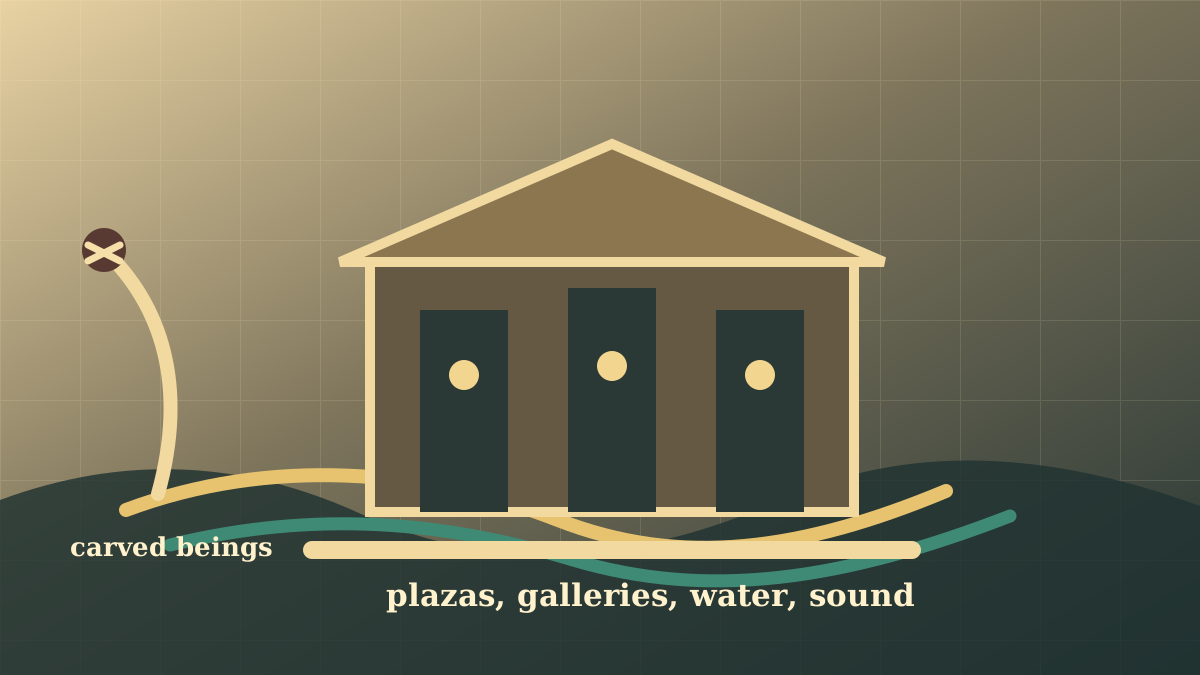
Law, diplomacy, and everyday labor rarely leave the same marks as stone. To understand Chavín culture we must balance environmental pressures, local interests, and the deliberate choices of people who shaped a ceremonial network without reducing the story to one cause. The site itself should be read as technology. Sunken plazas, underground galleries, carved stone heads, the Lanzon, water channels, acoustics, and controlled movement shaped what visitors could see, hear, and feel. Chavin influence was not only an art style moving across the Andes; it was a carefully staged experience that made ritual authority persuasive. Chavin culture makes Andean history visible before empire.
Ceremonial centers, carved stone, pilgrimage, ritual sound, iconography, exchange networks, and highland-lowland connections show how authority could be built through sacred experience and movement. The site of Chavin de Huantar is especially useful because architecture shaped perception. Dark galleries, water sounds, carved beings, plazas, and controlled access created a ritual landscape where power was felt physically as well as seen.
The Turning Point
The crucial change around c. 900 BCE was the reconfiguration of ritual authority and the physical infrastructure that supported it. At Chavín de Huantar ritual specialists—people trained in performance, image-making, and the management of ritual space—built a place whose architecture and artworks facilitated large-scale gatherings and sensory experiences: carved stelae, sculpted faces, and channels that carried sound and water through enclosed spaces. Highland communities began to travel to this center or to adopt its images and ritual forms at home. Those choices mattered: adopting shared iconography and ceremonial practices created a recognizable religious language that could cross ecological and social boundaries.
Pilgrims carried ideas back along trading routes; local leaders used Chavín-style symbols to legitimate authority; craftsmen replicated motifs in distant valleys. None of these actions was inevitable. Competing local traditions, economic needs, and political calculations meant that some communities embraced Chavín forms while others ignored or reinterpreted them. The turning point was therefore less a single event than a widening of influence produced by deliberate ritual, artistic, and logistical practices. Movement through the temple turned architecture into argument. Visitors entered spaces where darkness, sound, restricted access, unfamiliar images, and ceremonial performance could make specialist knowledge feel powerful.
Local leaders who adopted Chavin imagery were not copying decoration; they were borrowing a language of authority that could be adapted to their own valleys and communities.
Consequences
In the near term, Chavín de Huantar functioned as a catalyst: a concentration of ritual expertise, visual motifs, and movement that produced a shared artistic and religious style spreading across parts of the central Andes. Pilgrimage and exchange intensified along particular corridors, and communities that adopted Chavín elements gained new avenues for ritual legitimacy and social connection. In the longer view, this era complicates narratives that treat the Andes as waiting for later imperial projects. Instead, Chavín culture reveals an independent trajectory of complexity—networks built around religion, art, and movement that structured social life for centuries.
Archaeologists find echoes of Chavín motifs and architectural strategies in later highland centers; historians and indigenous communities inherit different memories and meanings of that past. Importantly, recognizing these consequences requires attention to whose records survive: stone carvings and architecture tell different parts of the story than oral traditions, economic records, or later political histories. The spread of a shared style was real and consequential, but its meanings shifted across time and place. The spread of Chavin forms also shows how influence can travel without a conquering empire. Shared motifs, prestige goods, pilgrimage, and ritual expertise linked communities while leaving local variation intact.
That pattern helps readers compare Chavin with later Andean states without treating it as merely an early step toward Inca power. The consequences include shared religious styles, wider Andean interaction, and a model for thinking about authority before large territorial states. Chavin matters because it reveals a deep history of ritual, art, and exchange in the Andes.
Interpretation Notes
Interpretations of Chavin Culture Flourishes depend on whose evidence is centered: rulers and official records, affected communities, oral memory, archaeology, law, diplomacy, labor, and later public memory do not always tell the same story.
Why Keep Reading
Follow this thread to see how religious networks and artistic forms traveled, transformed, and anchored local power across the Andes. The story of Chavín culture opens questions about how images become authoritative, how pilgrimage reshapes economies, and how ritual specialists translate local needs into regional influence. Reading onward connects Chavín’s ceremonial innovations to later architectural choices, to changing trade routes, and to the contested memories different communities preserve. If you want to trace a non-imperial path to social complexity in the highlands, the routes that begin at Chavín de Huantar lead to surprising connections and renewed questions. Continue toward Nasca, Moche, Tiwanaku, Wari, and Inca routes to compare ceremonial authority, environmental management, and regional power.
The strongest path keeps Andean societies central rather than making them a prelude to conquest. Read Chavin with Moche, Nazca, Wari, Tiwanaku, Inca, and Indigenous Americas routes.
Reading Path
Follow the story without losing the thread
Before This
- Olmec Centers Flourishc. 1200 BCE
After This
- Monte Alban Foundedc. 500 BCE
- Nazca Lines Createdc. 200 BCE-600 CE
- Beginning of Muhammad's Revelationsc. 610 CE
Same Period
- Olmec Centers Flourishc. 1200 BCE
- Monte Alban Foundedc. 500 BCE
- Nazca Lines Createdc. 200 BCE-600 CE
Wider Timeline
Mind Map
How to think about Chavin Culture Flourishes
Ecological patchwork
Diverse microclimates and valley communities created incentives to connect across the highlands
Map Layer
Where this event sits geographically
Gold pins mark the approximate locations of published event pages. This is a schematic locator map, not a historical border map.
Coordinates are approximate and are used to help readers orient themselves before opening a full event page.
References
Where to Check the Facts
- Encyclopaedia Britannica: IncaReference for Inca state formation, expansion, and Spanish conquest.
- Official UNESCO World Heritage Centre: Lines and Geoglyphs of Nasca and PalpaReference for the Nazca geoglyph landscape and its archaeological significance.
- The Metropolitan Museum of Art: TenochtitlanMuseum reference for Mexica urban power, Tenochtitlan, and pre-Columbian imperial context.
- Encyclopaedia Britannica: The Spanish Conquest of the AztecsReference for the Spanish conquest, alliances, Tenochtitlan siege, and Indigenous context.