At a Glance
The shape of the event
- Date
- 1886
- Place
- Cuba
- Type
- Abolition Decree
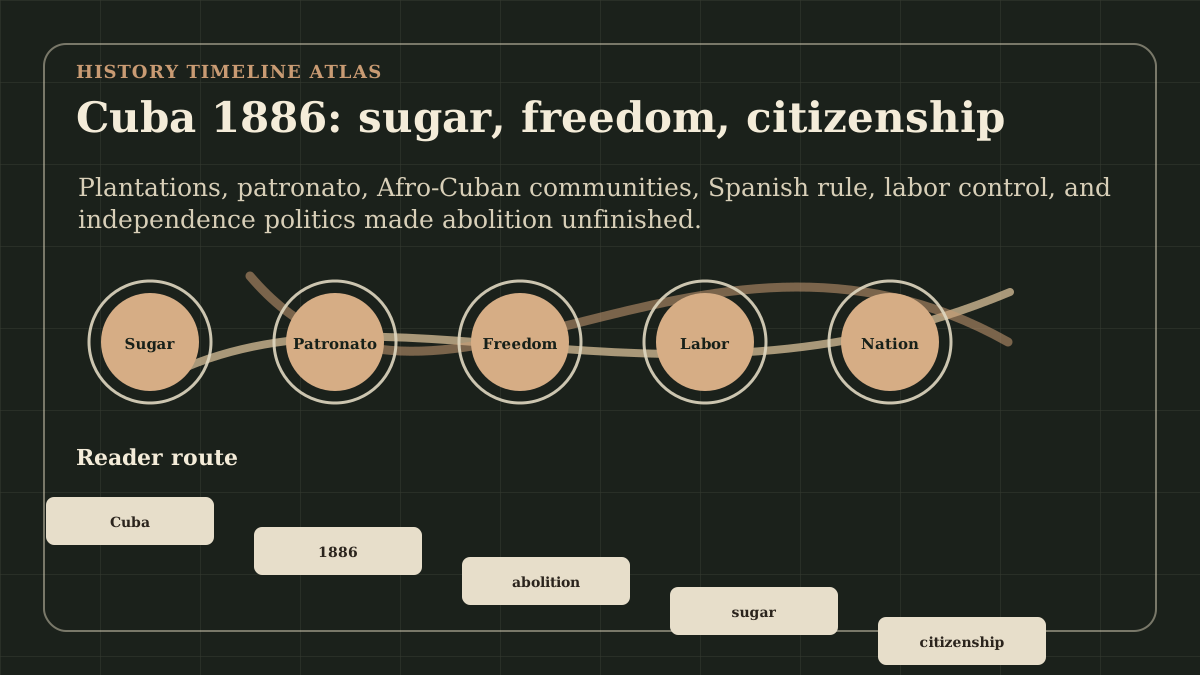
Spanish authorities ended legal slavery in Cuba in 1886 after decades of plantation expansion, resistance, gradual emancipation measures, and political pressure.
1886; place the event in Cuba before comparing causes or consequences.
The event adds the Spanish Caribbean to the abolition route and shows why legal freedom did not immediately settle labor, race, or sovereignty.
Enslaved people in Cuba / Spanish colonial officials / Afro-Cuban communities are the first names or groups to compare before widening the story.
Legal slavery ended, but sugar labor, racial hierarchy, colonial rule, and independence politics remained deeply connected.
Legal slavery ended, but sugar labor, racial hierarchy, colonial rule, and independence politics remained deeply connected.
The event adds the Spanish Caribbean to the abolition route and shows why legal freedom did not immediately settle labor, race, or sovereignty.
Read Cuba after Haiti and before Brazil.
Background
Cuban slavery grew with the island's sugar economy and with the wider Atlantic demand for plantation commodities. Enslaved Africans and their descendants worked in brutal conditions on plantations, in mills, in cities, in households, and in skilled labor settings. The end of the legal transatlantic trade did not end slavery; illegal trafficking, internal sale, plantation expansion, and coercive labor practices continued. Cuba also remained a Spanish colony, so emancipation was tied to imperial politics and independence struggles. The Ten Years' War, abolitionist pressure, slave resistance, patronato arrangements, and debates over labor all shaped the path toward 1886.
A serious page keeps those pieces together: sugar was economic, slavery was legal and racial, empire was political, and freedom was lived through bodies, families, wages, policing, and mobility. Cuba's abolition has to be placed inside the sugar economy. Slavery survived late on the island because plantation wealth, Spanish colonial rule, racial hierarchy, credit, export markets, and political fear kept coercive labor profitable and defended. Legal freedom came after decades of pressure, not as a sudden moral awakening. Enslaved and free Afro-Cubans, abolitionists, insurgents, plantation owners, colonial officials, and international critics all belonged to the story. Gradual abolition also matters.
Systems such as patronato could change legal language while keeping former enslaved people tied to employers, wages, surveillance, and limited choices. That is why the date 1886 should not be treated as instant equality. It marks the end of legal slavery, but not the end of plantation power, racial exclusion, or the struggle over citizenship.
The Turning Point
The turning point in 1886 was the end of legal slavery and the breakdown of the patronato system that had delayed full freedom through a form of transitional labor control. That matters because gradual emancipation often promised freedom while keeping former enslaved people bound to employers, authorities, and paperwork. In Cuba, abolition was not just a date when Spain changed a rule; it was the closing phase of a system that had adapted under pressure. Enslaved people had resisted, negotiated, preserved family ties, fled, bought freedom where possible, joined political struggles, and forced slavery to become harder to defend.
The 1886 decree ended legal ownership of people, but it did not erase the sugar economy, racial hierarchy, colonial rule, or the memory of violence. The turning point was legal abolition after a long transition in which slavery had already been pressured by war, resistance, international criticism, and changing colonial calculation. The law mattered, but it arrived after enslaved people and Afro-Cuban communities had already shaped the terms of freedom. Another turning point was the way emancipation entered independence politics. Freedom from slavery and freedom from empire did not mean the same thing, but Cuban national arguments increasingly had to address both.
Consequences
After 1886, freedom in Cuba remained contested. Formerly enslaved people and Afro-Cuban communities faced questions that appeared across the post-emancipation Atlantic: who controlled land, who set wages, who could move, who could vote, who was protected by law, and who was marked by race after the legal category of slavery ended. Cuban independence politics also changed because abolition altered labor relations and widened the meaning of citizenship. The island's later wars against Spain, the politics of race in the new republic, and debates over national memory all carried slavery's afterlife. Cuba therefore helps readers understand abolition as a beginning as well as an ending. Legal slavery ended, but social repair, economic justice, political equality, and public memory remained unfinished.
The event connects directly to Cuban independence politics. The question of who counted as part of the nation could not be separated from the labor of people whose exploitation had enriched the colony. Abolition changed the terms of political argument: freedom, race, military service, land, work, and sovereignty now had to be discussed together. Cuba also helps readers compare Atlantic emancipation. Haiti, Britain, the United States, Cuba, and Brazil did not follow one clean sequence. Each case tied slavery's end to war, law, compensation, rebellion, empire, and labor control in different proportions. That comparison keeps the page from becoming a single-country note and turns it into a route through the long afterlife of Atlantic slavery.
Interpretation Notes
Interpretations of Cuba Abolishes Slavery depend on whose evidence is centered: rulers and official records, affected communities, oral memory, archaeology, law, diplomacy, labor, and later public memory do not always tell the same story.
Why Keep Reading
Read Cuba after Haiti and before Brazil. Haiti shows enslaved revolution making abolition and independence inseparable. Cuba shows a Spanish Caribbean colony ending slavery late while sugar, empire, and independence politics remained entangled. Brazil's Golden Law then shows the last major slaveholding society in the Americas ending legal slavery in 1888 without broad redistribution or repair. That sequence gives the Atlantic slavery timeline a stronger southern and Caribbean spine. It also prevents readers from treating emancipation as a single Anglo-American story. The best next question is how legal abolition changed labor without automatically changing power. Read Cuba's abolition beside Haiti, the U. S. Thirteenth Amendment, Brazil's Golden Law, and Cuban independence.
That path shows why Atlantic emancipation was legal, economic, racial, military, and national at once. The next useful question is what freedom meant without land, equal citizenship, or a transformed sugar economy. That question carries the reader from abolition into labor history, race politics, and the later wars that made Cuban independence inseparable from Afro-Cuban participation.
Reading Path
Follow the story without losing the thread
Before This
After This
- Brazil's Golden Law1888
- Cuban War of Independence Begins1895
- Philippine Revolution1896-1898 CE
Same Period
- France Abolishes Colonial Slavery1848
- Fall of the Aztec Empire1521 CE
- Cuban Missile CrisisOctober 1962
Wider Timeline
Mind Map
How to think about Cuba Abolishes Slavery
Sugar economy
Plantation production kept slavery profitable and made abolition a conflict over labor and wealth.
Map Layer
Where this event sits geographically
Gold pins mark the approximate locations of published event pages. This is a schematic locator map, not a historical border map.
Coordinates are approximate and are used to help readers orient themselves before opening a full event page.
References
Where to Check the Facts
- The National Archives: British transatlantic slave trade recordsOfficial research guide reference for British slave-trade records and digitised legislation including the Abolition of the Slave Trade Act 1807 and Slavery Abolition Act 1833.
- Official archive: Emancipation ProclamationReference for the United States Emancipation Proclamation and its legal setting.
- Legifrance: French abolition decree, 1848Official legal reference for the 1848 abolition of slavery in French colonies and possessions.
- Gilder Lehrman Institute: Frederick Douglass, 1852Primary-source teaching reference for Douglass's abolitionist Fourth of July address.
- Yale Archives: Cuban slavery collectionArchival reference for Cuban slavery and the 1886 abolition date.
- Encyclopaedia Britannica: William WilberforceBiographical reference for Wilberforce, parliamentary abolitionism, the 1807 slave-trade abolition, and the 1833 slavery abolition act.
- Encyclopaedia Britannica: Slavery Abolition ActReference for British abolition of slavery in much of the empire.
- Primary Source Set: Latin American RevolutionariesPrimary-source set reference for Latin American revolutionary leaders, documents, and independence politics.
- Library of Congress: Hispanic Reading Room CollectionsArchive and collection reference for Latin America, the Caribbean, Iberian worlds, and related primary materials.
- Cambridge University Press: The Cambridge History of Latin AmericaSpecialist scholarly synthesis for colonial society, independence, republic-building, regional variation, and modern Latin American historiography.
- Oxford Research Encyclopedia of Latin American HistoryPeer-reviewed reference for Latin American history themes, regional debates, social history, and competing interpretations.
- John Carter Brown Library: Spanish America collectionPrimary-source collection reference for Spanish American independence, printed political culture, maps, and early republican debate.
- Encyclopaedia Britannica: Latin America independenceReference for Spanish American and Portuguese American independence movements.
- Encyclopaedia Britannica: History of Latin AmericaReference for Latin American colonial, independence, national, and modern history.
- Official UNESCO World Heritage Centre: City of PotosiInstitutional reference for Potosi's mining city, colonial extraction, and global silver economy.
- Library of Congress: U.S. History Primary Source TimelinePrimary-source timeline reference for Atlantic settlement, colonial expansion, reform, and later U.S. history paths.