At a Glance
The shape of the event
- Date
- 1973-1974 CE
- Place
- Middle East and global oil markets
- Type
- Energy embargo
Arab oil producers restricted shipments during the 1973 Arab-Israeli war, turning energy supply into a global diplomatic and economic crisis.
1973-1974 CE; place the event in Middle East and global oil markets before comparing causes or consequences.
The embargo shows how Middle Eastern politics, resource control, diplomacy, inflation, and everyday life became globally linked.
OAPEC governments / Richard Nixon are the first names or groups to compare before widening the story.
Oil prices surged, industrial economies faced shocks, and energy security became a central policy issue.
Oil prices surged, industrial economies faced shocks, and energy security became a central policy issue.
The embargo shows how Middle Eastern politics, resource control, diplomacy, inflation, and everyday life became globally linked.
Follow this episode into adjacent timelines to see how a regional conflict produced global policy transformations.
Background
The embargo unfolded against layered pressures rather than a single cause. The immediate trigger was the 1973 Arab-Israeli war, during which Arab oil producers sought to signal political opposition and exert pressure by restricting shipments. But that action landed on a world already shaped by deep interdependence: industrial economies had by then become heavily reliant on supplies from the Middle East; global trade and finance linked distant markets; and Cold War alignments magnified the diplomatic stakes of regional conflicts. OAPEC governments — the Arab oil-producing states that coordinated the restriction of shipments — acted in a regional political context where resource control could be a visible instrument of statecraft.
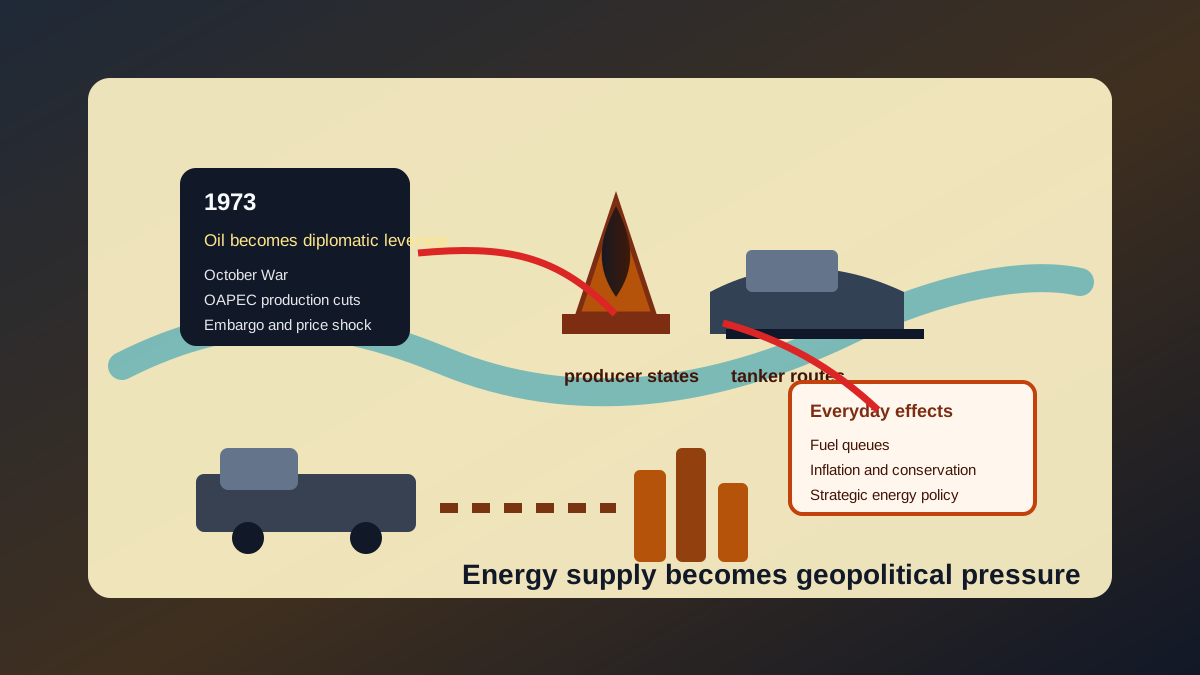
At the same time, many consuming states had built infrastructures and consumption patterns that assumed steady, affordable petroleum. Those technical and economic patterns, the war in the region, and the broader strategic competition of the era together set the stage for a shock that would be felt in boardrooms, ministries and households alike. The Arab oil embargo should not be treated as a simple price shock. It emerged from the October War, OAPEC strategy, U. S. support for Israel, producer-state bargaining, and a changing global energy order. Oil became a diplomatic weapon because industrial economies had built everyday life around reliable petroleum supply. The crisis exposed how vulnerable that system was.
Queues, inflation, conservation language, speed limits, strategic reserves, and new attention to producer sovereignty made energy politics visible to households as well as governments.
The Turning Point
What changed was the redefinition of oil from a broadly traded commodity into a leverageable geopolitical asset. In the months around the 1973 Arab-Israeli war, OAPEC governments restricted shipments; that policy decision converted regional politics into a global economic and diplomatic emergency. The embargo interrupted established flows of crude and refined product, forcing importing nations and international oil companies to confront immediate shortages and uncertainty. Political leaders — including figures in Washington such as President Richard Nixon and his administration — found energy suddenly central to foreign as well as domestic policy. Diplomacy shifted toward emergency negotiations over supply, transit and pricing even as markets scrambled to adjust.
Commercial routines that had treated oil as a largely market-driven good were disrupted by strategic decisions from oil-producing states, and that shift exposed the limits of previous assumptions: when producers collectively used export controls, the ripple effects extended from financial markets to industrial output and consumer prices. In short, the turning point was the explicit use of shipment restrictions by Arab producers during a live regional war, and the immediate conversion of that choice into a global crisis of supply, diplomacy and economic expectation. The turning point was the use of production cuts and embargo policy to connect Middle Eastern war diplomacy with the global economy. Energy supply became a field of geopolitical leverage, not just commerce.
Consequences
In the near term the embargo produced a severe shock: oil prices surged, industrial economies experienced dislocations, and governments scrambled to respond to rapidly rising import bills and inflationary pressure. The sudden rise in energy costs fed into broader economic strains and made energy availability a political issue at home and abroad. Over the longer term, the episode shifted priorities for states and institutions. Energy security moved to the center of policy discussions — a matter for defence planners, trade negotiators and fiscal policymakers as much as for energy ministries and companies.
The embargo also altered international relations by underscoring the potency of Middle Eastern resource politics; consuming countries re-evaluated diplomatic ties, supply diversification and the vulnerability of their economic models. On a social level, the crisis connected distant conflicts to everyday experiences of price and access, shaping public memory and political debate for years to come. Finally, historians and political actors have avoided flattening the episode into a single headline precisely because its legacies include a web of economic adjustments, diplomatic realignments and contested memories about who was affected and why. The afterlife included stagflation debates, shifts in U. S. energy policy, strengthened Gulf producer influence, petrodollar flows, and long arguments over dependency, security, and conservation.
The embargo belongs inside Middle Eastern history and global economic history at the same time. It also gives readers a concrete way to see how distant war, household routines, and financial systems can become connected overnight.
Interpretation Notes
Arab Oil Embargo is easy to flatten into one dramatic date. A stronger reading separates immediate action from deeper causes, affected communities, and the memory later states or movements built around the event.
Why Keep Reading
Follow this episode into adjacent timelines to see how a regional conflict produced global policy transformations. Read next about the 1973 Arab-Israeli war to understand the proximate political dispute; then trace how importing governments recalibrated energy policy and how oil markets adjusted in subsequent years. Paying attention to policy responses, the experiences of importing and exporting communities, and the evolving public memory will reveal why the embargo still matters for debates about energy security, international leverage and the diplomatic consequences of resource control. Read this page with the October War, Iranian Revolution, Suez Crisis, Cold War energy routes, and globalization pages to see how oil linked war, inflation, diplomacy, and daily life.
Reading Path
Follow the story without losing the thread
Before This
- Chilean Coup1973
- SALT I and Detente1972
- ARPANET Connection1969 CE
After This
- Fall of SaigonApril 30, 1975
- Angola Gains IndependenceNovember 11, 1975
- Helsinki Final ActAugust 1, 1975
Same Period
- Iranian Revolution1978-1979 CE
- Iran-Iraq War BeginsSeptember 1980
- Mongol Sack of BaghdadFebruary 1258
Wider Timeline
Mind Map
How to think about Arab Oil Embargo
Regional conflict
The 1973 Arab-Israeli war provided the immediate political context that prompted producers to restrict shipments.
Map Layer
Where this event sits geographically
Gold pins mark the approximate locations of published event pages. This is a schematic locator map, not a historical border map.
Coordinates are approximate and are used to help readers orient themselves before opening a full event page.
References
Where to Check the Facts
- Encyclopaedia Britannica: Iranian RevolutionReference for the 1978-1979 revolution and establishment of the Islamic Republic.
- Encyclopaedia Britannica: Arab oil embargoReference for the 1973-1974 embargo and its energy, diplomatic, and economic consequences.
- Official United Nations Peacekeeping: First United Nations Emergency ForceOfficial UN reference for the Suez Crisis, UNEF, ceasefire, withdrawal, and international peacekeeping frame.
- Official UN Peacemaker: Oslo AccordsOfficial UN-hosted reference for the 1993 Declaration of Principles and interim self-government framework.
- U.S. National Archives: The Cold WarArchive reference hub for Cold War records, federal documentation, and research guidance.
- Office of the Historian: The Early Cold War, 1945-1952Official diplomatic history reference for early Cold War foreign-policy context.