How to Read the Year
Why does 550 BCE make the Achaemenid Empire easier to understand?
550 BCE is useful because it gives readers a doorway into the rise of the Achaemenid Persian Empire without pretending that empire began in a single instant. Cyrus the Great's defeat of the Median king Astyages is the usual anchor, but the larger history is about how a regional power learned to govern distance, elites, roads, tribute, armies, and imperial memory.
The date belongs to a world of older Near Eastern states, Iranian-speaking groups, Babylonian power, Anatolian kingdoms, trade routes, and court politics. Persia did not rise in an empty landscape. Its expansion worked because conquest was followed by systems that could hold many peoples, languages, cults, and local authorities inside one imperial frame.
Cyrus matters because later memory treated him as both conqueror and model ruler. Greek, biblical, Babylonian, and later Persian-related traditions remembered him in different ways, so the year opens a source question as well as a political one. Which evidence describes military success, which describes imperial policy, and which reflects later admiration?
The Median victory also helps readers see continuity inside change. Persian rule drew on older imperial practices from Assyria, Babylonia, Elam, and Anatolia while adapting them to a wider, more flexible monarchy. Local elites, scribes, priests, soldiers, and tribute systems did not disappear when new rulers arrived; they became part of the machinery that made expansion governable.
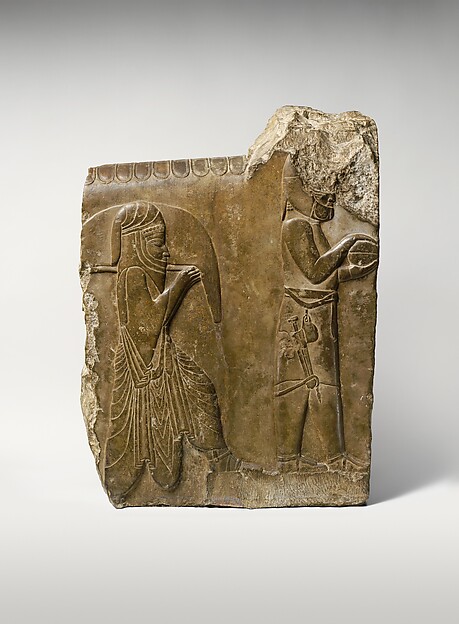
A strong reading keeps administration near the front. Satrapies, tribute, royal roads, local elites, imperial capitals, soldiers, messengers, and ceremonial display mattered because empire had to be made practical across long distances. 550 BCE is therefore less a birthday than a threshold: after the Median victory, Persian power could become an imperial system.
Imperial communication is the hidden theme. Roads, relay stations, multilingual records, sealings, royal audiences, and palace centers allowed orders and gifts to move through distance. Those tools did not eliminate rebellion or negotiation, but they explain why Achaemenid power could link the Iranian plateau, Mesopotamia, Anatolia, Egypt, and Central Asian frontiers.
The sources require caution. Greek writers often turned Persia into a mirror for debates about monarchy and freedom, while Babylonian and biblical materials preserve different political and religious memories. A good 550 BCE page teaches readers to compare those archives instead of accepting a single imperial origin story.
The year also helps readers compare ancient empires. Qin centralization, Mauryan inscriptions, Roman law, and Persian satrapies answer similar problems in different ways. Reading 550 BCE beside those routes turns one date into a larger question about how states govern diversity after conquest.
550 BCE in History gathers events that help readers move from a single date into wider historical patterns. A useful year entry does more than answer what happened; it shows why people keep using the year as a marker for change.
The connected events show how decisions, institutions, conflicts, ideas, and consequences crossed beyond one location or one person. The event links explain the immediate story, while the topic routes and timelines show what came before and after.
The year also helps organize broad questions. It gives readers a concise answer and a direct path into deeper event pages where causes, turning points, consequences, maps, and references are easier to inspect.
Read the date in three passes. First ask what happened inside the year itself. Then ask which older pressures made the event possible. Finally ask which later pages reuse the same vocabulary, institutions, borders, technologies, or memories. That sequence keeps the page from becoming a trivia answer.
Even when only one event is currently attached, the year still has a job: it gives students and curious visitors a stable chronological doorway into the atlas. The page makes the doorway useful by pointing to the event, the topic route, the timeline, the map, and the evidence trail that can turn a date into a broader explanation.
This year matters because it connects Achaemenid Empire Founded to a wider sequence of causes and consequences. It gives the reader a chronological anchor while still pointing outward to people, places, institutions, and later effects. A thin year page would only name the event; a useful year page explains why this date is a handle for a larger route through history. 550 BCE matters because it marks the rise of a Persian imperial project that would reshape the Near East, challenge Greek city-states, influence imperial administration, and become a reference point for later empires. The date is strongest when readers treat it as the opening of a process: conquest had to become communication, revenue, legitimacy, and remembered rule.
Reader Lenses
Look for the pressures that made change possible.
Identify who acted and what options were available.
Follow what changed after the event.
Ask why this date still appears in historical summaries.
Ask how victory over Media became a wider claim to rule.
Follow satrapies, tribute, roads, capitals, and local elites as the machinery of empire.
Compare Greek, biblical, Babylonian, and later traditions about Cyrus and Persian rule.
How This Year Connects
550 BCE in History is anchored by Achaemenid Empire Founded. Read those pages together and the year stops being a date label; it becomes a crossroads where immediate choices met older pressures and opened later consequences.
The setting matters as much as the date. The year moves through Persis and belongs to Classical Antiquity. That combination helps readers avoid treating the year as isolated; geography, institutions, conflict, belief, economy, and communication all shape what a date can mean.
The year also opens into people and themes. Figures such as Cyrus the Great appear because their choices made the year visible, while themes such as Persian Empire, Achaemenid Empire, and Empire explain why the consequences outlived the moment. A useful next step is usually an event page, then a topic route, then a timeline.
Evidence changes the way a date reads. A treaty, battle report, inscription, newspaper, census, court record, memoir, photograph, or archaeological trace does not answer the same question. Looking at source type helps separate what happened in the year from how later people remembered it.
A year page is most useful when it keeps two scales open at once. The first scale is immediate: what happened, where, and who was involved. The second scale is interpretive: why later readers use this date to organize a wider story. Holding both scales together makes the page a starting point for deeper reading rather than a dead-end answer.
The before-and-after frame matters too. A date rarely begins the forces it reveals. Earlier pressures made the linked event possible, while later pages show which effects were temporary, which became institutions, and which turned into memory. Reading the year this way helps students avoid the false impression that history changes only when the calendar flips.
Use this page as a junction. If the event feels too brief, follow the topic route for background; if the cause feels too abstract, open the event page for sequence; if the consequence feels larger than the date, move into the timeline. The value of a year page is that it lets readers change scale without losing their place.
Read 550 BCE beside the Achaemenid Empire route, Cyrus the Great material where available, and later Greek-Persian conflict pages. That sequence keeps Persian state formation visible before the story turns into a Greek war narrative.
Then compare with Qin, Rome, Maurya, and Han. The comparison asks which imperial tools were local inventions and which problems every large empire had to solve.
Events in This Year
- c. 550 BCEAchaemenid Empire Founded
Cyrus the Great built the Achaemenid Empire from a Persian power base, creating an imperial system that connected Iran, Mesopotamia, Anatolia, and Central Asia.
Map Layer
550 BCE in History geography
Gold pins mark the approximate locations of published event pages. This is a schematic locator map, not a historical border map.
Coordinates are approximate and are used to help readers orient themselves before opening a full event page.
References
Where to Check the Facts
- Encyclopaedia Britannica: Achaemenid EmpireSpecific reference for the Achaemenid founding frame and the 550 BCE imperial transition.
- World History Encyclopedia: Achaemenid EmpireNarrative reference for Cyrus, Persian imperial formation, and the Achaemenid state.