At a Glance
The shape of the event
- Date
- c. 900 CE
- Place
- Hawaiian Islands
- Type
- Migration and Settlement
Polynesian settlement expanded in Hawaii through ocean navigation, voyaging knowledge, agriculture, kinship, and island adaptation.
c. 900 CE; place the event in Hawaiian Islands before comparing causes or consequences.
The event deepens the Pacific route before European contact and modern sovereignty debates.
Polynesian navigators / Hawaiian communities are the first names or groups to compare before widening the story.
Hawaiian societies developed distinctive political, religious, and ecological systems.
Hawaiian societies developed distinctive political, religious, and ecological systems.
The event deepens the Pacific route before European contact and modern sovereignty debates.
Follow the routes and the lives they carried to see how early settlement choices turned into institutions and conflicts.
Background
The Hawaiian Settlement Expands sits within a larger Pacific movement of people and practices. For centuries before and after c. 900 CE, Polynesian seafarers crossed vast distances using non-instrument navigation: stars, swell patterns, bird behavior, and oral wayfinding traditions. Those navigation systems did not float in isolation; they carried domesticated plants and animals, practical knowledge about soil and water, and social forms that could be transferred between islands. Islands presented a suite of pressures: limited fresh water, variable soils, and isolated ecological communities that required new agricultural techniques and careful resource management. Socially, kinship networks and chiefly lineages structured who traveled and who settled.
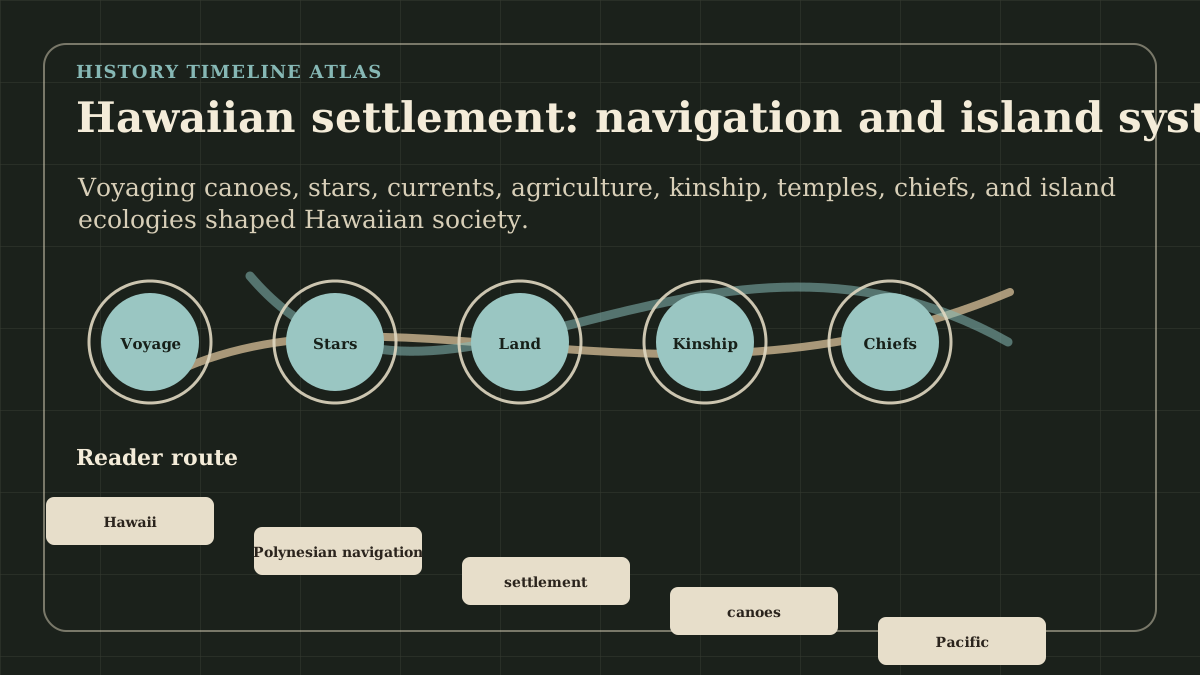
At the same time, the Pacific was not a blank slate—oral memory, ritual practices, and local adaptation produced many distinct community responses. No single cause—technology, population pressure, or prestige voyaging—explains expansion on its own. Instead, navigation, plant and animal introduction, social ties, and island-specific adaptation combined to open Hawaiian settlement to sustained growth. Hawaiian settlement belongs in the atlas as a history of knowledge, not as a vague migration note. Polynesian voyaging required memory of stars, swells, birds, winds, currents, canoe technology, food storage, social organization, and the courage to move across open ocean. The islands were reached through skill, not accident. The island setting then changed the story.
Settlement meant learning soils, rainfall, reefs, uplands, fishponds, crops, and local ecologies. Communities adapted plants, tools, kinship, ritual authority, and chiefly power to a chain of islands with different resources. Navigation opened the route; settlement turned arrival into durable society. The event also matters because it deepens Hawaiian history before European contact. Readers often meet Hawaii through Cook, missionaries, sugar, annexation, tourism, or statehood. This page moves the starting point earlier, toward Indigenous Pacific capability and island systems that already had politics, religion, agriculture, exchange, and memory.
The Turning Point
The core change during this phase was the conversion of episodic voyaging into durable island society. Polynesian navigators made concrete choices: which islands to aim for, which gardens and animals to transport, and which kin groups to plant as the nucleus of new communities. Voyages were not merely accidental landfalls but planned movements that integrated knowledge of ocean routes with social strategies—marriage ties, leadership claims, and the distribution of cultivars such as taro and sweet potato. On arrival, settlers had to transform coastal landing sites into places of residence, invent water storage and terrace systems, assign chiefs authority over land and labor, and create ritual frameworks that anchored memory to place.
Those administrative and religious decisions—who led, how resources were allocated, and how ancestry was remembered—turned initial landings into lasting settlement. The process also required environmental choices: which native plants to protect, which introduced species to spread, and how to manage fishery access. In short, navigation enabled arrival; social and ecological choices determined permanence. The turning point was sustained adaptation. Voyagers did not merely arrive; communities reproduced knowledge across generations, built food systems, established sacred and political places, and linked families to landscapes. Settlement became history when movement turned into institutions. Chiefly authority and ritual order developed in relation to land and sea. Agricultural fields, fisheries, temples, labor obligations, genealogy, and conflict all tied power to ecology.
That makes Hawaiian settlement a foundation for later sovereignty history rather than a background chapter.
Consequences
In the near term, expanded settlement produced denser and more stratified island communities. Chiefs and priestly specialists consolidated authority to coordinate irrigation, temple building, and redistributive feasts; kinship networks structured labor and land rights. Agricultural experimentation and the selective spread of introduced species reshaped lowland valleys and coastal fisheries. Over time those institutional and ecological patterns hardened into distinctive Hawaiian political, religious, and environmental systems—temple complexes, ranking systems, and land divisions tied to stewardship responsibilities. In the long term, the expansion of Hawaiian settlement altered Pacific human geography by creating a network of inhabited islands with shared cultural templates and localized innovations.
That legacy matters for later centuries: it shaped the forms of authority encountered by European visitors and underpins contemporary claims about land, genealogy, and sovereignty. Importantly, historians and other observers do not all tell the same story about these consequences: official chronicles, archaeological layers, oral histories, and legal documents emphasize different outcomes and sometimes conflict. Recognizing those differing perspectives is essential to understanding how the past is used in present debates. The long consequence is that Hawaii became a distinctive Polynesian society with its own political and ecological systems. Later encounters with Europeans, missionaries, traders, disease, plantation capitalism, and U. S. power did not enter an empty world. They entered an island society with deep history.
The page therefore supports a better Pacific route. It connects navigation to sovereignty, environment, food systems, and memory. A reader can move from voyaging settlement to Cook, the Hawaiian Kingdom, overthrow, and modern sovereignty debates without treating the nineteenth century as the beginning.
Interpretation Notes
Interpretations of Hawaiian Settlement Expands depend on whose evidence is centered: rulers and official records, affected communities, oral memory, archaeology, law, diplomacy, labor, and later public memory do not always tell the same story.
Why Keep Reading
Follow the routes and the lives they carried to see how early settlement choices turned into institutions and conflicts. The next sections trace how temple and chiefly systems emerged, how ecological strategies created sustainable and vulnerable landscapes, and how later encounters with outsiders reframed Hawaiian authority. Readers who continue will find the human decisions—the selection of crops, the forging of kinship ties, and the establishment of ritual sites—that connect a canoe landing to centuries of governance and to the contemporary controversies over land and political recognition. Read Hawaiian settlement before James Cook, the Hawaiian Kingdom, overthrow, and Pacific sovereignty pages. That path keeps Indigenous voyaging and island adaptation visible before colonial pressure enters the story.
Reading Path
Follow the story without losing the thread
Before This
- Fall of the Western Roman Empire, 476 AD: What Happened Next476 CE
- Lapita Expansion Beginsc. 1600 BCE
- First Peoples Settle Australiac. 65,000 BCE
After This
- Eastern Polynesia Settlement Expandsc. 1000 CE
- Maori Settlement of Aotearoac. 1250 CE
- Kamehameha Unifies Hawaii1810
Same Period
- Attack on Pearl HarborDecember 7, 1941
- Fall of the Western Roman Empire, 476 AD: What Happened Next476 CE
- Homo sapiens Emergesc. 300,000 BCE
Wider Timeline
Mind Map
How to think about Hawaiian Settlement Expands
Navigation
Wayfinding using stars, swell, and birds that enabled planned voyages to Hawaii
Map Layer
Where this event sits geographically
Gold pins mark the approximate locations of published event pages. This is a schematic locator map, not a historical border map.
Coordinates are approximate and are used to help readers orient themselves before opening a full event page.
References
Where to Check the Facts
- Te Ara: Pacific migrationsReference for Pacific voyaging, settlement paths, Polynesian migration, and Aotearoa context.
- Te Ara: TupaiaPacific-based biographical reference for Tupaia's navigation, mediation, and role during Cook's voyage.
- University of Hawaii ScholarSpace: Epeli Hau'ofa, Our Sea of IslandsPacific scholar's argument for reading Oceania as a connected sea of islands rather than scattered small places.
- Waitangi Tribunal: Treaty claims and Te TiritiPacific-based institutional reference for Te Tiriti, Maori claims, Crown obligations, and treaty interpretation.
- Encyclopaedia Britannica: Hawaii historyReference for Hawaiian settlement, kingdom history, and later United States annexation.
- Encyclopaedia Britannica: Te Tiriti o WaitangiReference for the Treaty of Waitangi and British annexation of New Zealand.
- Official UNESCO World Heritage Centre: TaputapuateaInstitutional reference for a Polynesian cultural landscape connected to voyaging, ritual, genealogy, and ocean paths.