How to Read the Year
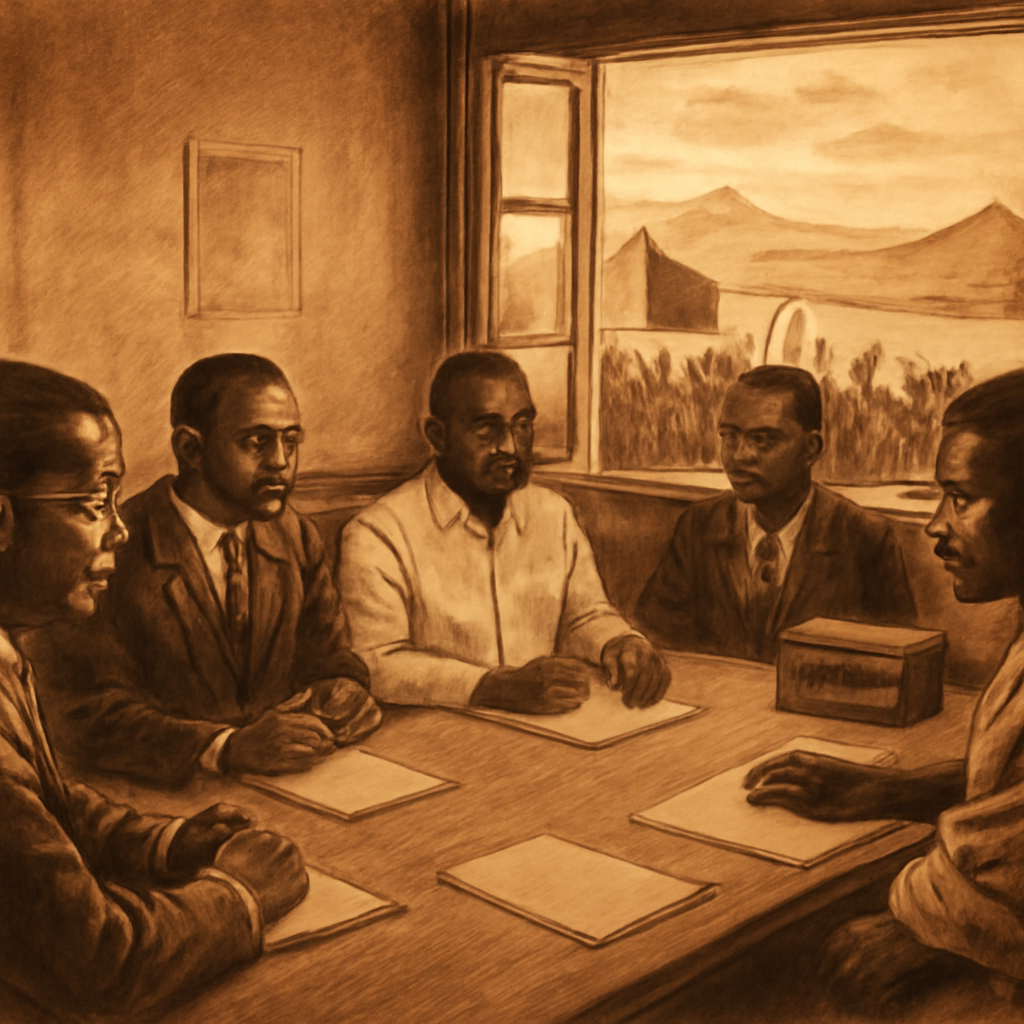
Why does 1967 show postcolonial state-building under pressure?
1967 connects the Arusha Declaration, the founding of ASEAN, and the start of the Nigerian Civil War. The year shows postcolonial states trying to solve different versions of the same problem: how to build legitimacy, development, security, and unity after empire, war, or regional tension.
Tanzania's Arusha Declaration framed socialism and self-reliance as a route toward equality and national purpose. ASEAN's founding created a regional cooperation framework in Southeast Asia during a Cold War era of instability, development anxiety, and security concern. Nigeria's civil war exposed the violent fragility of federal power, oil politics, ethnic violence, secession, famine, and postcolonial survival.
A careful 1967 reading keeps optimism and crisis together. The year includes planning documents and diplomatic institutions, but also civil war and humanitarian catastrophe. It helps readers see that new states were not simply free after independence; they had to govern diversity, borders, resources, parties, armies, and external pressure.
The human scale gives the year weight. Farmers asked what self-reliance meant in practice, diplomats negotiated regional trust, civilians fled violence, journalists photographed famine, and governments learned that unity could not be declared into existence.
The year also reminds readers that postcolonial projects moved at different scales. A village program in Tanzania, a foreign ministers' meeting in Bangkok, and a battlefield in eastern Nigeria were not the same kind of event, yet all asked how new states could survive pressure from poverty, borders, ethnic fear, Cold War alignment, and the memory of colonial rule.
1967 is useful as a search entry because it does not offer one neat answer. It lets students compare a socialist development program, a regional diplomatic institution, and a secessionist war without pretending all postcolonial states faced identical problems. The comparison turns the year into a map of choices and limits.
The evidence also comes from different kinds of records. Party declarations, diplomatic communiques, newspaper photographs, refugee testimony, military reports, and later development debates each show a different face of state-building. That mixed source trail helps readers understand why the year cannot be judged only by official optimism or only by catastrophe.
1967 CE in History gathers events that help readers move from a single date into wider historical patterns. A useful year entry does more than answer what happened; it shows why people keep using the year as a marker for change.
The connected events show how decisions, institutions, conflicts, ideas, and consequences crossed beyond one location or one person. The event links explain the immediate story, while the topic routes and timelines show what came before and after.
The year also helps organize broad questions. It gives readers a concise answer and a direct path into deeper event pages where causes, turning points, consequences, maps, and references are easier to inspect.
Read the date in three passes. First ask what happened inside the year itself. Then ask which older pressures made the event possible. Finally ask which later pages reuse the same vocabulary, institutions, borders, technologies, or memories. That sequence keeps the page from becoming a trivia answer.
Even when only one event is currently attached, the year still has a job: it gives students and curious visitors a stable chronological doorway into the atlas. The page makes the doorway useful by pointing to the event, the topic route, the timeline, the map, and the evidence trail that can turn a date into a broader explanation.
This year matters because it connects Arusha Declaration, ASEAN Founded, Nigerian Civil War Begins to a wider sequence of causes and consequences. It gives the reader a chronological anchor while still pointing outward to people, places, institutions, and later effects. A thin year page would only name the event; a useful year page explains why this date is a handle for a larger route through history. 1967 matters because it makes postcolonial history concrete. It links African socialism, Southeast Asian regionalism, Nigerian federal crisis, Biafra, Cold War development, and the hard work of holding states together after independence.
Reader Lenses
Look for the pressures that made change possible.
Identify who acted and what options were available.
Follow what changed after the event.
Ask why this date still appears in historical summaries.
Track policy, party power, rural development, public ownership, federalism, and legitimacy.
Ask why Southeast Asian governments built cooperation amid Cold War and development pressures.
Keep Biafra, famine, civilians, oil, and secession beside abstract language about national unity.
How This Year Connects
1967 CE in History is anchored by Arusha Declaration, ASEAN Founded, and Nigerian Civil War Begins. Read those pages together and the year stops being a date label; it becomes a crossroads where immediate choices met older pressures and opened later consequences.
The setting matters as much as the date. The year moves through Arusha, Bangkok, and Nigeria and Biafra and belongs to Postcolonial Africa and Cold War and Regionalism. That combination helps readers avoid treating the year as isolated; geography, institutions, conflict, belief, economy, and communication all shape what a date can mean.
The year also opens into people and themes. Figures such as Julius Nyerere, Founding foreign ministers, Chukwuemeka Odumegwu Ojukwu, and Yakubu Gowon appear because their choices made the year visible, while themes such as Tanzania, Ujamaa, African Socialism, Postcolonial State, ASEAN, and Southeast Asia explain why the consequences outlived the moment. A useful next step is usually an event page, then a topic route, then a timeline.
Evidence changes the way a date reads. A treaty, battle report, inscription, newspaper, census, court record, memoir, photograph, or archaeological trace does not answer the same question. Looking at source type helps separate what happened in the year from how later people remembered it.
A year page is most useful when it keeps two scales open at once. The first scale is immediate: what happened, where, and who was involved. The second scale is interpretive: why later readers use this date to organize a wider story. Holding both scales together makes the page a starting point for deeper reading rather than a dead-end answer.
The before-and-after frame matters too. A date rarely begins the forces it reveals. Earlier pressures made the linked event possible, while later pages show which effects were temporary, which became institutions, and which turned into memory. Reading the year this way helps students avoid the false impression that history changes only when the calendar flips.
Use this page as a junction. If the event feels too brief, follow the topic route for background; if the cause feels too abstract, open the event page for sequence; if the consequence feels larger than the date, move into the timeline. The value of a year page is that it lets readers change scale without losing their place.
Read 1967 beside Arusha, Nyerere, ASEAN, Nigerian Civil War, decolonization, Southeast Asia, Africa, Cold War, and humanitarian crisis routes.
Then compare 1967 with 1955, 1960, 1963, 1971, 1975, and 1994. The comparison asks how new states pursued unity, regional cooperation, development, and survival under stress.
Events in This Year
- 1967 CEArusha Declaration
Tanzania's Arusha Declaration set out a socialist and self-reliance program that linked rural development, public ownership, equality, and postcolonial legitimacy.
- August 8, 1967ASEAN Founded
ASEAN was founded by Indonesia, Malaysia, the Philippines, Singapore, and Thailand to promote cooperation, development, and regional stability during the Cold War.
- 1967 CENigerian Civil War Begins
The Nigerian Civil War began after Biafra declared secession, turning ethnic violence, federal power, oil, famine, and postcolonial state survival into a brutal conflict.
Map Layer
1967 CE in History geography
Gold pins mark the approximate locations of published event pages. This is a schematic locator map, not a historical border map.
Coordinates are approximate and are used to help readers orient themselves before opening a full event page.
References
Where to Check the Facts
- Encyclopaedia Britannica: Julius NyerereReference for Nyerere's leadership and socialist policy direction.
- Encyclopaedia Britannica: Tanzania, political developmentReference for Tanzania's independence-era political development.
- Encyclopaedia Britannica: Arusha DeclarationReference for the 1967 declaration, Nyerere, African socialism, self-reliance, and policy direction.
- Encyclopaedia Britannica: ujamaaReference for ujamaa, villagization, socialist policy, and Tanzanian development debates.