How to Read the Year
Why did 1791 make enslaved revolution impossible for the Atlantic world to ignore?
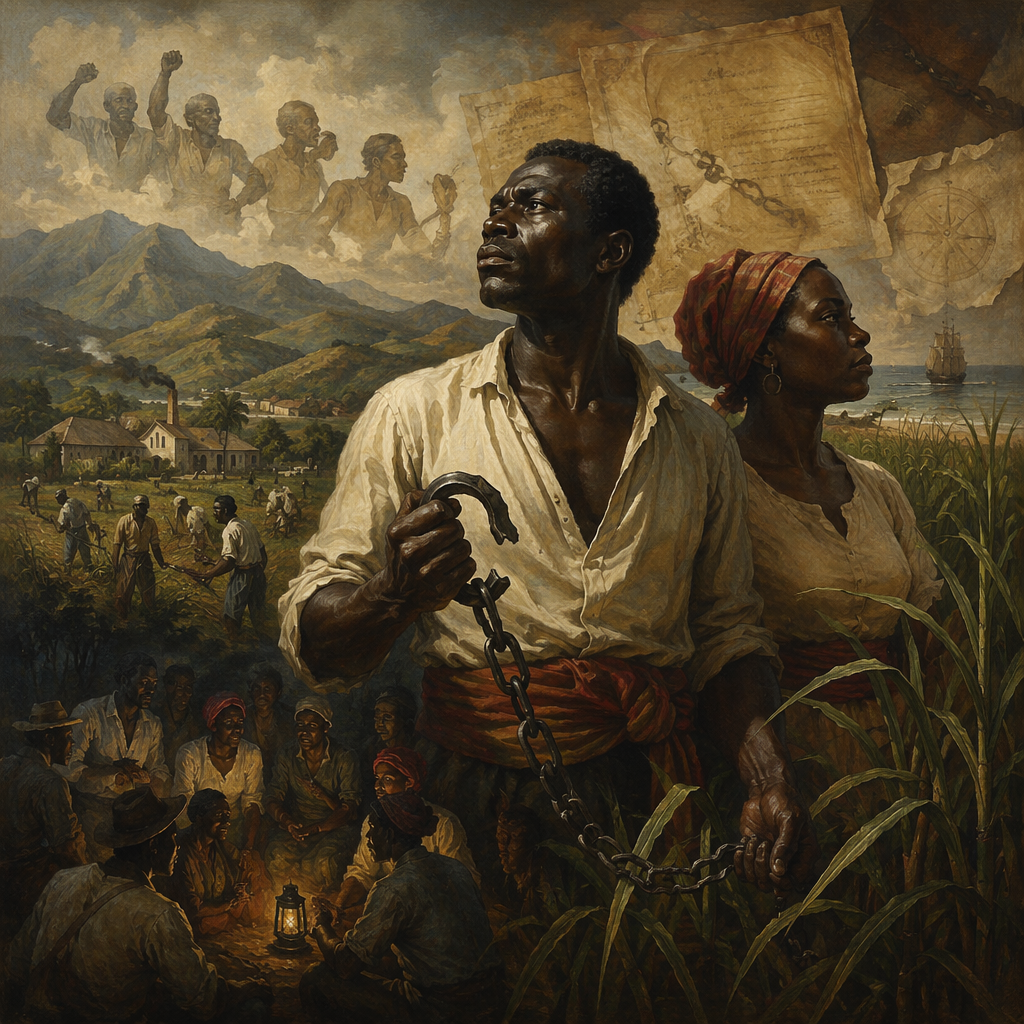
1791 is anchored by the beginning of the Haitian Revolution in Saint-Domingue, the richest plantation colony in the Atlantic world. The year matters because enslaved people did not merely react to European revolution; they forced liberty, slavery, race, property, and empire into the same conflict.
The colony's wealth rested on brutal sugar and coffee plantations, racial hierarchy, coerced labor, violence, disease, and a small planter class afraid of the very system it depended on. Free people of color, enslaved Africans and Creoles, white planters, French officials, royalists, revolutionaries, Spanish and British forces, and later leaders such as Toussaint Louverture all entered a crisis that no single group controlled.
The uprising began in a world of rumor, ritual, planning, plantation networks, and revolutionary language. Enslaved people used local knowledge, night meetings, kinship, military skill, and the geography of plantations and mountains to turn scattered violence into a revolutionary process. That process would reshape emancipation debates far beyond Saint-Domingue.
A strong year page avoids making Haiti an echo of France. The French Revolution opened political language and instability, but the Haitian Revolution changed the meaning of that language by asking whether universal rights included enslaved Black people. The answer was fought through armies, decrees, labor policy, diplomacy, and independence.
1791 should be read forward to abolition, Napoleon's attempt to restore control, Haitian independence, Latin American revolutions, and Black Atlantic memory. It also belongs backward to the Atlantic slave trade, plantation capitalism, maroon communities, and resistance before the famous revolt.
The source trail requires care. Planter reports, French political documents, military accounts, abolitionist writing, Haitian memory, and later scholarship all carry different stakes. Readers should see why the revolution is both a factual sequence and a struggle over who gets to describe freedom. That makes source voice part of the lesson.
Emancipation policy makes the year more than an opening revolt. As the conflict developed, French commissioners, Black insurgent leaders, free people of color, foreign armies, plantation workers, and revolutionary governments all had to decide whether liberty would be declared, defended, limited, or betrayed. That makes 1791 the beginning of a political process, not only the first night of uprising.
1791 CE in History gathers events that help readers move from a single date into wider historical patterns. A useful year entry does more than answer what happened; it shows why people keep using the year as a marker for change.
The connected events show how decisions, institutions, conflicts, ideas, and consequences crossed beyond one location or one person. The event links explain the immediate story, while the topic routes and timelines show what came before and after.
The year also helps organize broad questions. It gives readers a concise answer and a direct path into deeper event pages where causes, turning points, consequences, maps, and references are easier to inspect.
Read the date in three passes. First ask what happened inside the year itself. Then ask which older pressures made the event possible. Finally ask which later pages reuse the same vocabulary, institutions, borders, technologies, or memories. That sequence keeps the page from becoming a trivia answer.
Even when only one event is currently attached, the year still has a job: it gives students and curious visitors a stable chronological doorway into the atlas. The page makes the doorway useful by pointing to the event, the topic route, the timeline, the map, and the evidence trail that can turn a date into a broader explanation.
This year matters because it connects Haitian Revolution Begins, Haitian Revolution Begins to a wider sequence of causes and consequences. It gives the reader a chronological anchor while still pointing outward to people, places, institutions, and later effects. A thin year page would only name the event; a useful year page explains why this date is a handle for a larger route through history. 1791 matters because it marks the opening of the only successful large-scale slave revolution that founded a state. The year helps readers connect plantation capitalism, racial slavery, French revolutionary language, military resistance, emancipation, and the birth of Haiti. It turns Atlantic history from a story of empires into a story of enslaved people forcing a new political future.
Reader Lenses
Look for the pressures that made change possible.
Identify who acted and what options were available.
Follow what changed after the event.
Ask why this date still appears in historical summaries.
Start with sugar, coffee, violence, labor, disease, and racial hierarchy before reading revolutionary language.
Follow enslaved organizers, maroons, soldiers, families, and local networks as political actors.
Place Saint-Domingue among France, Spain, Britain, abolition, Napoleon, and Black Atlantic memory.
How This Year Connects
1791 CE in History is anchored by Haitian Revolution Begins. Read those pages together and the year stops being a date label; it becomes a crossroads where immediate choices met older pressures and opened later consequences.
The setting matters as much as the date. The year moves through Saint-Domingue and belongs to Age of Revolutions. That combination helps readers avoid treating the year as isolated; geography, institutions, conflict, belief, economy, and communication all shape what a date can mean.
The year also opens into people and themes. Figures such as Toussaint Louverture, Jean-Jacques Dessalines, and Enslaved rebels appear because their choices made the year visible, while themes such as Slavery, Atlantic World, Independence, Haitian Revolution, and Atlantic Revolutions explain why the consequences outlived the moment. A useful next step is usually an event page, then a topic route, then a timeline.
Evidence changes the way a date reads. A treaty, battle report, inscription, newspaper, census, court record, memoir, photograph, or archaeological trace does not answer the same question. Looking at source type helps separate what happened in the year from how later people remembered it.
A year page is most useful when it keeps two scales open at once. The first scale is immediate: what happened, where, and who was involved. The second scale is interpretive: why later readers use this date to organize a wider story. Holding both scales together makes the page a starting point for deeper reading rather than a dead-end answer.
The before-and-after frame matters too. A date rarely begins the forces it reveals. Earlier pressures made the linked event possible, while later pages show which effects were temporary, which became institutions, and which turned into memory. Reading the year this way helps students avoid the false impression that history changes only when the calendar flips.
Use this page as a junction. If the event feels too brief, follow the topic route for background; if the cause feels too abstract, open the event page for sequence; if the consequence feels larger than the date, move into the timeline. The value of a year page is that it lets readers change scale without losing their place.
Read 1791 beside Toussaint Louverture, the Haitian Revolution, French Revolution, Atlantic slavery, abolition, and rights movements. That route keeps enslaved agency at the center.
Then compare 1791 with 1776, 1789, 1807, 1848, 1865, and 1888. The comparison asks how freedom claims changed when enslaved people themselves made revolution.
Events in This Year
- 1791 CEHaitian Revolution Begins
Enslaved people in Saint-Domingue rose against plantation slavery, turning the French colony into the center of the Atlantic world's most radical revolution.
- 1791 CEHaitian Revolution Begins
The Haitian Revolution began as enslaved people and free people of color challenged plantation slavery, French colonial power, and racial hierarchy in Saint-Domingue.
Map Layer
1791 CE in History geography
Gold pins mark the approximate locations of published event pages. This is a schematic locator map, not a historical border map.
Coordinates are approximate and are used to help readers orient themselves before opening a full event page.
References
Where to Check the Facts
- Library of Congress: U.S. History Primary Source TimelinePrimary-source timeline reference for Atlantic settlement, colonial expansion, reform, and later U.S. history paths.
- Encyclopaedia BritannicaBackground reference for chronology, names, and historical context.
- WikidataStructured reference for dates, places, alternate names, and entity links.
- The Haitian Revolution Timeline: Brown University Library ProjectUniversity-supported timeline reference for Haitian Revolution chronology, actors, and events.