Historical Role
Toussaint Louverture's page belongs inside the Atlantic age of slavery, revolution, empire, and emancipation. He rose in Saint-Domingue, one of the world's richest plantation colonies, where sugar wealth depended on brutal enslaved labor, racial hierarchy, imperial rivalry, and constant fear among planters that the system they built could be overturned.
The Haitian Revolution gives Toussaint's biography its world-historical force. Enslaved people and free people of color did not merely echo the French Revolution; they transformed its language by forcing liberty, citizenship, property, race, and empire into direct conflict. Toussaint became important because military skill, political negotiation, emancipation policy, and plantation labor discipline all met in his leadership.
His career is not a simple freedom story. He fought slavery and defended emancipation, but he also tried to restore plantation production through coercive labor rules because he believed Saint-Domingue needed economic survival and military strength. That tension makes him a real statesman under pressure rather than a statue.
Napoleon's attempt to reassert control and Toussaint's deportation reveal the stakes. The struggle in Saint-Domingue exposed the contradiction between revolutionary rights and colonial slavery. Toussaint's defeat as a person did not defeat the revolution; Haiti's later independence made the Atlantic world confront a Black republic born from enslaved people's rebellion.
The biography gains depth when readers follow alliances rather than slogans. Toussaint negotiated with French, Spanish, and British forces while trying to preserve emancipation and autonomy. Those shifts were not simple inconsistency; they were strategies inside a Caribbean war where every empire wanted sugar, ports, labor, and leverage.
Labor policy keeps the page morally difficult. Formerly enslaved people wanted freedom from plantation discipline, while Toussaint believed export agriculture was needed to fund defense and state survival. That contradiction forces a hard question: what happens when a revolution against slavery inherits an economy built by slavery?
Race and citizenship also sit at the center. French revolutionary law, white planter fear, free people of color, Black military leadership, and Atlantic racism all collided in Saint-Domingue. Toussaint's authority came from making emancipation a military and political fact that imperial officials could not easily reverse.
His capture and deportation turn biography into imperial warning. France could remove a leader, but it could not restore the old order without facing armed resistance from people who had already experienced freedom. The later Haitian state emerged from that refusal.
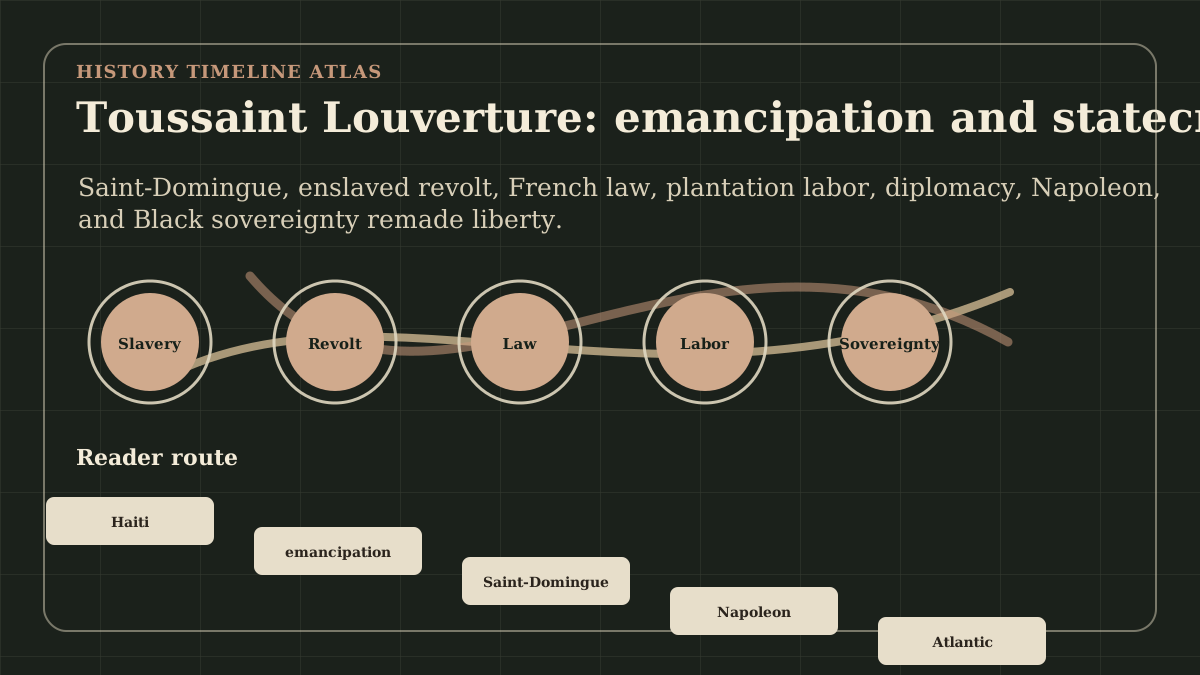
A strong reader path moves from Toussaint to the Haitian Revolution, Napoleon, Atlantic abolition, and later debt and isolation. That path keeps victory, coercion, emancipation, punishment, and the cost of Black sovereignty in one frame.
The page also makes leadership less lonely. Toussaint mattered, but the revolution depended on soldiers, plantation workers, women, local commanders, informants, families, and communities that refused a return to slavery. That wider field keeps the biography from replacing the revolution.
Toussaint Louverture helps connect individual action with wider historical change in Saint-Domingue. The biography works best when it keeps the surrounding world visible: authority, conflict, belief, reform, or discovery moved through decisions made under pressure.
The related events show how roles such as Revolutionary leader can be read through dates, places, institutions, and consequences rather than through reputation alone. The biography explains why this person matters, while the linked events explain what changed around them.
A richer reading starts with the limits around the person. Some figures acted through offices, armies, courts, laboratories, churches, parties, ships, trade networks, or protest movements; others became important because later communities turned their lives into symbols. The page therefore asks what this person could actually change, what was already moving before them, and which consequences later readers attached to the name.
Read the biography against absence as well. Many lives around Toussaint Louverture are less visible in the record: opponents, collaborators, family members, workers, soldiers, students, subjects, victims, translators, scribes, or local communities. Keeping those surrounding people in view makes the page less like a name card and more like an entry point into historical systems.
Toussaint Louverture also works as a navigation point. Open the linked event pages to see where the biography becomes chronology, then use the topic routes to test whether the same pattern appears beyond one life. That extra step matters because historical importance is rarely contained inside a single decision; it usually spreads through institutions, witnesses, opponents, imitators, and later arguments over memory.
Sources and Method
Source method: this page reads Toussaint through the linked Haitian Revolution route and existing Atlantic abolition source trail. It treats him as one actor inside a mass uprising, not as the sole author of Haitian emancipation.
Why This Person Matters
Toussaint Louverture matters because the connected events make a larger historical pattern easier to follow. The page links biography to consequences so readers can move from a life story into the wider atlas, compare the person with contemporaries, and understand why later memory kept returning to this figure. Toussaint Louverture matters because he makes the Haitian Revolution visible as Atlantic world history. His life links enslaved resistance, military leadership, emancipation, plantation economics, French revolutionary claims, and the birth of a Black political future.
How did Toussaint Louverture defend emancipation while trying to build a state inside an economy and war system made by slavery?
How to Read This Life
Toussaint Louverture is easiest to understand when the biography is read beside Haitian Revolution Begins. Those events show the historical setting in motion: dates, places, institutions, conflict, and consequences give the life a structure that a short biography alone cannot provide.
The surrounding route crosses Age of Revolutions and locations such as Saint-Domingue. That matters because influence rarely stays inside one person. It moves through offices, armies, movements, laws, texts, speeches, institutions, and later memory.
A useful reading path starts with the role labels, then opens the event pages to see what changed, and finally compares this person with other actors facing similar pressures.
For readers who arrive on a biography first, this page is meant to become a doorway rather than a stop. Read one paragraph for the answer, then use the turning points, topic routes, and event links to test whether the person's reputation matches the wider evidence.
Read Toussaint beside Haitian Revolution, French Revolution, Napoleon, and abolition routes. That path keeps Saint-Domingue inside both Caribbean plantation history and revolutionary Atlantic politics.
Then compare him with Sengbe Pieh, Wilberforce, Bolivar, and Gandhi. The comparison asks how freedom claims changed when enslaved, colonized, or legally excluded people forced them into practice.
Read Toussaint Louverture through the roles of Revolutionary leader rather than as reputation alone.
Place the biography inside Saint-Domingue and the wider events linked below.
Ask which choices were personal and which were constrained by institutions or crisis.
Follow how later memory simplified, contested, or reused this person's role.
Track how enslaved people's action changed the meaning of revolutionary liberty.
Ask why Toussaint joined emancipation to military discipline, diplomacy, and labor control.
Place Saint-Domingue among France, Spain, Britain, plantation capital, and Black freedom.
Legacy, Limits, and Memory
A useful biography keeps scale in view. Toussaint Louverture mattered because individual choices met a wider structure: institutions, enemies, allies, audiences, technologies, beliefs, and inherited conflicts. The related event pages help separate personal agency from conditions that no single person controlled.
Memory is part of the biography too. Later readers often simplify a figure into a hero, villain, founder, reformer, conqueror, prophet, scientist, or symbol. Those labels can be helpful, but they become misleading when they hide conflict, compromise, exclusion, uncertainty, or the experiences of people outside the main biography.
For the next step, compare this life with a topic route rather than stopping at the name. If the same pattern appears across several figures, the reader has found a historical structure; if this person breaks the pattern, the contrast is usually where the most interesting question begins.
Toussaint is often simplified into heroic liberation. The stronger page keeps strategy, coercive labor policy, diplomacy, race, French law, Spanish and British rivalry, and plantation economics in the story.
The biography also shifts the atlas away from European-centered revolution. Saint-Domingue did not sit at the edge of modern politics; it forced modern politics to answer whether liberty included enslaved Black people.
Turning Points to Read Next
Haitian Revolution Begins
Enslaved people in Saint-Domingue rose against plantation slavery, turning the French colony into the center of the Atlantic world's most radical revolution.
Related Timeline
- 1791 CEHaitian Revolution Begins
Enslaved people in Saint-Domingue rose against plantation slavery, turning the French colony into the center of the Atlantic world's most radical revolution.
References
Where to Check the Facts
- Encyclopaedia Britannica: Toussaint LouvertureBiographical reference for Toussaint Louverture's life dates, roles, institutions, and historical setting.
- Encyclopaedia BritannicaBackground reference for chronology, names, and historical context.
- WikidataStructured reference for dates, places, alternate names, and entity links.