Central Question
How did East Asian societies turn dynastic statecraft, frontier pressure, maritime conflict, revolution, and industrial power into long historical routes?
Start With These Dates
- 221 BCEQin Unification of China
The Qin state defeated its rival kingdoms and declared a unified imperial order, creating institutions that later dynasties would adapt, contest, and remember.
- 202 BCEHan Dynasty Founded
Liu Bang founded the Han dynasty after the fall of Qin rule, creating a long-lasting imperial order that balanced central authority with political adaptation.
- 138 BCEZhang Qian's Western Mission
The Han court sent Zhang Qian westward to seek alliances and gather knowledge about Central Asian peoples and routes.
- 751 CEBattle of Talas
Tang and Abbasid forces fought near the Talas River as rival powers competed over Central Asian alliances, trade corridors, and frontier influence.
- 1868 CEMeiji Restoration
The Tokugawa shogunate collapsed and imperial rule was restored in a political settlement that launched intense state-led modernization.
- June 25, 1950Korean War Begins
North Korean forces crossed into South Korea, turning a divided peninsula into a major Cold War war involving the United Nations, China, and the United States.
- 1989Tiananmen Square Protests
Pro-democracy demonstrations centered on Tiananmen Square called for political reform before the Chinese government used force to suppress the movement.
Sources Used Here
- Encyclopaedia Britannica: East Asian arts and civilization overview
Reference for East Asia as a regional historical frame across China, Korea, Japan, and surrounding worlds.
- Asia for Educators: East Asian History Sourcebook
Educational reference for East Asian chronology, statecraft, religion, and modern transformation.
East Asia is designed as a route, not a folder. It gathers events that answer related reader questions about power, belief, conflict, exchange, institutions, and memory. The strongest way to read the page is to move from the earliest events toward the later ones, watching how one kind of pressure changes form across different places.
The route currently runs from 221 BCE to 1989. That span lets readers compare immediate turning points with slower consequences: the founding of institutions, the spread of ideas, the shock of war or disease, and the way later societies reused earlier events as warnings, models, or symbols.
Start with Qin Unification of China, Han Dynasty Founded, Zhang Qian's Western Mission, Battle of Talas, First Opium War Begins and then follow the internal links into people, timelines, years, maps, and source lists. The route structure stays visible when each event explains why it belongs with the others and where the next useful page is.
Compare the events by scale. Some are concentrated moments, such as a battle, proclamation, trial, or publication. Others are long processes, such as a reform movement, pandemic, trade route, or diplomatic order. Reading both types together helps prevent the page from becoming a list of dates.
A useful route keeps uncertainty visible. Historical change rarely has one cause or one clean ending, so the reader can separate background pressure, immediate trigger, turning point, result, and later memory. That pattern is what makes the atlas expandable without making the reader start over each time.
This route is also a comparison tool. After reading one event, compare it with a later event on the same page and ask what changed in scale, language, geography, technology, authority, or public memory. The comparison is often more useful than the individual summary because it reveals the pattern the topic page is built to expose. When a claim feels too neat, open the full event page and check whether the evidence supports one cause, several causes, or a contested interpretation before moving on.
East Asia cannot be reduced to dynasties, modernization, or Cold War conflict. This hub follows imperial state formation, frontier strategy, Confucian and Buddhist learning, Silk Road exchange, maritime pressure, Japanese industrialization, Chinese revolution, Korean division, Pacific war memory, and modern protest. It gives readers a way to move from Qin and Han statecraft to Meiji, Hiroshima, the People's Republic of China, Korea, and Tiananmen without treating them as disconnected episodes.
The first spine is state formation. Qin unification and the Han Dynasty show how law, commanderies, writing, roads, taxation, court ritual, frontier policy, and historical memory could make rule durable. Qin created a hard model of centralization; Han adapted and softened that inheritance while making imperial identity more durable. East Asian history becomes clearer when readers ask how institutions outlast rulers.
The second spine is frontier and exchange. Zhang Qian's mission and the Battle of Talas show that East Asia was never sealed off. Steppe politics, Central Asian routes, Buddhism, horses, textiles, envoys, merchants, and military colonies shaped what Chinese courts knew and feared. A serious East Asia hub has to include borders as zones of contact, not just lines on a map.
The third spine is maritime pressure and unequal trade. The Opium War is not only a British-Chinese conflict; it reveals Qing institutions under fiscal, diplomatic, commercial, and military pressure. The event changed treaty ports, sovereignty, law, addiction economies, and Chinese political memory. It also helps readers compare land-frontier problems with coastal and imperial-capitalist pressure.
Japan's Meiji Restoration adds a different answer to nineteenth-century pressure. Japanese elites reorganized authority, industry, military capacity, education, and imperial ambition under conditions of global competition. Meiji was not simply westernization. It was a selective state-building project that turned anxiety over vulnerability into new institutions and later imperial expansion.
Revolution changes the route again. The Xinhai Revolution and the founding of the People's Republic of China show that dynastic legitimacy, republicanism, nationalism, socialism, warlordism, civil war, peasant mobilization, and anti-imperial memory all mattered. Modern China cannot be read only as a break from the past or only as dynastic continuity. It is a struggle over which past could authorize a new future.
War memory is unavoidable. Hiroshima, the Pacific War, Korean War, and Cold War alliances created memories that still shape diplomacy, education, apology politics, nuclear fear, and regional security. East Asia's twentieth century is not just modernization. It is also occupation, bombing, civil war, partition, revolution, and the problem of living with memories that neighboring states interpret differently.
Korea belongs inside the hub as more than a Cold War battlefield. The Korean War shows how decolonization, civil conflict, superpower rivalry, Chinese intervention, U.S. strategy, refugees, and armistice politics converged. It also keeps the region from being reduced to China and Japan. A better East Asia route has to make Korea a structural part of the map.
Tiananmen brings the route to questions of reform, protest, legitimacy, public memory, censorship, and global attention. The event asks how an ancient imperial-capital frame, revolutionary state, reform economy, student movement, and international media could meet in one square. It also warns readers that modern economic change does not automatically answer political questions.
Culture and ideas need more future pages, but they already shape the route. Confucian learning, Buddhist translation, print culture, examinations, family hierarchy, nationalism, scientific education, and revolutionary language all changed how power explained itself. East Asian statecraft was never only bureaucracy. It also depended on moral vocabularies, schooling, ritual, texts, and public memory.
The hub also guards against treating East Asia as one civilization. China, Korea, Japan, Vietnam, Mongolia, Taiwan, and overseas communities have linked histories, but they are not interchangeable. Shared scripts, religious routes, diplomatic models, and trade patterns created connections; war, colonization, ideology, and national memory created sharp differences. The page must make both connection and conflict legible.
Economic history gives the modern section more depth. Treaty ports, state-led industrialization, wartime mobilization, land reform, export economies, development states, and technology firms all changed daily life and regional power. East Asia's modern importance cannot be explained only by ideology or war. It also depends on factories, education systems, infrastructure, finance, labor, and global supply chains.
The evidence problem is especially sharp. Dynastic histories, court memorials, inscriptions, maps, colonial archives, occupation records, propaganda, memoirs, photographs, protest documents, and digital censorship all preserve different realities. The hub asks readers to treat official records seriously without mistaking them for the whole society.
East Asia is also a maritime region. The Yellow Sea, East China Sea, South China Sea, Pacific islands, treaty ports, naval bases, fisheries, and shipping lanes shaped diplomacy and war. Adding this layer prevents the route from being only a land empire story and prepares readers for Pacific and Southeast Asian connections.
Korea, Vietnam, Taiwan, and Mongolia need stronger future routes because they test every broad claim about East Asia. Korea shows dynastic culture, colonial rule, division, war, development, and memory. Vietnam links the Chinese world, Southeast Asia, colonialism, and Cold War struggle. Taiwan raises questions of Qing frontier, Japanese empire, civil war, democracy, and sovereignty. Mongolia keeps steppe power visible beside sedentary statecraft.
Script, education, and examinations are another route through the region. Writing systems, classical texts, printing, schools, civil service examinations, language reform, newspapers, and political education all shaped who could enter public authority. Literacy was never only cultural polish. It decided access to office, law, memory, propaganda, and later mass politics.
Urban and labor history make the modern route less abstract. Treaty-port workers, miners, soldiers, textile workers, railway crews, students, rural migrants, factory families, white-collar employees, and technology workers all shaped the region's transformation. East Asia's rise in global production was not only a story of state policy. It depended on disciplined labor, household sacrifice, education, migration, and export systems.
Japanese empire belongs inside the hub as a regional structure, not only as a Japanese national story. Taiwan, Korea, Manchuria, China, Southeast Asia, and Pacific islands experienced empire through schools, police, industry, language policy, forced labor, military violence, and memory. Reading Hiroshima without Japanese empire, or reading Chinese revolution without wartime occupation, makes the twentieth-century route too thin.
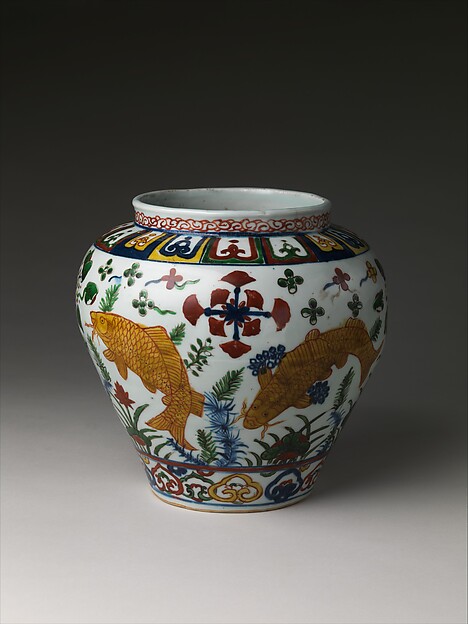
Visual material works best when it signals material culture, statecraft, or documents rather than a generic modern skyline. A porcelain object, court record, map, treaty-port image, wartime photograph, protest image, or factory scene can show East Asia's mix of cultural memory and institutional change. The route benefits from a visual that is not only Cold War space imagery, because the topic begins long before the twentieth century.
The route's most useful habit is to compare reform moments. Qin centralization, Han adaptation, Meiji state-building, Chinese republicanism, communist revolution, postwar reconstruction, and late twentieth-century economic reform all ask how institutions change without losing legitimacy. Each answer created new exclusions and new possibilities.
A second habit is to read East Asia through neighbors. Japan's rise changed Korea and China; Chinese revolution changed Korea, Vietnam, and global communism; U.S. power changed Japan, Korea, Taiwan, and the Pacific. Regional history becomes clearer when influence is traced in more than one direction.
The Tang and Song periods are major missing bridges. Tang history would connect empire, Buddhism, Central Asia, Chang'an, military frontiers, and cosmopolitan exchange. Song history would bring printing, commerce, exams, urban life, technology, and a different kind of state capacity. Without those bridges, the route jumps too quickly from Han foundations to nineteenth-century pressure. Future pages should make the middle of East Asian history much more visible.
The Mongol and Ming layers would also change the map. Mongol rule connected China to Eurasian empire, forced new questions of ethnicity and administration, and reshaped trade and military geography. Ming maritime power, border defense, court politics, printing, porcelain, and global silver would connect East Asia to the Indian Ocean, Southeast Asia, Europe, and the Americas. These additions would make the hub less landbound and less modern-heavy.
Korean history needs a stronger independent spine. Silla, Goryeo, Joseon, Hangul, Confucian statecraft, Japanese colonization, liberation, division, industrialization, democracy, and cultural globalization all deserve links. Korea is not merely the place where Cold War armies met. It is a long historical field that repeatedly mediates between continental power, maritime pressure, local institutions, and memory.
Japan before Meiji also needs more room. Nara and Heian court culture, samurai rule, Kamakura and Muromachi politics, Tokugawa order, urban culture, print, coastal defense, and social hierarchy explain why Meiji reform had materials to work with. Modernization becomes less mysterious when readers see which institutions were broken, adapted, or repurposed from earlier Japanese history.
Taiwan and borderlands complicate national narratives. Indigenous communities, Qing frontier administration, Japanese colonial rule, civil war migration, Cold War security, democratization, semiconductor supply chains, and sovereignty disputes all make Taiwan a key route through modern East Asia. Manchuria, Mongolia, Tibet, Xinjiang, and maritime borders similarly show that frontiers are not edges of history; they are places where states define themselves.
Vietnam belongs in the East Asian frame as well as the Southeast Asian one. Chinese imperial pressure, local dynastic rule, Confucian learning, French colonialism, Japanese occupation, communist revolution, Cold War war, and postwar reform all connect Vietnam to multiple regional stories. Including Vietnam prevents the route from treating cultural zones as fixed borders and helps readers see how influence moved across mountains, deltas, scripts, and empires.
Border rivers, mountain passes, islands, and port cities keep those connections concrete instead of abstract.
Economic miracles need social context. Japan's postwar reconstruction, South Korean industrialization, Taiwan's export economy, Hong Kong and Singapore's port-finance roles, and China's reform era all depended on education, land policy, U.S. security structures, disciplined labor, family sacrifice, migration, and global demand. Growth is easier to understand when factories, households, schools, and ports stand beside ministries and corporations.
Diaspora history adds another bridge through migration, remittances, language schools, restaurants, universities, technology work, and public memory across oceans.
Everyday cultural history can carry readers deeper than diplomacy alone. Foodways, family registers, ancestor rituals, temple festivals, exams, school uniforms, newspapers, cinema, popular music, manga, television dramas, internet culture, and diaspora communities all reveal how large political changes became habits, memories, and identities. This layer gives the hub more reasons to keep reading after the major wars and revolutions.
The strongest next expansion is therefore not one more famous event, but a balanced regional ladder: Tang, Song, Mongol/Yuan, Ming, Joseon Korea, Tokugawa Japan, Japanese empire, Taiwan, postwar development states, and contemporary technology politics. That ladder would let the topic cover two thousand years with fewer empty jumps and stronger internal links.
Future expansion should add Tang and Song transformations, Mongol and Yuan rule, Ming maritime politics, Qing frontiers, Tokugawa Japan, Japanese empire, Korean independence, Taiwan, Vietnam, economic miracles, and contemporary technology politics. Naming that queue matters because the current hub is a spine, not a finished encyclopedia.
The reader payoff is a regional route with real continuity and conflict. East Asia becomes a field of statecraft, frontier exchange, maritime pressure, revolution, war memory, technology, protest, and diplomacy. The page can serve both a beginner who needs chronology and a student who needs an argument about how institutions, geography, and memory interact.
Read the events in order first; the page is built to reveal change over time.
Ask which pressures existed before the visible turning point and which actors had room to choose.
Follow what changed afterward in institutions, borders, law, belief, or everyday life.
Notice which events became symbols and why later generations kept returning to them.
Follow law, bureaucracy, exams, roads, courts, and military organization rather than only rulers.
Read steppe, Central Asian, maritime, and Korean borders as zones of exchange and conflict.
Compare Qing crisis, Meiji reform, revolution, occupation, and Cold War division as responses to global power.
Watch how war, empire, protest, and revolution are remembered differently across China, Japan, Korea, and the wider world.
Follow writing, exams, schools, print, language reform, newspapers, and political education as institutions of authority.
Read factories, ports, mines, students, rural migrants, families, and technology workers beside state strategy.
Choose a Reading Path
Start With the Timeline
Use the related timeline first when you want a chronological route through the topic.
Start with 221 BCE: Qin Unification of ChinaOpen a Person Page
Use people pages when the topic is easier to understand through leadership, resistance, reform, or memory.
Start with 202 BCE: Han Dynasty FoundedUse Year Pages
Use year pages when you need a fast answer to what changed in a specific year.
Start with 138 BCE: Zhang Qian's Western MissionReturn to the Map
Use the map to keep geography visible while moving between events and regions.
Start with 751 CE: Battle of TalasImperial Foundations
Begin with Qin and Han to understand the institutional vocabulary later histories reused or rejected.
Start with 1868 CE: Meiji RestorationRoutes and Borders
Use Zhang Qian, Talas, and Korea to see East Asia as connected to Central Asia and the Pacific.
Start with June 25, 1950: Korean War BeginsNineteenth-Century Shock
Read the Opium War and Meiji Restoration together as different answers to imperial pressure.
Start with 1989: Tiananmen Square ProtestsTwentieth-Century Memory
Move from Hiroshima and the People's Republic to Korea and Tiananmen for war, revolution, and protest.
Neighbor Route
Use Korea, Vietnam, Taiwan, Mongolia, and the Pacific to keep regional history from becoming only China and Japan.
Development Route
Follow treaty ports, land reform, factories, export economies, education, and technology when the question is modern power.
How the Story Builds
Begin with Qin Unification of China. The opening event usually shows the pressure that made the route necessary: a crisis of authority, an expanding exchange system, a new technology, a contested idea, or a conflict that older institutions could no longer contain.
Meiji Restoration works as a checkpoint because it lets readers ask what had become irreversible, which actors still had choices, and how the route changed scale between the opening event and the later consequences.
The later edge of the route includes Founding of the People's Republic of China, Korean War Begins, and Tiananmen Square Protests. These pages help readers see what survived beyond the first shock: institutions, borders, laws, memories, technologies, movements, or arguments that kept shaping later history.
The route is easier to remember through people and places. Watch figures such as Qin Shi Huang, Liu Bang, Zhang Qian, Emperor Wu of Han, Gao Xianzhi, and Abbasid commanders move through settings such as Xianyang, Chang'an, Chang'an to Central Asia, Talas River, and Guangzhou; that is where large structures become visible as choices, risks, costs, and memories.
Qin and Han show how centralization, adaptation, and memory created durable models of imperial rule.
Silk Road missions, Central Asian battles, Buddhism, and steppe politics keep the route open across borders.
The Opium War and Meiji Restoration show two different nineteenth-century responses to global power.
Xinhai, Hiroshima, the People's Republic, and Korea link nationalism, ideology, occupation, and civil conflict.
Tiananmen asks how economic reform, political legitimacy, youth protest, and memory collide.
Postwar rebuilding, export economies, education systems, labor migration, and technology industries turn statecraft into daily life.
- Which event in East Asia feels like the true point of no return, and why might another reader choose a different event?
- What changes if the route is read from the perspective of ordinary people rather than rulers, armies, inventors, reformers, or institutions?
- Which consequence was immediate, and which consequence only became clear decades later?
- Where does the map change the interpretation by showing distance, borders, routes, ports, capitals, or frontiers?
- What made Han statecraft more durable than Qin centralization?
- How did frontiers connect East Asia to Central Asia instead of simply separating them?
- Why did China and Japan respond differently to nineteenth-century imperial pressure?
- How does war memory still shape regional politics?
- Where should Korea, Vietnam, and the steppe world be added next to deepen the route?
- How did script, schooling, and examinations turn culture into political authority?
- What changes when East Asian development is read through labor, households, and migration rather than only state policy?
Interactive Timeline
Follow East Asia by sequence
Qin Unification of China
The Qin state defeated its rival kingdoms and declared a unified imperial order, creating institutions that later dynasties would adapt, contest, and remember.
Read the full event pageMap Layer
East Asia geography
Gold pins mark the approximate locations of published event pages. This is a schematic locator map, not a historical border map.
Coordinates are approximate and are used to help readers orient themselves before opening a full event page.
Route Events
Events in This Topic
Qin Unification of China
The Qin state defeated its rival kingdoms and declared a unified imperial order, creating institutions that later dynasties would adapt, contest, and remember.
Han Dynasty Founded
Liu Bang founded the Han dynasty after the fall of Qin rule, creating a long-lasting imperial order that balanced central authority with political adaptation.
Zhang Qian's Western Mission
The Han court sent Zhang Qian westward to seek alliances and gather knowledge about Central Asian peoples and paths.
Battle of Talas
Tang and Abbasid forces fought near the Talas River as rival powers competed over Central Asian alliances, trade corridors, and frontier influence.
First Opium War Begins
Disputes over opium smuggling, trade access, and imperial authority escalated into war between Qing China and Britain.
Meiji Restoration
The Tokugawa shogunate collapsed and imperial rule was restored in a political settlement that launched intense state-led modernization.
Xinhai Revolution
The Xinhai Revolution overthrew the Qing dynasty and opened the way for the Republic of China after centuries of imperial rule.
Atomic Bombing of Hiroshima
The United States dropped an atomic bomb on Hiroshima, causing massive civilian destruction and introducing nuclear weapons into war.
Founding of the People's Republic of China
Mao Zedong proclaimed the People's Republic of China in Beijing after Communist victory in the Chinese Civil War.
Korean War Begins
North Korean forces crossed into South Korea, turning a divided peninsula into a major Cold War war involving the United Nations, China, and the United States.
Tiananmen Square Protests
Pro-democracy demonstrations centered on Tiananmen Square called for political reform before the Chinese government used force to suppress the movement.
References
Where to Check the Facts
- Encyclopaedia Britannica: East Asian arts and civilization overviewReference for East Asia as a regional historical frame across China, Korea, Japan, and surrounding worlds.
- Asia for Educators: East Asian History SourcebookEducational reference for East Asian chronology, statecraft, religion, and modern transformation.