At a Glance
The shape of the event
- Date
- c. 1235 CE
- Place
- Kangaba and Niani Region
- Type
- Imperial Foundation
Sundiata Keita's victory and consolidation helped found the Mali Empire, linking Mande political traditions with gold trade, cavalry power, and regional alliances.
c. 1235 CE; place the event in Kangaba and Niani Region before comparing causes or consequences.
Mali's rise made West Africa central to medieval Afro-Eurasian exchange and created the political setting for Mansa Musa's famous pilgrimage.
Sundiata Keita are the first names or groups to compare before widening the story.
Mali became a major West African empire whose rulers controlled influential routes across the Niger and Sahel.
Mali became a major West African empire whose rulers controlled influential routes across the Niger and Sahel.
Mali's rise made West Africa central to medieval Afro-Eurasian exchange and created the political setting for Mansa Musa's famous pilgrimage.
Follow the trail of Mali’s commercial and cultural networks to see how regional power connects to global history.
Background
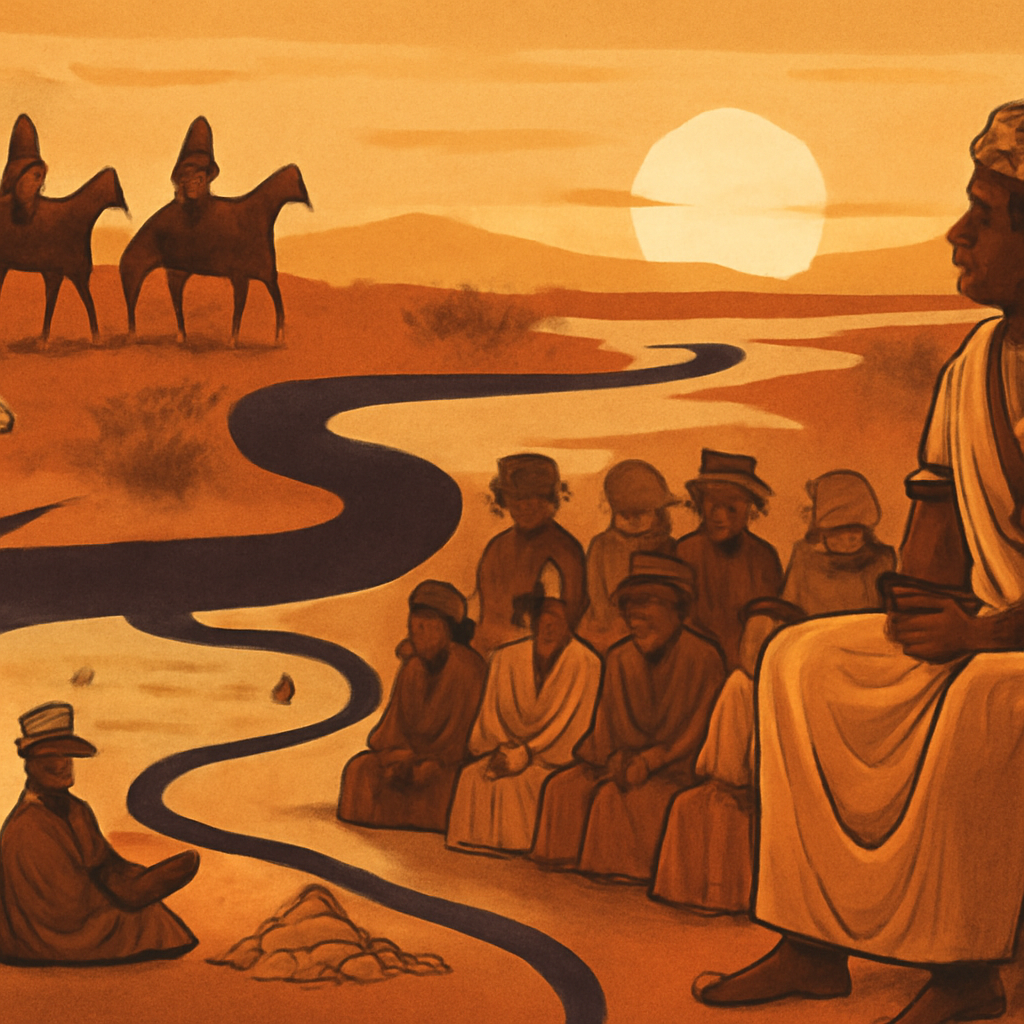
The lands of the Mande world before c. 1235 CE were never static; local kingdoms, lineage groups and caravan networks had long navigated shifting rainfall, trade booms and rivalries. Across the Niger and Sahel, goldfields, riverine markets and overland routes connected forest communities to Saharan traders. Political authority in this space combined inherited ritual claims with practical control over raiding, grazing, and commerce. External pressures—moving peoples, the lure of trans-Saharan profit, and the technological value of horse cavalry—intensified competition among leaders seeking advantage. At the same time, Mande political traditions offered flexibility: councils, kinship obligations and prestige goods mattered as much as naked coercion. These conditions did not predetermine a single outcome.
Rather, they narrowed and reshaped options for ambitious actors who could align military skill, marriage ties, and commercial networks to create larger polities. The foundation of the Mali Empire therefore stands at the intersection of long-term economic and social shifts and the contingent choices of people operating within them. Mali's foundation should be told through Mande political recovery, oral tradition, gold routes, and coalition-building. Sundiata Keita's story is preserved through epic memory as well as historical reconstruction, so the page needs to treat griot tradition as evidence with its own form, purpose, and authority. The founding was not only a heroic biography.
It involved alliances, military victory, control of trade routes, agricultural communities, Niger valley connections, and the ability to turn local authority into an empire that later shaped trans-Saharan commerce.
The Turning Point
The turning point associated with the foundation of the Mali Empire centers on the sequence by which Sundiata Keita converted a military victory into durable political order. Around Kangaba and the Niani region, Sundiata consolidated allies from across the Mande world, drawing on marriage ties, ritual legitimacy and the promise of access to trade routes to assemble a coalition. He made cavalry power a central instrument—horses offered mobility and deterrence across the floodplains and Sahel—while protecting and integrating market towns that handled gold and trans-Saharan traffic. Crucially, this was not simply conquest; it involved the selective incorporation of local elites and customs so that older Mande practices were layered into a broader imperial framework.
Commanding routes along the Niger and across the Sahel required diplomatic negotiation with neighbouring polities and caravan leaders as much as force. The result was an observable shift: political authority that could claim responsibility for securing trade corridors, mobilizing militaries, and adjudicating disputes over resources. Whether one treats this as a sudden foundation or the visible crest of earlier trends depends on how much weight one gives to Sundiata’s strategic choices versus the deeper pressures already reshaping the region. The turning point was the creation of a Mande-centered imperial order after conflict with rival power. Political consolidation gave Mali a platform to control gold, build legitimacy, and connect West Africa more tightly to Sahelian and Islamic commercial worlds.
Consequences
In the near term, the consolidation under Sundiata created a more coherent political centre able to project influence across a broad stretch of West Africa. Control over key routes meant Mali’s rulers could tax and protect caravans, making gold and other valuables move through imperial channels rather than diffuse local networks. This produced wealth that underwrote further state-building: administrative roles, military retinues, and the authority to broker marriages and alliances. Over decades, the empire’s reach altered patterns of migration, labour and religious exchange, amplifying Islamic learning in market towns while local ritual practice persisted in court life.
In the longer view, Mali’s rise repositioned parts of West Africa within medieval Afro-Eurasian exchange: places that once functioned at the margins of trans-Saharan traffic became central nodes receiving merchants, scholars and envoys. Importantly, the empire also set the political stage for later episodes—most famously the pilgrimage journeys of later rulers—by creating the institutions and wealth that made such spectacles possible. At every step, historians debate scale and causation: was the key change the visible construction of imperial authority, or had shifting economic and social pressures already constrained what communities could do? Both lines of explanation remain necessary to understand the empire’s complex legacy. Its afterlife leads to Mansa Musa, Timbuktu, trans-Saharan trade, Islamic scholarship, and modern West African memory.
The foundation page should help readers see Mali as a political system, not only the background to one famous pilgrimage.
Interpretation Notes
Mali's founding is remembered through Sundiata and Mande oral tradition, but empire-building was also about goldfields, cavalry, river routes, tribute, Islam, and regional alliances. The debate is how to respect epic memory while separating political formation from later imperial mythology.
Why Keep Reading
Follow the trail of Mali’s commercial and cultural networks to see how regional power connects to global history. Read on to trace the caravans that carried gold, salt and ideas; to meet the market towns where Islamic scholarship and local customs met; and to watch how later rulers used Mali’s structures to stage public displays that resonated across continents. Exploring the empire’s neighbours and successors will show whether Mali’s foundation was an exceptional event or a hinge in longer processes that remade the Sahel. Read Mali's foundation with Ghana Empire, Mansa Musa's hajj, Songhai, Timbuktu, and Atlantic trade pages to follow how West African state power moved through gold, memory, religion, and routes.
Reading Path
Follow the story without losing the thread
Before This
- Kilwa Sultanate Flourishesc. 1200 CE
- Great Zimbabwe Risesc. 1100 CE
- Ghana Empire Flourishesc. 800 CE
After This
- Great Zimbabwe Flourishesc. 1250 CE
- Mansa Musa's Hajj1324-1325 CE
- Songhai Empire Risesc. 1464 CE
Same Period
- Ghana Empire Flourishesc. 800 CE
- Great Zimbabwe Risesc. 1100 CE
- Mansa Musa's Hajj1324-1325 CE
Wider Timeline
Mind Map
How to think about Mali Empire Founded
Gold trade
Control of trans-Saharan and riverine gold routes increased fiscal resources and political leverage
Map Layer
Where this event sits geographically
Gold pins mark the approximate locations of published event pages. This is a schematic locator map, not a historical border map.
Coordinates are approximate and are used to help readers orient themselves before opening a full event page.
References
Where to Check the Facts
- Encyclopaedia Britannica: Mali EmpireReference for Mali's formation, geography, rulers, and regional importance.
- Encyclopaedia Britannica: Sundiata KeitaBiographical reference for Sundiata Keita and the founding tradition of Mali.
- The Met: The Empires of the Western SudanMuseum reference for West African empires, gold trade, Islam, trans-Saharan exchange, and the regional setting of Mali.