Historical Role
Sundiata Keita is best read at the meeting point of oral tradition, regional warfare, Mande political memory, and the formation of the Mali Empire. He is more than a founder's name: stories about exile, return, coalition, battle, and legitimacy helped later communities explain why Mali became powerful.
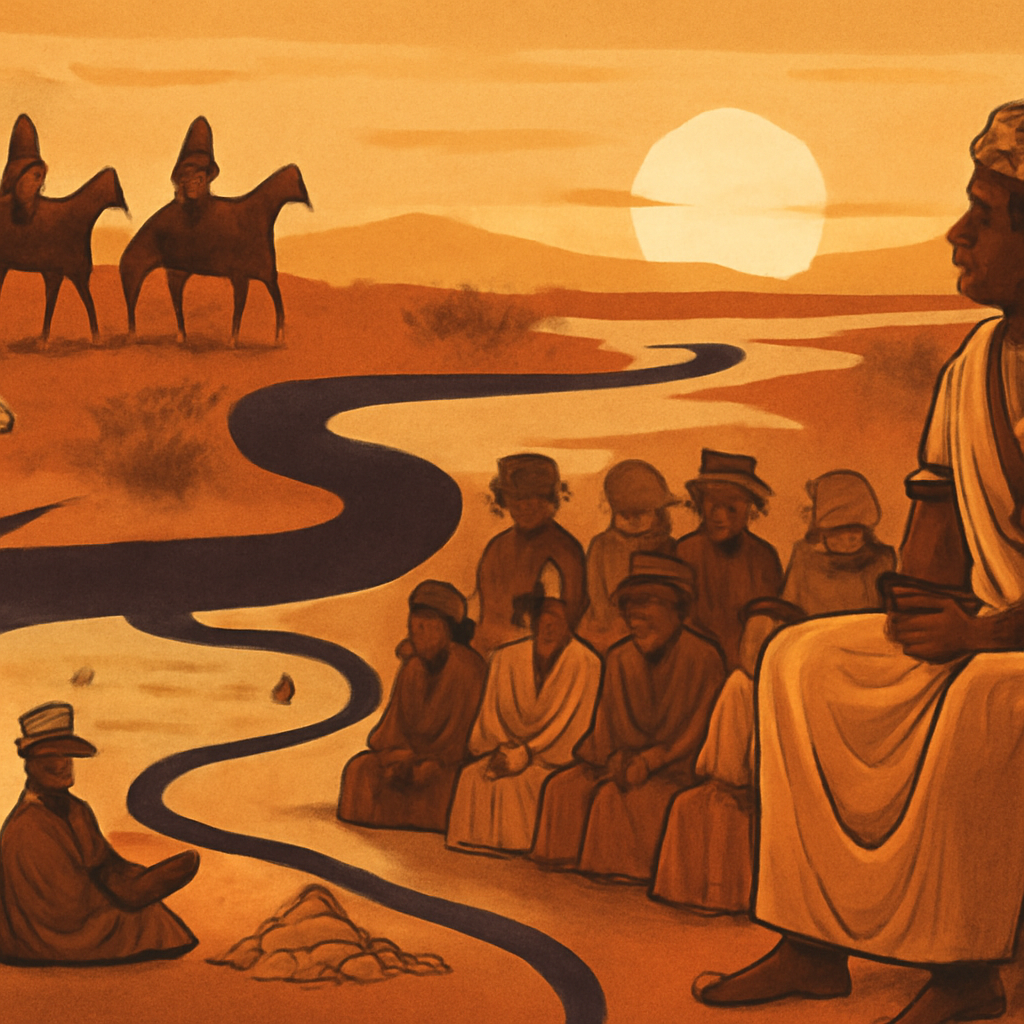
The Mali foundation story also needs geography. Power moved through the Niger River, savanna routes, goldfields, agriculture, cavalry, market towns, and long-distance exchange. Sundiata matters because political authority was built where local communities, trade wealth, military alliances, and oral specialists could hold memory together.
Oral tradition is not a weakness in the evidence trail. It is part of the subject. Griots preserved political memory, genealogy, praise, warning, and social meaning. A careful biography asks what oral epics can tell us, what they reshape, and why they remained important to Mande identity long after the thirteenth century.
The biography also benefits from a state-formation lens. Sundiata's importance lies in the movement from fragmented authority toward a wider Mali political order, where alliance, tribute, trade protection, military command, and remembered legitimacy could make expansion durable enough for later rulers to inherit. That is why the route connects founding memory to later imperial prosperity instead of isolating Sundiata from the systems that followed him.
Kirina gives the founder story a political scene, but the page works best when the battle is not treated as a single magic origin. A coalition had to be formed, rivals had to be defeated or absorbed, lineages had to accept a wider order, and routes toward goldfields and river settlements had to become safer for trade and tribute. Founding power was therefore social and geographic, not only military.
The griot tradition gives Sundiata's biography its texture. Praise names, exile scenes, disability and recovery motifs, kinship conflict, and heroic return are not modern footnotes to a harder archive. They are part of how Mande communities preserved political meaning, taught legitimacy, and remembered obligations. A reader can respect the epic form while still asking how performance, patronage, and later empire shaped the telling.
Sundiata also helps widen the atlas beyond Mediterranean and European models of empire. Mali's early power rested on savanna agriculture, cavalry, river corridors, market protection, gold wealth, Islamic contacts, and local ritual authority. Those materials produced an imperial world that looked different from Rome, Qin, or Abbasid Baghdad but answered the same historical problem: how a center coordinates distant communities without erasing every local identity.
Sundiata Keita helps connect individual action with wider historical change in Mali Empire. The biography works best when it keeps the surrounding world visible: authority, conflict, belief, reform, or discovery moved through decisions made under pressure.
The related events show how roles such as Founder of Mali, Mande ruler can be read through dates, places, institutions, and consequences rather than through reputation alone. The biography explains why this person matters, while the linked events explain what changed around them.
A richer reading starts with the limits around the person. Some figures acted through offices, armies, courts, laboratories, churches, parties, ships, trade networks, or protest movements; others became important because later communities turned their lives into symbols. The page therefore asks what this person could actually change, what was already moving before them, and which consequences later readers attached to the name.
Read the biography against absence as well. Many lives around Sundiata Keita are less visible in the record: opponents, collaborators, family members, workers, soldiers, students, subjects, victims, translators, scribes, or local communities. Keeping those surrounding people in view makes the page less like a name card and more like an entry point into historical systems.
Sundiata Keita also works as a navigation point. Open the linked event pages to see where the biography becomes chronology, then use the topic routes to test whether the same pattern appears beyond one life. That extra step matters because historical importance is rarely contained inside a single decision; it usually spreads through institutions, witnesses, opponents, imitators, and later arguments over memory.
Sources and Method
Source method: use the Mali Empire and Sundiata references as entry points, while treating oral tradition and later epic memory as historical evidence with its own rules rather than as simple decoration.
Why This Person Matters
Sundiata Keita matters because the connected events make a larger historical pattern easier to follow. The page links biography to consequences so readers can move from a life story into the wider atlas, compare the person with contemporaries, and understand why later memory kept returning to this figure. Sundiata Keita matters because he gives readers a route into West African state formation that takes oral tradition seriously. His story links founding memory, Mande identity, coalition politics, trade routes, gold wealth, and the later Mali Empire that would make figures such as Mansa Musa globally visible.
The page also teaches a source lesson: a founder known through epic memory is not less historical than a ruler known through court records, but the questions change. Readers need to ask how memory was performed, who preserved it, and what kind of political order the story helped explain.
What becomes clearer when this person's life is read through connected events instead of isolated biography, and where do the consequences outgrow the person?
How to Read This Life
Sundiata Keita is easiest to understand when the biography is read beside Mali Empire Founded. Those events show the historical setting in motion: dates, places, institutions, conflict, and consequences give the life a structure that a short biography alone cannot provide.
The surrounding route crosses Medieval Africa and locations such as Kangaba and Niani Region. That matters because influence rarely stays inside one person. It moves through offices, armies, movements, laws, texts, speeches, institutions, and later memory.
A useful reading path starts with the role labels, then opens the event pages to see what changed, and finally compares this person with other actors facing similar pressures.
For readers who arrive on a biography first, this page is meant to become a doorway rather than a stop. Read one paragraph for the answer, then use the turning points, topic routes, and event links to test whether the person's reputation matches the wider evidence.
Read Sundiata beside Mali Empire Founded, Mansa Musa's Hajj, trans-Saharan trade, and West African empire routes. The sequence moves from founding memory to gold, pilgrimage, scholarship, and wider Afro-Eurasian connection.
Compare him with Mansa Musa, Gajah Mada, Pachacuti, and Qin Shi Huang. The comparison asks how founders, administrators, ritual authorities, and memory keep large political systems coherent.
Read Sundiata Keita through the roles of Founder of Mali, Mande ruler rather than as reputation alone.
Place the biography inside Mali Empire and the wider events linked below.
Ask which choices were personal and which were constrained by institutions or crisis.
Follow how later memory simplified, contested, or reused this person's role.
Ask how griot performance preserves, interprets, and reshapes political memory.
Follow alliance, warfare, lineage, and local authority as foundations of Mali's expansion.
Connect the founder story to goldfields, Niger routes, markets, agriculture, and later imperial wealth.
Legacy, Limits, and Memory
A useful biography keeps scale in view. Sundiata Keita mattered because individual choices met a wider structure: institutions, enemies, allies, audiences, technologies, beliefs, and inherited conflicts. The related event pages help separate personal agency from conditions that no single person controlled.
Memory is part of the biography too. Later readers often simplify a figure into a hero, villain, founder, reformer, conqueror, prophet, scientist, or symbol. Those labels can be helpful, but they become misleading when they hide conflict, compromise, exclusion, uncertainty, or the experiences of people outside the main biography.
For the next step, compare this life with a topic route rather than stopping at the name. If the same pattern appears across several figures, the reader has found a historical structure; if this person breaks the pattern, the contrast is usually where the most interesting question begins.
Sundiata is often presented through heroic epic. The biography gains depth when it asks how hero memory, political coalition, trade wealth, and state formation support one another.
The biography also widens the atlas's evidence model. Not all history begins with bureaucratic archives. Performance, genealogy, praise poetry, place memory, and archaeology can all shape what readers can know.
Turning Points to Read Next
Mali Empire Founded
Sundiata Keita's victory and consolidation helped found the Mali Empire, linking Mande political traditions with gold trade, cavalry power, and regional alliances.
Related Timeline
- c. 1235 CEMali Empire Founded
Sundiata Keita's victory and consolidation helped found the Mali Empire, linking Mande political traditions with gold trade, cavalry power, and regional alliances.
References
Where to Check the Facts
- Encyclopaedia Britannica: Sundiata KeitaBiographical reference for Sundiata Keita's life dates, roles, institutions, and historical setting.
- Encyclopaedia Britannica: Mali EmpireReference for the Mali Empire's founding, expansion, gold wealth, and regional setting.