At a Glance
The shape of the event
- Date
- c. 1200 CE
- Place
- Kilwa Kisiwani
- Type
- Commercial florescence
Kilwa became one of the most influential Swahili city-states, mediating gold, ivory, ceramics, cloth, and Islamic prestige between inland routes and Indian Ocean ports.
c. 1200 CE; place the event in Kilwa Kisiwani before comparing causes or consequences.
Kilwa's growth shows how African coastal cities could shape global exchange through ports, language, religion, and access to inland wealth.
Kilwa sultans / Swahili merchants are the first names or groups to compare before widening the story.
The city developed monumental architecture, commercial wealth, and wider diplomatic visibility across the oceanic trading world.
The city developed monumental architecture, commercial wealth, and wider diplomatic visibility across the oceanic trading world.
Kilwa's growth shows how African coastal cities could shape global exchange through ports, language, religion, and access to inland wealth.
Follow the thread from Kilwa’s commercial rise to the architecture and the diplomatic ties that followed.
Background
Kilwa did not appear fully formed in a single day. Centuries of coastal settlement and maritime knowledge, an expanding demand for African gold and ivory in the Indian Ocean world, and a growing web of merchants who spoke Swahili laid the groundwork. Swahili city-states patterned themselves around stone houses, coral mosques, and market complexes that signaled permanence to Indian Ocean partners. Inland routes carried gold and ivory to the coast; coastal dhow captains carried ceramics and cloth back inland and to ports as far as the Persian Gulf and western India. Local rulers—the Kilwa sultans—found that controlling anchorage, customs, and dockside credit could convert seasonal traffic into predictable revenue.
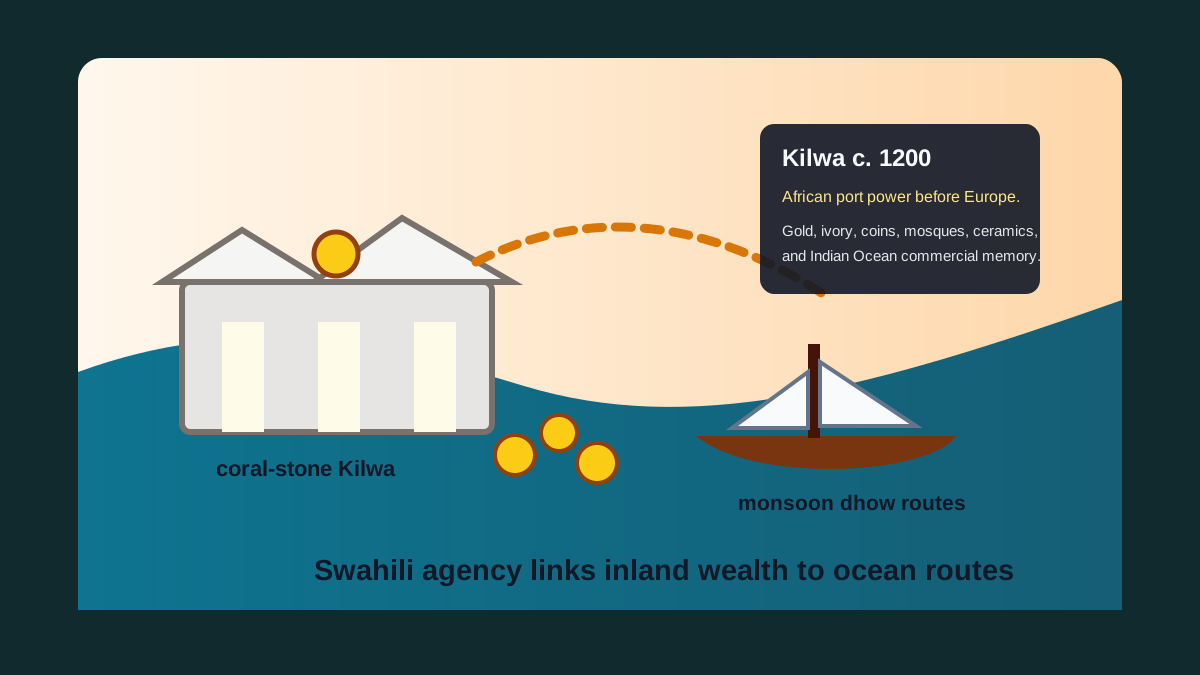
At the same time Islam provided idioms of authority and networks of legitimacy that merchants and rulers used to reassure distant partners. None of these pressures fully explains Kilwa’s rise alone: environmental factors, seamanship, kinship ties among Swahili families, and the fragmentation of rival polities all mattered. The scene was one of overlapping incentives rather than a single inevitable trajectory. Kilwa becomes more compelling when it is treated as a port city built from coral stone, monsoon timing, African mainland connections, and Indian Ocean demand. Its wealth did not come from isolation. Gold from the interior, ivory, textiles, ceramics, ships, merchants, and Islamic scholarly ties made the Swahili Coast a connected commercial world long before European arrival.
The city also complicates simple labels. Kilwa was African, coastal, Islamic, and cosmopolitan at once. Archaeology, ruins, imported ceramics, coins, mosques, and later travel writing show a society that combined local political authority with far-reaching oceanic exchange.
The Turning Point
Around c. 1200 CE Kilwa’s position and leadership choices intensified existing flows. Kilwa sultans and leading Swahili merchants made concrete decisions—expanding storage and shipyards, enforcing harbor dues, and investing in stone architecture and mosques—that signaled permanence and reliability to foreign partners. Kilwa’s marketplaces specialized in intermediating inland gold and ivory with incoming ceramics and textiles from the Indian Ocean, and those deals required trusted middlemen who could guarantee weights, credit, and safe passage. Swahili merchants acted as brokers, translating between inland traders and oceanic buyers, setting prices and arranging convoy sailings.
The decision to present Kilwa as a stable Islamic center mattered: mosques and civic buildings announced a polity linked to broader religious currents, which could ease negotiations with Muslim merchants from Arabia and South Asia. These were choices about infrastructure, legal practice, and ritual visibility as much as about a single trade wind. Actors on the ground—sultans collecting dues, merchants negotiating cargoes, dhow captains choosing routes—turned a favorable position into institutional advantage. The city’s material investment in durable buildings and organized markets converted episodic trade into a sustained commercial reputation. The turning point was Kilwa's ability to control and profit from trade routes linking the Zimbabwe plateau and other inland zones to the wider Indian Ocean.
Commercial strength became urban power, religious patronage, and regional authority.
Consequences
In the near term Kilwa’s tightening control of harbor operations and its central role in the gold trade produced concentrated commercial wealth: merchant houses could finance larger expeditions, sultans could fund public architecture, and the town drew craftsmen and specialist traders. Monumental coral and stone structures rose not merely as prestige projects but as visible proof that Kilwa could host long-distance partners and anchor seasonal trade. Diplomatically, Kilwa acquired visibility across the Indian Ocean: merchants and envoys recognized it as a reliable stop, and that recognition translated into more regular shipping and credit relationships. Over the longer term Kilwa’s example reshaped perceptions of African coastal polities.
The city showed how ports could mediate inland resources, influence language and religious practice along the coast, and participate in oceanic diplomacy without being subsumed by distant empires. This influence was uneven: wealth concentrated, some communities prospered, others adapted or were displaced, and later rulers and movements would remember Kilwa selectively. Appreciating these consequences means recognizing both what Kilwa enabled—expanded commercial networks, architectural expression, and transoceanic visibility—and what it left ambiguous: the distribution of benefits across social groups and the varied memories later political actors attached to the city’s past. Its afterlife includes Portuguese violence in the sixteenth century, UNESCO heritage, and modern debates about how to narrate African urban history without making Europe the starting point.
Kilwa's story should begin with Swahili agency. That approach helps readers see medieval Africa through cities, ships, mosques, artisans, rulers, and merchants rather than through later colonial interruption.
Interpretation Notes
Kilwa Sultanate Flourishes is easy to flatten into one dramatic date. A stronger reading separates immediate action from deeper causes, affected communities, and the memory later states or movements built around the event.
Why Keep Reading
Follow the thread from Kilwa’s commercial rise to the architecture and the diplomatic ties that followed. Looking next at contemporaneous Swahili towns, the mechanics of dhow navigation, or the inland gold routes reveals how ports redistributed power and wealth. Understanding the subsequent centuries—how Kilwa’s monuments were used, contested, or repurposed—shows how a commercial boom becomes political memory. If you care about how local choices intersect with global currents, these linked stories explain why a single island port mattered far beyond its shoreline. Read Kilwa with Ibn Battuta, Great Zimbabwe, Portuguese capture of Kilwa, Zanzibar, and Indian Ocean timelines to follow port power across centuries.
Reading Path
Follow the story without losing the thread
Before This
- Chola Raid on Srivijaya1025 CE
- Swahili Coast City-States Risec. 900 CE
- Ghana Empire Flourishesc. 800 CE
After This
- Mali Empire Foundedc. 1235 CE
- Great Zimbabwe Flourishesc. 1250 CE
- Mansa Musa's Hajj1324-1325 CE
Same Period
- Chola Raid on Srivijaya1025 CE
- Swahili Coast City-States Risec. 900 CE
- Ibn Battuta Visits Kilwa1331 CE
Wider Timeline
Mind Map
How to think about Kilwa Sultanate Flourishes
maritime demand
Growing Indian Ocean demand for gold, ivory, ceramics, and cloth created predictable markets for coastal brokers.
Map Layer
Where this event sits geographically
Gold pins mark the approximate locations of published event pages. This is a schematic locator map, not a historical border map.
Coordinates are approximate and are used to help readers orient themselves before opening a full event page.
References
Where to Check the Facts
- Encyclopaedia Britannica: KilwaReference for Kilwa as a Swahili city-state, commercial center, Portuguese occupation, and later decline.
- Official UNESCO World Heritage Centre: Ruins of Kilwa Kisiwani and Songo MnaraReference for the material remains and Indian Ocean setting of Kilwa and Songo Mnara.