At a Glance
The shape of the event
- Date
- c. 600 BCE
- Place
- Red River Delta
- Type
- Cultural and Technological Development
Dong Son culture flourished around the Red River region, known especially for bronze drums, craft production, wet-rice agriculture, and exchange networks.
c. 600 BCE; place the event in Red River Delta before comparing causes or consequences.
The event gives Southeast Asia a pre-imperial anchor and shows that the region's history cannot begin with outside empires or colonial arrival.
Dong Son communities are the first names or groups to compare before widening the story.
Bronze objects, ritual forms, and regional exchange made northern Vietnam a visible center in early Southeast Asian history.
Bronze objects, ritual forms, and regional exchange made northern Vietnam a visible center in early Southeast Asian history.
The event gives Southeast Asia a pre-imperial anchor and shows that the region's history cannot begin with outside empires or colonial arrival.
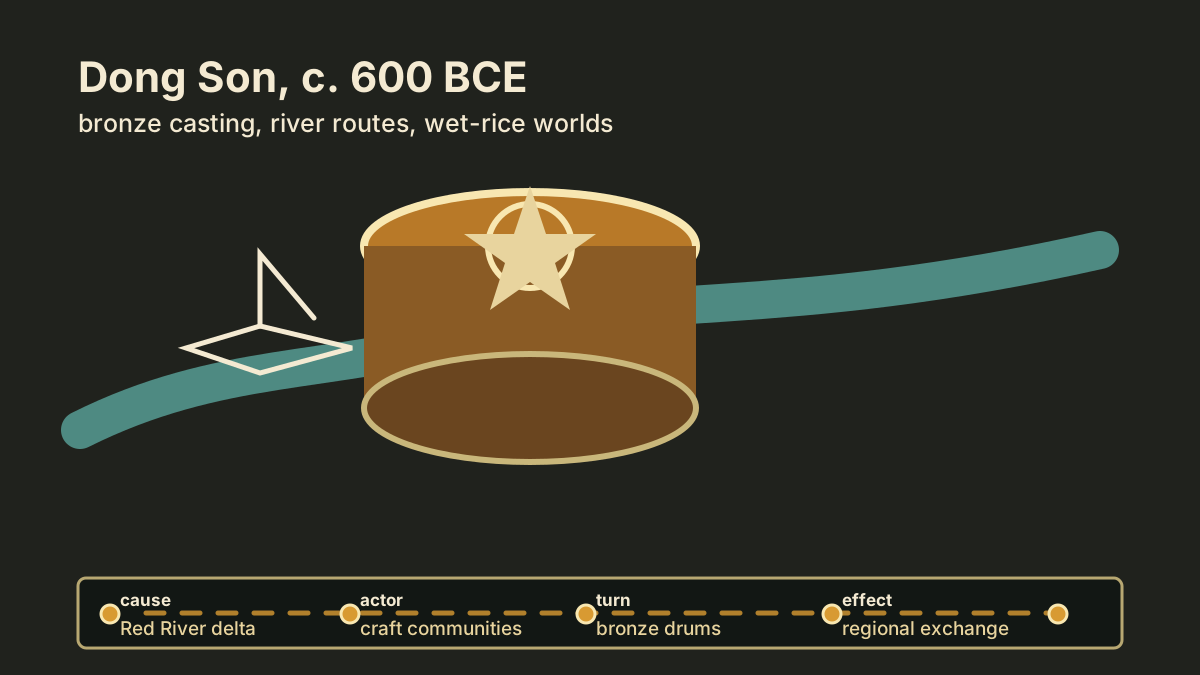
Follow the timeline that traces objects and ideas out of the Red River Delta: how did bronze drums travel, who moved them, and what did they signify in places beyond their manufacture?
Background
The Dong Son moment sits in a Bronze Age Southeast Asia where craft, cultivation, and contact intersect. In the Red River Delta, communities practiced wet-rice agriculture that made sustained surplus and denser settlement patterns possible. Skilled metalworkers developed recognizable types of bronze objects—especially large ceremonial drums—that carried social weight beyond their material value. Those objects circulated: they were used ritually, exchanged across distances, and displayed in local gatherings. The delta’s ecology and the seasonality of rice shaped labor rhythms, which in turn made specialized craft viable. At the same time, broader exchange networks moved goods, styles, and ideas across what is now mainland Southeast Asia, so innovations did not arise in isolation.
No single cause explains the Dong Son florescence: environmental productivity, craft skill, social choices, and interregional contact combined unevenly across communities. Later storytellers—courts, religious groups, merchant networks, or modern national histories—will read those material traces for different lessons, which is why the archaeological record and remembered meanings must be held apart. Dong Son culture is easiest to remember through bronze drums, but the drums are a doorway rather than the whole story. Communities in and around the Red River Delta combined wet-rice agriculture, river transport, bronze casting, boat imagery, warfare, ritual display, and exchange with neighboring regions. The material record matters because there is no single royal chronicle explaining Dong Son society in its own words.
Archaeologists work from graves, drums, weapons, tools, settlement remains, casting technology, and regional comparison.
The Turning Point
What changes in the Delta around c. 600 BCE were emphatically practical: communities began to make and to move bronze objects and ritual forms at a scale and with a regularity that announced their presence to neighbors. Craftspeople—the smiths and their assistants—chose to refine techniques that produced larger, more ornate bronze pieces, and those choices required coordinated labor, access to metal-bearing trade, and demand from ritual users. Farmers in the wet paddies organized planting and harvesting cycles that could support more specialized households rather than everyone producing only subsistence. Traders and exchange networks linked the Red River Delta to coastal and inland routes, so objects and styles traveled beyond single valleys.
These are concrete actions: decisions to concentrate skills, to invest surplus in non-food production, and to accept circulating objects as currency of prestige or ritual power. As a result, the Delta became more visibly networked; its material culture—bronze drums and other objects—served as proof that northern Vietnam was a node in regional exchange and social display, not merely a passive hinterland. The turning point was the emergence of a recognizable material and social complex whose bronze objects communicated authority across villages, rivers, and trade routes. Drums were not only musical instruments. Their decoration, size, production cost, and circulation suggest ritual and political importance.
Boats, birds, warriors, houses, and processions on the drums point toward a riverine world where movement and status were tightly connected. Craft specialists, local leaders, farmers, and traders all belonged to the system that made such objects possible.
Consequences
In the near term, the investment in bronze production and in ritual forms helped shape social relationships inside and across communities: prestige goods marked status, ritual objects structured public life, and exchange sustained ties between distant groups. The material traces left behind—bronze drums, tools, and ornaments—amplified the region’s voice in the wider Bronze Age world. Over the longer course of history, the Dong Son phenomenon provides a tangible pre-imperial anchor for Southeast Asian history: it shows that sophisticated craft economies, ritual complexity, and interregional exchange predate the arrival of external empires or later colonial frameworks.
That does not mean a single political state emerged from these patterns, but it does mean northern Vietnam figured as a visible center in early regional networks. Finally, the way these consequences are remembered varies: a court may stress continuity and lineage, a merchant lineage may highlight trade links, a religious community may emphasize ritual meaning, and modern nations may use the same artifacts to assert antiquity and identity. The objects remain constant; their uses as symbols change with each storyteller. Dong Son influence shaped later memories of early Vietnamese and Southeast Asian history, but it does not fit a simple modern national origin story. The culture crossed and connected regions that do not map neatly onto modern borders.
Its importance lies in showing how Bronze Age Southeast Asia developed complex technologies and social forms through local innovation and exchange, not as a passive recipient of Chinese or Indian civilization. That correction is essential for readers who arrive with a China-centered frame.
Interpretation Notes
The memory of Dong Son Culture Flourishes often depends on who tells the story. A court, army, religious community, merchant network, or later nation can emphasize different causes and make Red River Delta stand for different lessons.
Why Keep Reading
Follow the timeline that traces objects and ideas out of the Red River Delta: how did bronze drums travel, who moved them, and what did they signify in places beyond their manufacture? If you want to see how material practice turns into political memory, examine later episodes where those same objects are cited or displayed. Tracking trade routes and comparing neighboring material cultures will reveal the shape of Southeast Asian exchange long before external empires arrived. Each step deepens a central lesson: the region’s history is indigenous in origin and complex in consequence. Read next through Southeast Asian maritime routes, early Vietnam, Han expansion, and Angkor.
Dong Son helps establish a long regional history before later imperial states and colonial categories.
Reading Path
Follow the story without losing the thread
Before This
No direct path yet.
After This
Same Period
- Funan Maritime Network Risesc. 100 CE
- Black Death Reaches Europe1347 CE
- First Opium War Begins1839 CE
Wider Timeline
Mind Map
How to think about Dong Son Culture Flourishes
Bronze drums
Large ceremonial drums acted as focal ritual objects and visible evidence of specialized metalwork
Map Layer
Where this event sits geographically
Gold pins mark the approximate locations of published event pages. This is a schematic locator map, not a historical border map.
Coordinates are approximate and are used to help readers orient themselves before opening a full event page.
References
Where to Check the Facts
- Encyclopaedia Britannica: Dong Son cultureReference for Dong Son chronology, bronze drums, geography, and cultural context.
- The Metropolitan Museum of Art: Bronze drums in Southeast AsiaMuseum reference for Dong Son-style bronze drums and material culture.