At a Glance
The shape of the event
- Date
- 1769 CE
- Place
- Tahiti
- Type
- Oceanic Contact
James Cook's arrival at Tahiti connected British scientific voyaging with Pacific knowledge, Polynesian diplomacy, astronomy, mapping, and future imperial contact.
1769 CE; place the event in Tahiti before comparing causes or consequences.
The event is best read as contact, translation, and unequal encounter, not as a simple European discovery of an empty ocean.
James Cook / Tupaia / Tahitians are the first names or groups to compare before widening the story.
Tahiti became a key point in European Pacific knowledge, while Pacific navigators and communities shaped what outsiders could learn.
Tahiti became a key point in European Pacific knowledge, while Pacific navigators and communities shaped what outsiders could learn.
The event is best read as contact, translation, and unequal encounter, not as a simple European discovery of an empty ocean.
This moment opens lines into the larger story of Pacific and European encounters.
Background
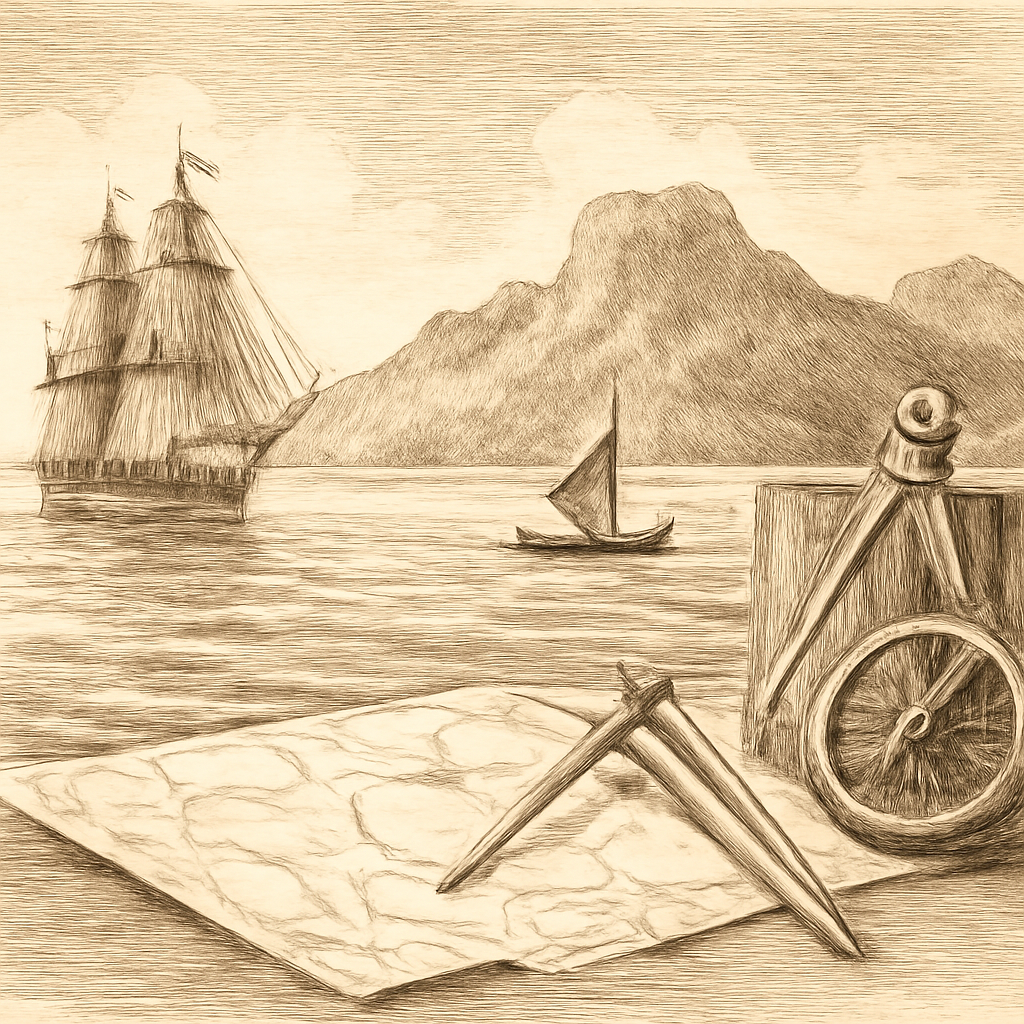
By 1769 European powers sent ships for purposes that mixed curiosity, science, navigation, and imperial interest. British voyages carried instruments and aims framed by astronomy and mapping; they expected to measure and position places in a global grid. Those expectations met a Pacific already organized by its own expert knowledge: lifeways, navigation across vast seas, political rituals, and local priorities. Tahiti was not an empty point on a chart. It was a place with peoples who managed visitors, performed diplomacy, and controlled how disclosure and exchange would proceed. Cook’s arrival thus carried multiple pressures. On one side were British officers, scientists, and sailors whose training pushed them toward precise observations and charts.
On the other were Tahitian communities whose decisions about hospitality, guidance, trade, and ritual would determine what information left the island. Tupaia, a Polynesian navigator and interlocutor, embodied this two-way traffic: his skills and choices shaped both communication and the mapping of regional knowledge. Reading the arrival of Cook at Tahiti requires attention to these distinct priorities, not a single cause. It is a story of overlapping aims, practical negotiations, and the uneasy beginnings of longer-term contact between Pacific peoples and European voyagers. Cook's arrival at Tahiti belongs to both European science and Pacific history.
The voyage observed the transit of Venus, mapped routes, gathered information, and entered a society with its own politics, exchange practices, sacred authority, navigation knowledge, and regional relationships. The encounter was not a scene of Europeans discovering emptiness. Tahitians interpreted the visitors through local expectations, negotiated exchange, managed curiosity and tension, and lived with the consequences of new objects, diseases, stories, and strategic knowledge entering Pacific networks.
The Turning Point
In the months around 1769, the encounter at Tahiti altered who could name and map parts of the Pacific. The immediate change was not a sudden conquest but a reconfiguration of access to knowledge. Cook arrived with a mandate to observe and to record; Tahitians received, guided, and negotiated what they gave. Tupaia’s presence exemplified a decisive choice within the event: as a Polynesian navigator and interlocutor he mediated language, route-knowledge, and cultural expectations, enabling British scientists to read landscapes and to collect data they could not produce alone. For Cook and his team, Tahiti shifted from an unknown point to a functioning field laboratory where observation, measurement, and exchange took place.
For Tahitian communities the arrival required decisions about alliance, trade, ritual hospitality, and limits on what to reveal. Those decisions determined the shape of maps, the content of recorded conversations, and the pathways by which Pacific knowledge traveled into European hands. The turning point, therefore, was not merely a landing but a set of human choices—by Tahitians, by Tupaia, and by Cook’s officers—that translated local systems of knowledge into forms useful to British voyagers and to later European readers. This translation remade meanings on both sides, setting the terms for subsequent encounters across the Pacific.
Consequences
The arrival at Tahiti had layered consequences that unfolded unevenly. In the near term, the island became a focal point for European voyagers seeking astronomical observation, mapping, and regional information; Tahiti supplied kinds of knowledge that visitors recorded and carried into European scientific and naval networks. Those records helped make Tahiti a reference point in later European charts and accounts. At the same time, Tahitian actors retained agency: choices by local leaders, guides, and navigators like Tupaia shaped what was visible, what remained private, and how information circulated. Over the longer term, the encounter mattered less as a single moment of discovery than as the opening of a relationship defined by translation and unequal power.
European knowledge of the Pacific expanded in ways that aided later navigation, commerce, and imperial reach, but that expansion depended on ongoing cooperation, negotiation, and sometimes misunderstanding with Pacific people. The memory of Cook’s arrival therefore varies: different communities and institutions use it to tell different lessons—scientific triumph, indigenous diplomacy, colonial precedent, or contested memory. Reading the event as contact underscores that what followed was neither simple incorporation nor total resistance but a sequence of exchanges in which Pacific navigators and communities continuously shaped the limits and content of European learning. The consequences included more intensive European mapping, future missionary and imperial contact, scientific prestige, and later transformations in Tahitian politics and health.
The event matters because it reveals encounter as a two-sided process shaped by knowledge, misunderstanding, and unequal future power.
Interpretation Notes
The memory of James Cook Arrives at Tahiti often depends on who tells the story. A court, army, religious community, merchant network, or later nation can emphasize different causes and make Tahiti stand for different lessons.
Why Keep Reading
This moment opens lines into the larger story of Pacific and European encounters. Follow the timelines that track how mapping, astronomical projects, and sailor reports circulated through science and empire; look for the movements of people such as navigators, interpreters, and island communities who negotiated those exchanges. Studying subsequent voyages, changing maps, and shifting memories will reveal how scientific aims and political ambitions intertwined with local diplomacy. If you want to understand how a single landing turned into a network of knowledge and power, pursue the threads of navigation, colonial contact, and indigenous agency that run outward from Tahiti in 1769. Continue to Pacific voyaging, Polynesian settlement, Kamehameha, Waitangi, and colonial Pacific routes to keep Indigenous ocean worlds central.
Reading Path
Follow the story without losing the thread
Before This
After This
- Kamehameha Unifies Hawaii1810
- Attack on Pearl HarborDecember 7, 1941
- Battle of the Coral SeaMay 1942
Same Period
- Attack on Pearl HarborDecember 7, 1941
- Treaty of Tordesillas1494 CE
- Vasco da Gama Reaches India1498 CE
Wider Timeline
Mind Map
How to think about James Cook Arrives at Tahiti
British scientific voyaging
Organized pressure to observe, map, and record places in the Pacific, creating expectations for data and instruments.
Map Layer
Where this event sits geographically
Gold pins mark the approximate locations of published event pages. This is a schematic locator map, not a historical border map.
Coordinates are approximate and are used to help readers orient themselves before opening a full event page.
References
Where to Check the Facts
- Encyclopaedia Britannica: James CookReference for Cook's Pacific voyages, chronology, and exploration context.
- National Library of New Zealand: TupaiaInstitutional reference for Tupaia and Pacific knowledge in Cook's voyages.
- Library of Congress: U.S. History Primary Source TimelinePrimary-source timeline reference for Atlantic settlement, colonial expansion, reform, and later U.S. history paths.