At a Glance
The shape of the event
- Date
- 1988
- Place
- Bougainville
- Type
- Conflict
Conflict began in Bougainville amid disputes over mining, environmental damage, autonomy, and state authority.
1988; place the event in Bougainville before comparing causes or consequences.
The event connects resource extraction, Indigenous land, postcolonial statehood, and Pacific self-determination.
Bougainville communities / Papua New Guinea officials are the first names or groups to compare before widening the story.
A long crisis led to peace processes and later debates over independence.
A long crisis led to peace processes and later debates over independence.
The event connects resource extraction, Indigenous land, postcolonial statehood, and Pacific self-determination.
Follow the subsequent timelines and peace initiatives to see how immediate clashes in 1988 translated into years of negotiation, intermittent violence and eventual frameworks for dialogue.
Background
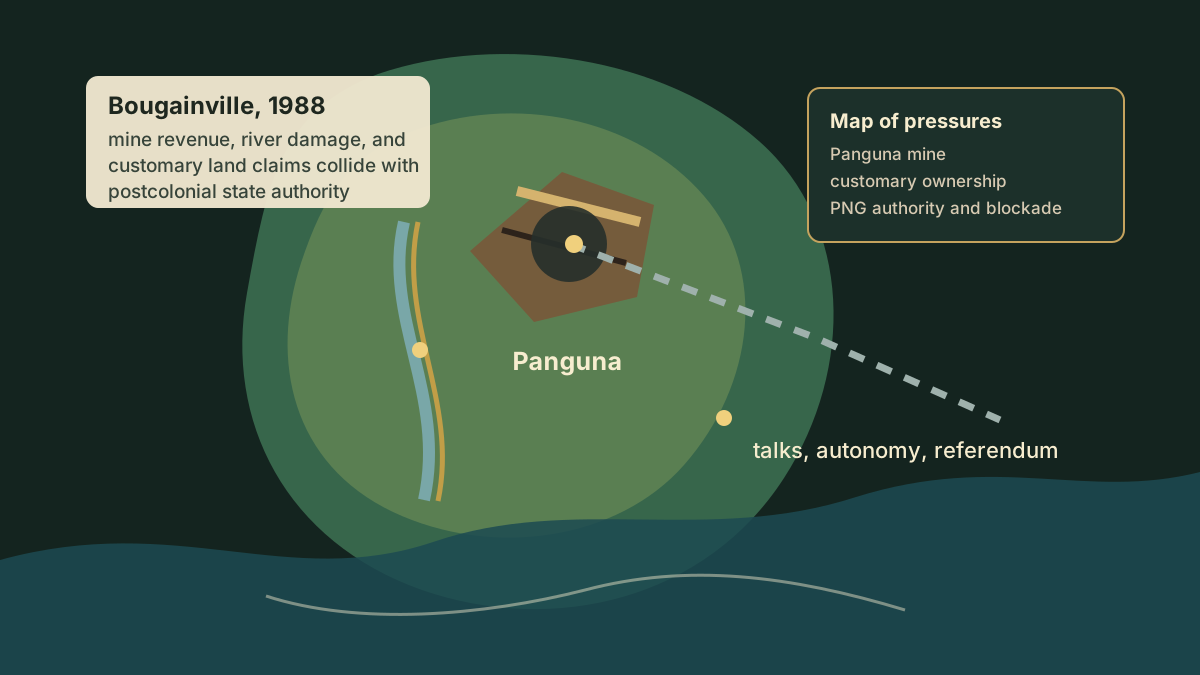
Bougainville is an island where land ownership is primarily customary and local communities have long-standing ties to specific rivers, gardens and reefs. In the years before 1988 a large-scale mine operated on the island, bringing both income and deep grievances: complaints about environmental damage, disruption to food systems and the sense that decisions about land and labour were taken without adequate local consent. Papua New Guinea, a young postcolonial state, asserted authority over resource revenues and legal jurisdiction; Bougainville communities asserted customary rights and sought greater autonomy over their lands. These pressures — economic interests tied to extraction, visible environmental harm, contrasting legal and customary claims, and the political incompleteness of statehood in postcolonial settings — accumulated unevenly.
Different actors recorded these pressures in different ways: official reports emphasized order and regulation, community oral accounts emphasized lived losses, and legal and diplomatic exchanges emphasized sovereignty and governance. None of those records alone explains why conflict erupted in 1988, but together they map the collision of competing expectations about who should decide Bougainville’s future. Bougainville is easier to understand when the mine is treated as a whole landscape rather than a single industrial site. Panguna brought roads, wages, company housing, government revenue, outside labor, and promises of development, but it also changed rivers, gardens, village politics, and expectations about who had the right to speak for land.
Customary ownership did not map neatly onto corporate leases or national revenue systems. That gap mattered because people experienced environmental harm through daily life: water quality, garden productivity, clan obligations, and the ability to pass land to children. Papua New Guinea's central government read the mine as a national asset; many Bougainvilleans read it as extraction from a place whose owners had not been respected. The conflict's opening therefore joins resource politics to memory, law, ecology, and postcolonial sovereignty.
The Turning Point
The moment the conflict began in 1988 turned on concrete choices made by local leaders, community groups and state officials in response to those accumulated grievances. Bougainville communities mobilised around visible damage and perceived marginalisation: landowners and workers drew attention to environmental impacts and what they saw as inadequate returns from extraction. Papua New Guinea officials responded as a national government often must — by asserting legal authority, attempting to maintain production and seeking to preserve state control over revenue and order. Those responses were experienced as compressing space for local decision-making; for some islanders that compression crystallised into direct challenge.
The confrontation was not a single event but a cascade of decisions: protests, demands for autonomy, policing and administrative measures taken by state actors, and local campaigns to protect land and livelihoods. Each choice hardened positions. Oral memories and local networks spread grievances and expectations of resistance; official records documented attempts at containment and governance. The interaction between specific community actions and specific governmental measures in 1988 created a new dynamic: what had been periodic dispute became an open crisis, setting patterns of contested authority that persisted through years of negotiation, violence and international attention. The 1988 escalation was not inevitable, but each side interpreted the other's moves through deep mistrust.
Local activists and landowners saw petitions, compensation disputes, and environmental complaints failing to produce meaningful change. State officials saw threats to a major revenue source and to the authority of a young nation. When sabotage, policing, emergency measures, and armed organizing began to reinforce one another, the dispute crossed from protest into conflict. Francis Ona and other Bougainvillean figures became symbols of resistance for some and rebellion for others. The mine's physical infrastructure made the confrontation visible: roads, power lines, processing facilities, and tailings became political objects. Each attack or crackdown narrowed the room for compromise and made later peace work harder.
Consequences
In the near term the outbreak of conflict in 1988 plunged Bougainville into a prolonged crisis. What began with disputes over mining, environmental damage and autonomy expanded to encompass issues of governance, labour, and the legitimacy of state authority. The immediate consequences included disruption to daily life, breakdowns in local-state relations, and the opening of sustained political and military confrontation that made normal economic and social relations difficult. Over the longer term the 1988 beginning shaped trajectories of peacemaking and political debate: it prompted long, often halting peace processes and produced enduring questions about whether Bougainville should remain part of Papua New Guinea or seek greater autonomy or independence.
The event also reframed broader regional conversations about resource extraction on Indigenous lands, postcolonial governance, and Pacific self-determination. Interpretations of these consequences vary depending on which evidence one privileges — official records, community oral memory, labour histories, archaeology, law or diplomacy — and those differing narratives continue to influence how the conflict and its outcomes are remembered, taught and settled in law and politics. The long consequences included severe disruption, displacement, a blockade, internal divisions, and a peace process that had to rebuild trust almost from zero. Bougainville's later autonomy arrangements and the 2019 referendum cannot be understood without the grievances opened in 1988.
The conflict also became a regional case study in how resource extraction can test postcolonial states when revenue, environmental harm, and customary land rights are distributed unevenly. It warns against simple narratives of development. A project can raise national income and still fracture legitimacy if local communities believe the costs are borne by them and the decisions are made elsewhere. For readers, the key is to follow institutions and landscapes together: mines, rivers, clans, police commands, peace monitors, and ballot papers all belong to the same story.
Interpretation Notes
Interpretations of Bougainville Conflict Begins depend on whose evidence is centered: rulers and official records, affected communities, oral memory, archaeology, law, diplomacy, labor, and later public memory do not always tell the same story.
Why Keep Reading
Follow the subsequent timelines and peace initiatives to see how immediate clashes in 1988 translated into years of negotiation, intermittent violence and eventual frameworks for dialogue. The next chapters show how local leaders, mediators and external actors tried to translate grievances into political settlements, and how competing accounts of harm and entitlement shaped those talks. Reading on clarifies why questions about land, consent and resource control that surfaced in 1988 remain central to debates over autonomy and possible independence in the Pacific today. Follow Bougainville's peace negotiations, autonomy framework, and referendum debate after this page.
That route shows how conflicts over land and extraction can become constitutional questions, and how a peace process has to address grief, governance, and future revenue at the same time.
Reading Path
Follow the story without losing the thread
Before This
- Attack on Pearl HarborDecember 7, 1941
- James Cook Arrives at Tahiti1769 CE
- Maori Settlement of Aotearoac. 1250 CE
After This
No direct path yet.
Same Period
- Attack on Pearl HarborDecember 7, 1941
- Eastern Polynesia Settlement Expandsc. 1000 CE
- Maori Settlement of Aotearoac. 1250 CE
Wider Timeline
Mind Map
How to think about Bougainville Conflict Begins
Mining
A large-scale mine generated revenue and visible environmental damage that became a focal point of local grievance
Map Layer
Where this event sits geographically
Gold pins mark the approximate locations of published event pages. This is a schematic locator map, not a historical border map.
Coordinates are approximate and are used to help readers orient themselves before opening a full event page.
References
Where to Check the Facts
- Official NZ History: Nuclear testing in the PacificReference for French nuclear testing in the Pacific and regional protest.
- Moruroa Files: Investigation into French nuclear tests in the PacificInvestigative reference for declassified-record analysis and contested health-impact claims around French Polynesian nuclear testing.
- Bougainville Referendum Commission: PublicationsOfficial reference for Bougainville referendum materials, voter information, observers, and public communication.
- PaCSIA: Bougainville Referendum DialoguesCivil-society reference for Bougainville dialogue work, referendum education, and local peace-process participation.
- Pacific Islands Forum: 2050 Strategy for the Blue Pacific ContinentPacific regional institutional reference for climate diplomacy, ocean governance, security, and shared Blue Pacific strategy.
- Encyclopaedia Britannica: Papua New GuineaReference for Papua New Guinea's independence and modern state formation.