How to Read the Year
Why does 622 CE in History deserve a focused year page?
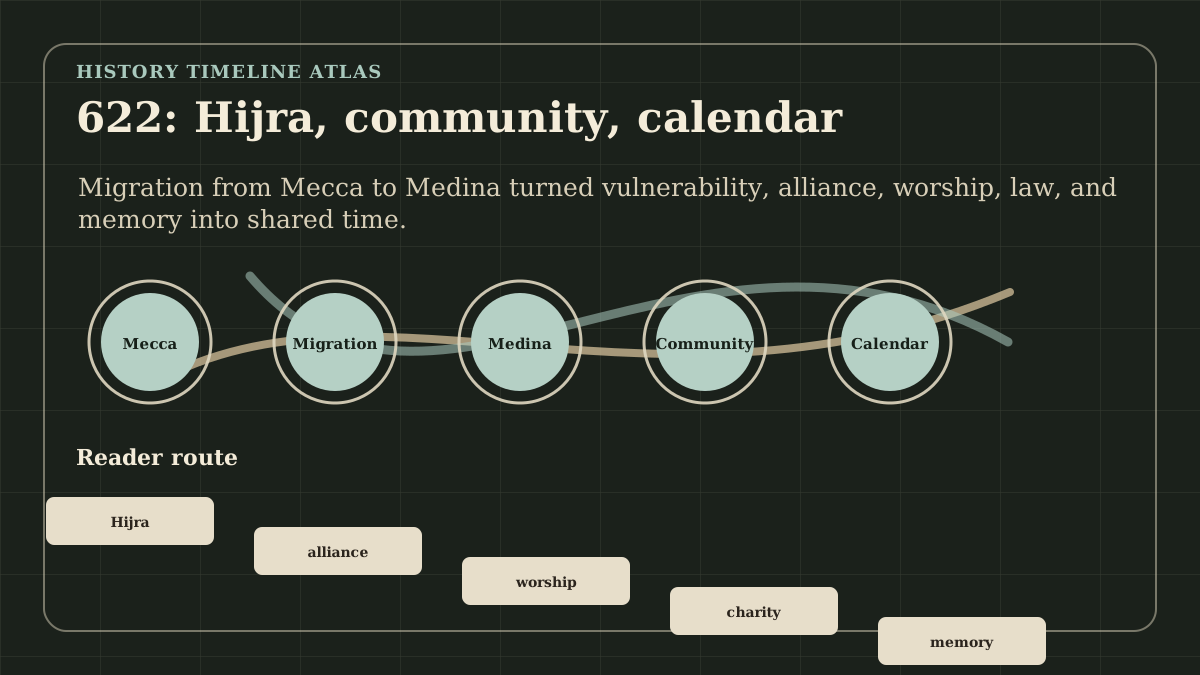
The Hijra makes 622 a year about migration, community formation, sacred memory, and political organization. For Muslims, the migration from Mecca to Medina is not only a date in biography; it becomes the starting point of the Islamic calendar and a foundational moment in communal history.
The immediate setting matters. Early Muslims moved from vulnerability in Mecca into a Medinan environment of migrants, local supporters, clans, treaties, markets, worship, charity, and conflict management. Migration changed the community's social form because belief now had to be organized through public obligations.
A careful year page separates devotion from historical method without disrespecting either. Muslim memory treats the Hijra as sacred history; historical overview can also ask how migration created institutions, alliances, leadership practices, and a new calendar for later communities.
622 also anchors a world-history route. Later Islamic law, scholarship, pilgrimage, empire, trade, and devotional practice repeatedly returned to the founding community in Medina. The date therefore links a local migration with a civilization whose later geography stretched across Afro-Eurasia.
The year should stay human as well as institutional. Migration meant leaving protection, forming new bonds, sharing resources, negotiating with neighbors, and building trust under pressure. That everyday scale helps the Hijra read as lived history rather than only calendar origin.
The year page should also distinguish the event from later empire. The Hijra did not already contain Abbasid Baghdad, Ottoman power, or Indian Ocean Islam in finished form. It created a community setting that later Muslims returned to when thinking about worship, law, leadership, migration, obligation, and the meaning of belonging.
For readers arriving from search, 622 is a date with several names: Hijra, Hegira, migration to Medina, and the beginning of the Islamic calendar. Those terms meet here without becoming a glossary. The point is why a movement across western Arabia became a way for a civilization to count time.
Care and conflict belong together. The Medinan community needed mutual support, prayer, charity, and rules for belonging, but it also faced security pressure, alliance politics, and disputes. That combination makes 622 a human turning point rather than a purely symbolic date.
A wider lens follows how later communities used the Hijra as a model for movement under pressure. Migration could mean protection, moral renewal, political reorganization, or a test of loyalty, depending on the period. That afterlife explains why the year remains meaningful beyond a single biographical episode.
A strong 622 page therefore serves two readers at once: the student asking what the Hijra was, and the curious reader asking why a migration became the chronological foundation for Islamic history.
622 CE in History gathers events that help readers move from a single date into wider historical patterns. A useful year entry does more than answer what happened; it shows why people keep using the year as a marker for change.
The connected events show how decisions, institutions, conflicts, ideas, and consequences crossed beyond one location or one person. The event links explain the immediate story, while the topic routes and timelines show what came before and after.
The year also helps organize broad questions. It gives readers a concise answer and a direct path into deeper event pages where causes, turning points, consequences, maps, and references are easier to inspect.
Read the date in three passes. First ask what happened inside the year itself. Then ask which older pressures made the event possible. Finally ask which later pages reuse the same vocabulary, institutions, borders, technologies, or memories. That sequence keeps the page from becoming a trivia answer.
Even when only one event is currently attached, the year still has a job: it gives students and curious visitors a stable chronological doorway into the atlas. The page makes the doorway useful by pointing to the event, the topic route, the timeline, the map, and the evidence trail that can turn a date into a broader explanation.
This year matters because it connects Hijra to Medina to a wider sequence of causes and consequences. It gives the reader a chronological anchor while still pointing outward to people, places, institutions, and later effects. A thin year page would only name the event; a useful year page explains why this date is a handle for a larger route through history. 622 matters because it turns migration into an organizing date for Islamic history. It helps readers see how a religious community moved from preaching under pressure to building public life, obligations, leadership, and memory. The year also teaches that calendars are historical arguments: they tell communities which event gives time its shared meaning.
Reader Lenses
Look for the pressures that made change possible.
Identify who acted and what options were available.
Follow what changed after the event.
Ask why this date still appears in historical summaries.
Read movement from Mecca to Medina as social reorganization, not only relocation.
Track worship, charity, alliance, treaty, market, and defense as public practices.
Ask why later Muslims made the Hijra the starting point for communal time.
Separate the local Medinan community from later empires while tracing how later memory returned to 622.
How This Year Connects
622 CE in History is anchored by Hijra to Medina. Read those pages together and the year stops being a date label; it becomes a crossroads where immediate choices met older pressures and opened later consequences.
The setting matters as much as the date. The year moves through Medina and belongs to Late Antiquity. That combination helps readers avoid treating the year as isolated; geography, institutions, conflict, belief, economy, and communication all shape what a date can mean.
The year also opens into people and themes. Figures such as Muhammad appear because their choices made the year visible, while themes such as Islam, Community Formation, and Arabia explain why the consequences outlived the moment. A useful next step is usually an event page, then a topic route, then a timeline.
Evidence changes the way a date reads. A treaty, battle report, inscription, newspaper, census, court record, memoir, photograph, or archaeological trace does not answer the same question. Looking at source type helps separate what happened in the year from how later people remembered it.
A year page is most useful when it keeps two scales open at once. The first scale is immediate: what happened, where, and who was involved. The second scale is interpretive: why later readers use this date to organize a wider story. Holding both scales together makes the page a starting point for deeper reading rather than a dead-end answer.
The before-and-after frame matters too. A date rarely begins the forces it reveals. Earlier pressures made the linked event possible, while later pages show which effects were temporary, which became institutions, and which turned into memory. Reading the year this way helps students avoid the false impression that history changes only when the calendar flips.
Use this page as a junction. If the event feels too brief, follow the topic route for background; if the cause feels too abstract, open the event page for sequence; if the consequence feels larger than the date, move into the timeline. The value of a year page is that it lets readers change scale without losing their place.
Events in This Year
- 622 CEHijra to Medina
Muhammad and his followers migrated from Mecca to Medina, creating a new community that linked religious authority with social and political organization.
Map Layer
622 CE in History geography
Gold pins mark the approximate locations of published event pages. This is a schematic locator map, not a historical border map.
Coordinates are approximate and are used to help readers orient themselves before opening a full event page.
References
Where to Check the Facts
- Encyclopaedia Britannica: HijrahSpecific reference for the 622 CE anchor event, chronology, and historical setting.
- Encyclopaedia BritannicaBackground reference for chronology, names, and historical context.
- WikidataStructured reference for dates, places, alternate names, and entity links.