Central Question
How did a religious community become a political and military force?
Start With These Dates
- c. 610 CEBeginning of Muhammad's Revelations
Islamic tradition places the first revelations to Muhammad near Mecca, beginning a religious movement that would transform Arabia and much of the wider world.
- 622 CEHijra to Medina
Muhammad and his followers migrated from Mecca to Medina, creating a new community that linked religious authority with social and political organization.
- March 624 CEBattle of Badr
The early Muslim community fought Meccan opponents at Badr, a battle remembered in Islamic tradition as a decisive moment of communal survival.
- 637 CERashidun Conquest of Jerusalem
Jerusalem surrendered to the Rashidun caliphate after Byzantine control in the Levant weakened, placing one of the eastern Mediterranean's most sacred cities inside the expanding Islamic political world.
- 661 CEUmayyad Caliphate Founded
The Umayyad dynasty established a caliphal regime centered on Damascus, turning early Islamic rule toward a more durable dynastic and imperial form.
- 751 CEBattle of Talas
Tang and Abbasid forces fought near the Talas River as rival powers competed over Central Asian alliances, trade corridors, and frontier influence.
- February 1258Mongol Sack of Baghdad
Mongol forces under Hulagu captured Baghdad, ending the Abbasid caliphate's political center and shocking the Islamic world.
Sources Used Here
- Encyclopaedia Britannica: Islamic world
Broad reference for early Islamic community formation, caliphal expansion, institutions, and cultural geography.
- The Metropolitan Museum of Art: The Islamic World
Museum reference for Islamic-world dynasties, cities, trade routes, art, and material culture.
Early Islam and Caliphates is designed as a route, not a folder. It gathers events that answer related reader questions about power, belief, conflict, exchange, institutions, and memory. The strongest way to read the page is to move from the earliest events toward the later ones, watching how one kind of pressure changes form across different places.
The route currently runs from c. 610 CE to February 1258. That span lets readers compare immediate turning points with slower consequences: the founding of institutions, the spread of ideas, the shock of war or disease, and the way later societies reused earlier events as warnings, models, or symbols.
Start with Beginning of Muhammad's Revelations, Hijra to Medina, Battle of Badr, Rashidun Conquest of Jerusalem, Umayyad Caliphate Founded and then follow the internal links into people, timelines, years, maps, and source lists. The route structure stays visible when each event explains why it belongs with the others and where the next useful page is.
Compare the events by scale. Some are concentrated moments, such as a battle, proclamation, trial, or publication. Others are long processes, such as a reform movement, pandemic, trade route, or diplomatic order. Reading both types together helps prevent the page from becoming a list of dates.
A useful route keeps uncertainty visible. Historical change rarely has one cause or one clean ending, so the reader can separate background pressure, immediate trigger, turning point, result, and later memory. That pattern is what makes the atlas expandable without making the reader start over each time.
This route is also a comparison tool. After reading one event, compare it with a later event on the same page and ask what changed in scale, language, geography, technology, authority, or public memory. The comparison is often more useful than the individual summary because it reveals the pattern the topic page is built to expose. When a claim feels too neat, open the full event page and check whether the evidence supports one cause, several causes, or a contested interpretation before moving on.
Early Islam and the caliphates belong near the center of world history because they connect late antique Arabia, Byzantine and Sasanian exhaustion, urban trade, revelation, migration, Arabic political language, conquest, law, scholarship, and long-distance exchange. The route begins with Mecca and Medina, but it does not stay there. It follows how a community formed around prophecy became a political order whose institutions had to govern cities, tribes, garrison towns, tax systems, non-Muslim communities, frontier armies, scholars, merchants, and pilgrims.
The first pressure is social and religious. The beginning of Islam in 610 is not just a date for a new faith. It opens questions about monotheism, public preaching, kinship protection, opposition in Mecca, and the moral language of judgment, community, charity, and accountability. A reader who starts here can see why belief and social order were never separate tracks. The message created a community, and the community needed protection, leadership, law, memory, and places where public life could continue.
The Hijra in 622 changes the scale. Migration from Mecca to Medina made survival into organization. The event matters because it turns a vulnerable community into a new political society with alliances, dispute settlement, ritual practice, and a calendar memory. It also gives the route a useful interpretive pattern: movement can be more than escape. In this case, movement created a setting where religious authority, social negotiation, and public order could develop together.
Badr gives the early route its conflict layer. The battle was not a vast imperial war, but its memory became large because it showed the community surviving under pressure and interpreting military danger through faith, leadership, and collective identity. That makes the event useful for readers who need to understand how sacred memory and political survival reinforce one another. It also keeps later imperial success from being projected backward as inevitable.
The caliphate problem begins when leadership has to outlive the founding generation. Early Islamic history becomes a question of succession, legitimacy, expansion, taxation, law, Arabic administration, and the relationship between rulers and scholars. The route therefore needs more than a conquest map. It needs institutions: garrison cities, judges, mosques, coinage, documents, pilgrimage routes, and scholarly networks. Those structures explain why political authority could travel beyond Arabia while still arguing about the meaning of right rule.
The Battle of Talas shows the route crossing Central Asia. It places the Islamic world beside Tang China, Turkic powers, frontier armies, paper technology, and Silk Road corridors. The event is useful because it resists a small map. Caliphal history is not only Middle Eastern history. It touches Central Asia, South Asia, North Africa, the Mediterranean, the Indian Ocean, and West Africa through merchants, armies, scholars, pilgrims, and texts.
Baghdad and the Abbasid world give the route an intellectual and urban center. Even when a specific Baghdad page is not the reader's entry point, the caliphal route needs the city as a concept: a capital where court politics, translation, administration, astronomy, mathematics, medicine, theology, poetry, and commerce met. The point is not to romanticize a golden age. It is to ask how patronage, multilingual scholarship, paper, libraries, and urban life changed what knowledge could do.
The Islamic world also connects to Africa and the Indian Ocean. Mansa Musa's hajj belongs in the same broader system because pilgrimage, gold, scholarship, Arabic literacy, and Sahelian statecraft tied West Africa to Cairo, Mecca, and wider Muslim networks. Indian Ocean ports created other connections through merchants, Sufi teachers, ship captains, family networks, and law. This helps the atlas avoid reducing Islam to conquest or reducing Africa and Asia to receivers of outside influence.
The Mongol sack of Baghdad in 1258 gives the route a rupture without making it an ending. The Abbasid capital was devastated, and the symbolic shock was enormous, but Islamic political, legal, scholarly, and commercial life did not disappear. The route continues through Mamluk, Ottoman, Safavid, Mughal, West African, Central Asian, and Indian Ocean settings. That distinction matters for the reader and for history: a dramatic fall needs to be separated from a civilization's wider transformation.
The Ottoman capture of Constantinople, when read from this route, is not only an event in European or Byzantine history. It is also a moment when an Islamic empire claimed a Roman imperial city, reorganized Mediterranean power, and turned conquest into capital-building. The same event therefore belongs to several routes: Byzantine ending, Ottoman expansion, Mediterranean trade, gunpowder war, and Islamic imperial memory. That multi-route structure is what makes the atlas feel connected rather than scattered.
A careful route also keeps disagreement visible. Islamic history contains debates over succession, law, theology, sectarian identity, caliphal authority, local custom, non-Muslim protection, scholarly independence, empire, and reform. Flattening those debates into a single civilizational story makes the subject thinner and less accurate. The stronger reading move is to ask who was speaking, which institution gave the claim weight, and how local settings changed the practice of wider ideas.
Geography gives the route its shape. Mecca, Medina, Damascus, Baghdad, Cairo, Cordoba, Samarkand, Timbuktu, Delhi, Istanbul, and Indian Ocean ports do not form one straight line. They form a changing network. Deserts, caravan routes, oases, rivers, sea lanes, pilgrimage paths, and frontier zones shaped what rulers, merchants, scholars, and travelers could do. The map is essential because the Islamic world was never just a block of territory; it was a set of routes and institutions that changed across time.
Late antiquity gives the opening its deeper setting. Arabia was connected to Byzantine and Sasanian politics, Red Sea trade, monotheist debates, pilgrimage, poetry, tribal alliances, and market towns before the first Muslim community emerged. Reading that background helps prevent two errors: treating Islam as appearing outside history, or treating it as only a continuation of older empires. The route begins with a new religious claim inside a world already full of institutions and rival powers.
Succession turns the route into political history. The question after Muhammad was not only who would lead, but what kind of authority leadership represented: kinship, community consensus, conquest command, legal memory, piety, dynastic rule, or scholarly interpretation. Rashidun, Umayyad, Abbasid, Shi'i, Kharijite, and later regional claims all reveal that legitimacy was argued through history, theology, law, family, and military success.
Non-Muslim communities belong inside the story. Christians, Jews, Zoroastrians, Samaritans, and others lived under changing arrangements of taxation, protection, legal status, local autonomy, pressure, and opportunity. Their experiences varied by city, ruler, century, and source. Including them makes caliphal history more concrete because governing diversity was one of the central problems of expansion.
Arabic language and administration changed the route's scale. Coins, documents, inscriptions, chancery practice, taxation, and the gradual Arabization of government gave distant regions shared administrative tools while leaving local languages and customs alive. A decree, tax register, or coin can show state formation as clearly as a battle. The caliphate became durable partly because it learned how to write power across distance.
Cities give readers a way to remember the map. Mecca and Medina explain community formation; Damascus explains Umayyad imperial rule; Kufa and Basra explain garrison politics and scholarship; Baghdad explains Abbasid court and translation; Cairo explains later institutional centers; Cordoba and Samarkand show western and eastern creativity. The route becomes less abstract when each city answers a different historical question.
Women and households are often less visible in the evidence, but they shaped transmission, property, kinship, education, piety, patronage, and memory. Marriage alliances, inheritance rules, hadith transmission, household economies, charitable endowments, and elite patronage connect family life to public institutions. The route gains human texture when community formation is not reduced to male rulers and armies.
Material culture also helps prevent a purely textual story. Qur'an manuscripts, mosque architecture, inscriptions, ceramics, textiles, astrolabes, coinage, water systems, and book arts show how belief, wealth, craft, knowledge, and authority became visible. These objects do not decorate the route; they teach readers how institutions left traces that can still be examined.
The strongest future expansion ladder is late antique Arabia; succession and civil war; Umayyad administration; Abbasid Baghdad; Shi'i and Sunni institutional formation; al-Andalus, North Africa, and Central Asia; Indian Ocean Islam; Sahelian pilgrimage; Mongol rupture; and Ottoman, Safavid, and Mughal successors. That ladder keeps early Islam connected to later Islamic worlds without pretending one capital or dynasty contains the whole story.
Trade and credit give the route an everyday infrastructure. Merchants moved textiles, spices, books, slaves, horses, ceramics, metals, and grain through caravan and sea routes, but they also moved contracts, trust, family partnerships, and legal expectations. Commercial life connected ports and inland towns to courts and scholars. It also explains why Islam spread through exchange as well as rule.
Pilgrimage keeps the map moving. The hajj connected local communities to Mecca through roads, ships, guides, markets, charity, learning, danger, and memory. Pilgrims carried news and books home; rulers funded roads and water; scholars met across regions; states watched movement. A pilgrimage route can reveal more about institutions than a conquest map because it shows repeated travel through shared obligations.
Translation and science need careful language. Greek, Syriac, Persian, Sanskrit, and Arabic materials moved through translators, patrons, physicians, astronomers, mathematicians, theologians, and scribes. This was not a simple handoff from one civilization to another. It was selective, debated, funded, copied, criticized, and reused in new settings. Knowledge history becomes richer when the labor of translation remains visible.
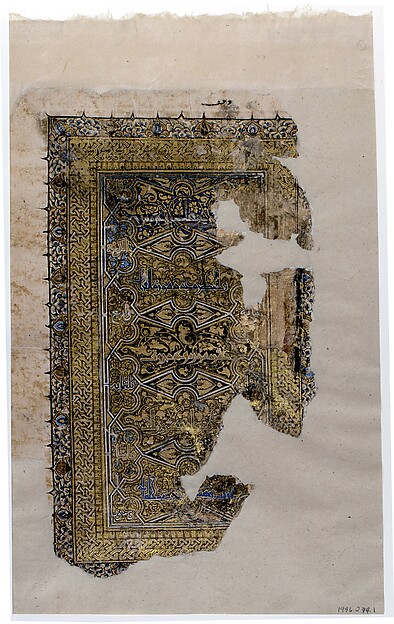
The visual route benefits from manuscript and instrument imagery because the subject is institutional as well as political. A Qur'an folio can signal revelation and transmission; an astrolabe can signal science, timekeeping, and navigation; an architectural image can signal public worship and patronage. Later image expansion can give Mecca, Medina, Damascus, Baghdad, and Cairo distinct visual anchors.
Readers also need a memory lens. Karbala, Baghdad, Damascus, Jerusalem, Cordoba, and Constantinople became symbols in later arguments about legitimacy, loss, reform, revival, and empire. The events matter not only for what happened, but for how later communities used them to explain authority and belonging.
A final student-friendly path is to compare spread by setting. Arabia shows community formation; Syria and Iraq show administration and cities; Central Asia shows frontier exchange; North Africa and al-Andalus show regional creativity; the Sahel and Indian Ocean show trade and pilgrimage. The same faith moved through different institutions.
The reader payoff is a better answer to a common search question: how did Islam spread and why did caliphates matter? The answer is not one cause. It combines preaching, migration, conquest, state formation, Arabic administration, trade, scholarship, law, pilgrimage, patronage, urban life, and local adaptation. The route lets a beginner start with 610 and 622, then move outward to Talas, Baghdad, Mansa Musa, Constantinople, and later empire without losing the thread.
Read the events in order first; the page is built to reveal change over time.
Ask which pressures existed before the visible turning point and which actors had room to choose.
Follow what changed afterward in institutions, borders, law, belief, or everyday life.
Notice which events became symbols and why later generations kept returning to them.
Track how revelation, migration, alliance, worship, leadership, and memory turned a vulnerable community into a durable public order.
Ask how rulers claimed authority after the founding generation, and where scholars, cities, armies, and local elites accepted or resisted those claims.
Follow Arabic, Persian, Greek, Sanskrit, and other knowledge worlds through translation, paper, schools, libraries, courts, and trade.
Keep Central Asia, West Africa, the Indian Ocean, Anatolia, and the Mediterranean on the map instead of treating the topic as a single-region story.
Read leadership disputes through kinship, community memory, dynastic rule, legal scholarship, and sectarian identity.
Use manuscripts, coins, inscriptions, mosques, water systems, ceramics, and scientific objects to see institutions at work.
Choose a Reading Path
Start With the Timeline
Use the related timeline first when you want a chronological route through the topic.
Start with c. 610 CE: Beginning of Muhammad's RevelationsOpen a Person Page
Use people pages when the topic is easier to understand through leadership, resistance, reform, or memory.
Start with 622 CE: Hijra to MedinaUse Year Pages
Use year pages when you need a fast answer to what changed in a specific year.
Start with March 624 CE: Battle of BadrReturn to the Map
Use the map to keep geography visible while moving between events and regions.
Start with 637 CE: Rashidun Conquest of JerusalemStart With Mecca and Medina
Read 610, the Hijra, and Badr first when the question is how belief, migration, leadership, and survival became a historical community.
Start with 661 CE: Umayyad Caliphate FoundedFollow the Caliphate Route
Move to Talas and Baghdad when the question becomes administration, scholarship, frontier politics, and the management of distance.
Start with 751 CE: Battle of TalasWiden to Africa and Oceans
Use Mansa Musa and trade routes to connect pilgrimage, gold, law, scholarship, ports, and Indian Ocean exchange.
Start with February 1258: Mongol Sack of BaghdadRead the Ruptures
Use Baghdad in 1258 and Constantinople in 1453 to separate local catastrophe from wider institutional transformation.
Study Cities
Move through Mecca, Medina, Damascus, Kufa, Basra, Baghdad, Cairo, Cordoba, Samarkand, and Timbuktu as different institutional centers.
Follow Everyday Institutions
Use courts, markets, schools, mosques, households, pilgrimage routes, tax records, and endowments to keep the route human.
How the Story Builds
Begin with Beginning of Muhammad's Revelations. The opening event usually shows the pressure that made the route necessary: a crisis of authority, an expanding exchange system, a new technology, a contested idea, or a conflict that older institutions could no longer contain.
Umayyad Caliphate Founded works as a checkpoint because it lets readers ask what had become irreversible, which actors still had choices, and how the route changed scale between the opening event and the later consequences.
The later edge of the route includes Dome of the Rock Completed, Battle of Talas, and Mongol Sack of Baghdad. These pages help readers see what survived beyond the first shock: institutions, borders, laws, memories, technologies, movements, or arguments that kept shaping later history.
The route is easier to remember through people and places. Watch figures such as Muhammad, Umar ibn al-Khattab, Sophronius of Jerusalem, and Muawiya I move through settings such as Mecca, Medina, Badr, Jerusalem, and Damascus; that is where large structures become visible as choices, risks, costs, and memories.
The opening stage centers Mecca, public preaching, social opposition, and the formation of a community defined by belief and obligation.
The Hijra and Medina stage turns movement into political organization, alliance-making, public authority, and calendar memory.
Caliphal rule expands through armies, garrison cities, tax systems, Arabic administration, law, coinage, and urban centers.
Baghdad, paper, translation, mathematics, medicine, pilgrimage, merchants, and scholars make the route intellectual as well as political.
Mongol, Ottoman, Sahelian, and Indian Ocean pages show that Islamic history continued through new centers after older capitals lost power.
Non-Muslim communities, local customs, legal schools, languages, and regional elites reveal how rule changed by place.
Al-Andalus, Fatimid, Mamluk, Ottoman, Safavid, Mughal, Sahelian, and Indian Ocean histories extend the route beyond one caliphate.
- Which event in Early Islam and Caliphates feels like the true point of no return, and why might another reader choose a different event?
- What changes if the route is read from the perspective of ordinary people rather than rulers, armies, inventors, reformers, or institutions?
- Which consequence was immediate, and which consequence only became clear decades later?
- Where does the map change the interpretation by showing distance, borders, routes, ports, capitals, or frontiers?
- How did migration change the political possibilities of the early Muslim community?
- Where did caliphal authority depend on soldiers, scholars, taxpayers, non-Muslim communities, or local elites?
- Why does the Islamic world become clearer when Central Asia, Africa, and the Indian Ocean stay on the same map?
- What changed after Baghdad's destruction, and what continued through other institutions and cities?
- How can readers compare conquest, trade, pilgrimage, scholarship, and local adaptation without reducing spread to one cause?
- Why did succession disputes become debates about memory, law, family, and legitimate rule?
- Which sources reveal ordinary people, women, non-Muslim communities, and local institutions beneath caliphal politics?
Interactive Timeline
Follow Early Islam and Caliphates by sequence
Beginning of Muhammad's Revelations
Islamic tradition places the first revelations to Muhammad near Mecca, beginning a religious movement that would transform Arabia and much of the wider world.
Read the full event pageMap Layer
Early Islam and Caliphates geography
Gold pins mark the approximate locations of published event pages. This is a schematic locator map, not a historical border map.
Coordinates are approximate and are used to help readers orient themselves before opening a full event page.
Route Events
Events in This Topic
Beginning of Muhammad's Revelations
Islamic tradition places the first revelations to Muhammad near Mecca, beginning a religious movement that would transform Arabia and much of the wider world.
Hijra to Medina
Muhammad and his followers migrated from Mecca to Medina, creating a new community that linked religious authority with social and political organization.
Battle of Badr
The early Muslim community fought Meccan opponents at Badr, a battle remembered in Islamic tradition as a decisive moment of communal survival.
Rashidun Conquest of Jerusalem
Jerusalem surrendered to the Rashidun caliphate after Byzantine control in the Levant weakened, placing one of the eastern Mediterranean's most sacred cities inside the expanding Islamic political world.
Umayyad Caliphate Founded
The Umayyad dynasty established a caliphal regime centered on Damascus, turning early Islamic rule toward a more durable dynastic and imperial form.
Battle of Karbala
Husayn ibn Ali and a small group of supporters were killed by Umayyad forces at Karbala, creating one of the most powerful memories of sacrifice, legitimacy, and mourning in Islamic history.
Dome of the Rock Completed
The Umayyad caliph Abd al-Malik completed the Dome of the Rock in Jerusalem, giving early Islamic rule a monumental architectural statement in a city of layered sacred history.
Battle of Talas
Tang and Abbasid forces fought near the Talas River as rival powers competed over Central Asian alliances, trade corridors, and frontier influence.
Mongol Sack of Baghdad
Mongol forces under Hulagu captured Baghdad, ending the Abbasid caliphate's political center and shocking the Islamic world.
References
Where to Check the Facts
- Encyclopaedia Britannica: Islamic worldBroad reference for early Islamic community formation, caliphal expansion, institutions, and cultural geography.
- The Metropolitan Museum of Art: The Islamic WorldMuseum reference for Islamic-world dynasties, cities, trade paths, art, and material culture.