How to Read the Year
Why does 1325 connect travel, cities, and world-making across distant regions?
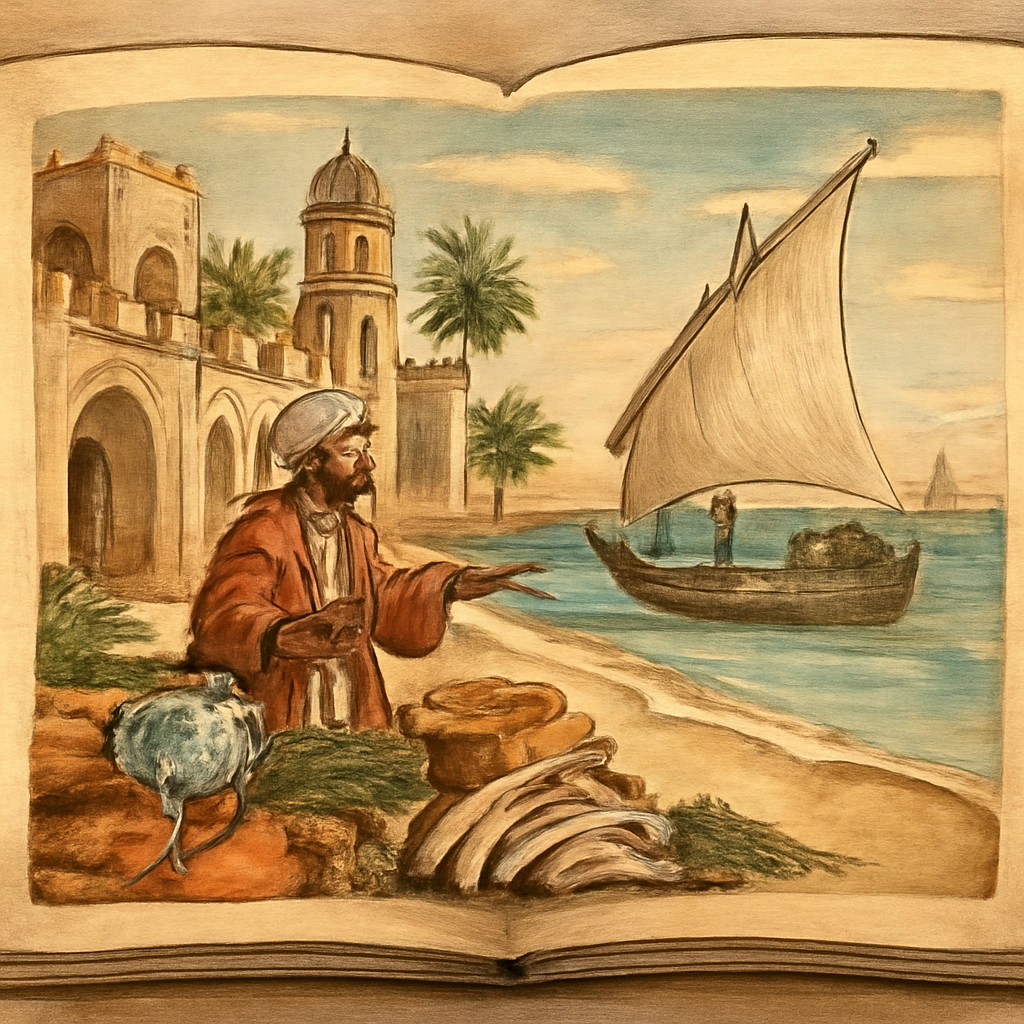
1325 is useful because it refuses to keep medieval history in one region. Ibn Battuta left Tangier on a journey that would move through Islamic courts, ports, pilgrimage routes, and scholarly networks, while Tenochtitlan was founded in Lake Texcoco as the urban base for later Mexica power. The year does not claim one event caused the other. It lets readers compare how movement and settlement both make historical worlds.
Ibn Battuta's departure turns mobility into evidence. Pilgrimage, law, Arabic literacy, patronage, ships, caravans, judges, merchants, and hosts made long-distance travel possible for a learned traveler. Tenochtitlan turns landscape into political possibility. Chinampas, causeways, lake transport, ritual authority, alliance, tribute, and urban planning would help transform an island settlement into a powerful capital.
The comparison is valuable because both stories are easy to flatten. Ibn Battuta can become a list of destinations, and Tenochtitlan can become only the city Cortes later entered. A richer reading starts earlier: before travel became a famous book and before the city became an imperial capital. The year shows historical scale forming through routes, memory, water, institutions, and later narration.
The year also asks readers to compare archives. Ibn Battuta is known through a travel account shaped by memory, literary convention, learned geography, and later copying. Tenochtitlan is approached through archaeology, Nahua memory, Spanish conquest accounts, maps, and colonial records. The difference matters because both stories became famous through later narration, not simply through the moment itself.
That source contrast makes 1325 more than a convenient pair of events. It teaches method: a traveler can reveal networks that already existed, while a city foundation can reveal environmental engineering and political possibility before imperial power becomes obvious.
The reader path should therefore move in two directions: eastward through pilgrimage, courts, and ports with Ibn Battuta, and inward through lake ecology, food production, ritual authority, and Mexica alliance politics around Tenochtitlan.
The year also makes a useful antidote to linear world history. Movement across Afro-Eurasia and city-building in the Americas were not peripheral side stories waiting for European arrival. They were already producing knowledge, infrastructure, politics, and memory on their own terms.
1325 CE in History gathers events that help readers move from a single date into wider historical patterns. A useful year entry does more than answer what happened; it shows why people keep using the year as a marker for change.
The connected events show how decisions, institutions, conflicts, ideas, and consequences crossed beyond one location or one person. The event links explain the immediate story, while the topic routes and timelines show what came before and after.
The year also helps organize broad questions. It gives readers a concise answer and a direct path into deeper event pages where causes, turning points, consequences, maps, and references are easier to inspect.
Read the date in three passes. First ask what happened inside the year itself. Then ask which older pressures made the event possible. Finally ask which later pages reuse the same vocabulary, institutions, borders, technologies, or memories. That sequence keeps the page from becoming a trivia answer.
Even when only one event is currently attached, the year still has a job: it gives students and curious visitors a stable chronological doorway into the atlas. The page makes the doorway useful by pointing to the event, the topic route, the timeline, the map, and the evidence trail that can turn a date into a broader explanation.
This year matters because it connects Ibn Battuta Begins His Travels, Tenochtitlan Founded to a wider sequence of causes and consequences. It gives the reader a chronological anchor while still pointing outward to people, places, institutions, and later effects. A thin year page would only name the event; a useful year page explains why this date is a handle for a larger route through history. 1325 matters because it widens medieval history beyond a single map. It links Moroccan travel, Islamic-world connectivity, Indian Ocean and caravan routes, Mexica urban formation, and Indigenous American state-building. The date helps readers see that world history is built by movement and by place-making at the same time.
Reader Lenses
Look for the pressures that made change possible.
Identify who acted and what options were available.
Follow what changed after the event.
Ask why this date still appears in historical summaries.
Follow the institutions that made travel possible: pilgrimage, law, hosts, ships, courts, and money.
Read Tenochtitlan through water, agriculture, causeways, ritual power, and alliance before conquest.
Ask how a travel narrative and a later conquered capital became famous in very different archives.
How This Year Connects
1325 CE in History is anchored by Ibn Battuta Begins His Travels and Tenochtitlan Founded. Read those pages together and the year stops being a date label; it becomes a crossroads where immediate choices met older pressures and opened later consequences.
The setting matters as much as the date. The year moves through Tangier and Tenochtitlan and belongs to Medieval Islamic World and Postclassic Mesoamerica. That combination helps readers avoid treating the year as isolated; geography, institutions, conflict, belief, economy, and communication all shape what a date can mean.
The year also opens into people and themes. Figures such as Ibn Battuta, Mexica founders, and Central Mexican communities appear because their choices made the year visible, while themes such as Ibn Battuta, Travel, Islamic World, Indian Ocean, Aztec, and Tenochtitlan explain why the consequences outlived the moment. A useful next step is usually an event page, then a topic route, then a timeline.
Evidence changes the way a date reads. A treaty, battle report, inscription, newspaper, census, court record, memoir, photograph, or archaeological trace does not answer the same question. Looking at source type helps separate what happened in the year from how later people remembered it.
A year page is most useful when it keeps two scales open at once. The first scale is immediate: what happened, where, and who was involved. The second scale is interpretive: why later readers use this date to organize a wider story. Holding both scales together makes the page a starting point for deeper reading rather than a dead-end answer.
The before-and-after frame matters too. A date rarely begins the forces it reveals. Earlier pressures made the linked event possible, while later pages show which effects were temporary, which became institutions, and which turned into memory. Reading the year this way helps students avoid the false impression that history changes only when the calendar flips.
Use this page as a junction. If the event feels too brief, follow the topic route for background; if the cause feels too abstract, open the event page for sequence; if the consequence feels larger than the date, move into the timeline. The value of a year page is that it lets readers change scale without losing their place.
Read 1325 beside Ibn Battuta, Kilwa, Mansa Musa, Delhi Sultanate, Tenochtitlan, Aztec history, Indigenous Americas, and Indian Ocean routes.
Then compare 1325 with 1200, 1331, 1405, 1492, and 1521 where available. The comparison asks how travelers, cities, ports, and conquest narratives change what later readers think the medieval world was.
Events in This Year
- 1325 CEIbn Battuta Begins His Travels
Ibn Battuta left Tangier on a journey that eventually crossed North Africa, the Middle East, East Africa, South Asia, Central Asia, and parts of Southeast Asia and China.
- 1325Tenochtitlan Founded
Mexica settlers founded Tenochtitlan on an island in Lake Texcoco, building the urban base for later Aztec imperial power.
Map Layer
1325 CE in History geography
Gold pins mark the approximate locations of published event pages. This is a schematic locator map, not a historical border map.
Coordinates are approximate and are used to help readers orient themselves before opening a full event page.
References
Where to Check the Facts
- Encyclopaedia Britannica: Ibn BattutaBiographical reference for Ibn Battuta's journeys, Rihla, and travel range.
- The Metropolitan Museum of Art: Trade and Travel in the Islamic WorldReference for travel networks, paths, and exchange across Islamic-world geographies.
- Fordham Internet History Sourcebooks: Ibn Battuta, Travels in Asia and AfricaTeaching excerpts from Ibn Battuta's Rihla for travel writing, pilgrimage, patronage, and fourteenth-century Afro-Eurasian connections.
- Encyclopaedia Britannica: Ibn BattutaSpecific reference for Ibn Battuta's departure from Tangier, hajj journey, later travels, and dictated travel account.