At a Glance
The shape of the event
- Date
- 1808
- Place
- Washington, DC
- Type
- Legislation
The United States banned the legal importation of enslaved people from abroad while domestic slavery continued to expand.
1808; place the event in Washington, DC before comparing causes or consequences.
The event separates banning the slave trade from abolishing slavery itself.
United States lawmakers / Enslaved Africans are the first names or groups to compare before widening the story.
The international trade became illegal, but internal slave trading and plantation slavery remained central to the United States.
The international trade became illegal, but internal slave trading and plantation slavery remained central to the United States.
The event separates banning the slave trade from abolishing slavery itself.
Follow the subsequent threads to see how law, economy, and lives adjusted to this new legal map.
Background
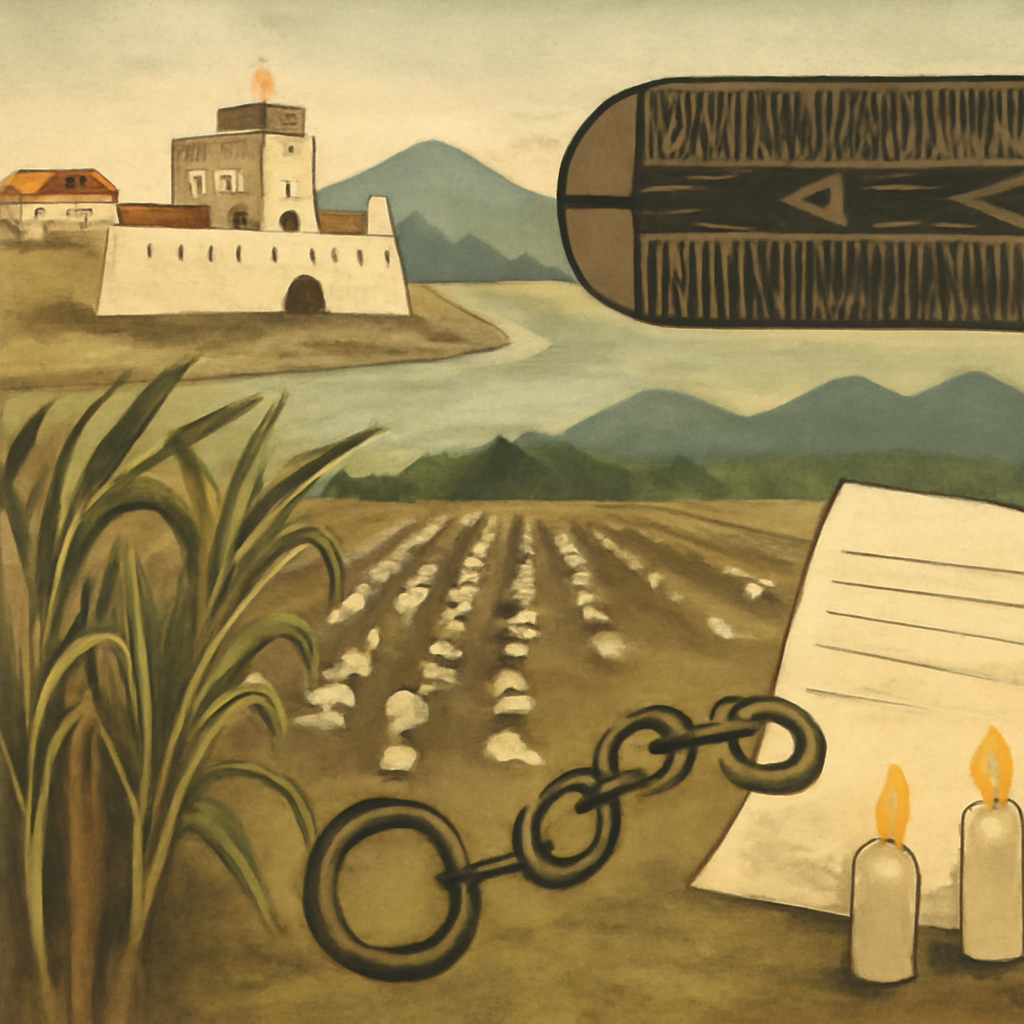
Across the late eighteenth and early nineteenth centuries, the United States sat inside a hemispheric system in which people, goods, and capital crossed the Atlantic and then moved across the continent. Debates in state legislatures, federal halls, and ports mixed moral rhetoric, commercial calculation, diplomatic concerns, and regional politics. Some voices pressed to end the international traffic in enslaved people; others feared economic dislocation or loss of political power. By 1808, Congress acted to make the international trade unlawful; the decision was the product of competing pressures rather than a single cause. At the same time, the internal economy of the United States—plantations, domestic markets in enslaved people, and regional labor needs—continued to expand and to shape law and politics.
The legal ban therefore intersected with lived experience unevenly: official records and proclamations tell one side of the story, while communities affected by enslavement, oral memories, and material traces reveal different continuities and ruptures. The U. S. ban on the transatlantic slave trade took effect in 1808 because the Constitution had protected the trade from federal prohibition until that year. The law did not abolish slavery, and that distinction is crucial. Enslavers in the United States could still buy and sell people domestically, and the forced movement of enslaved people from the Upper South to the expanding cotton South became more important over time.
The ban therefore sits at the intersection of moral pressure, constitutional compromise, Atlantic enforcement, and the growth of an internal slave market.
The Turning Point
The core change in 1808 was legal and directional: United States lawmakers in Washington declared that importing enslaved people from abroad would be illegal. That choice redirected one stream of human traffic and made a diplomatic and legal statement to other nations. For the enslaved Africans who had been sold across the Atlantic, the law meant that future arrivals could no longer be sanctioned by U. S. statute. For politicians and merchants, the measure required decisions about enforcement, shipping, and economic adjustment. Crucially, the law did not dismantle slavery inside the country. Domestic traders, plantation owners, and regional markets remained intact and, in many places, continued to grow.
The turning point is therefore paradoxical: a decisive legal rupture with the transatlantic trade that coexisted with the steady continuation and expansion of internal systems of human bondage. The actors—lawmakers who voted in halls, officials charged with implementing the ban, and the people whose lives were governed by those decisions—made choices that redirected one axis of the system while leaving others intact. The decisive shift was legal rather than liberatory. Congress could now claim opposition to the international trade while leaving the plantation system intact. Enforcement depended on ships, courts, customs officials, informants, and political will, all of which varied. Illegal voyages continued, and prosecutions were uneven.
The law allowed many Americans to imagine progress without confronting the domestic institution that made slavery profitable. That tension makes 1808 an especially important event: it separated antislave-trade language from abolitionist transformation.
Consequences
Immediately, the international slave trade became unlawful in the United States; ships bringing enslaved people from abroad lost legal sanction. That shift altered commercial calculations and international diplomacy, and it changed the source of new enslaved people from foreign ports to domestic channels. In the near term, internal markets and the forced migration of people within the United States took on greater prominence as plantation economies sought labor. Over the longer term, the 1808 ban created a lasting distinction in law and memory between outlawing the international trade and abolishing slavery itself.
Scholars, communities, and governments have treated those two moves differently: one targeted the movement of people across oceans, the other would later confront the institution that held people in bondage within national borders. The discrepancy produced contested legacies in law, material culture, and public memory: official records emphasize legislative action; family histories, archaeology, and community memory often record continuities of dispossession and domestic trade that statutes did not erase. The ban therefore stands as both a legal milestone and a reminder that outlawing an external traffic did not equal emancipation at home. The consequences were morally mixed.
The law contributed to a wider Atlantic move against legal slave trading, but it also increased the value of enslaved people already in the United States and helped intensify domestic trafficking. Families were separated through sales to new cotton frontiers, while politicians used the ban to deflect criticism from slavery itself. The page should therefore not be read as a clean humanitarian victory. It is a case study in how reform can close one channel of violence while another expands.
Interpretation Notes
Interpretations of United States Bans the Transatlantic Slave Trade depend on whose evidence is centered: rulers and official records, affected communities, oral memory, archaeology, law, diplomacy, labor, and later public memory do not always tell the same story.
Why Keep Reading
Follow the subsequent threads to see how law, economy, and lives adjusted to this new legal map. Read next about the domestic slave trade and plantation expansion that filled the demand once supplied from abroad; about legal and political battles that framed later abolition efforts; and about how communities preserved memory and resisted through family networks, testimony, and material culture. Understanding this moment helps explain why later debates over emancipation, citizenship, and memory were shaped not only by national statutes but by the uneven realities of labor and law on the ground. Read next into Britain's 1807 abolition act, the domestic slave trade, cotton expansion, and the Civil War.
The key question is what a society chooses not to abolish when it celebrates partial reform.
Reading Path
Follow the story without losing the thread
Before This
After This
- Tanzimat Reforms Begin1839 CE
- Amistad Case1841
- American Civil War BeginsApril 12, 1861
Same Period
- Magna CartaJune 15, 1215
- American Civil War BeginsApril 12, 1861
- Attack on Pearl HarborDecember 7, 1941
Wider Timeline
Mind Map
How to think about United States Bans the Transatlantic Slave Trade
international ban
Congress in Washington declared the importation of enslaved people unlawful in 1808
Map Layer
Where this event sits geographically
Gold pins mark the approximate locations of published event pages. This is a schematic locator map, not a historical border map.
Coordinates are approximate and are used to help readers orient themselves before opening a full event page.
References
Where to Check the Facts
- Official archive: Act Prohibiting ImportationReference for the United States ban on importing enslaved people.
- Encyclopaedia Britannica: Transatlantic slave tradeReference for the forced migration system, Atlantic paths, and slavery's global consequences.
- Gilder Lehrman Institute: Olaudah Equiano, 1789Primary-source teaching reference for Equiano's abolitionist narrative and remembered Middle Passage experience.
- Official database: Slave VoyagesReference database for transatlantic slave trade paths, voyages, forced migration, and estimates.