At a Glance
The shape of the event
- Date
- December 25, 800
- Place
- Rome
- Type
- Coronation
Pope Leo III crowned Charlemagne emperor in Rome, joining Frankish military power with papal authority in a ceremony loaded with Roman memory.
December 25, 800; place the event in Rome before comparing causes or consequences.
The coronation shaped medieval ideas about empire, kingship, and the relationship between church and ruler.
Charlemagne / Pope Leo III are the first names or groups to compare before widening the story.
Charlemagne gained an imperial title that strengthened his prestige across western Europe.
Charlemagne gained an imperial title that strengthened his prestige across western Europe.
The coronation shaped medieval ideas about empire, kingship, and the relationship between church and ruler.
Move from the coronation to the Carolingian Empire, the papacy, Byzantine politics, medieval kingship, and the later Holy Roman Empire.
Background
By 800, political authority in western Europe had been reconfigured around new dynasties and new alliances. The Carolingian family had become the dominant military and political force among the Franks; the papacy, situated in Rome but threatened by local violence and factional competition, sought reliable protectors and renewed claims to moral authority. Neither pope nor king operated in a vacuum: both inherited Roman symbols and sought audiences who recognized those symbols as sources of legitimacy. At the same time, memory mattered. The language and ceremonies of empire retained power even when the old imperial machinery had changed, and leaders invoked that memory to test new claims.
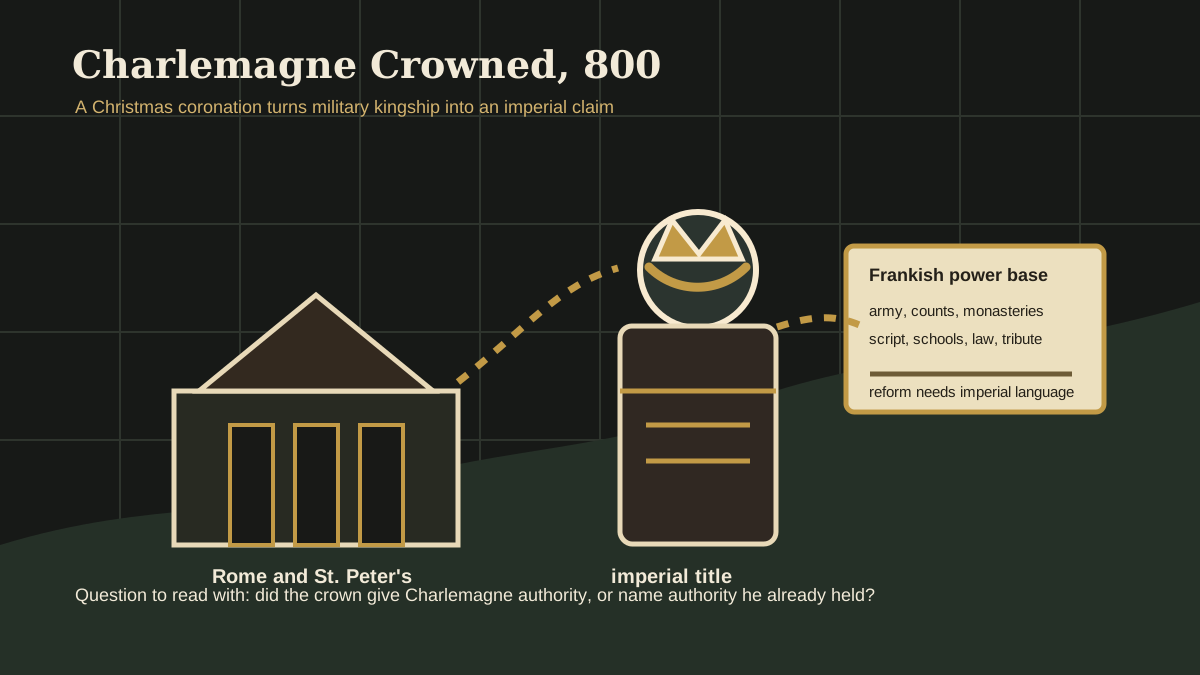
Historians disagree about what drove the decision in December 800—some emphasize opportunistic choices by individuals, others point to deeper structural pressures, such as the need for recognized authority across disparate polities. This account keeps both possibilities visible: a decisive ceremony shaped by particular actors, and broader currents of legitimacy, protection, and symbolic inheritance that made that ceremony possible and consequential. Charlemagne's coronation in 800 joined Frankish power, papal politics, and Roman memory in one carefully charged ceremony. Pope Leo III needed protection and legitimacy after conflict in Rome. Charlemagne already ruled a vast Frankish realm through conquest, patronage, courts, monasteries, and counts. The imperial title did not create his power from nothing, but it gave that power a new language.
It also challenged the Byzantine Empire's claim to Roman imperial continuity.
The Turning Point
The ceremony in Rome altered the political vocabulary of western Europe. Pope Leo III placed an imperial crown on Charlemagne, creating a visible fusion of papal sanction and Frankish power. That choice mattered because it claimed, in a single act, the language of Roman empire for a western ruler who already exercised vast authority by military and administrative means. For Leo III, the act asserted papal capacity to bestow imperial dignity; for Charlemagne, it converted martial dominance into a recognized imperial title that traveled beyond his immediate domains. The setting—Christmas Day in Rome—was deliberate, invoking both Christian liturgy and Roman ceremony, and it made the act public and symbolic.
Contemporaries read the moment in different ways: some saw it as a papal endorsement of a standing protector; others as a ruler accepting a religiously grounded elevation. Either way, the coronation shifted the balance between de facto power and sanctioned rule, making the emperor not only a conqueror but also an occupant of a revived imperial office embedded in Christian ritual and Roman memory. The turning point was the Christmas Day coronation in St. Peter's. The act placed a crown on a political relationship: the pope recognized Charlemagne as emperor, and Frankish military power appeared as defender of the Roman church. Yet the meaning was contested from the start. Who had made whom?
Did the pope grant imperial authority, or did the ceremony acknowledge power Charlemagne already possessed? That ambiguity became part of the coronation's long afterlife. The ceremony sits inside a debate over choreography and authority. Einhard later suggested Charlemagne would not have entered the church had he known what Leo planned, but historians still ask whether the coronation was surprise, choreography, or useful ambiguity. The Byzantine context mattered too: with Irene ruling in Constantinople, western writers could argue over whether imperial authority in the West was vacant, revived, borrowed, or contested.
Consequences
In the short term, the title transformed Charlemagne’s standing across western Europe: it bolstered his prestige and gave other rulers a recognizable benchmark of imperial claim. The papacy gained a powerful ally whose protection and approval now carried renewed symbolic weight. Over the longer centuries, the coronation became a reference point for medieval ideas about what empire should mean—how kingship could be legitimized by church authorities, how imperial ritual could be re-invented, and how the memory of Rome could be repurposed to order medieval politics. Scholars still debate how intentional or inevitable these outcomes were.
Some trace later political arrangements—alliances, conflicts over investiture, and claims to imperial succession—back to this moment; others argue the coronation was one of several interacting forces that slowly shaped medieval institutions. What is clear is that the act did not simply decorate a ruler with a title: it set a precedent for the relationship between a spiritual authority and a secular sovereign that would be argued over for generations. The coronation shaped medieval ideas of empire, papacy, and western Christendom. It influenced later claims that rulers could inherit or revive Roman authority in the West, eventually feeding into the tradition called the Holy Roman Empire. It also intensified questions about the relationship between sacred authority and military power.
The ceremony was a single event, but it gave later generations a vocabulary for arguing about kingship, church authority, reform, and imperial legitimacy.
Interpretation Notes
The coronation is debated because ceremony and authority do not line up neatly. Old St Peter's, Pope Leo III, Charlemagne's existing power, Byzantine claims under Irene, and later accounts about surprise or choreography all shape the meaning of the crown.
Why Keep Reading
Move from the coronation to the Carolingian Empire, the papacy, Byzantine politics, medieval kingship, and the later Holy Roman Empire. The route keeps the main question alive: did the crown create authority, recognize military power, or give church and ruler a shared language they would later fight over?
Reading Path
Follow the story without losing the thread
Before This
- Battle of Talas751 CE
After This
- Great Schism of 10541054 CE
- Norman Conquest of England1066 CE
- First Crusade Begins1095 CE
Same Period
- Battle of Talas751 CE
- Norman Conquest of England1066 CE
- Magna CartaJune 15, 1215
Wider Timeline
Mind Map
How to think about Coronation of Charlemagne
mutual need
The papacy sought protection and legitimacy while the Carolingians sought greater trans-regional recognition; their needs aligned to make a coronation possible.
Map Layer
Where this event sits geographically
Gold pins mark the approximate locations of published event pages. This is a schematic locator map, not a historical border map.
Coordinates are approximate and are used to help readers orient themselves before opening a full event page.
References
Where to Check the Facts
- Encyclopaedia Britannica: CharlemagneBiographical reference for Charlemagne's kingship, imperial title, and political legacy.
- Encyclopaedia Britannica: Charlemagne, Emperor of the RomansSpecific reference for the 800 CE coronation and its Roman-imperial meaning.