How to Read the Year
Why does 541 CE in History deserve a focused year page?
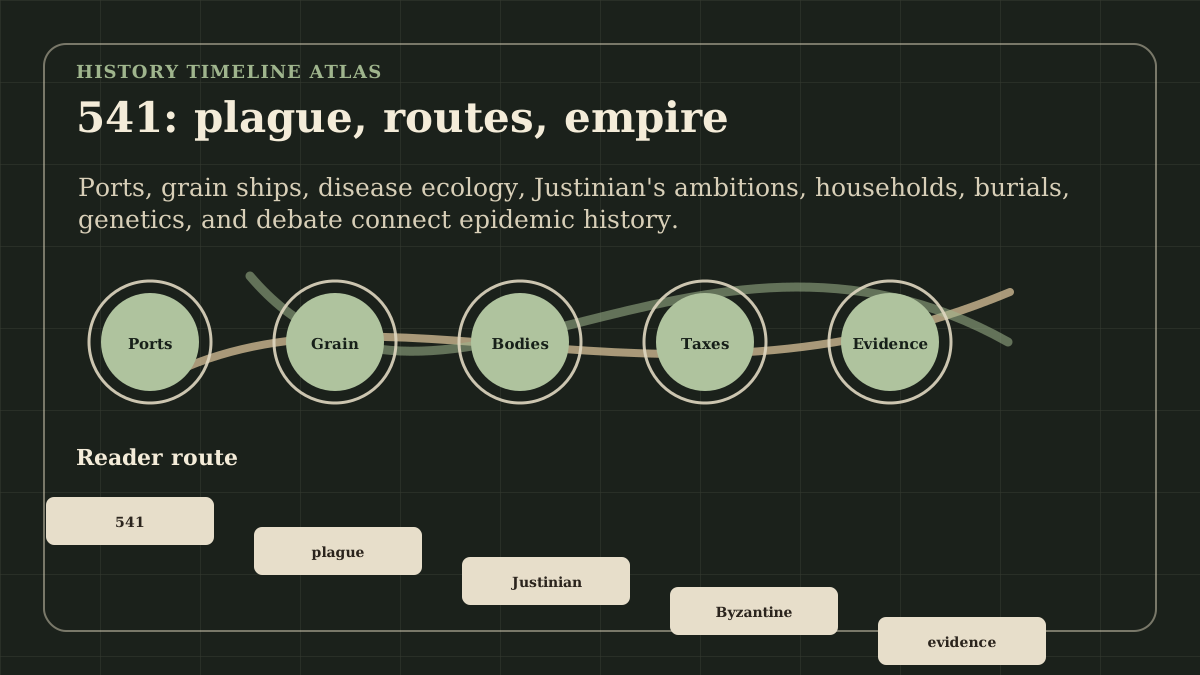
The Plague of Justinian makes 541 a year about disease, empire, environment, and evidence. The outbreak is associated with the reign of Justinian and the eastern Roman world, but its meaning reaches beyond court history into ports, grain routes, armies, taxation, cities, burial, and fear.
The year is read through movement. Disease followed human and animal worlds connected by trade, transport, ships, food supply, and urban density. Constantinople matters, but so do Egypt, the Mediterranean, Red Sea routes, and the wider ecological setting that made transmission possible.
Justinian's empire was already ambitious: legal codification, church building, campaigns in the west, and efforts to restore Roman authority all demanded resources. Plague did not singlehandedly end those projects, but it added demographic and fiscal pressure to a system already stretched by war and administration.
The evidence is difficult. Literary accounts describe terror and mass death; archaeology, paleogenetics, and demographic debate add other kinds of evidence. Readers see why historians can agree on the outbreak's importance while debating scale, regional variation, and long-term effects.
A strong reading path moves from 541 to the Black Death, trade and disease routes, Byzantine history, and public-health explainers. The year matters because it shows disease as part of political and environmental history, not only medical history.
The everyday layer remains visible: burial pressure, labor shortage, fear of ships, interrupted markets, orphaned households, and officials trying to keep taxes and food supply moving. Epidemic history is not only mortality curves. It is the breakdown and repair of ordinary routines.
Constantinople gives the outbreak a dramatic imperial center, but the route extends through Egypt, grain shipments, Red Sea connections, Mediterranean ports, and inland communities. Disease history becomes richer when readers track movement rather than imagine a plague appearing in one place.
The scale debate is part of the page's value. Some older accounts made the plague a single decisive cause of late antique transformation, while newer work tests that claim with archaeology and genetics. The page helps readers see evidence as an argument, not a fixed number.
The year also opens a comparison with later pandemics. The Justinianic outbreak, the Black Death, influenza, cholera, and smallpox vaccination pages all ask how societies explain invisible danger, maintain food systems, and decide what public authority can do.
541 CE in History gathers events that help readers move from a single date into wider historical patterns. A useful year entry does more than answer what happened; it shows why people keep using the year as a marker for change.
The connected events show how decisions, institutions, conflicts, ideas, and consequences crossed beyond one location or one person. The event links explain the immediate story, while the topic routes and timelines show what came before and after.
The year also helps organize broad questions. It gives readers a concise answer and a direct path into deeper event pages where causes, turning points, consequences, maps, and references are easier to inspect.
Read the date in three passes. First ask what happened inside the year itself. Then ask which older pressures made the event possible. Finally ask which later pages reuse the same vocabulary, institutions, borders, technologies, or memories. That sequence keeps the page from becoming a trivia answer.
Even when only one event is currently attached, the year still has a job: it gives students and curious visitors a stable chronological doorway into the atlas. The page makes the doorway useful by pointing to the event, the topic route, the timeline, the map, and the evidence trail that can turn a date into a broader explanation.
This year matters because it connects Plague of Justinian to a wider sequence of causes and consequences. It gives the reader a chronological anchor while still pointing outward to people, places, institutions, and later effects. A thin year page would only name the event; a useful year page explains why this date is a handle for a larger route through history. 541 matters because it gives readers a way to connect epidemic disease with imperial capacity. The Plague of Justinian affected people through bodies, households, ports, food systems, taxes, armies, and memory. Its exact scale is debated, but the year remains a powerful entry into how disease can expose the fragility of states, the limits of evidence, and the connectedness of trade worlds.
Reader Lenses
Look for the pressures that made change possible.
Identify who acted and what options were available.
Follow what changed after the event.
Ask why this date still appears in historical summaries.
Follow ports, grain, ships, animals, and cities rather than treating disease as placeless.
Ask how plague interacted with Justinian's wars, taxes, buildings, and administration.
Compare literary testimony, archaeology, genetics, and demographic debate.
How This Year Connects
541 CE in History is anchored by Plague of Justinian. Read those pages together and the year stops being a date label; it becomes a crossroads where immediate choices met older pressures and opened later consequences.
The setting matters as much as the date. The year moves through Eastern Mediterranean and belongs to Late Antiquity. That combination helps readers avoid treating the year as isolated; geography, institutions, conflict, belief, economy, and communication all shape what a date can mean.
The year also opens into people and themes. Figures such as Justinian I appear because their choices made the year visible, while themes such as Disease, Byzantine Empire, and Trade explain why the consequences outlived the moment. A useful next step is usually an event page, then a topic route, then a timeline.
Evidence changes the way a date reads. A treaty, battle report, inscription, newspaper, census, court record, memoir, photograph, or archaeological trace does not answer the same question. Looking at source type helps separate what happened in the year from how later people remembered it.
A year page is most useful when it keeps two scales open at once. The first scale is immediate: what happened, where, and who was involved. The second scale is interpretive: why later readers use this date to organize a wider story. Holding both scales together makes the page a starting point for deeper reading rather than a dead-end answer.
The before-and-after frame matters too. A date rarely begins the forces it reveals. Earlier pressures made the linked event possible, while later pages show which effects were temporary, which became institutions, and which turned into memory. Reading the year this way helps students avoid the false impression that history changes only when the calendar flips.
Use this page as a junction. If the event feels too brief, follow the topic route for background; if the cause feels too abstract, open the event page for sequence; if the consequence feels larger than the date, move into the timeline. The value of a year page is that it lets readers change scale without losing their place.
Read 541 beside Justinian, Byzantine history, the Black Death, trade and disease routes, and public-health explainers. That path connects epidemic experience to empire, ecology, and evidence.
Then compare 541 with 1347, 1918, 1796, and 2003 where available. The comparison asks how disease, fear, records, and institutions change across different medical worlds.
Events in This Year
- 541 CEPlague of Justinian
A devastating plague struck the Byzantine world during Justinian's reign, spreading through connected trade and urban networks.
Map Layer
541 CE in History geography
Gold pins mark the approximate locations of published event pages. This is a schematic locator map, not a historical border map.
Coordinates are approximate and are used to help readers orient themselves before opening a full event page.
References
Where to Check the Facts
- Encyclopaedia Britannica: Plague of JustinianSpecific reference for the 541 CE anchor event, chronology, and historical setting.
- Encyclopaedia BritannicaBackground reference for chronology, names, and historical context.
- WikidataStructured reference for dates, places, alternate names, and entity links.