How to Read the Year
Why did the Council of Nicaea become a landmark in Christian and imperial history?
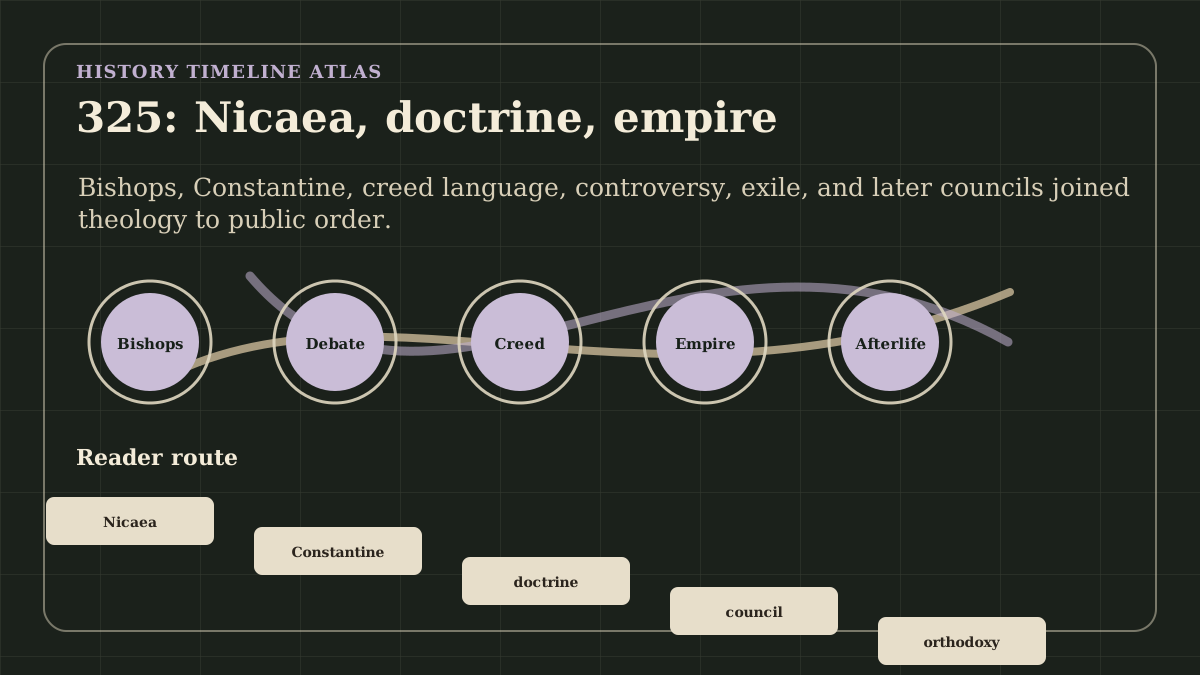
325 is anchored by the Council of Nicaea, where bishops gathered under Constantine's imperial authority to address a theological dispute that had become a public problem for the Roman Empire. The year matters because doctrine, church leadership, imperial unity, and public religion met in one highly visible council.
The Arian controversy was not a minor word game. It concerned how Christians spoke about Christ, God, creation, and worship. The council's creed gave a formula that later became central to orthodox Christian identity, but the conflict did not disappear in 325. Debate, exile, imperial pressure, and later councils continued to shape the issue.
Constantine's role makes the year historically important even for readers who are not studying theology. An emperor who had recently favored Christianity now acted as convener and guardian of unity. That did not mean he controlled doctrine in a simple way. It showed that Christian disputes now mattered to imperial stability.
A careful year page avoids saying Nicaea instantly created one uniform church. The council mattered because it set a powerful standard, linked doctrine to public authority, and gave later Christians a reference point for orthodoxy, controversy, and memory.
The year also helps readers understand why councils became institutions. Bishops did not only debate ideas privately; they met, argued, signed formulas, appealed to authority, and sometimes faced exile or restoration when emperors changed policy. Doctrine moved through people, documents, offices, and imperial enforcement.
Nicaea is a good doorway into late antiquity because it links several routes at once: Christian theology, Roman state power, Greek-language argument, imperial ceremony, and later Byzantine and medieval church memory. Readers can move from a creed sentence to the political world that made the sentence consequential.
A strong search answer should also prevent a common misconception: Nicaea did not simply invent Christianity. It intervened in disputes among Christians and gave later communities a durable reference point for defining orthodoxy, dissent, and imperial involvement.
The year also helps readers see disagreement as organized history. Bishops traveled, debated, signed, resisted, appealed, and later reinterpreted the council's language. That process makes Nicaea more than a doctrinal label: it shows how communities create authoritative formulas while conflict continues around them.
325 CE in History gathers events that help readers move from a single date into wider historical patterns. A useful year entry does more than answer what happened; it shows why people keep using the year as a marker for change.
The connected events show how decisions, institutions, conflicts, ideas, and consequences crossed beyond one location or one person. The event links explain the immediate story, while the topic routes and timelines show what came before and after.
The year also helps organize broad questions. It gives readers a concise answer and a direct path into deeper event pages where causes, turning points, consequences, maps, and references are easier to inspect.
Read the date in three passes. First ask what happened inside the year itself. Then ask which older pressures made the event possible. Finally ask which later pages reuse the same vocabulary, institutions, borders, technologies, or memories. That sequence keeps the page from becoming a trivia answer.
Even when only one event is currently attached, the year still has a job: it gives students and curious visitors a stable chronological doorway into the atlas. The page makes the doorway useful by pointing to the event, the topic route, the timeline, the map, and the evidence trail that can turn a date into a broader explanation.
This year matters because it connects Council of Nicaea to a wider sequence of causes and consequences. It gives the reader a chronological anchor while still pointing outward to people, places, institutions, and later effects. A thin year page would only name the event; a useful year page explains why this date is a handle for a larger route through history. 325 matters because it marks a new relationship between Christian doctrine and imperial power. The Council of Nicaea made theological language a matter of public order, not only local teaching. The year helps readers understand why creeds, councils, bishops, emperors, imperial patronage, exile, and later memory became central to late antique history, Byzantine politics, and medieval Christianity. That makes the year a bridge between Roman imperial history and later Christian institutional memory.
Reader Lenses
Look for the pressures that made change possible.
Identify who acted and what options were available.
Follow what changed after the event.
Ask why this date still appears in historical summaries.
Ask why precise theological language mattered for worship and communal identity.
Track Constantine's interest in unity without reducing bishops to imperial puppets.
Remember that Nicaea set a standard while later conflicts continued.
How This Year Connects
325 CE in History is anchored by Council of Nicaea. Read those pages together and the year stops being a date label; it becomes a crossroads where immediate choices met older pressures and opened later consequences.
The setting matters as much as the date. The year moves through Nicaea and belongs to Late Antiquity. That combination helps readers avoid treating the year as isolated; geography, institutions, conflict, belief, economy, and communication all shape what a date can mean.
The year also opens into people and themes. Figures such as Constantine the Great and Early bishops appear because their choices made the year visible, while themes such as Christianity, Roman Empire, and Doctrine explain why the consequences outlived the moment. A useful next step is usually an event page, then a topic route, then a timeline.
Evidence changes the way a date reads. A treaty, battle report, inscription, newspaper, census, court record, memoir, photograph, or archaeological trace does not answer the same question. Looking at source type helps separate what happened in the year from how later people remembered it.
A year page is most useful when it keeps two scales open at once. The first scale is immediate: what happened, where, and who was involved. The second scale is interpretive: why later readers use this date to organize a wider story. Holding both scales together makes the page a starting point for deeper reading rather than a dead-end answer.
The before-and-after frame matters too. A date rarely begins the forces it reveals. Earlier pressures made the linked event possible, while later pages show which effects were temporary, which became institutions, and which turned into memory. Reading the year this way helps students avoid the false impression that history changes only when the calendar flips.
Use this page as a junction. If the event feels too brief, follow the topic route for background; if the cause feels too abstract, open the event page for sequence; if the consequence feels larger than the date, move into the timeline. The value of a year page is that it lets readers change scale without losing their place.
Read 325 beside Constantine, the Edict of Milan, and the Christianization of the Roman Empire. That path shows how a persecuted movement became entangled with imperial authority.
Then move toward 451, Byzantine history, and medieval church-state conflicts. Nicaea becomes clearer when readers see how councils and creeds kept shaping politics.
Events in This Year
- 325 CECouncil of Nicaea
Bishops gathered at Nicaea under Constantine to address doctrinal disputes and define shared Christian teaching within an imperial setting.
Map Layer
325 CE in History geography
Gold pins mark the approximate locations of published event pages. This is a schematic locator map, not a historical border map.
Coordinates are approximate and are used to help readers orient themselves before opening a full event page.
References
Where to Check the Facts
- Encyclopaedia Britannica: Council of NicaeaSpecific reference for the 325 CE anchor event, chronology, and historical setting.
- Encyclopaedia BritannicaBackground reference for chronology, names, and historical context.
- WikidataStructured reference for dates, places, alternate names, and entity links.