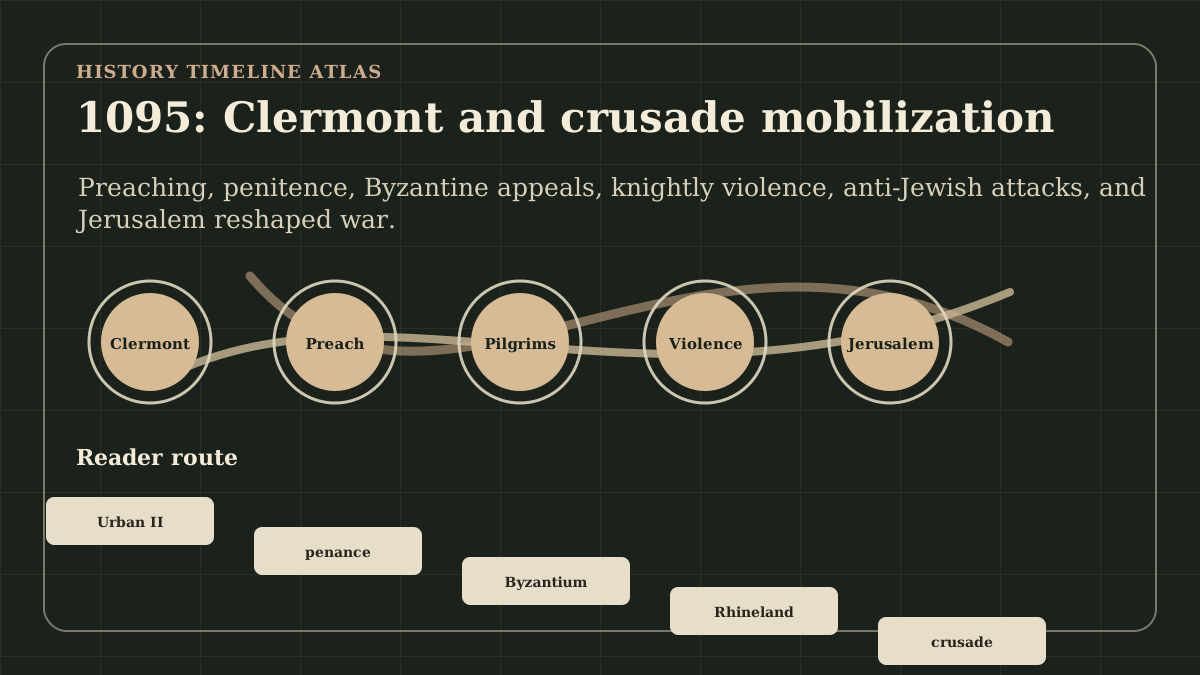
How to Read the Year
How did a call at Clermont become the opening of the First Crusade?
1095 is anchored by Pope Urban II's call at Clermont, but the year matters because it joined reform papacy, pilgrimage, knightly violence, Byzantine appeals, penitential language, and the politics of the eastern Mediterranean. The First Crusade did not begin from one motive; it gathered several pressures into a new armed movement.
The Byzantine Empire's request for help after Turkish advances gave western leaders a diplomatic opening. Urban's preaching then framed armed travel toward Jerusalem as a religious act with spiritual stakes. That framing helped turn local warriors, nobles, clergy, and ordinary participants toward a long and dangerous expedition.
The year also needs its dark side. Crusading enthusiasm produced violence against Jewish communities in the Rhineland before armies reached the eastern Mediterranean. A responsible page does not hide that fact behind pilgrimage language. Holy war rhetoric could mobilize devotion and atrocity at the same time.
1095 is therefore a hinge between medieval church reform, military culture, interreligious violence, Byzantine-Latin relations, and the creation of crusader states. It should be read as the beginning of a long pattern, not only as one dramatic speech.
The search question behind the page is usually simple: what happened in 1095, and why did it matter? The answer needs more than 'Urban II called the First Crusade.' Readers should see how papal reform sought moral authority, how aristocratic warfare could be redirected, how pilgrimage language changed the meaning of violence, and how eastern Mediterranean politics made a distant campaign seem urgent.
The year also helps readers avoid a common mistake: treating crusading as only religious enthusiasm or only material greed. Clermont mattered because several motives could reinforce one another. Penance, honor, land, status, fear, preaching, kinship, and apocalyptic expectation could travel together inside one armed movement.
A thick 1095 page must also explain aftermath without pretending the whole First Crusade was already scripted. Preaching opened a path, but recruitment, logistics, local violence, leadership disputes, and conditions on the road shaped what the movement became.
The road matters because ideas became history through movement. Families, lords, clerics, poorer participants, merchants, and victims encountered crusading as vows, debts, rumors, attacks, supply problems, and changing expectations before armies reached Jerusalem.
1095 CE in History gathers events that help readers move from a single date into wider historical patterns. A useful year entry does more than answer what happened; it shows why people keep using the year as a marker for change.
The connected events show how decisions, institutions, conflicts, ideas, and consequences crossed beyond one location or one person. The event links explain the immediate story, while the topic routes and timelines show what came before and after.
The year also helps organize broad questions. It gives readers a concise answer and a direct path into deeper event pages where causes, turning points, consequences, maps, and references are easier to inspect.
Read the date in three passes. First ask what happened inside the year itself. Then ask which older pressures made the event possible. Finally ask which later pages reuse the same vocabulary, institutions, borders, technologies, or memories. That sequence keeps the page from becoming a trivia answer.
Even when only one event is currently attached, the year still has a job: it gives students and curious visitors a stable chronological doorway into the atlas. The page makes the doorway useful by pointing to the event, the topic route, the timeline, the map, and the evidence trail that can turn a date into a broader explanation.
This year matters because it connects First Crusade Begins to a wider sequence of causes and consequences. It gives the reader a chronological anchor while still pointing outward to people, places, institutions, and later effects. A thin year page would only name the event; a useful year page explains why this date is a handle for a larger route through history. 1095 matters because it shows how religious authority can redirect violence across distance. The year connects preaching, penitence, pilgrimage, aristocratic warfare, Byzantine diplomacy, anti-Jewish violence, and Latin Christian expansion. It helps readers understand why the Crusades were both devotional movements and coercive military campaigns.
Reader Lenses
Look for the pressures that made change possible.
Identify who acted and what options were available.
Follow what changed after the event.
Ask why this date still appears in historical summaries.
Ask how speech, promise, and ritual turned warfare into a religious journey.
Keep anti-Jewish attacks and coercion visible alongside pilgrimage language.
Track Byzantine, Latin Christian, Muslim, and Jewish histories in the same map.
How This Year Connects
1095 CE in History is anchored by First Crusade Begins. Read those pages together and the year stops being a date label; it becomes a crossroads where immediate choices met older pressures and opened later consequences.
The setting matters as much as the date. The year moves through Clermont and belongs to Medieval World. That combination helps readers avoid treating the year as isolated; geography, institutions, conflict, belief, economy, and communication all shape what a date can mean.
The year also opens into people and themes. Figures such as Pope Urban II appear because their choices made the year visible, while themes such as Crusades, Christianity, and Medieval Power explain why the consequences outlived the moment. A useful next step is usually an event page, then a topic route, then a timeline.
Evidence changes the way a date reads. A treaty, battle report, inscription, newspaper, census, court record, memoir, photograph, or archaeological trace does not answer the same question. Looking at source type helps separate what happened in the year from how later people remembered it.
A year page is most useful when it keeps two scales open at once. The first scale is immediate: what happened, where, and who was involved. The second scale is interpretive: why later readers use this date to organize a wider story. Holding both scales together makes the page a starting point for deeper reading rather than a dead-end answer.
The before-and-after frame matters too. A date rarely begins the forces it reveals. Earlier pressures made the linked event possible, while later pages show which effects were temporary, which became institutions, and which turned into memory. Reading the year this way helps students avoid the false impression that history changes only when the calendar flips.
Use this page as a junction. If the event feels too brief, follow the topic route for background; if the cause feels too abstract, open the event page for sequence; if the consequence feels larger than the date, move into the timeline. The value of a year page is that it lets readers change scale without losing their place.
Read 1095 beside the First Crusade, Byzantine history, and medieval papal reform. That route keeps the call at Clermont inside institutional and geopolitical context.
Then compare with 1204, 1453, and later Ottoman history. The comparison shows how crusading, Byzantine weakness, and eastern Mediterranean power interacted over centuries.
A useful next route is to move from Clermont to anti-Jewish violence, then to Jerusalem and the Latin East. That order keeps victims, institutions, and conquest in one frame instead of letting the page become a triumphalist expedition summary.
Events in This Year
- 1095 CEFirst Crusade Begins
Pope Urban II called for armed pilgrimage to the eastern Mediterranean, launching the First Crusade and a new phase of Latin Christian warfare.
Map Layer
1095 CE in History geography
Gold pins mark the approximate locations of published event pages. This is a schematic locator map, not a historical border map.
Coordinates are approximate and are used to help readers orient themselves before opening a full event page.
References
Where to Check the Facts
- Encyclopaedia Britannica: First CrusadeSpecific reference for the 1095 CE anchor event, chronology, and historical setting.
- Encyclopaedia BritannicaBackground reference for chronology, names, and historical context.
- WikidataStructured reference for dates, places, alternate names, and entity links.