Historical Role
Yi Sun-sin's biography belongs to the Imjin War, where Japanese invasion, Joseon survival, Ming intervention, naval logistics, coastal geography, and command under political pressure all met. He is famous as an admiral, but the deeper history is sea power defending a peninsula during a regional war.
His importance is easiest to see through supply. Armies invading Korea needed movement, reinforcement, and provisions across water. Naval resistance made those connections harder, turning ships, straits, islands, weather, local knowledge, and disciplined crews into strategic forces. Battles mattered because they disrupted the practical machinery of invasion.
The turtle ship is memorable, but it should not swallow the biography. Technology helped, yet command, training, intelligence, morale, repair, coastal communities, and timing were just as important. A page that treats Yi as a miracle inventor misses the institutional and geographic work behind naval defense.
Yi's career also shows the danger of politics during war. Accusation, dismissal, punishment, restoration, and command under crisis reveal that military competence does not operate in a vacuum. Court suspicion, factional struggle, and battlefield necessity shaped how his ability could be used.
His memory in Korea is strong because the story joins endurance, discipline, sacrifice, and national survival. A careful history keeps that memory visible while also placing the war in a larger East Asian frame involving Toyotomi Hideyoshi's Japan, Joseon Korea, and Ming China.
The biography becomes more vivid when readers picture the coast as infrastructure. Harbors, currents, islands, repair yards, warning networks, fishermen, pilots, and supply boats all mattered. Yi's achievement was not only winning set-piece battles; it was making the sea dangerous for an invasion that depended on moving men and materials across water.
Command under disgrace is another reason the page holds attention. Yi was removed and punished, then restored when crisis exposed how badly Joseon needed experienced naval leadership. That arc turns biography into a question about institutions: how can a state recognize competence when court politics, rumor, and factional competition distort trust?
The source trail should also keep diary, official record, and patriotic memory distinct. Yi's own writings and later commemoration do not answer the same questions. One helps readers approach daily command and anxiety; the other shows how later Korea turned naval defense into a durable symbol of national endurance.
The best next step is to read the Imjin War as a regional system. Japan's invasion plans, Joseon court politics, Ming intervention, local Korean suffering, and naval logistics all interacted. Yi's page gains depth when it points readers from a single admiral toward the larger East Asian crisis around him.
The biography also benefits from a civilian lens. Coastal families, shipwrights, rowers, scouts, fishermen, refugees, and officials trying to move grain all lived inside the naval war. That human scale prevents tactical brilliance from floating above the society that supplied ships, crews, information, and the fear of invasion.
Yi Sun-sin helps connect individual action with wider historical change in Joseon Korea. The biography works best when it keeps the surrounding world visible: authority, conflict, belief, reform, or discovery moved through decisions made under pressure.
The related events show how roles such as Korean admiral, Naval commander can be read through dates, places, institutions, and consequences rather than through reputation alone. The biography explains why this person matters, while the linked events explain what changed around them.
A richer reading starts with the limits around the person. Some figures acted through offices, armies, courts, laboratories, churches, parties, ships, trade networks, or protest movements; others became important because later communities turned their lives into symbols. The page therefore asks what this person could actually change, what was already moving before them, and which consequences later readers attached to the name.
Read the biography against absence as well. Many lives around Yi Sun-sin are less visible in the record: opponents, collaborators, family members, workers, soldiers, students, subjects, victims, translators, scribes, or local communities. Keeping those surrounding people in view makes the page less like a name card and more like an entry point into historical systems.
Yi Sun-sin also works as a navigation point. Open the linked event pages to see where the biography becomes chronology, then use the topic routes to test whether the same pattern appears beyond one life. That extra step matters because historical importance is rarely contained inside a single decision; it usually spreads through institutions, witnesses, opponents, imitators, and later arguments over memory.
Sources and Method
Source trail: the page uses Imjin War event sources, East Asia route context, and Korean naval-history references where available.
Method note: the biography treats naval victory as logistics and geography, not only heroism or technology.
Evidence Notes
How Sensitive Claims Are Sourced
Why This Person Matters
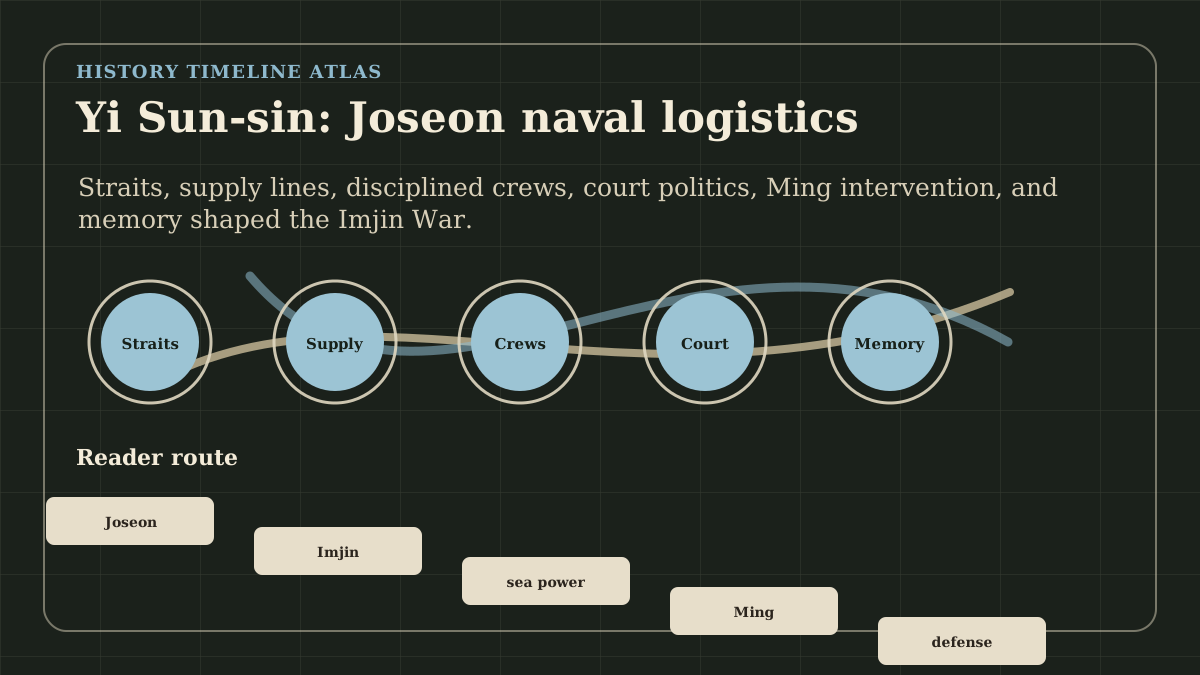
Yi Sun-sin matters because the connected events make a larger historical pattern easier to follow. The page links biography to consequences so readers can move from a life story into the wider atlas, compare the person with contemporaries, and understand why later memory kept returning to this figure. Yi Sun-sin matters because his biography shows sea power as logistics, geography, discipline, state survival, and memory. The page helps readers move beyond heroic shorthand toward the practical question of how ships, coasts, crews, and command decisions can change the outcome of a regional war.
How can command at sea change a land war by controlling movement, supply, and morale?
How to Read This Life
Yi Sun-sin is easiest to understand when the biography is read beside Imjin War Begins. Those events show the historical setting in motion: dates, places, institutions, conflict, and consequences give the life a structure that a short biography alone cannot provide.
The surrounding route crosses Early Modern East Asia and locations such as Korean Peninsula. That matters because influence rarely stays inside one person. It moves through offices, armies, movements, laws, texts, speeches, institutions, and later memory.
A useful reading path starts with the role labels, then opens the event pages to see what changed, and finally compares this person with other actors facing similar pressures.
For readers who arrive on a biography first, this page is meant to become a doorway rather than a stop. Read one paragraph for the answer, then use the turning points, topic routes, and event links to test whether the person's reputation matches the wider evidence.
Read Yi Sun-sin beside the Imjin War and Ming-Qing transition routes. The sequence shows how Korea, Japan, and China belonged to a connected East Asian strategic world.
Then compare naval power with the Spanish Armada, Indian Ocean trade, and World War II Pacific pages. Ships matter differently when they carry trade, invasion, empire, or supply.
Read Yi Sun-sin through the roles of Korean admiral, Naval commander rather than as reputation alone.
Place the biography inside Joseon Korea and the wider events linked below.
Ask which choices were personal and which were constrained by institutions or crisis.
Follow how later memory simplified, contested, or reused this person's role.
Follow straits, ships, islands, weather, and supply lines as strategic facts.
Keep Joseon, Japan, and Ming China in the same regional frame.
Separate patriotic remembrance from the practical mechanics of naval defense.
Legacy, Limits, and Memory
A useful biography keeps scale in view. Yi Sun-sin mattered because individual choices met a wider structure: institutions, enemies, allies, audiences, technologies, beliefs, and inherited conflicts. The related event pages help separate personal agency from conditions that no single person controlled.
Memory is part of the biography too. Later readers often simplify a figure into a hero, villain, founder, reformer, conqueror, prophet, scientist, or symbol. Those labels can be helpful, but they become misleading when they hide conflict, compromise, exclusion, uncertainty, or the experiences of people outside the main biography.
For the next step, compare this life with a topic route rather than stopping at the name. If the same pattern appears across several figures, the reader has found a historical structure; if this person breaks the pattern, the contrast is usually where the most interesting question begins.
Heroic memory is not the enemy of analysis, but it should be anchored in logistics, geography, institutions, and sources.
The biography should avoid reducing the war to Korea and Japan alone; Ming intervention and regional balance matter.
Technology such as turtle ships should be treated as one tool inside a larger system of command and supply.
Yi Sun-sin is a useful page for readers because it turns a famous hero into a system-level question: how does control of water change land warfare, diplomacy, memory, and the survival of a state?
Turning Points to Read Next
Imjin War Begins
Japanese invasions of Korea began the Imjin War, drawing Joseon Korea, Ming China, and Japanese armies into a devastating regional conflict.
Related Timeline
- 1592Imjin War Begins
Japanese invasions of Korea began the Imjin War, drawing Joseon Korea, Ming China, and Japanese armies into a devastating regional conflict.
References
Where to Check the Facts
- Cambridge University Press: The Cambridge History of ChinaSpecialist scholarly synthesis for Chinese dynastic, imperial, revolutionary, and Mao-era historical interpretation.
- Cambridge University Press: The Cambridge History of JapanSpecialist scholarly synthesis for Japanese state formation, Meiji transformation, imperial expansion, and modern political change.
- Harvard University Press: A New History of KoreaKorean-history scholarship reference for long Korean chronology, institutions, cultural history, colonial pressure, and modern change.
- Oxford Research Encyclopedia of Asian History: Meiji RevolutionPeer-reviewed reference for Meiji transformation as revolution, state centralization, social change, and contested modernization.
- Encyclopaedia Britannica: Ming dynastyReference for Ming restoration, government, maritime activity, and culture.
- Encyclopaedia Britannica: Qing dynastyReference for Qing conquest, imperial expansion, crisis, and reform.
- Official UNESCO World Heritage Centre: Historic Monuments of Ancient KyotoInstitutional reference for Kyoto's long capital history, court culture, temples, and urban memory.
- Official archive: Columbia Asia for Educators: Treaty of Nanjing excerptsPrimary-source teaching excerpt for the Treaty of Nanjing, treaty-port coercion, indemnity, and legal-commercial pressure after the Opium War.
- National Archives of Japan: Constitution of Japan and Meiji constitutional holdingsJapanese archival reference for Meiji constitutional state-building, imperial rescripts, and the legal language of modern reform.
- National Diet Library: Modern Japan in Archives - Japan's Annexation of KoreaJapanese archive reference for the 1910 annexation of Korea and the documentary trail behind Japanese colonial rule.
- National Institute of Korean History: Annals of the Choson DynastyKorean institutional reference for Joseon court records, dynastic governance, and Korean historical specificity inside the East Asia path.
- U.S. Office of the Historian: English translation of the 1910 Korea annexation treatyDiplomatic-document reference for treaty language around Japan's annexation of Korea and international reporting of colonial transition.
- Official archive: UK National Archives: May Fourth Movement 1919Primary-source archive material for May Fourth diplomacy, national equality language, and post-World War I Chinese protest context.
- Official archive: Hong Kong Basic Law official English textOfficial legal text for the Hong Kong handover framework, rights language, political structure, and sovereignty after 1997.