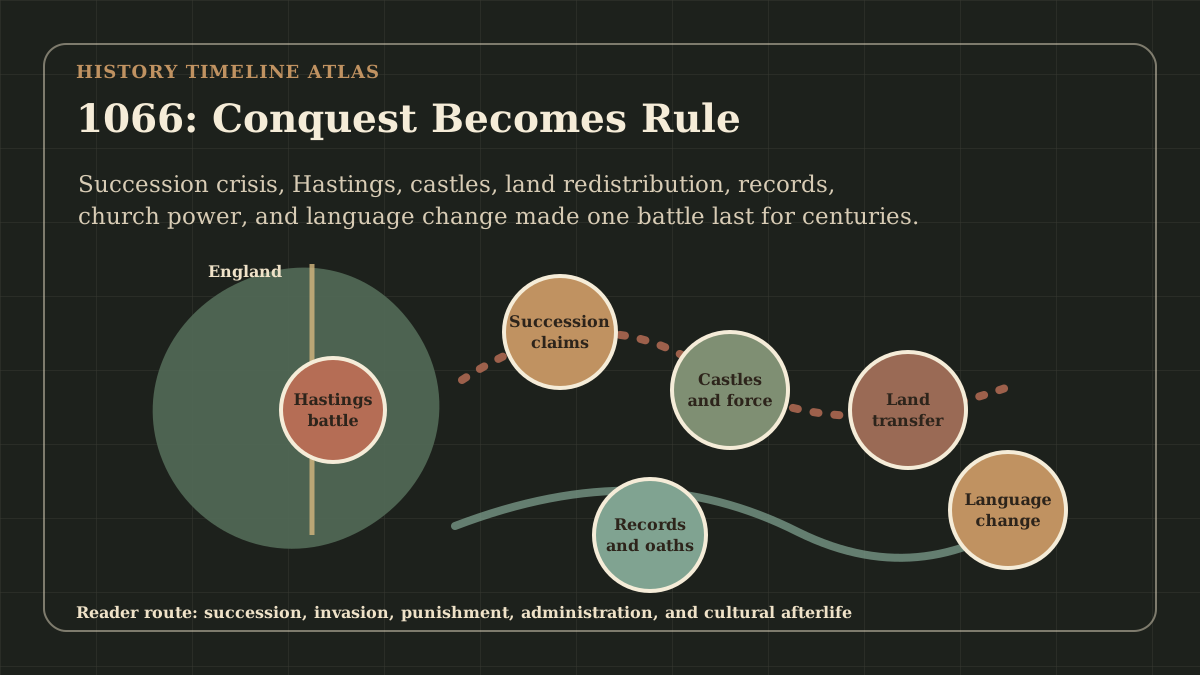
How to Read the Year
Why did 1066 reshape England long after the Battle of Hastings ended?
1066 is one of the most famous years in English history because of the Norman Conquest, but its importance reaches far beyond a single battlefield. The year began with a succession crisis after Edward the Confessor's death, moved through competing claims by Harold Godwinson, Harald Hardrada, and William of Normandy, and ended with a conquest that remade landholding, aristocratic power, language, law, and England's relationship with continental Europe.
The drama of 1066 is partly geographic. Harold's forces faced invasion pressure from the north and south in quick succession. Stamford Bridge and Hastings belong in the same story because they show the strain of moving armies across England before modern transport, the danger of divided fronts, and the speed with which a political crisis could become a military catastrophe.
William's victory at Hastings did not instantly create stable rule. Norman authority had to be imposed through castles, confiscations, new land grants, church appointments, military force, and repeated campaigns. Conquest continued through administration and property, not only through combat.
The afterlife of 1066 is visible in records and culture. Domesday Book, compiled later, shows the new regime's hunger for information about land, wealth, obligation, and lordship. French-speaking aristocratic culture reshaped elite life, while Old English, Latin, and Norman French interacted in ways that changed the long history of the English language.
For readers, 1066 is valuable because it links a clear event to slow structural change. Hastings is the hook, but the deeper story is how conquest reorganizes who owns land, who speaks with authority, who writes records, who builds fortifications, and how a society remembers defeat.
The year also shows how legitimacy is assembled after violence. Coronation, oaths, church support, written charters, punishment of rebellion, castle building, and selective accommodation all helped William convert victory into rule. The Normans could win a battle in one day, but they needed years to make conquest feel administratively unavoidable.
The human costs sit behind the institutional story. Dispossessed English elites, tenants facing new lords, churchmen navigating reform, towns absorbing garrisons, and northern communities hit by punitive campaigns all experienced 1066 differently. That social range helps the page avoid treating conquest as only a royal succession puzzle and makes the date useful for readers asking how everyday authority changed.
1066 in History: Norman Conquest, Succession, and England gathers events that help readers move from a single date into wider historical patterns. A useful year entry does more than answer what happened; it shows why people keep using the year as a marker for change.
The connected events show how decisions, institutions, conflicts, ideas, and consequences crossed beyond one location or one person. The event links explain the immediate story, while the topic routes and timelines show what came before and after.
The year also helps organize broad questions. It gives readers a concise answer and a direct path into deeper event pages where causes, turning points, consequences, maps, and references are easier to inspect.
Read the date in three passes. First ask what happened inside the year itself. Then ask which older pressures made the event possible. Finally ask which later pages reuse the same vocabulary, institutions, borders, technologies, or memories. That sequence keeps the page from becoming a trivia answer.
Even when only one event is currently attached, the year still has a job: it gives students and curious visitors a stable chronological doorway into the atlas. The page makes the doorway useful by pointing to the event, the topic route, the timeline, the map, and the evidence trail that can turn a date into a broader explanation.
This year matters because it connects Norman Conquest of England to a wider sequence of causes and consequences. It gives the reader a chronological anchor while still pointing outward to people, places, institutions, and later effects. A thin year page would only name the event; a useful year page explains why this date is a handle for a larger route through history. 1066 matters because it turns succession into conquest and conquest into institutional change. The year connects kingship, invasion, battlefield contingency, castles, land redistribution, church reform, record-keeping, cross-channel politics, and language. It helps readers see why a famous date stays famous: its consequences kept working long after the battle.
Reader Lenses
Look for the pressures that made change possible.
Identify who acted and what options were available.
Follow what changed after the event.
Ask why this date still appears in historical summaries.
Start with competing claims to the throne before treating Hastings as inevitable.
Follow castles, confiscation, military campaigns, and new elites after the battle.
Use Domesday-style record keeping to see how rulers converted victory into administration.
How This Year Connects
1066 in History: Norman Conquest, Succession, and England is anchored by Norman Conquest of England. Read those pages together and the year stops being a date label; it becomes a crossroads where immediate choices met older pressures and opened later consequences.
The setting matters as much as the date. The year moves through Hastings and belongs to Medieval World. That combination helps readers avoid treating the year as isolated; geography, institutions, conflict, belief, economy, and communication all shape what a date can mean.
The year also opens into people and themes. Figures such as William the Conqueror and Harold Godwinson appear because their choices made the year visible, while themes such as England, Normans, and Monarchy explain why the consequences outlived the moment. A useful next step is usually an event page, then a topic route, then a timeline.
Evidence changes the way a date reads. A treaty, battle report, inscription, newspaper, census, court record, memoir, photograph, or archaeological trace does not answer the same question. Looking at source type helps separate what happened in the year from how later people remembered it.
A year page is most useful when it keeps two scales open at once. The first scale is immediate: what happened, where, and who was involved. The second scale is interpretive: why later readers use this date to organize a wider story. Holding both scales together makes the page a starting point for deeper reading rather than a dead-end answer.
The before-and-after frame matters too. A date rarely begins the forces it reveals. Earlier pressures made the linked event possible, while later pages show which effects were temporary, which became institutions, and which turned into memory. Reading the year this way helps students avoid the false impression that history changes only when the calendar flips.
Use this page as a junction. If the event feels too brief, follow the topic route for background; if the cause feels too abstract, open the event page for sequence; if the consequence feels larger than the date, move into the timeline. The value of a year page is that it lets readers change scale without losing their place.
Read 1066 beside the Norman Conquest, medieval power routes, Domesday Book where available, and Magna Carta in 1215. That path follows conquest into administration and later limits on royal power.
Then compare 1066 with Constantinople in 1453, the Crusades, and other medieval turning points. The comparison shows how conquest changes political memory, property, and legitimacy.
Events in This Year
- 1066 CENorman Conquest of England
William of Normandy defeated Harold Godwinson and imposed a new ruling elite on England, tying the kingdom more closely to continental politics.
Map Layer
1066 in History: Norman Conquest, Succession, and England geography
Gold pins mark the approximate locations of published event pages. This is a schematic locator map, not a historical border map.
Coordinates are approximate and are used to help readers orient themselves before opening a full event page.
References
Where to Check the Facts
- Encyclopaedia Britannica: Norman ConquestSpecific reference for the 1066 CE anchor event, chronology, and historical setting.
- Encyclopaedia BritannicaBackground reference for chronology, names, and historical context.
- WikidataStructured reference for dates, places, alternate names, and entity links.